


Antique Walnut Shelf
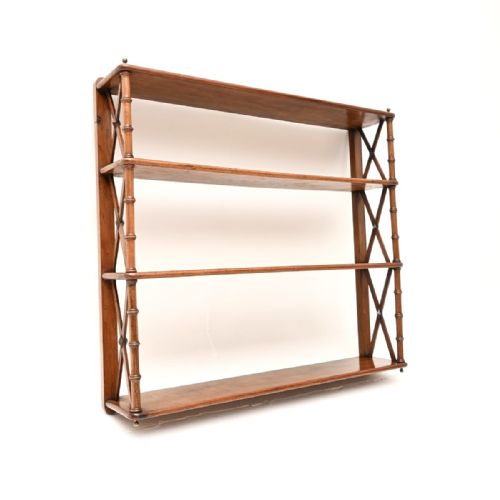
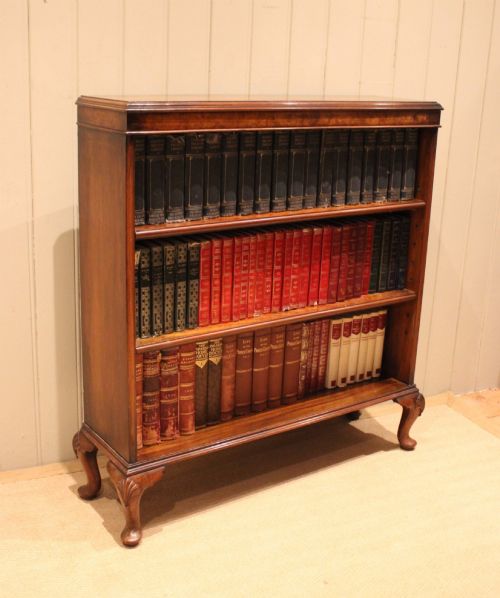
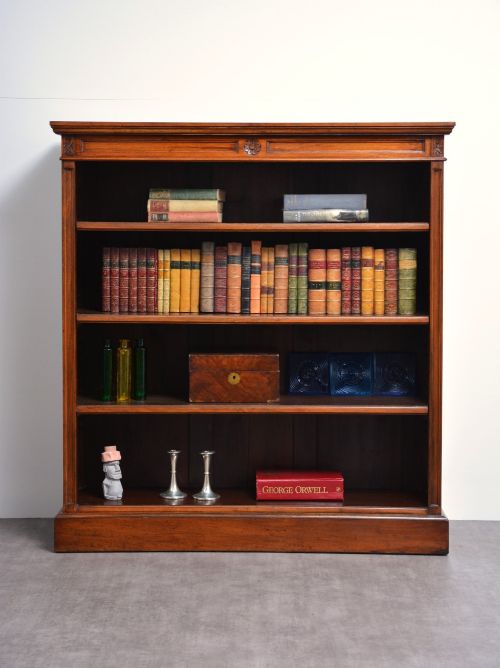
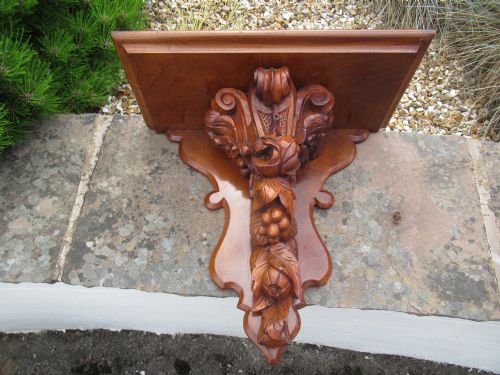
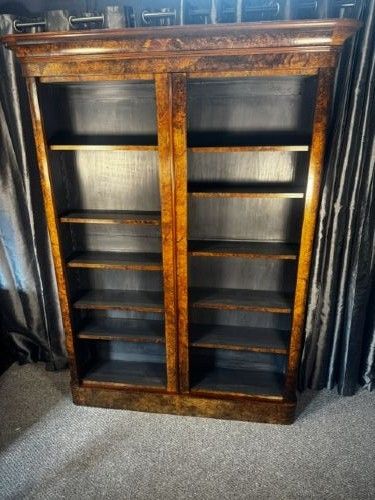
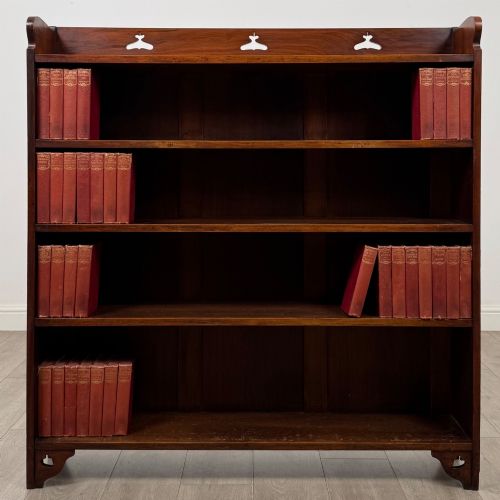
An antique walnut shelf brings rich grain and warm tone to a room, offering practical display space through open bookcases, corner brackets, and multi-tiered whatnots.
Antique Walnut Shelf
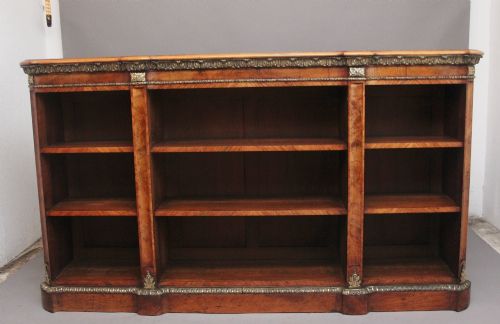
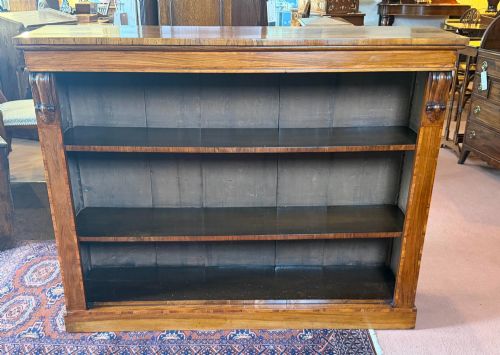
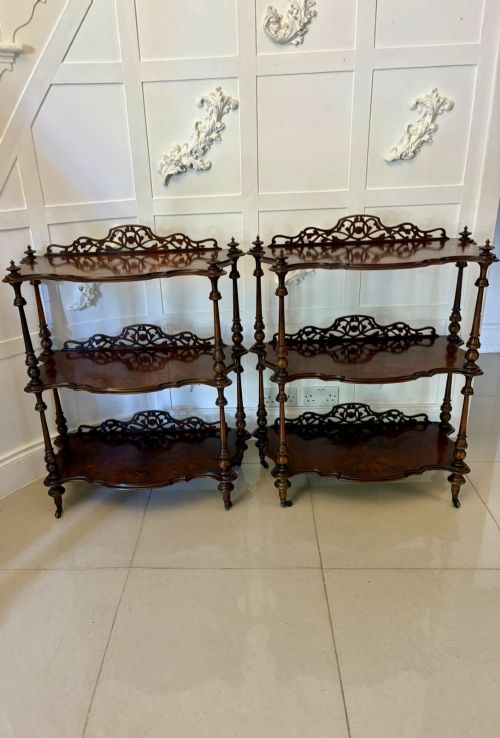
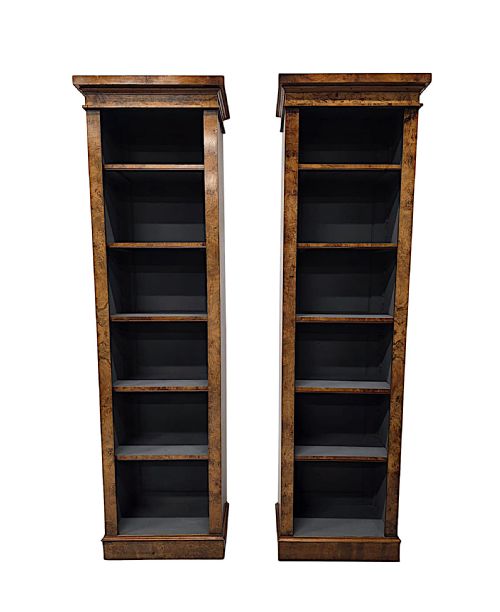
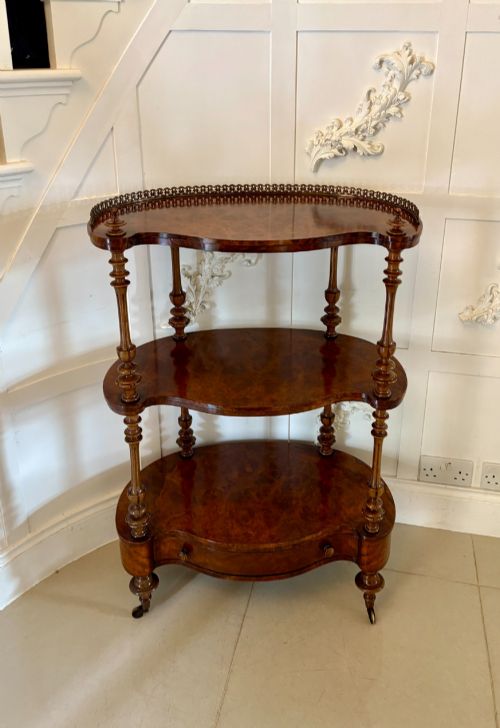
An antique walnut shelf encompasses a varied selection of open bookcases, wall brackets, corner cabinets, and tiered whatnots designed for storage and display. These items emerge predominantly from the nineteenth and early twentieth centuries, spanning Victorian, Edwardian, and William IV periods.
The assortment on this page frequently includes open bookshelves with adjustable interiors, wall-mounted display ledges, and decorative etageres. Walnut and burr walnut dominate the construction, often enhanced by marquetry, glass, and brass mounts.
Buyers encounter forms ranging from low bedside bookcases to tall library cabinets and small wall brackets. Regional influences appear through English, French, and German craftsmanship across different decades.
How they were made
Cabinet makers utilised solid timber and decorative walnut veneer over secondary woods to achieve striking grain patterns, particularly burr and figured walnut. Surfaces frequently display intricate marquetry inlay, ebony detailing, and polished French polish finishes.
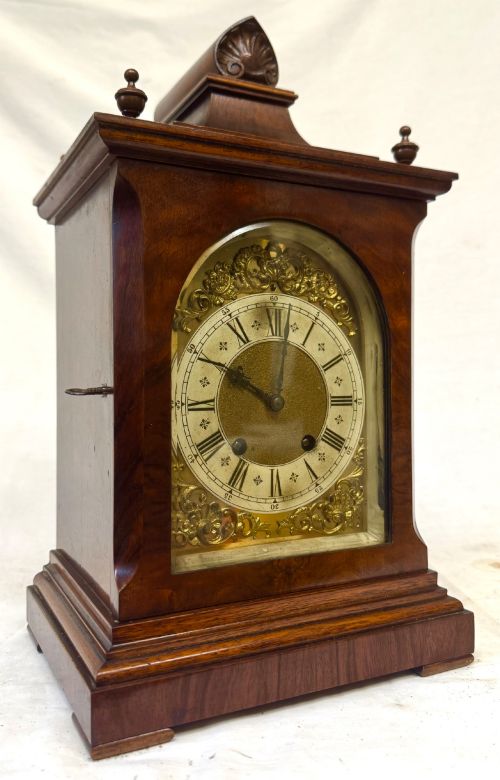
Metal elements such as brass dials, cast ormolu mounts, and chrome accents integrate with the wood structure on clocks, credenzas, and decorative wall shelves. Adjustable shelving mechanisms employ brass tracks and wooden supports within larger open bookcases.
Listings feature walnut furniture across Victorian, Edwardian, Art Deco, and William IV periods, incorporating brass, glass, and ormolu.
What varies in quality
The selection of timber grain significantly separates standard items from exceptional examples, with matched burr walnut veneers commanding greater visual depth. The precision of marquetry inlay and the crispness of hand-carved mouldings reflect the skill of the workshop.
Structural integrity depends on the quality of original joints, the stability of tiered shelves, and the retention of authentic brass or ormolu mounts. Finer pieces demonstrate careful attention to internal secondary timbers and well-executed adjustable shelf mechanisms.
Johnstone and Jeanes·Gillows·Gabriel Viardot
The Antique Walnut Shelf Glossary
- Burr Walnut
- A timber harvested from walnut tree growths, producing swirling, highly figured grain patterns prized for decorative veneer work. It appears frequently on Victorian and Edwardian cabinet fronts and shelf surfaces.
- Etagere
- A piece of furniture consisting of a set of open shelves for displaying small objects or ornaments. These tiered structures often feature turned legs and delicate wooden supports.
- Ormolu
- Gilded bronze applications mounted onto furniture frames and clock cases. This decorative technique adds metallic contrast to dark walnut surfaces.
- Whatnot
- A multi-tiered movable stand or wall shelf designed to hold books, ornaments, or bric-a-brac. Victorian examples often incorporate serpentine shapes and finely turned uprights.
- Marquetry
- Decorative patterns formed by fitting together thin slices of wood veneer onto a structural surface. Craftsmen utilise this technique to create geometric or floral designs.
Antique Walnut Shelf: Frequently Asked Questions
How do I style a walnut shelf?
Pair the rich brown tones of the walnut grain with neutral walls to let the timber texture stand out. Combine books with ceramics and small display items to balance open surfaces.
Keep arrangements uncluttered to showcase the woodwork and any decorative inlay or ormolu mounts present on the piece.
Where should I place a wall shelf?
Hang wall-mounted brackets and display shelves at eye level in hallways, studies, or living rooms to create a focal point. Ensure the wall structure can support the weight of solid timber.
Keep wooden items away from direct sunlight and extreme temperature fluctuations to protect the veneer and finish.
What is a burr walnut finish?
Burr walnut utilises timber cut from the gnarled Burl growth of the tree, creating intricate, swirling grain patterns. Craftsmen slice this wood into fine veneers to cover flat surfaces.
This decorative method highlights natural organic shapes that differ significantly from straight-grained timber.
Are these shelves suitable for heavy books?
Open bookcases and library shelves with adjustable wooden supports are built to hold standard book collections. Lighter wall brackets suit decorative ornaments rather than heavy volumes.
Check the thickness of the timber and the strength of the shelf supports before loading heavy items.