


Open Corner Bookcase
When you search for open corner bookcase, you are looking at tiered shelving units and bookcases designed to fit snugly into room angles, most commonly found in mahogany and walnut across the Georgian, Victorian, and Edwardian periods.
Open Corner Bookcase
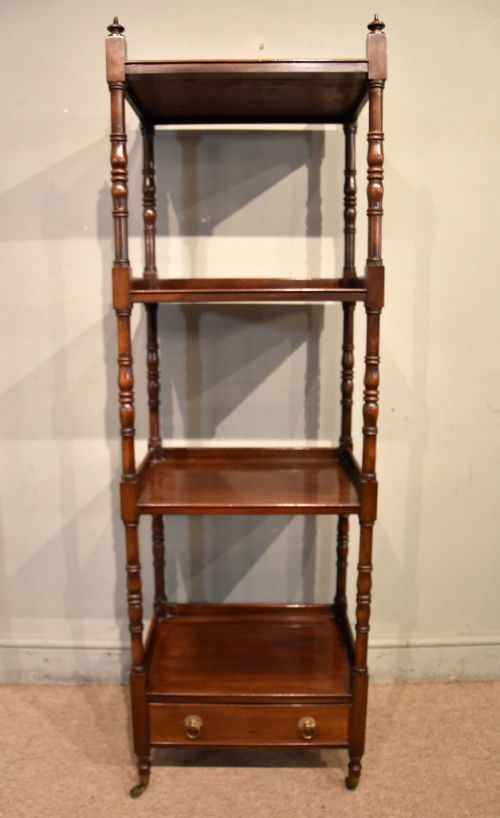
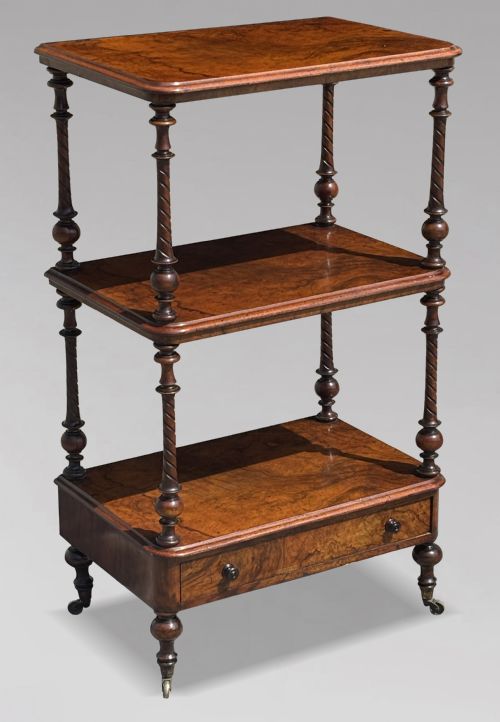
The open corner bookcase search phrase covers multi-tiered display stands, etageres, and whatnots that make practical use of neglected room angles. You will frequently encounter tiered mahogany or walnut shelves from the Victorian and Edwardian eras, designed for books and display.
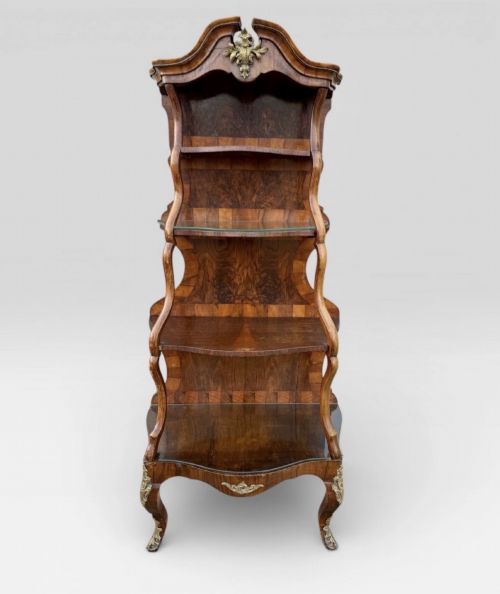
Makers and manufacturers ranging from the eighteenth century onwards produced these pieces in forms varying from simple three-tier stands to elaborate six-tier rosewood and burr walnut constructions with inlaid details and brass fittings.
What varies in quality
Quality rests primarily on the choice of timber and the crispness of the secondary decoration, such as intricate brass mounts or precise marquetry inlay. Pieces utilising heavily figured burr walnut or select rosewood sit firmly above standard utility items.
Construction methods also dictate standard; superior examples exhibit robust tier supports, carefully fitted joints, and balanced proportions that maintain stability across multiple stacked shelves.
Listings for this phrase frequently span the Georgian, Victorian, and Edwardian periods, utilising mahogany, walnut, rosewood, and brass.
Goodhall Lamb and Heighway
The Open Corner Bookcase Glossary
- Whatnot
- An open shelving unit with multiple tiers used for displaying ornaments or books. These pieces became particularly popular during the Victorian period.
- Etagere
- A piece of furniture consisting of a set of open shelves for displaying small objects or ornaments. The term is often used interchangeably with whatnot.
- Inlay
- A technique where contrasting materials such as lighter woods are inserted into the primary timber surface to form decorative patterns. This is commonly seen on walnut and mahogany pieces.
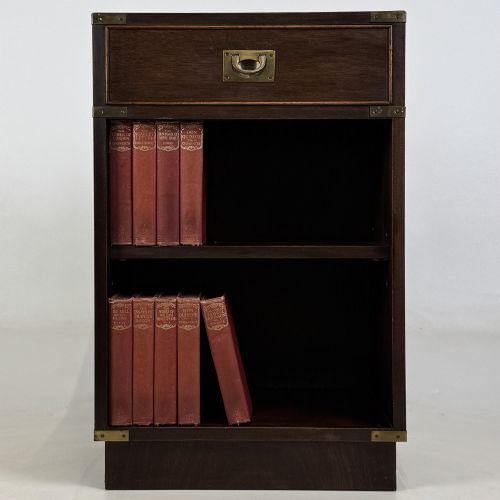
- Campaign style
- Furniture designed for easy dismantling and transport, typically featuring recessed brass handles and corner brackets. It reflects military portability.
- Burr walnut
- A prized timber cut from the warted growths on walnut trees, yielding complex swirling grain patterns. It was favoured for high-status cabinet work.
Open Corner Bookcase: Frequently Asked Questions
What is an open corner bookcase used for?
These pieces provide accessible storage and display space specifically engineered to fit room corners. They hold books, ceramics, and decorative objects without dominating floor space.
Historically, they served in parlours and drawing rooms to exhibit prized possessions. Today, they perform the same functional role in domestic interiors.
How do I identify a Victorian open corner bookcase?
Victorian examples frequently utilise dark dense timbers like rosewood and walnut, often incorporating turned columns, fretwork, or multiple tiers. Look for characteristic timber ageing and traditional joinery methods.
Later Victorian pieces from the late nineteenth century may also feature delicate inlay work and mirrored elements reflecting the aesthetic tastes of the period.
Are these bookcases sturdy enough for heavy books?
Most multi-tiered whatnots and etageres were built for decorative displays and lighter volumes rather than heavy folio books. The structural integrity depends on the upright supports and the fixing of each tier.
Examining the corner supports and upright columns will reveal whether a piece can safely bear significant weight across its shelves.
What is the difference between a whatnot and an etagere?
While both terms describe multi-tiered open shelving units, whatnot is a traditional British term frequently applied to nineteenth-century corner stands. Etagere often implies a French influence or a lighter decorative focus.
In practice, makers and dealers used both labels for similar shelved furniture designed to maximise corner spaces.