




Rococo Corner Cabinet
A rococo corner cabinet brings fluid asymmetric curves and rich timber into a room, turning a neglected angle into a decorative focus.
Rococo Corner Cabinet
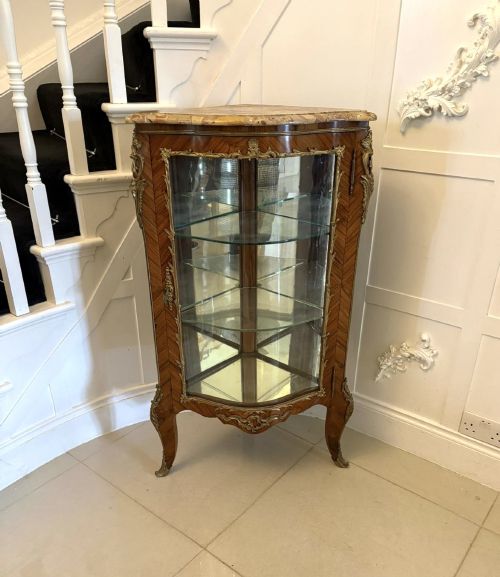
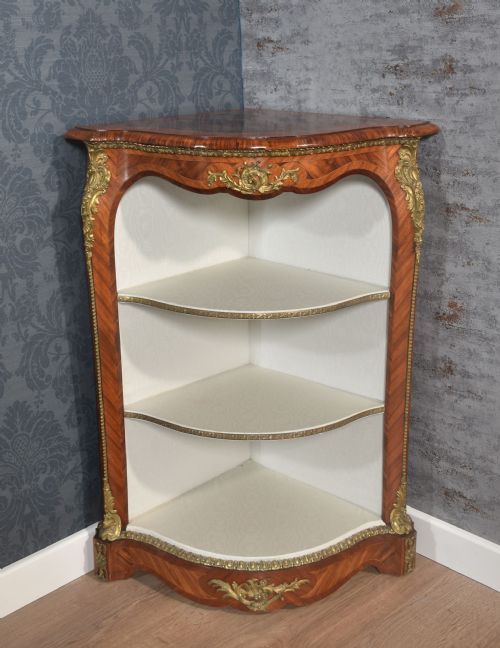
A rococo corner cabinet transforms a room's unused angles into elegant display or storage space, adopting the sweeping C and S scrolls characteristic of the style. The forms appearing on this page span several centuries and regions, uniting architectural utility with ornate continental flair.
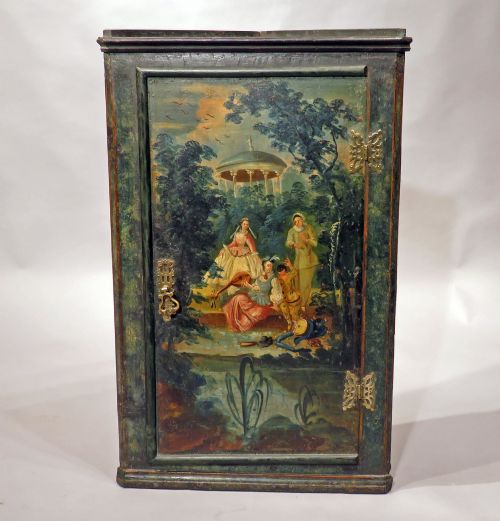
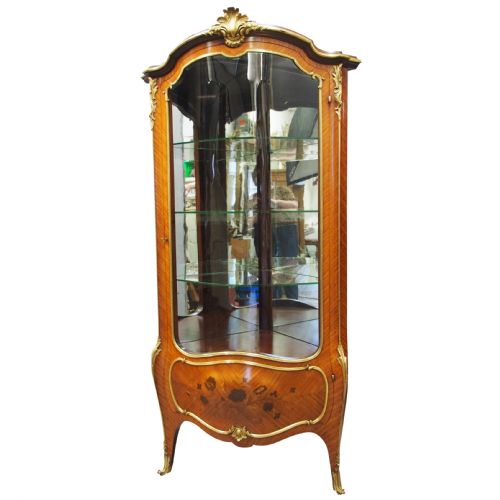
Buyers meet varied iterations ranging from grand freestanding display vitrines to compact painted hanging cupboards. Pieces from the eighteenth century rub shoulders with later nineteenth century revivals, offering both floor-standing bombé shapes and wall-mounted versions.
Origins shift across national borders, encompassing French, Italian, and Dutch workshops alongside Victorian interpretations. The core structure consistently respects the ninety-degree junction of a room while softening the transition with curved fronts and decorative mounts.
Materials and construction
Ormolu mounts, brass fittings, and marble tops provided structural contrast and opulent detailing to the wooden frames. Glazed doors and mirrored backings further enriched the construction, designed to catch and reflect candlelight within domestic interiors.
Pieces span the eighteenth and nineteenth centuries, including specific Victorian and Louis XV revival styles.
Assessing quality and craftsmanship
Superior examples reveal themselves through the precision of the parquetry, the crispness of the carved or cast ormolu mounts, and the fluid symmetry of the serpentine or bombé curves. The integration of marble tops and the quality of the timber veneers distinguish exceptional commissions from simpler provincial work.
The harmony of proportion between the cabinet body and its decorative hardware indicates the maker's skill. Finer pieces maintain structural integrity while displaying delicate decorative flourishes that resist heavy or clumsy execution.
The Rococo Corner Cabinet Glossary
- Bombe
- A bulging, outward-curving swell to the front and sides of a piece of furniture. This profile requires high joinery skill to execute successfully.
- Ormolu
- Gilded bronze used for decorative mounts and feet. The technique involves applying a mercury and gold amalgam to bronze.
- Parquetry
- Geometric wood-mosaic work used for covering floors or furniture surfaces. Artisans fit contrasting wood veneers together in precise repeating patterns.
- Serpentine
- A line or surface that curves outward in the middle and inward at the sides. It creates a dynamic movement across the front of a cabinet.
- Vitrine
- A glass-fronted cabinet designed for displaying fine objects or porcelain. These enclosures protect delicate items while offering clear visibility from multiple angles.
Rococo Corner Cabinet: Frequently Asked Questions
Where should I place a corner cabinet?
These cabinets fit neatly into ninety-degree wall junctions, making use of space that standard rectangular furniture cannot occupy.
They serve effectively in dining rooms for porcelain display or in living areas to soften stark architectural angles.
How do I care for kingwood veneer?
Keep wooden surfaces away from direct sunlight and heat sources to prevent the veneers from drying and cracking over time.
Dust gently with a soft cloth and avoid chemical polishes that might damage the historic finish.
How do I distinguish eighteenth-century pieces?
Early pieces often display hand-cut joinery, pegged construction, and patinated timber surfaces shaped by age.
Later nineteenth-century revivals often incorporate machine precision and specific revival styling markers from the period.