


Victorian Copper Hearth Guard
These victorian copper hearth guard pieces bring warmth and texture to a fireside, combining practical hearth protection with striking metalwork.
Victorian Copper Hearth Guard
A victorian copper hearth guard encompasses hearth protection and screens designed to contain embers and reflect warmth into a room. These pieces span the nineteenth century and into the early twentieth century, incorporating Victorian, Edwardian, Arts and Crafts, and Art Nouveau design influences.
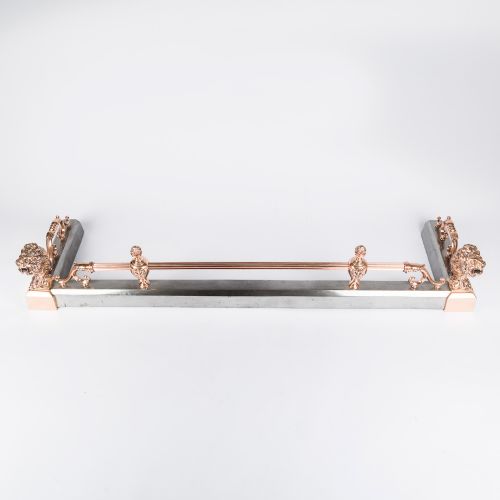
The selection ranges from low floor fenders and kerbs to standing fire screens and club fenders with leather seats. Buyers will frequently encounter copper panels combined with brass, iron, or steel frames.
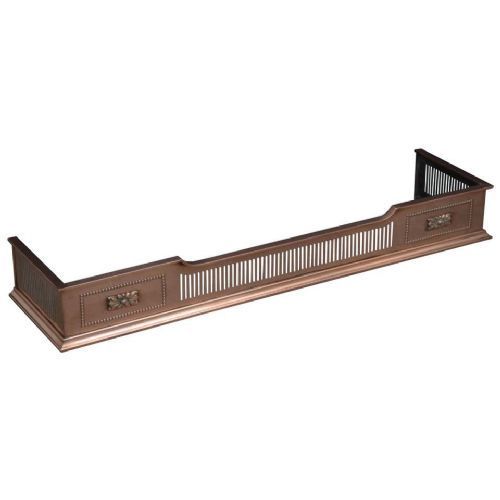
Origins stretch across English and Scottish workshops, alongside continental pieces such as French fire reflectors. Forms vary from simple riveted construction to elaborate decorative framing featuring floral patera.
Materials and construction
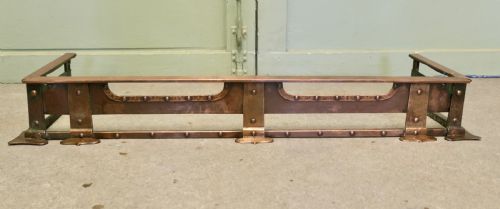
Makers shaped sheet copper over iron, steel, or brass armatures to build sturdy hearth surrounds and screens. Rivets feature prominently in Arts and Crafts examples, joining plates directly to structural frames.
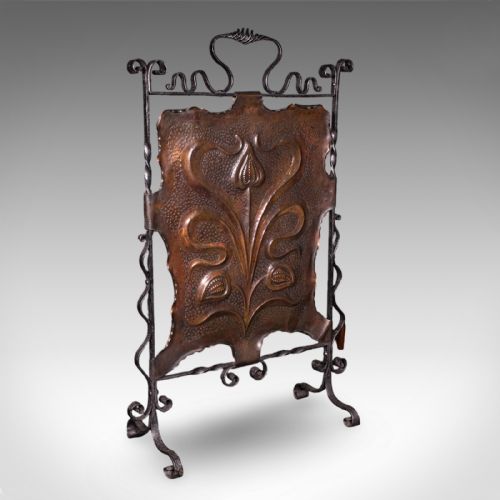
Surface ornamentation relied on hand-beating, repoussé work, and applied brass motifs like flower patera. Leather upholstery appears on club fender variations, providing integrated fireside seating.
Listings feature periods spanning from the Victorian era and the nineteenth century through to Edwardian and early twentieth-century designs.
Judging quality and execution
The distinction between standard production and superior work lies in the depth of hand-hammered detail and the weight of the underlying metal frame. Heavier gauge copper and secure, neat riveting separate finer workshop pieces from lighter commercial items.
Design integration also dictates worth, where fluent Art Nouveau lines or disciplined Arts and Crafts construction display greater artistic intent. The crispness of embossed motifs and the quality of secondary metals like brass or wrought iron complete the assessment.
The Victorian Copper Hearth Guard Glossary
- Fender
- A low metal guard placed around the hearth to keep coals and ash from spilling onto the floor. They are often made of brass, iron, or copper.
- Fire screen
- A movable panel placed before the fireplace to block excessive heat when the fire dies down. Many examples utilise reflective copper surfaces.
- Club fender
- A low-padded hearth surround featuring upholstered seats at either end. This form allows people to sit close to the fire.
- Patera
- A circular ornamental motif resembling a classical libation dish, frequently stamped or applied to metalwork. It forms a key decorative element on Victorian pieces.
- Repoussé
- A metalworking technique where the metal is hammered from the reverse side to form a raised design in relief. This method defines many decorative copper panels.
Victorian Copper Hearth Guard: Frequently Asked Questions
What is a club fender?
A club fender is a low metal hearth surround featuring integrated leather seats at either end. It originated in gentlemen's clubs to provide comfortable fireside seating.
These pieces combine functional ember protection with practical furniture, making them a sociable addition to a traditional fireplace.
How do I clean antique copper?
Antique copper benefits from gentle dusting and occasional cleaning with a non-abrasive metal polish to remove harmful tarnish. Collectors generally prefer to preserve a warm, aged patina rather than achieving a bright mirror finish.
Avoid harsh chemical cleaners that strip the historic surface character from Victorian metalwork.
Are fire screens still functional?
Historic fire screens serve effectively to block residual heat and drafts when the fireplace is not actively burning. Their reflective metal panels also bounce natural light around a room.
Care should be taken with placement if the hearth is in regular use to prevent excessive soot accumulation.
How do I identify Arts and Crafts copper?
Arts and Crafts copper work typically displays visible riveted construction, hand-beaten textures, and honest expression of materials without excessive machine finishing. Designs draw inspiration from nature, avoiding rigid symmetry in favour of fluid movement.
Maker signatures or workshop marks occasionally appear stamped on the reverse or underside of the panel.