
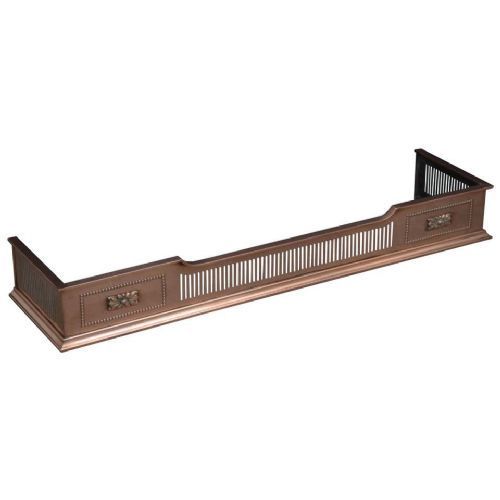


Antique Copper Fender
An antique copper fender frames the hearth, bringing warmth and character to the fireplace with its distinct metalwork.
Antique Copper Fender
An antique copper fender forms the protective barrier around a fireplace hearth, combining practicality with period design. These pieces anchor the fireplace surround while keeping stray embers safely contained on the hearth floor.
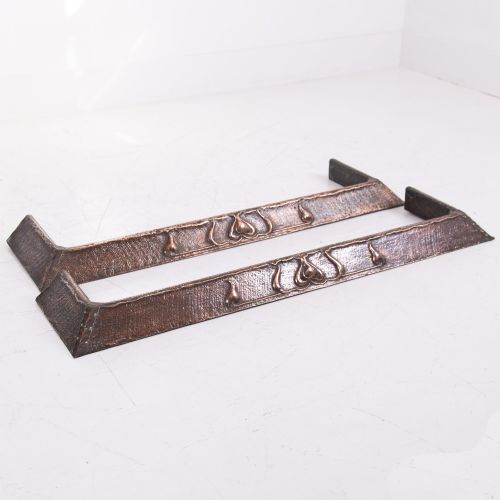
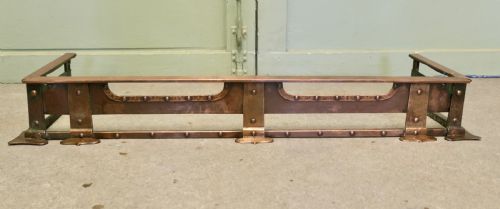
Buyers most frequently encounter Victorian and Edwardian examples on this page, often bearing the characteristic hand-worked details of the Arts and Crafts and Art Nouveau movements. These versions range from simple riveted surrounds to low club fenders topped with padded leather seats.
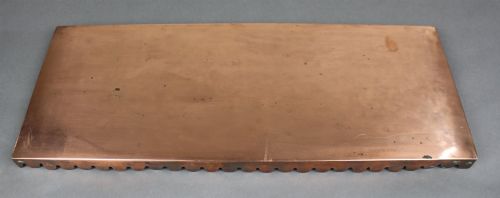
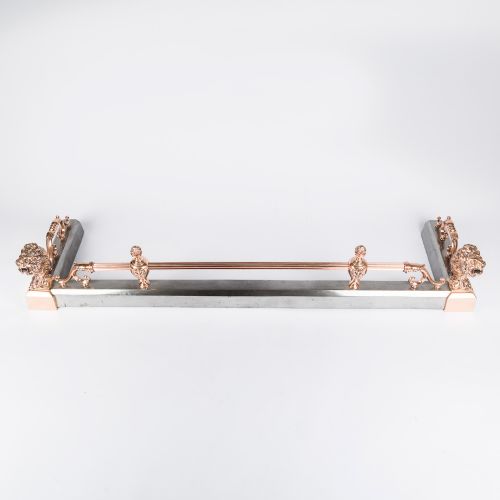
The selection encompasses diverse forms including hearth plates, fire kerbs, and framed surrounds spanning the nineteenth and early twentieth centuries. Copper is frequently paired with brass, steel, or iron to create contrast and structural rigidity.
Materials and construction methods
Makers shaped sheet copper over iron or steel frames, securing the joints with hand-beaten rivets or soldering methods. This construction provided the necessary rigidity to withstand the heat and daily wear of an active hearth.
Surface decoration relies heavily on hand-beating, repoussé work, and applied motifs such as flower patera or beaded borders. Many pieces combine copper bodies with brass feet, rails, or linear trim to accentuate the warm metallic tones.
Listings feature pieces spanning the Victorian, Edwardian, and Georgian periods, alongside Arts and Crafts and Art Nouveau styles.
Assessing quality and craftsmanship
The distinction between standard production and superior work lies in the depth and execution of the metalworking. Hand-beaten Arts and Crafts pieces with crisp rivet placement and substantial gauge metal sit at the upper end of the range.
Design integration also dictates quality, where proportion and the harmonious blending of copper with brass or leather create a balanced focal point for the room. Simpler mass-produced kerbs show less textural depth and lighter metal thickness.
The Antique Copper Fender Glossary
- Club fender
- A low fireside surround featuring upholstered corner seats, popular in the Edwardian period and late Victorian era. These padded seats allowed people to sit close to the fire for warmth.
- Patera
- A circular ornamental motif resembling a classical dish, often pressed or applied to the metal surface. These decorative details punctuate the corners and friezes of Victorian fenders.
- Repoussé
- A metalworking technique where the artisan hammers the design from the reverse side to create a raised relief on the front. This method gives Arts and Crafts copper fenders their tactile, textured appearance.
- Hearth plate
- A flat metal sheet extending in front of the fireplace opening to protect flooring from sparks. Georgian and Victorian examples frequently feature scalloped edges.
Antique Copper Fender: Frequently Asked Questions
What is an antique copper fender used for?
An antique copper fender sits on the floor around the fireplace hearth to prevent hot coals and sparks from damaging surrounding carpets or floorboards.
Beyond safety, these pieces frame the fireplace and serve as a decorative anchor for the room's interior scheme.
How do I clean an antique copper fender?
Maintenance typically involves gentle dusting with a soft cloth to preserve the aged surface and natural patina accumulated over decades.
Harsh metal polishes should be avoided unless removing active corrosion, as abrasive cleaning strips away the desirable historical character.
How do I date an antique copper fender?
Dating relies on stylistic clues, such as the flowing organic lines of Art Nouveau or the hand-hammered honesty of the Arts and Crafts movement.
Construction techniques like hand-cut joinery, iron framing, and material combinations also point towards specific nineteenth and early twentieth-century periods.
What is a club fender?
A club fender is a specialised fireside surround built with low upholstered seats integrated into the corners.
Originating in gentlemen's clubs and large country houses, these versatile items allowed sitters to warm themselves directly by the hearth fire.