

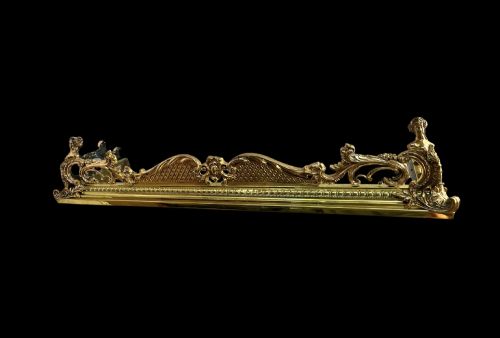
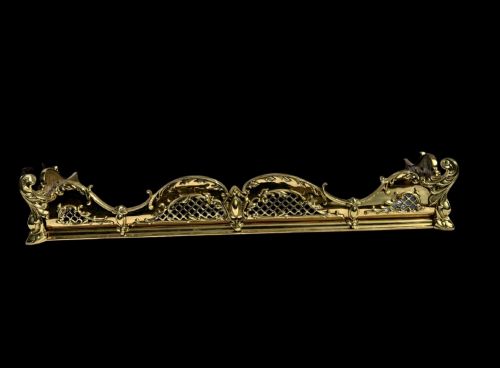


Ornate Brass Fireplace Fender
An ornate brass fireplace fender anchors the hearth with period weight, bringing chased detail and adjustable length to an active fireplace.
Ornate Brass Fireplace Fender
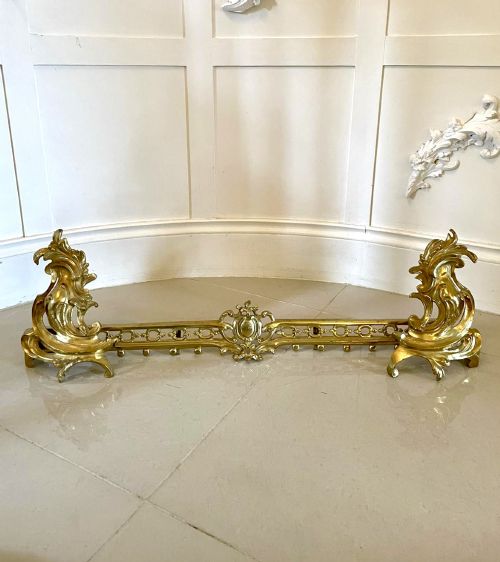
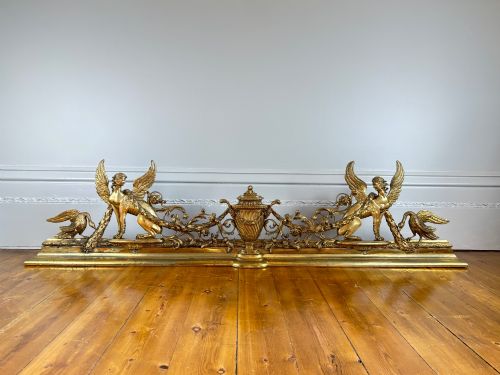
When you search for an ornate brass fireplace fender, you encounter hearth furniture designed to contain stray embers while defining the domestic fireplace. The selection centres on Victorian and nineteenth-century examples, ranging from English adjustable kerbs to French Rococo and Louis XV style pieces.
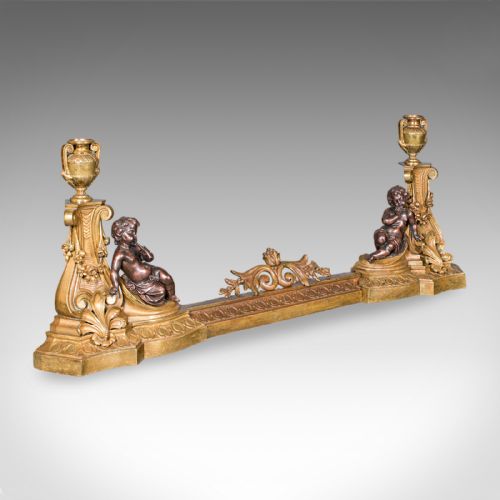
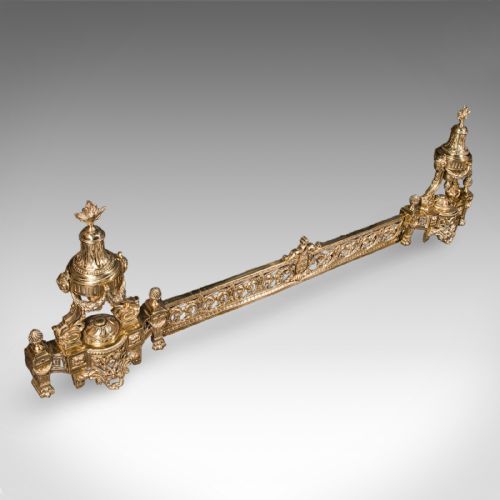
Many items combine brass with bronze, gilt bronze, ormolu, and cast iron, often incorporating extending mechanisms or paired chenets. These accessories appear across periods including 1860, 1890, 1900, and 1920, reflecting diverse revival aesthetics from Neoclassical to Gothic.
The primary forms include fireplace fenders, hearth fenders, and fire curbs, frequently detailed with garlands, pierced mounts, and polychrome finishes. Each piece functions as both a functional barrier and an ornamental centrepiece for period interiors.
Materials and construction
Maker workshops utilised cast brass and cast iron to form the structural body and heavy frames of each hearth guard. These foundations provided the necessary weight to remain stable against the hearth stone.
Surface embellishment relied on gilding, ormolu, and gilt bronze, creating contrasting metallic sheens through applied chemical finishes and fire gilding. Details such as brass garlands and decorative mounts were individually cast and secured to the main body.
Listings feature Victorian, 19th Century, 1860, 1890, 1900, and 1920 periods.
Markers of quality
Depth of casting and crispness in chased ornamentation distinguish superior examples from standard production pieces. Fine execution appears in the sharpness of rococo scrolls and the precise articulation of applied garlands.
Substantial gauge metal and robust extending mechanisms indicate higher manufacturing standards. Heavier brass and bronze components ensure the fender retains structural integrity during daily use around the hearth.
E F Caldwell New York
The Ornate Brass Fireplace Fender Glossary
- Fender
- A low metal kerb placed around the hearth to keep coals and ash from spilling onto the floor. This barrier sits directly on the carpet or stone surrounding the fireplace opening.
- Ormolu
- Finely ground high-carat gold applied to a bronze or brass object using a mercury amalgam technique. This decorative coating yields a rich, warm lustre characteristic of French revival pieces.
- Chenet
- An ornamental metal fire dog or andiron placed at the front of a hearth, often matched stylistically with a companion fender. They provide vertical decorative accents to the fireplace assembly.
- Kerb
- An alternative term for the low protective border enclosing the hearth area. It designates the structural frame that defines the perimeter of the fireplace base.
- Gilt Bronze
- Bronze metal treated with a thin layer of gold leaf or wash to simulate solid gold. The technique highlights intricate relief work on nineteenth-century decorative hardware.
Ornate Brass Fireplace Fender: Frequently Asked Questions
How do I adjust the fender length?
Many nineteenth-century examples feature a sliding telescopic mechanism that allows the side sections to expand or contract within a central channel. This enables the piece to fit varying fireplace hearth widths precisely.
Care should be taken when extending older metals to avoid stressing historical joints or locking pins. A gentle alignment ensures the brass glides smoothly without damaging the decorative corners.
Can I use these with an active fire?
These pieces were originally constructed to contain hot ash and embers from open coal or wood fires in period homes. Their heavy brass and iron frames withstand standard domestic hearth heat.
Modern users should verify that the floor clearance and surrounding materials comply with current safety regulations. Periodic cleaning of soot prevents accumulation on delicate gilt or ormolu surfaces.
How do I date a brass fender?
Stylistic indicators such as Rococo Revival scrolls, Louis XVI Neoclassical symmetry, or Victorian Gothic motifs offer initial chronological markers. Construction methods, including the type of casting sand used and the style of fasteners, help narrow the decade.
Makers' marks or stamps, when present, provide definitive attribution to specific firms or exhibitions. Comparing the weight and chased detail against known nineteenth-century production standards further refines the age.
What is the difference between brass and ormolu?
Brass is an alloy composed primarily of copper and zinc, valued for its bright golden appearance and durability in structural hearth furnishings. It forms the main body of most English and Victorian fenders.
Ormolu specifically denotes a gilded bronze or brass surface finish achieved through historical mercury-gilding processes. This treatment imparts a deeper, more luminescent golden tone typically found on French decorative pieces.