

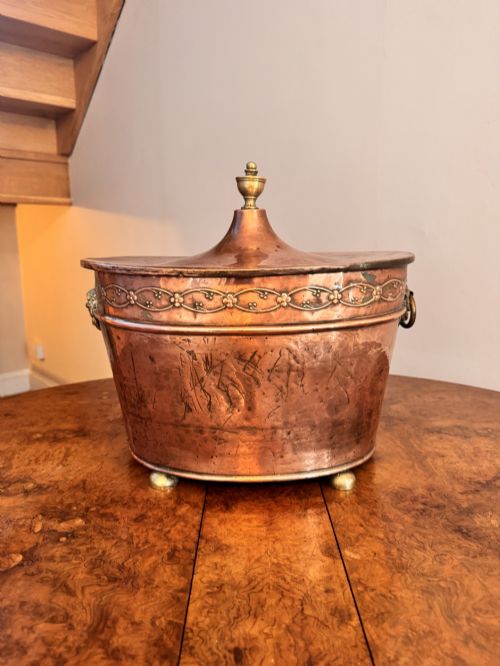
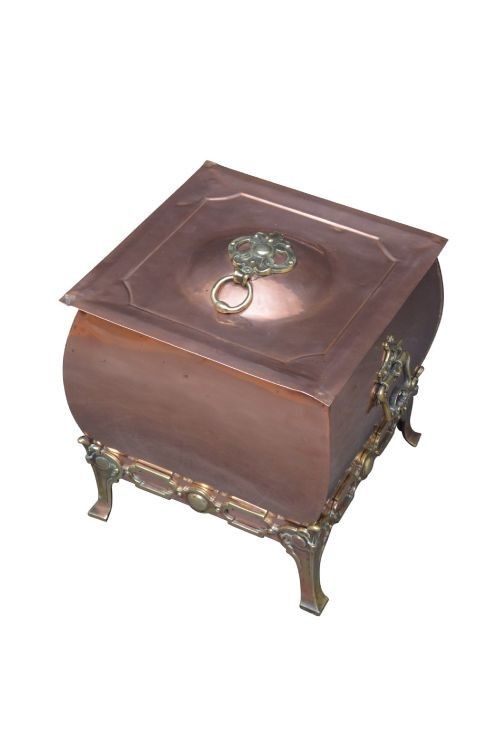


Victorian Copper Coal Box
A victorian copper coal box brings functional warmth to the hearth through hammered metal and brass fittings.

Victorian Copper Coal Box
A victorian copper coal box serves as both a practical fuel container and a decorative fireside accessory. These pieces span from the mid nineteenth century into the edwardian and later eras, reflecting changing domestic tastes around the hearth.
The versions most commonly met on this page include traditional coal scuttles, helmet coal boxes, and purdonium buckets alongside oval planters and log bins. Many examples incorporate brass handles and hinges, while others combine copper bodywork with wrought iron or oak elements.
Makers and artisans of the period drew upon victorian and arts and crafts design vocabularies. The forms range from plain riveted metal bodies to embossed surfaces featuring leaf motifs or galleon designs.
How they were made
Makers utilised sheet copper for the primary body, frequently joining plates with visible rivets or folded seams. Brass was selected for trim, handles, and fixings to provide a contrasting metallic tone against the warm copper surface.
Wrought iron and oak appear in supporting roles, particularly within arts and crafts interpretations that emphasise robust construction and structural honesty. Embossing and repoussé techniques were applied directly to the metal to create decorative panels depicting foliage or figurative scenes.
Victorian Copper Coal Box Retail Price Guide 2026
Typical asking prices for victorian copper coal box among the pieces listed under this phrase on Sellingantiques today, from the lower quarter to the upper quarter. They describe what is for sale here now, not the wider market.
Some coal boxes doubled as luggage carriers, storing fuel by day and doubling as travelling companions for ambitious hearths.
What varies in quality
Quality rests upon the gauge of the copper sheet and the integrity of the structural joints. Heavier metal gauge prevents denting and ensures the container bears the weight of fuel without sagging.
The refinement of the surface decoration separates standard utilitarian pieces from finer arts and crafts examples. Crisp hand-embossing and well-cast brass handles indicate superior craftsmanship compared to plain stamped alternatives.
The Victorian Copper Coal Box Glossary
- Purdonium
- A dedicated coal box featuring a sloping front flap and a shovel stored in an internal compartment. This form kept fuel neatly contained beside the fireplace.
- Helmet scuttle
- A coal container shaped like a classical helmet with a high back and a tipped spout for pouring fuel. These typically rest on a circular foot and feature a swinging handle.
- Repoussé
- A metalworking technique where the artisan hammers the design from the reverse side to raise relief patterns on the surface. This method appears frequently on arts and crafts pieces.
- Gladstone bag
- A rigid framed box shape adopted for fireside storage containers, mimicking the style of traditional travelling luggage. It provides a distinct rectangular silhouette.
- Fender
- A low metal barrier placed around the hearth to contain sparks, sometimes combined with integrated coal boxes or seating.
Victorian Copper Coal Box: Frequently Asked Questions
What is a purdonium?
A purdonium is a specialised coal box featuring a sloping front door that drops forward to release fuel. They often house a metal shovel in an interior slot.
These pieces were designed to sit neatly beside the fireplace while concealing the coal from view.
How do I clean a copper coal box?
Copper requires gentle cleaning to preserve its historic finish rather than a bright modern shine. Warm soapy water and a soft cloth remove accumulated dust without stripping the patina.
Avoid harsh abrasive compounds that can scratch the soft metal surface or damage embossed details.
Are these boxes only for coal?
While originally built to hold solid fuel for open fires, contemporary homes utilise them for multiple purposes. They function well as log bins, magazine holders, or large planters.
Their robust construction handles heavier dry materials without difficulty.
How do I distinguish arts and crafts pieces?
Arts and crafts examples showcase hand-worked surfaces, visible riveted joints, and ironwork details. The ornamentation often highlights natural forms such as leaves rather than formal victorian patterns.
Makers working in this tradition prioritised visible craftsmanship and honest construction over machine-stamped uniformity.