

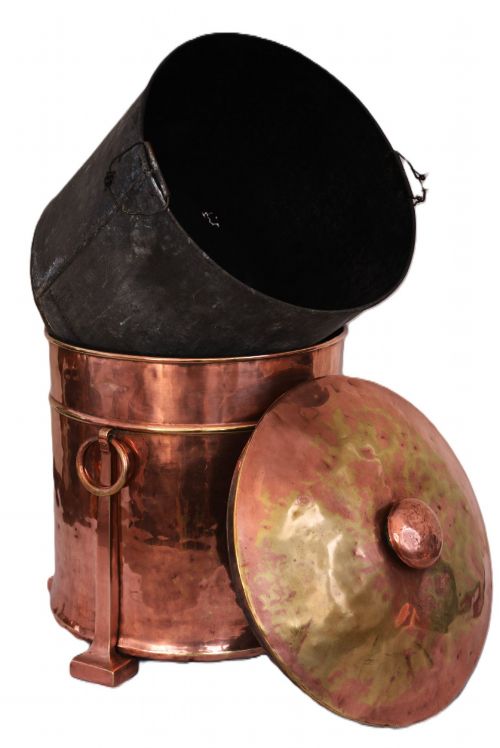


Hammered Copper Log Store
A hammered copper log store brings robust texture and warmth to a fireside, combining practical fuel storage with distinct period craftsmanship.

Hammered Copper Log Store
A hammered copper log store acts as a heavy-duty fireside container designed to hold solid fuel and firewood neatly beside the hearth. When searching for a hammered copper log store, buyers encounter robust vessels originating from the nineteenth and early twentieth centuries, spanning Victorian, Edwardian, Arts and Crafts, and Art Nouveau styles.
The inventory on this page consists principally of coal buckets, coal boxes, coal bins, scuttles, vessels, and log boxes. These functional items emerged from periods including the 1850s, 1860s, 1890s, and around 1900, reflecting the domestic metalwork traditions of those eras.
Many examples double as coal keepers or purdonium boxes, often incorporating brass, iron, wrought iron, or oak alongside the primary metal. The forms range from heavy grain measures adapted for domestic hearths to dedicated fireside helmets and riveted storage bins.
How they were made
Makers constructed these vessels primarily from heavy sheet copper, often incorporating brass fittings, iron reinforcement, and occasionally oak components for structure and contrast. Artisans shaped the metal manually, using hammers to beat the surface and create the characteristic textured finish seen on Arts and Crafts and Victorian pieces.
Joining techniques relied heavily on visible riveting to secure handles, seams, and hinges, ensuring durability for daily heavy use holding logs and coal. Some items also feature copper plating applied over base metals, combining visual warmth with structural rigidity.
Hammered Copper Log Store Retail Price Guide 2026
Typical asking prices for hammered copper log store among the pieces listed under this phrase on Sellingantiques today, from the lower quarter to the upper quarter. They describe what is for sale here now, not the wider market.
Current listings demonstrate a strong presence of Victorian and Edwardian items, utilising copper alongside brass, iron, wrought iron, and oak.
What varies in quality
The standard of a hammered copper log store depends heavily on the weight of the metal and the precision of the hand-beating. Thicker gauge copper resists dents and maintains structural integrity better over generations of fireside use.
Execution of decorative details, such as the neatness of riveted joints and the integration of contrasting brass or oak elements, distinguishes standard utility items from finer Arts and Crafts or Art Nouveau examples.
The Hammered Copper Log Store Glossary
- Arts and Crafts
- A design movement emphasising handcraftsmanship, simple forms, and traditional medieval or folk construction methods. It heavily influenced late nineteenth and early twentieth-century metalwork.
- Art Nouveau
- An international style of art, architecture, and applied art characterised by stylized, flowing, organic motifs. This aesthetic often appears on decorative copper coal buckets from the turn of the twentieth century.
- Purdonium
- A specialised household coal box or bin, typically featuring a downward-sloping front flap and a shovel stored in a compartment at the back or side. They became popular in Victorian drawing rooms.
- Helmet Scuttle
- A fireside coal container shaped like a classical helmet with a flared lip and a swinging handle. It is designed for easy carrying and pouring of fuel onto the fire.
- Grain Measure
- A cylindrical agricultural vessel, often made of heavy copper or wood, repurposed for domestic firesides as a log bin. These items display utilitarian strength and robust proportions.
Hammered Copper Log Store: Frequently Asked Questions
What is a hammered copper log store?
A hammered copper log store is a period fireside container designed to hold firewood and solid fuel next to a hearth. These items combine practical domestic utility with decorative metalwork.
They appear in various historic styles, most notably Victorian and Arts and Crafts, utilising beaten metal surfaces to catch and reflect firelight.
How do I date a copper log bin?
Dating relies on observing construction methods, material combinations, and stylistic markers such as Arts and Crafts hand-beating or Victorian proportions. Riveting techniques and secondary materials like oak or brass offer further clues to the decade of manufacture.
Items from the mid-nineteenth century often display heavier utilitarian forms, whereas turn-of-the-century pieces frequently embrace flowing Art Nouveau motifs.
Were these originally for logs or coal?
Many vessels categorized today as log stores served initially as coal buckets, coal bins, or purdoniums in period households. Their robust metal construction suited the heavy demands of storing and transporting solid fuel.
Today, their generous proportions and durable linings make them equally well-suited for holding modern fireplace logs.
How do I clean an antique copper log store?
Maintaining these pieces involves dusting regularly and deciding whether to preserve the accumulated patina or polish the metal surface. Harsh chemical cleaners can strip historical character from antique copper.
Gentle wiping with a soft cloth maintains the material without removing the signs of age that collectors value.