


Copper Fire Bucket
A copper fire bucket brings utilitarian history indoors, doubling as a robust hearthside container for logs and coal.
Copper Fire Bucket
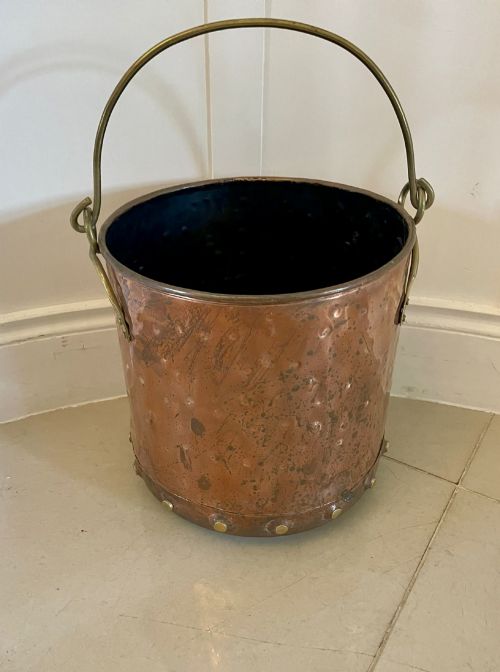
A copper fire bucket functions as a practical fireside accessory, repurposed today predominantly as a log bin, coal scuttle, or planter. These items originate mainly from the Georgian and Victorian eras, extending into the Arts and Crafts period around nineteen hundred.
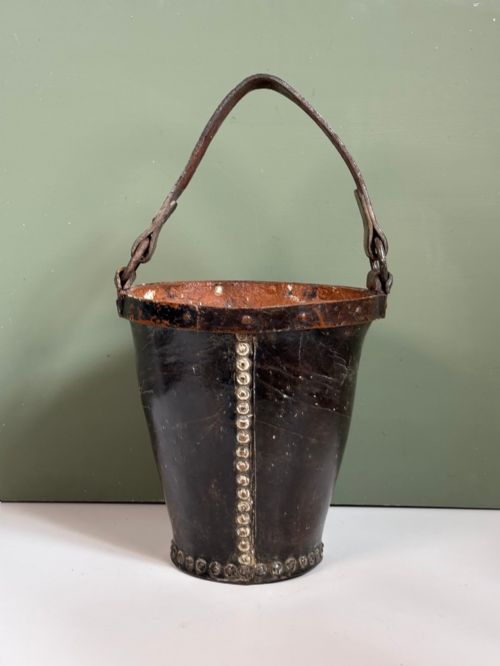
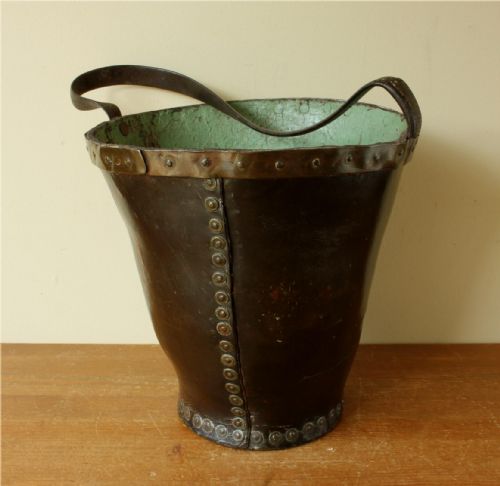
The versions most commonly met on this page combine hammered or riveted copper bodies with brass swing handles, iron mounts, and sometimes zinc or tin linings. Alongside metal examples, sturdy boiled leather fire buckets reinforced with copper studs and rims appear from the eighteenth and nineteenth centuries.
Makers fashioned these vessels for domestic utility, municipal fire safety, and country house hearths, shaping forms that range from simple cylindrical buckets to helmets, cauldrons, and ferrats.
How they were made
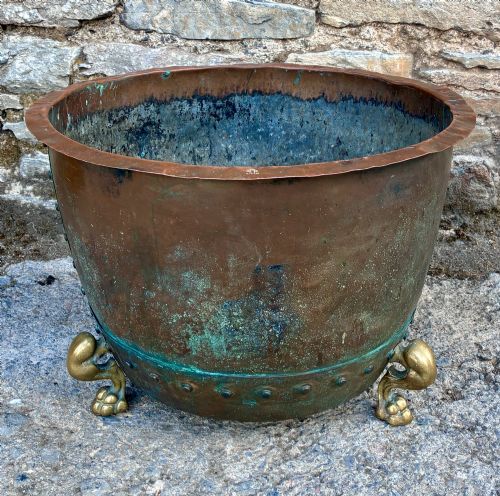
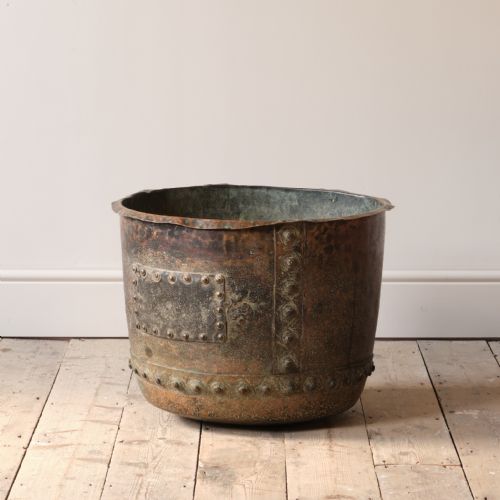
Craftsmen built these pieces primarily from sheet copper joined with visible hand-beaten rivets, attaching contrasting brass handles, rims, and paw feet for structural strength. Iron reinforcements provided additional rigidity to heavy-duty vessels intended to carry coal or water.
Older utility buckets utilised boiled leather treated for water resistance, secured with heavy copper studs and fitted with thick metal rims to withstand rough handling.
Arts and Crafts examples display surface patination and hand-hammered detailing, reflecting an aesthetic that valued visible tool marks over machine-smoothed uniformity.
Some eighteen-hundreds leather fire buckets still bear royal coats of arms stamped onto the leather to prove official parish readiness.
What varies in quality
The integrity of the construction dictates overall quality, distinguishing heavy-gauge riveted vessels from thinner, lighter stampings. Original mounts, matching brass handles, and authentic period fixings carry more weight among collectors than later replacements.
Surface finish also plays a role, with natural verdigris, weathered patination, and undisturbed age marks preferred over overly polished or stripped metal.
The presence of maker stamps or crests elevates certain utilitarian pieces into distinct decorative objects.
Bamfords·Percy Metal Works London
The Copper Fire Bucket Glossary
- Ferrat
- A traditional French bucket or vessel style often utilised as a log holder or planter. These pieces typically feature sturdy metal construction suitable for fireside use.
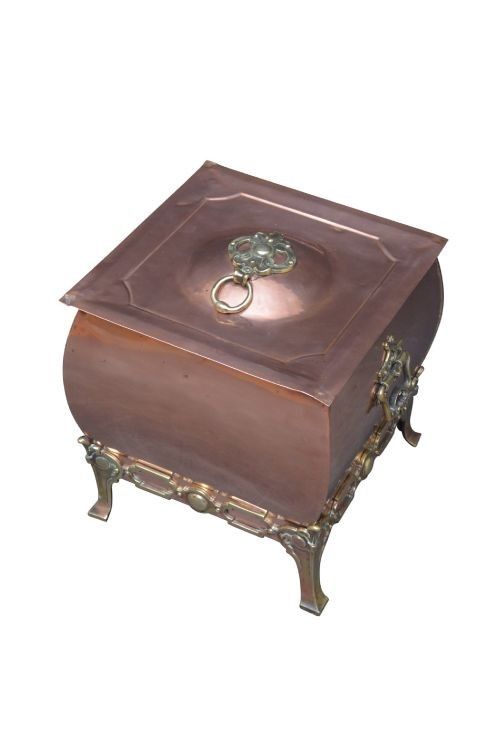
- Purdonium
- A specialised box or scuttle designed for storing coal beside the fireplace. They frequently incorporate hinged lids and internal scoops.
- Boiled leather
- An ancient hardening technique where leather is submerged in hot water, wax, or oil to create rigid, water-resistant containers. These were widely adapted for early fire buckets.
- Riveted
- A method of fastening overlapping metal sheets together using solid metal pins hammered flat at the ends. This technique provides both industrial strength and a distinct decorative border.
- Verdigris
- The green patina formed naturally on copper and brass through atmospheric oxidation over decades. Collectors often value this stable weathering for its historic appearance.
Copper Fire Bucket: Frequently Asked Questions
How were fire buckets originally used?
Communities and large households kept leather and metal buckets filled with water near doorways to tackle sudden blazes before professional fire brigades existed.
Over time, as municipal firefighting advanced, these sturdy waterproof vessels moved indoors to serve as convenient holders for hearthside coal and logs.
Can I use an antique bucket outdoors?
Many of these copper and leather vessels adapt well to garden use as planters for small trees or flowers, provided they handle moisture without leaking.
Weathered copper develops natural verdigris outdoors, though protecting vulnerable iron components helps preserve the structural frame.
How do I date a copper bucket?
Early eighteenth and nineteenth-century pieces often feature boiled leather construction with hand-hammered copper rivets, whereas later Victorian examples lean toward machine-rolled sheet metal and brass swing handles.
Arts and Crafts pieces from the late nineteenth and early twentieth centuries display distinct hand-beaten surfaces and decorative strapwork characteristic of the movement.
Are leather fire buckets waterproof?
Original boiled leather buckets were treated to hold water safely for firefighting duties, though age can cause the hide to dry out and soften.
Using a modern inner liner protects historic leather from moisture damage when utilising the vessel for logs or indoor plants.