




Victorian Copper Basin
When you search for a victorian copper basin, you seek a robust metal vessel that brings practical warmth and history into a modern room.
Victorian Copper Basin
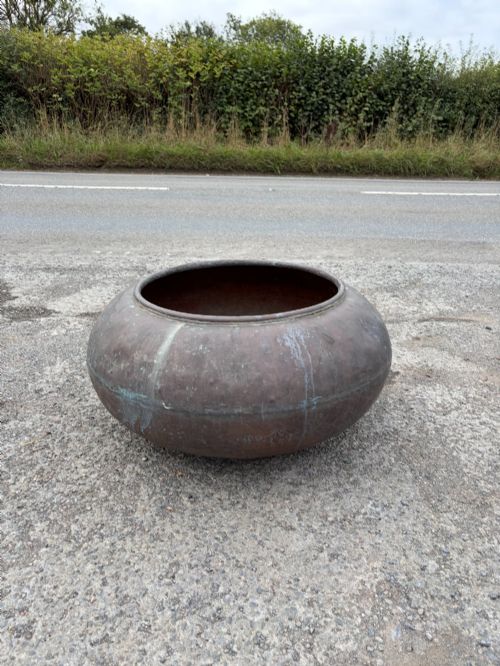
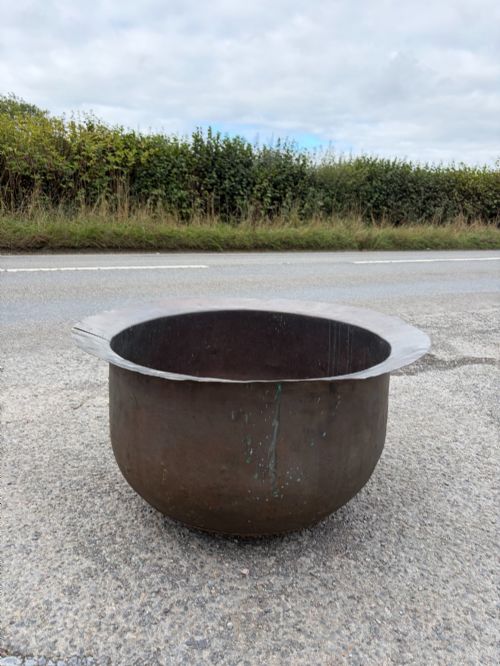
A victorian copper basin encompasses domestic cookware, deep preserving pans, log bins, and ornamental jardinieres originating from the nineteenth century. These heavy vessels served daily utility in period kitchens and dairies before finding new life in modern interiors.
The selections span simple rustic country cooking pots, riveted boilers, and refined brass-mounted planters reflecting styles from plain farmhouse utility to Mamluk Revival and Art Nouveau. Alongside metal vessels, ceramic toilet basins in patterns like Gaudy Welsh appear in the lineage.
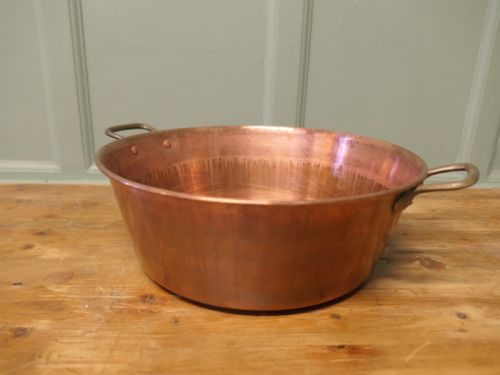
Most examples date across the mid to late nineteenth century, manufactured by makers such as Hodges and Sons or shaped in anonymous village workshops. Their forms range from circular preserve pans with iron handles to oval garden planters.
Materials and Fabrication
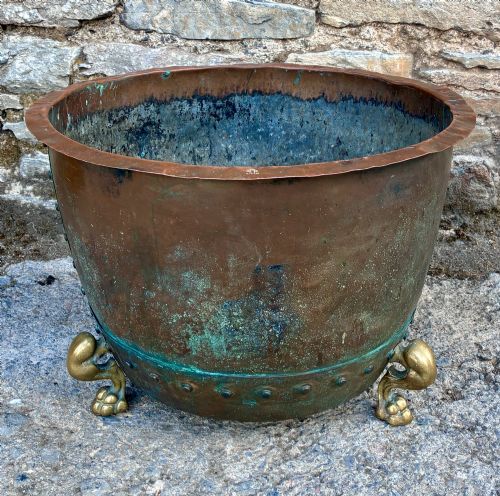
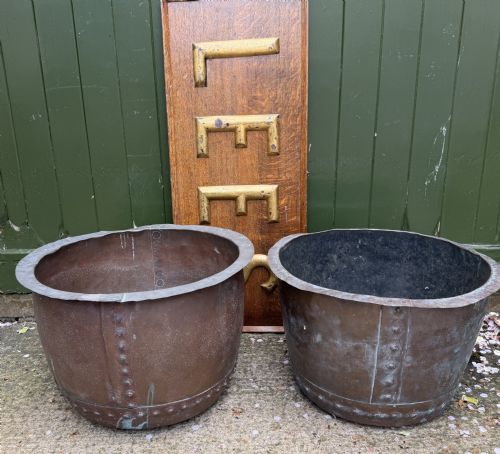
Constructed primarily from heavy sheet copper, these basins often feature hand-hammered surfaces joined by visible brass or copper rivets. Wrought iron handles, brass trim, and cast iron supports were integrated to manage the considerable weight of hot contents.
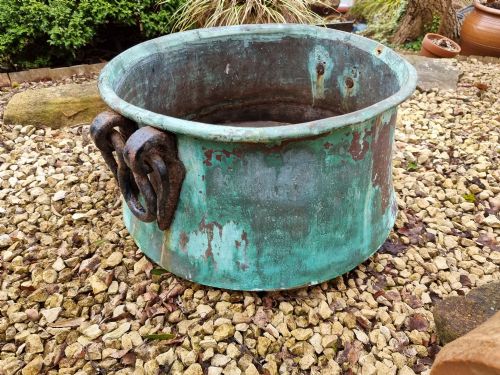
Makers shaped the metal through beating and spinning, leaving tactile tool marks and overlapping seams that evidence hand fabrication. Surfaces frequently display natural verdigris oxidation and weathered patinas developed through years of active use.
Listings feature nineteenth-century copper, brass, iron, and earthenware across functional cookware, jardinieres, and decorative bowls.
Assessing Quality and Character
The standard of a victorian copper basin depends upon the thickness of the original metal sheet and the integrity of its riveted construction. Heavier gauges resist denting and hold a truer circular or oval form over generations of service.
A superior piece displays a deep, undisturbed patina with honest signs of age rather than over-polished bright metal. Artisanal touches, such as robust dovetail joints, substantial brass handles, and crisp embossing, separate utilitarian kitchenware from decorative showpieces.
Hodges and Sons
The Victorian Copper Basin Glossary
- Verdigris
- A green patina or crust of copper carbonate formed on copper and brass through atmospheric exposure. This natural oxidation layer provides visual evidence of age.
- Preserve pan
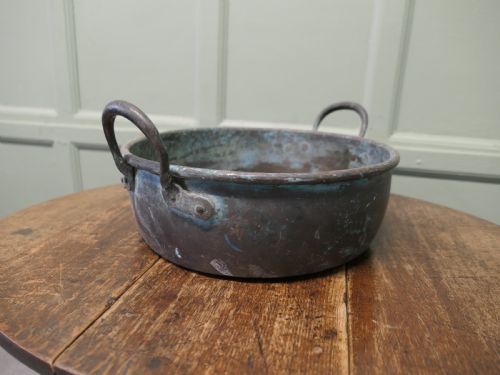
- A wide, shallow or deep copper cooking vessel designed for boiling fruits and sugar. These kitchen implements often feature a single long handle or twin iron carrying grips.
- Jardiniere
- An ornamental pot or stand for holding flowering plants or ferns. In nineteenth-century examples, these often incorporate brass mounts and embossed detailing.
- Gaudy Welsh
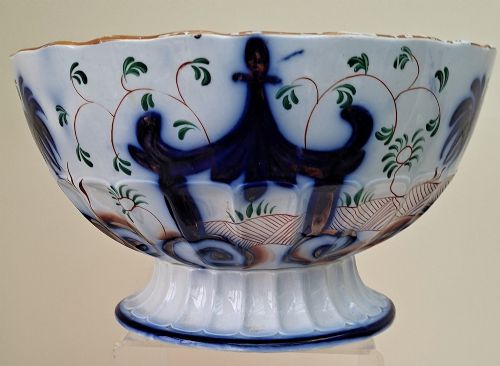
- A type of colourful earthenware pottery featuring rich cobalt blue, copper lustre, and iron-red decoration. Pieces in this style include toilet basins and footed bowls.
- Cairoware
- Metalware decorated with intricate Islamic-inspired brass and mixed metal inlay. This exotic style influenced Victorian decorative bowls and ornamental vessels.
Victorian Copper Basin: Frequently Asked Questions
How were copper basins used in Victorian homes?
Victorian households utilised these heavy metal vessels primarily for heavy-duty kitchen tasks such as boiling jam, setting cream, and preparing preserves over open ranges. Larger versions functioned as wash coppers or dairy vats.
Over time, many of these utilitarian containers transitioned into garden planters and fireside log bins as domestic technology modernised.
How do I clean a Victorian copper basin?
Preserving the historical integrity of a vintage basin usually means avoiding harsh chemical polishes that strip away the aged patina. Gentle washing with warm soapy water removes surface dirt without harming the stable oxidation layers.
If you prefer a brighter metallic finish, mild traditional metal creams can be applied sparingly while leaving the deeper crevices untouched.
Can I use these antique basins outdoors?
Solid metal and ceramic vessels from the nineteenth century handle outdoor environments quite well when planted with flowers or small shrubs. Copper and brass naturally withstand weathering, though freezing water trapped inside uninsulated pots can cause structural stress.
Bringing delicate ceramic basins indoors during winter prevents frost damage to the earthenware body.
How can I tell a genuine nineteenth-century piece apart?
Genuine nineteenth-century vessels reveal their age through hand-beatean metal textures, irregular hand-cut rivets, and authentic wear patterns around the rims and bases. Machine-rolled modern replicas lack these subtle discrepancies and the deep organic patina of old metal.
Weight is another reliable indicator, as period copper pans were cast and beaten to substantial gauges for heavy culinary work.