
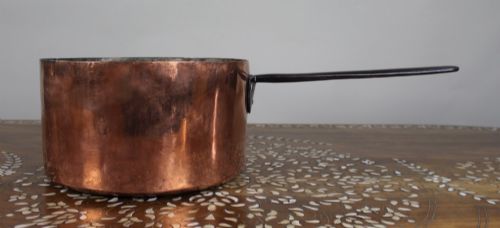


Riveted Copper Pan
A riveted copper pan brings warmth and tangible utility into a room, forged from heavy metal to last generations.
Riveted Copper Pan
A riveted copper pan is a robust piece of cookware or vessel designed for heavy domestic and kitchen use. When you search for a riveted copper pan on this page, you encounter sturdy utensils from the Georgian, Victorian, and nineteenth-century periods. These items range from large saucepans and cooking vessels to grain measures and fish kettles.
The pieces appearing here stem from British and continental European traditions, frequently described under rustic farmhouse or country styles. You meet items fashioned for practical hearth labour that now serve decorative or functional roles in modern homes.
How they were made
These items are constructed primarily from sheet copper joined with durable metal fasteners, paired with handles and fittings of iron, brass, or wrought iron. The plates of copper are shaped by hand or early mechanical means, then bound together with stout rivets to withstand intense heat and heavy contents.
Internal surfaces are typically lined with tin to prevent food from reacting directly with the copper, while handles are securely attached using iron brackets fixed with heavy-duty pins. The combination of malleable copper and rigid iron creates a balanced vessel meant for daily service.
Some pans bear tiny tally marks near the rim, scribbled by hurried cooks to prove whose pot stayed on the fire.
What varies in quality
The distinction between standard utility items and superior examples lies in the thickness of the metal sheet and the neatness of the hand-beaten form. Heavier gauge copper and well-proportioned iron handles indicate a vessel intended for professional or high-status kitchens rather than casual domestic tasks.
Construction details such as the uniform spacing of the rivets and the smoothness of the rolled rim reveal the maker's competence. Pieces that retain their original shape and structural integrity without excessive thinning show superior care and robust initial manufacture.
The Riveted Copper Pan Glossary
- Riveted
- Joined together using metal pins hammered flat at the ends. This technique provides immense structural strength before modern welding existed.
- Saucepan
- A deep cooking vessel with a single long handle, used for boiling and simmering liquids on the hearth or stove.
- Fish Kettle
- An elongated oval pan fitted with a lid and internal draining rack, specifically shaped to poach whole fish evenly.
- Grain Measure
- A standardised cylindrical container employed to quantify dry goods such as corn or wheat before sale or storage.
- Wrought Iron
- Iron that has been heated and hammered into shape by hand, known for its fibrous texture and high resistance to bending.
Riveted Copper Pan: Frequently Asked Questions
Can I still cook with old copper pans?
Many of these historical vessels were lined with tin to render them safe for food preparation. You should check the condition of this interior lining before using them on a modern heat source.
Heavier nineteenth-century examples conduct heat evenly and remain functional if the metal base sits flat against the hob.
How do I clean tarnished copper?
Copper naturally develops a dark surface oxidation over time when exposed to air and handling. Mild acidic pastes combined with gentle friction will lift the discoloration without scratching the soft metal.
Many collectors prefer to leave a warm, aged patina rather than polishing the surface to a bright mirror finish.
How do I date a copper pan?
Makers changed their construction methods across the decades, shifting from hand-beaten plates to machine-rolled sheets during the nineteenth century. Examining the shape of the handle attachments and the style of the rivets helps narrow down the period.
Georgian pieces often display heavier casting and simpler, more utilitarian lines than later Victorian kitchenware.
Where were these pans used?
These vessels originated in busy country kitchens, farmhouses, and commercial cooking environments where reliable heat transfer was essential. Large saucepans and cooking vessels sat directly on open hearths or early stoves.
Other items like grain measures served merchant functions in agricultural settings before finding their way into domestic collections.