



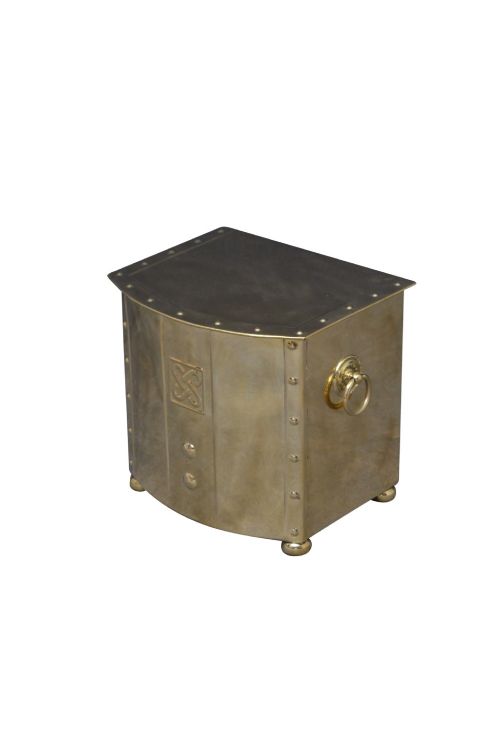


Fireplace Log Store
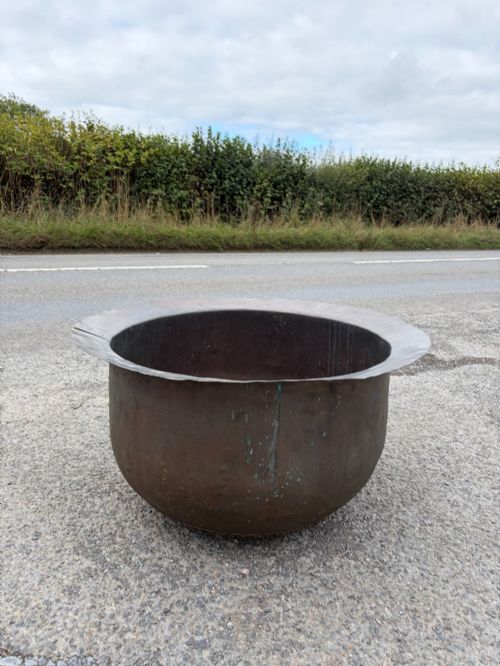
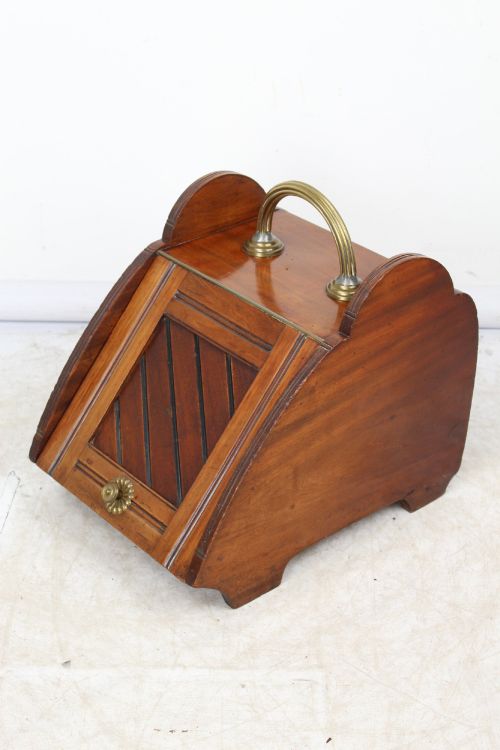
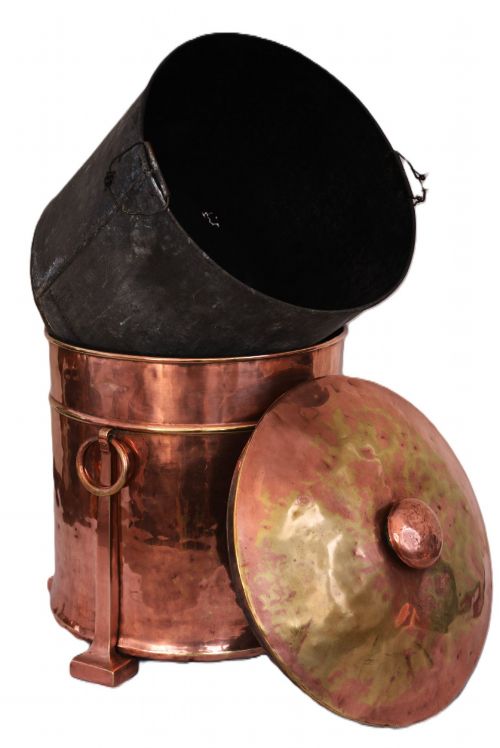
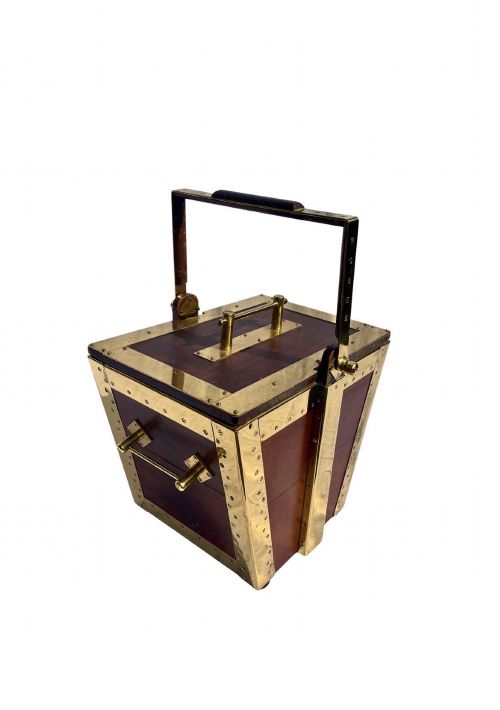
These fireplace log store pieces keep hearth fuel contained in brass, copper, iron, and wood.
Fireplace Log Store
A fireplace log store provides tidy containment for fuel beside the hearth, ranging from open buckets and bins to enclosed cabinets. The pieces seen here span periods from the Georgian era through the Victorian and Edwardian years up to the 1930s.
Most examples originate from Victorian workshops, appearing as brass and copper buckets, carved oak boxes, or iron carriers. Buyers will also encounter Edwardian purdoniums, Arts and Crafts handbeaten vessels, and rustic country containers.
Makers adapted utilitarian fuel storage into decorative fireside accessories, utilising coopered staves, riveted metal plates, and brass mountings. These vessels served double duty holding coal, peat, or logs depending on the domestic fuel of the day.
Materials and construction
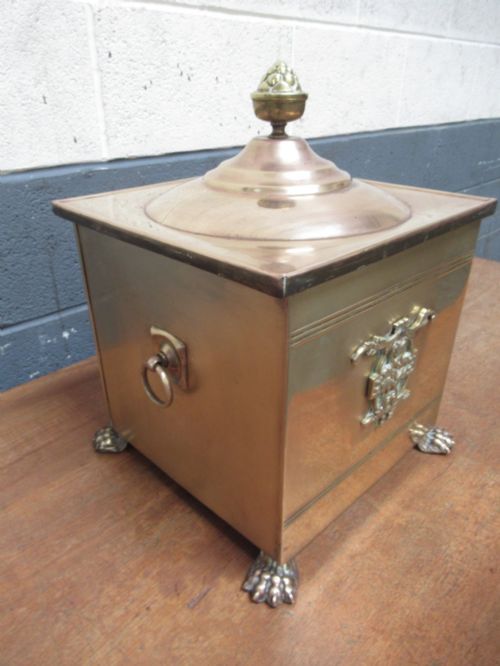
Metal vessels rely on handbeaten copper and brass sheets joined with rivets, often paired with swing handles and cast brass feet. Blacksmiths formed heavy wrought iron and industrial iron carriers for robust hearth utility.
Wooden boxes and bins utilise mahogany, oak, walnut, and pine, frequently featuring coopered staves bound with brass bands or intricate carved panels. Cabinet versions incorporate drop fronts and hinged lids to conceal the fuel within.
Fireplace Log Store Retail Price Guide 2026
Typical asking prices for fireplace log store among the pieces listed under this phrase on Sellingantiques today, from the lower quarter to the upper quarter. They describe what is for sale here now, not the wider market.
Judging construction and finish
Quality rests in the weight of the metal gauge and the integrity of the joinery, whether hand-riveted seams on copper buckets or dovetailed joints on timber boxes. Superior examples retain original brass mountings, robust handles, and uncompromised linings.
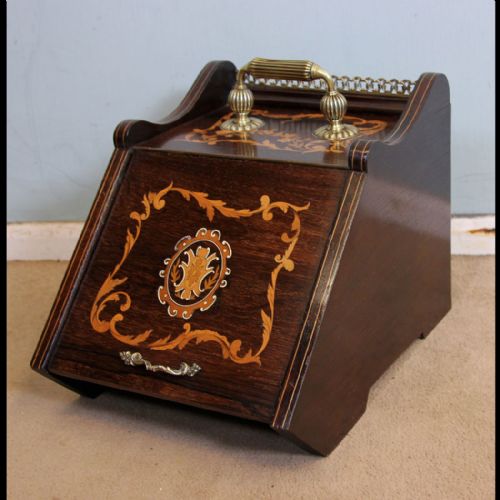
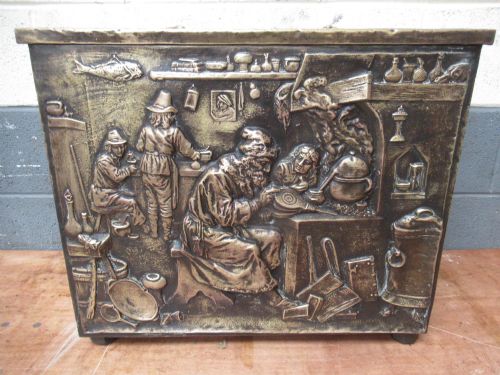
Artisanal touches separate standard containers from finer pieces, evident in handbeaten repoussé decoration, skilled cooperage, and thoughtful detailing like ceramic liners or inlaid mahogany panels.
William Soutter & Sons·Richard Arkwright Masson Mills
The Fireplace Log Store Glossary
- Purdonium
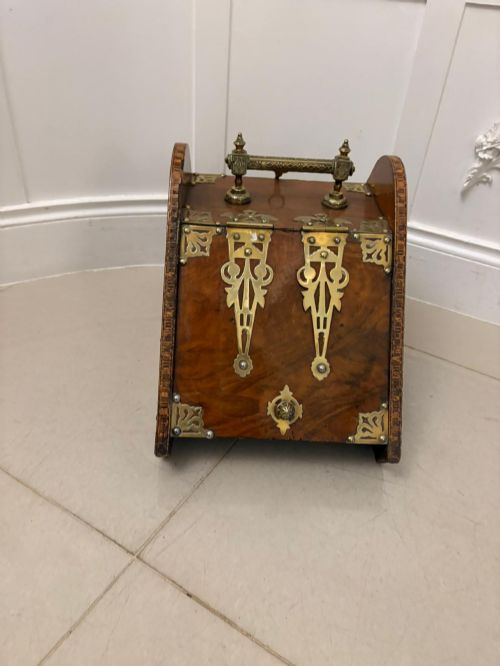
- A specialised coal or log cabinet featuring a sloping front door or a tilt-out bin to dispense fuel. These enclosed wooden boxes often include a shovel stored in an internal compartment.
- Coopered
- Built using wooden staves fitted together side by side and bound by metal hoops, much like a traditional barrel. This technique appears on peat buckets and log bunkers.
- Repoussé
- A metalworking technique where the pattern is hammered into relief from the reverse side. Arts and Crafts copper bins frequently display this handworked ornamentation.
- Coal scuttle
- A bucket or hod designed for carrying coal to the grate, typically fitted with a pivoting handle and a shaped mouth for pouring. Metal helmet scuttles are a common Victorian variant.
Fireplace Log Store: Frequently Asked Questions
How do I clean an antique copper log bin?
Wipe the surface with a soft, dry cloth to remove dust and maintain the aged patina. Avoid harsh chemical polishes that strip the historic character from the metal.
For copper lined with iron or steel, keep the interior dry to prevent rust accumulation from damp logs.
Can these bins hold modern firewood logs?
Many of these vessels were originally sized for coal, peat, or smaller hearth kindling rather than large modern logs. Check the dimensions of the opening before purchasing if you intend to store substantial split wood.
Smaller buckets work well placed beside the hearth strictly for holding kindling and firelighters.
How do I date a brass and copper coal bucket?
Examine the construction methods, such as hand-riveted seams versus machine stamping, along with the prevailing design style. Victorian and Edwardian examples often feature embossed decoration or aesthetic movement motifs.
Georgian and Regency pieces tend to display simpler, heavier brass binding and classic coopered wood construction.