
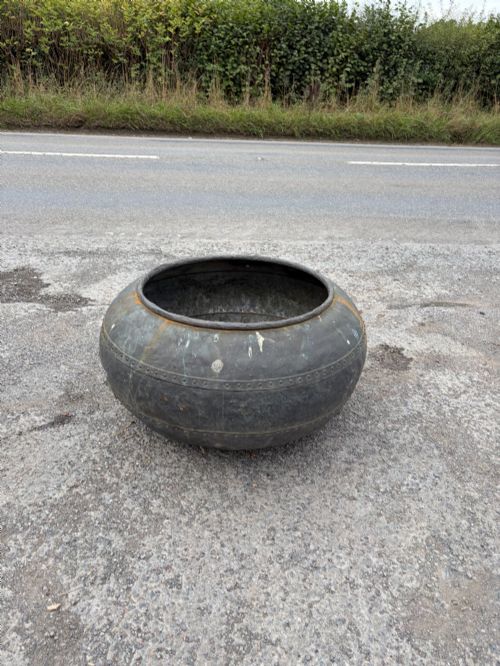
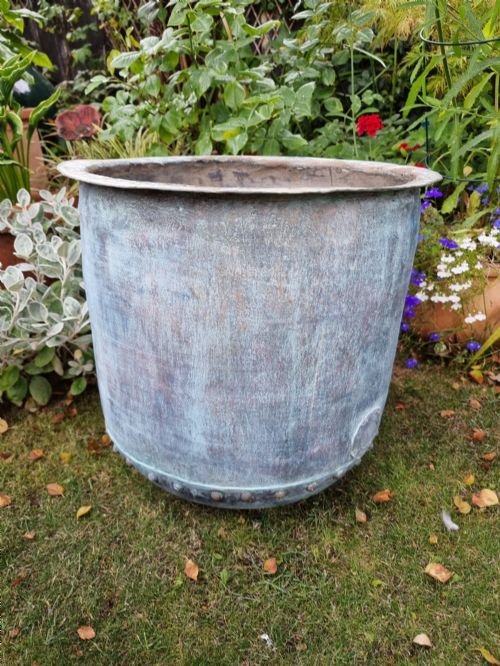
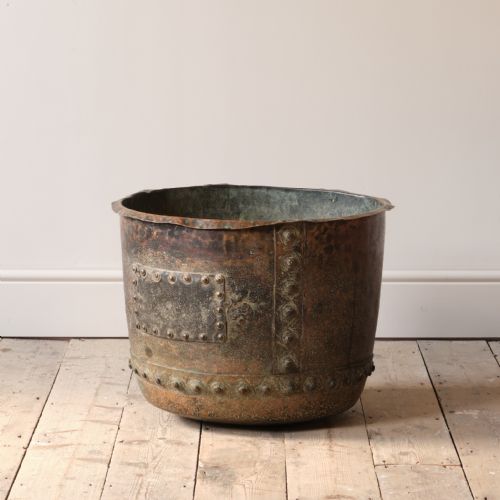
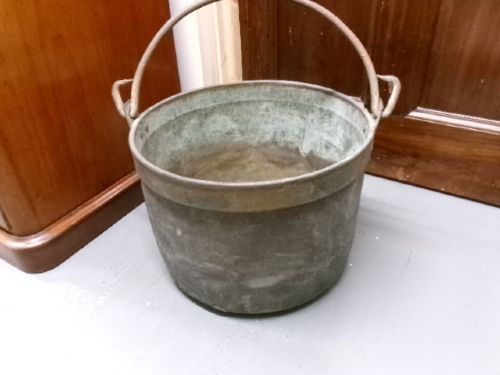
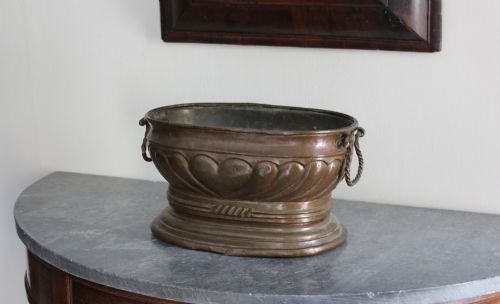


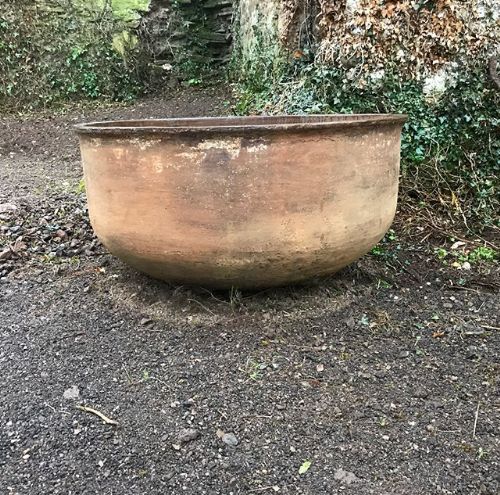
Patinated Copper Planter
These patinated copper planter pieces bring rich metallic tones and historic utility to a room, offering both decorative presence and practical capacity.
Patinated Copper Planter
A patinated copper planter combines utilitarian metalworking traditions with decorative horticulture, drawing from styles such as Victorian, French Country, and Arts & Crafts. Buyers searching for a patinated copper planter encounter vessels originating from the eighteenth, nineteenth, and early twentieth centuries, spanning periods like Victorian and Georgian eras.
The inventory on this page most frequently presents nineteenth century examples, alongside eighteenth century wine coolers and twentieth century metal log bins. Forms range from garden display pots and lidded log bins to swing-handled cauldrons and large buckets, reflecting multipurpose historic origins.
Materials and construction methods
Construction relies primarily on copper, often paired with brass, iron, or steel reinforcements, demonstrating hand-worked riveted techniques across sturdy vessels. Artisans shaped these heavy gauge metals to hold weight, incorporating swing handles and decorative bands that secure the body of the pot.
Surface finishes develop through natural oxidation and age, creating the characteristic patinated skin seen on both English and French examples. Secondary materials such as wrought iron and galvanised steel appear in supporting elements and allied log bins.
Listings feature copper alongside iron, brass, and steel, spanning the eighteenth, nineteenth, and twentieth centuries.
Assessing quality in metal vessels
Quality rests upon the integrity of the metalwork, the depth of the natural patina, and the structural proportion of the vessel. Superior examples display clean riveting, substantial gauge metal that resists distortion, and well-integrated brass or iron fittings.
The distinction between ordinary utility items and finer pieces involves hand-finished detailing, such as decorative handles and harmonious proportions developed over centuries of exposure and handling.
Shapland & Petter
The Patinated Copper Planter Glossary
- Patination
- The surface alteration and chemical colouration acquired by metal through age, oxidation, and handling. This skin provides the characteristic antique appearance valued by collectors.
- Riveted
- A method of joining metal plates together using driven pins that are hammered flat. This technique ensures durable construction on large nineteenth century vessels.
- Cauldron
- A deep round metal pot featuring a swing handle, traditionally used over fires. These pieces often transition into decorative planters.
- Wine Cooler
- A vessel designed to hold ice and bottles, sharing similar metalworking forms with large planters and log bins. Eighteenth century examples demonstrate refined proportions.
Patinated Copper Planter: Frequently Asked Questions
What were these metal vessels originally used for?
Historic copper vessels served multiple domestic and garden duties, functioning as laundry coppers, cooking cauldrons, wine coolers, and indoor log bins. Many large pots transitioned into garden use as display planters over the centuries.
Their robust construction allowed them to handle heavy loads of timber, coal, or damp soil without structural failure.
How do I care for antique copper indoors?
Preserving the historic surface requires avoiding harsh metal polishes that strip away the authentic patinated skin. Gentle dusting and occasional soft waxing maintain the stabilised metal finish.
If used for live plants, placing a protective liner inside prevents moisture from accelerating internal corrosion.
How can I tell an eighteenth century piece from a nineteenth century one?
Earlier eighteenth century examples often display specific forging traits, such as hand-hammered sheet variations and distinct Georgian proportions, particularly in wine coolers. Nineteenth century pieces frequently incorporate heavier machine-rolled copper plates and sturdier riveted seams.
Maker marks and handle attachments also offer clues to the prevailing manufacturing techniques of each period.
Can these planters be used outdoors in the garden?
Most copper and mixed metal vessels withstand outdoor environments well, provided they are not exposed to standing winter ice that could split the base. The metal naturally continues to weather when placed in a garden setting.
Elevating the pot slightly on feet prevents moisture from trapping underneath during wet months.