
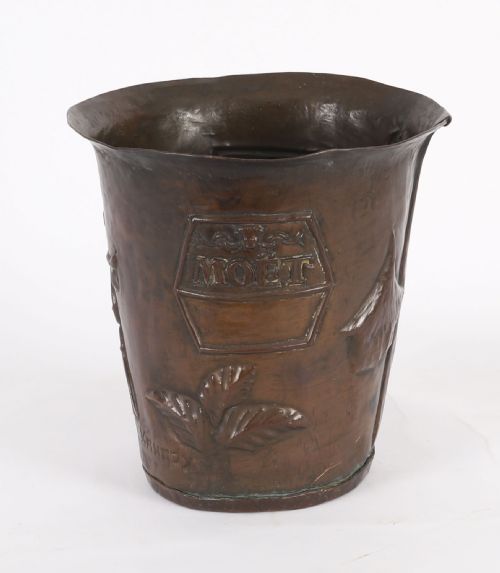


Embossed Copper Bucket
An embossed copper bucket brings warmth and texture to a fireside or hallway, holding logs, coal or umbrellas with enduring utility.
Embossed Copper Bucket
When you search for an embossed copper bucket, you encounter heavy metal vessels designed for domestic service, most frequently taking the form of coal scuttles, log bins and wine coolers. These pieces originate from various eras, with Victorian items and early twentieth-century examples appearing regularly alongside earlier continental forms.
The selection ranges from utilitarian coal helmets to large decorative wine cisterns and umbrella stands. Many examples incorporate brass bands, handles or feet, combining two metals for structural strength and visual contrast.
How they were made
These vessels rely primarily on beaten or sheet copper, often shaped by hand and joined at the seams with rivets or solder. Artisans applied relief ornamentation through hammering and embossing from the reverse side to create raised motifs such as coats of arms or galleon designs.
Secondary materials like brass provide structural edging, hinges and handles, while wooden elements occasionally appear in bases or handle grips. The interaction between the warm reddish copper and the bright yellow brass defines the visual character of the grouped pieces.
One small copper coal box proudly displays a detailed galleon design, proving that even household fuel storage could harbour nautical ambitions.
What varies in quality
Quality reveals itself in the crispness of the embossed relief and the thickness of the metal sheet used to form the body. Superior vessels maintain structural rigidity under weight, whereas lesser examples feature thinner metal that yields easily to pressure.
The integration of mounts, such as brass feet and swing handles, distinguishes standard production items from more ambitious decorative pieces. Fine craftsmanship shows in clean seam work and deliberate detailing rather than hasty assembly.
The Embossed Copper Bucket Glossary
- Coal scuttle
- A domestic container designed for carrying coal to a fireplace, often featuring a sloping scuttle mouth and a swinging handle. These typically sit beside the hearth as fireside accessories.
- Log bin
- A deep cylindrical or bucket-shaped vessel intended for storing firewood near a hearth. They frequently display reinforced rims and heavy handles to bear the weight of timber.
- Wine cistern
- A large ornamental basin used historically for cooling wine bottles or washing glasses during meals. These pieces often exhibit sophisticated decorative embossing suited for dining rooms.
- Embossing
- A technique where a pattern is raised in relief from the surface of the metal by hammering from the reverse side. This method creates tactile ornamentation across the body of the vessel.
- Jardiniere
- An ornamental pot or stand designed to hold growing plants or floral arrangements. They share similar copper and brass construction methods with fireside buckets.
Embossed Copper Bucket: Frequently Asked Questions
How were these copper buckets used?
These vessels served practical domestic roles around the home, primarily transporting and storing fuel such as coal and logs for open fires. Others functioned as specialised water and wine containers in dining rooms.
Over time, many of these utilitarian objects transitioned into purely decorative roles, serving as umbrella stands in hallways or planters in living spaces.
How do I clean an embossed copper bucket?
Maintenance depends on the desired appearance, as some buyers prefer a dark, aged patina while others favour a bright polished finish. Gentle washing with warm soapy water removes dust without disturbing the surface oxidation.
Avoid harsh abrasive cleaners that can flatten the fine details of the embossed relief work. A soft cloth and mild metal cleaner suffice for removing active tarnish from copper and brass components.
How do I date a copper bucket?
Dating relies on observing manufacturing techniques, material combinations and stylistic motifs across different periods. Victorian pieces often feature robust brass mounts and traditional coal scuttle forms, while early twentieth-century examples may display Arts and Crafts influences or simpler pictorial motifs like galleons.
Examining the construction of handles, rivets and seams provides further clues regarding the era of production.