
Victorian Console Card Table
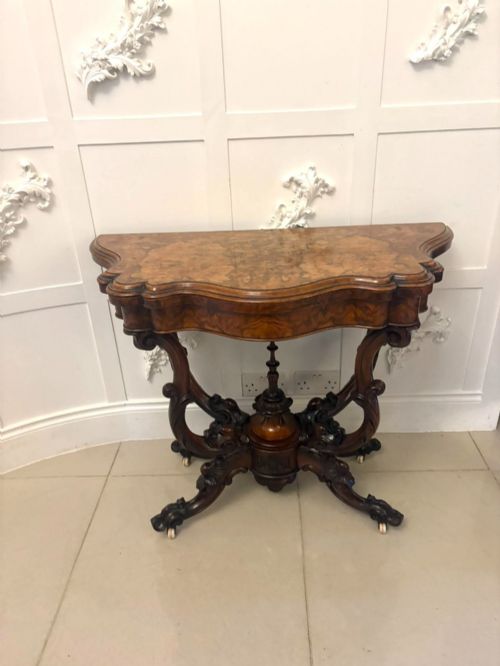
A victorian console card table combines the dual purpose of a decorative living room console and a folding surface for evening entertainment.
Victorian Console Card Table
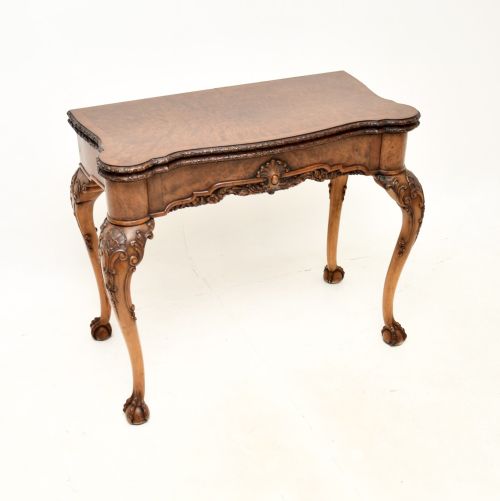
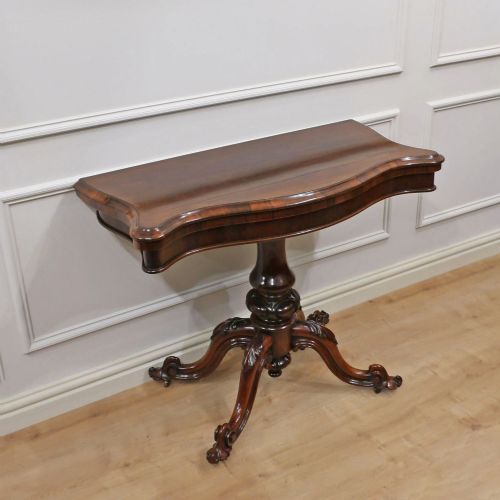
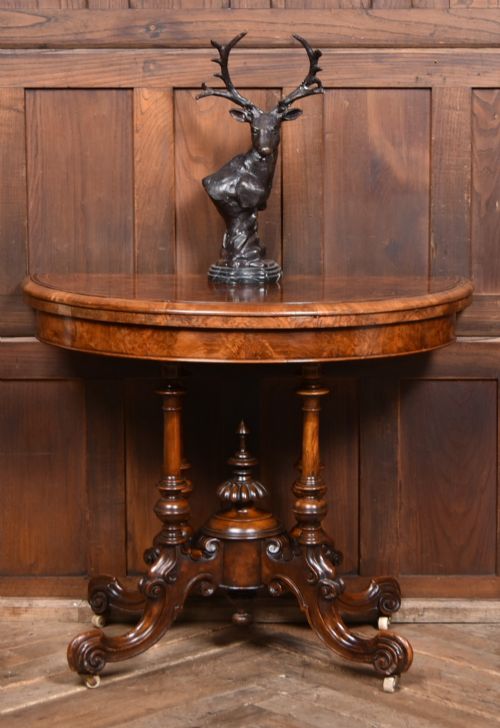
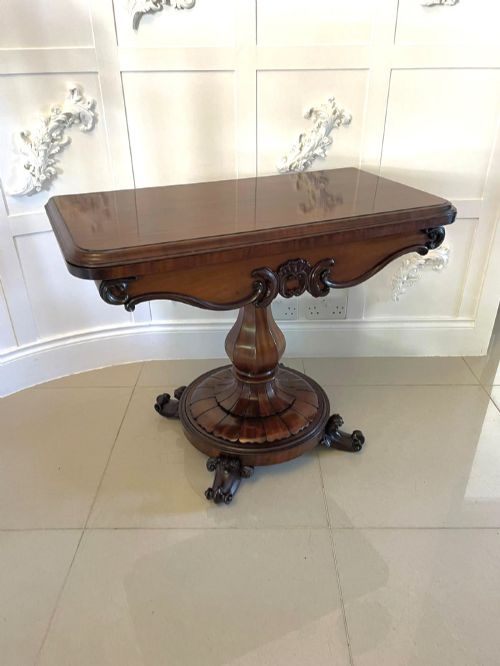
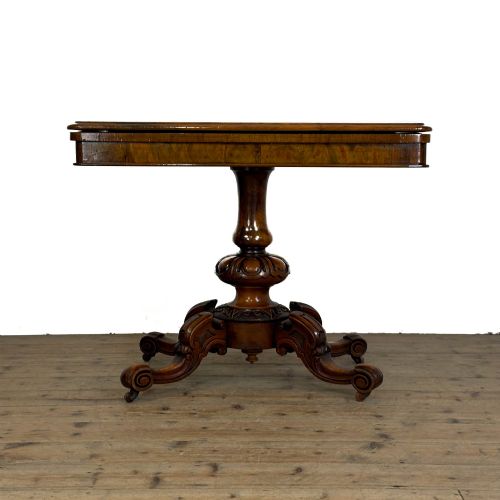
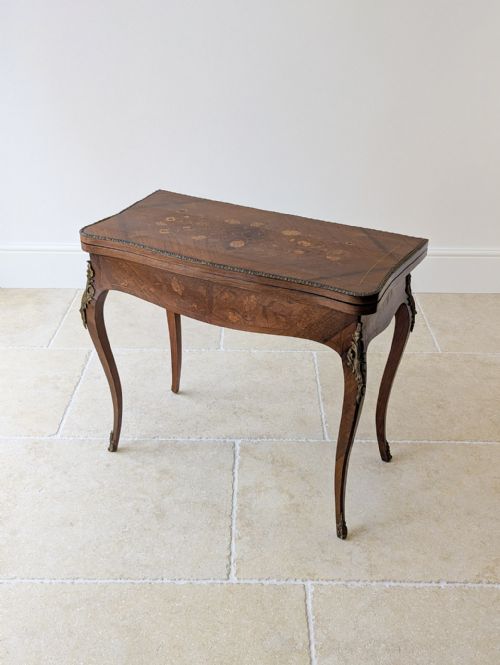
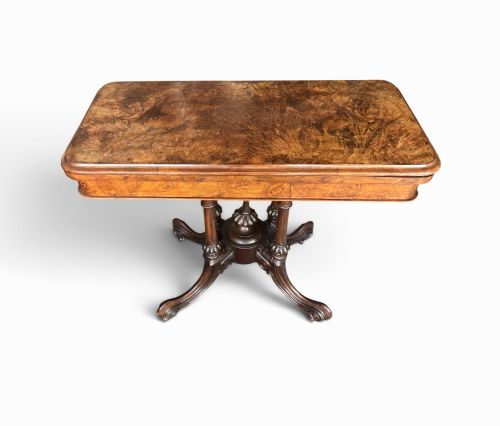
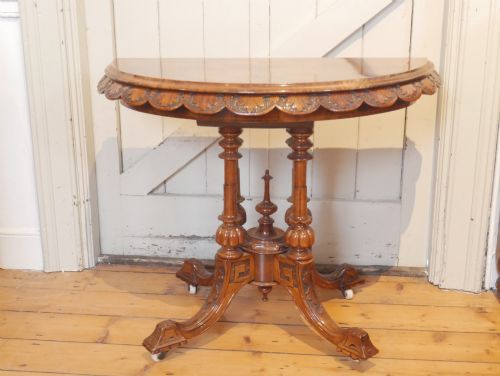
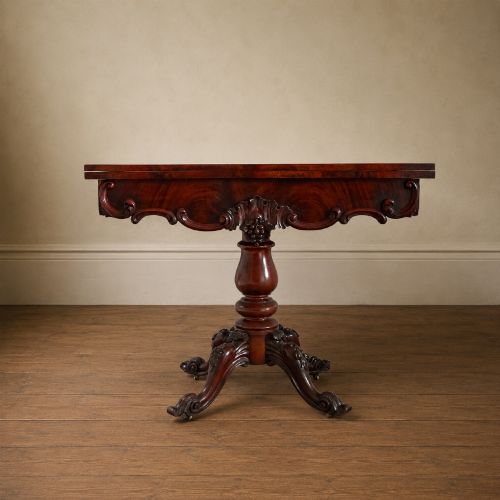
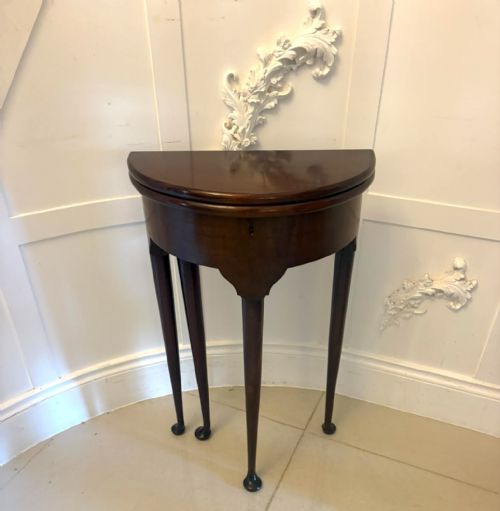
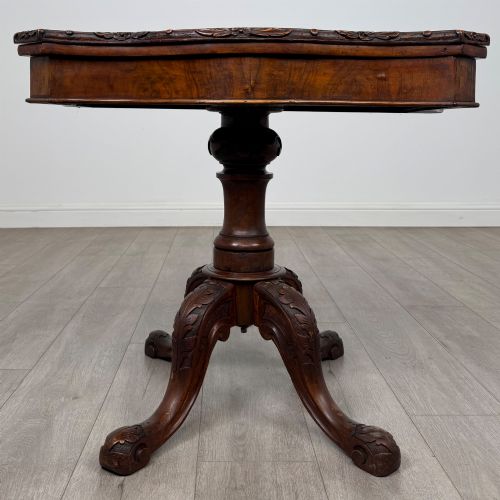
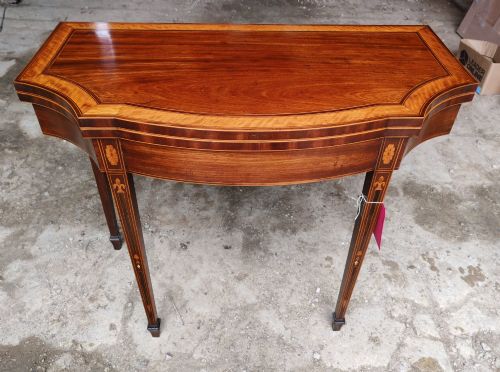
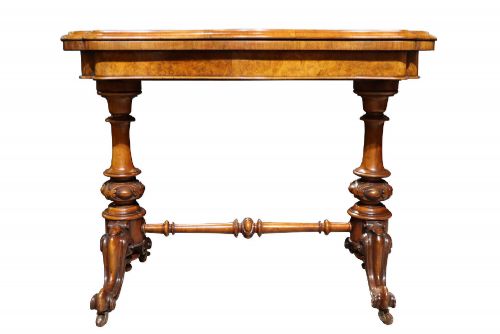
A victorian console card table serves as both a narrow pier table against a wall and a functional games surface when the hinged top opens out. Walnut and burr walnut dominate the examples encountered here, alongside rich mahogany and rosewood.
Most pieces date from the mid to late nineteenth century, spanning standard Victorian production through to revivalist Louis XV and Aesthetic Movement interpretations. The dual-function design allows a flat display surface to transform into a baize-lined playing area via a turnover or fold-over mechanism.
Materials and construction
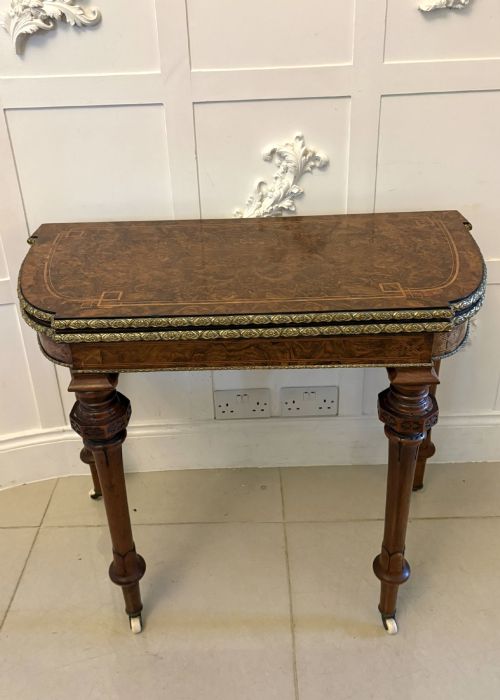
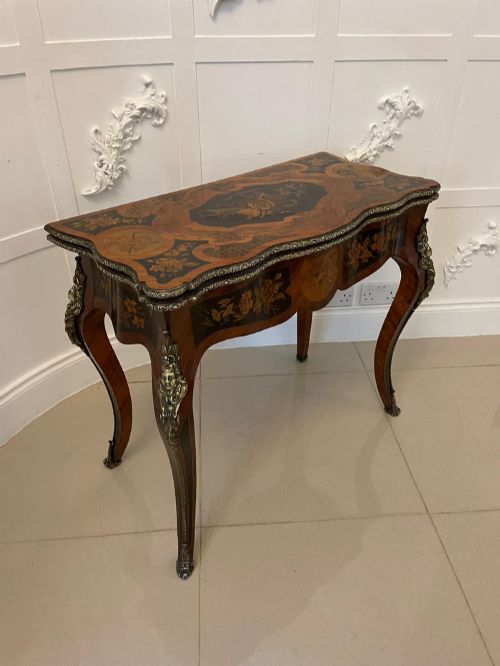
Cabinet makers utilised solid framing timbers such as mahogany and rosewood, applying figured walnut veneers and intricate marquetry inlays to the visible surfaces. Ormolu mounts, brass hinges, and ceramic castors provide structural detail and mobility.
The folding mechanisms rely on pivoting or swing-leg supports that reveal concealed storage compartments beneath the main board when opened.
Some tables hide secret compartments under the folding top, originally meant for stashing stray counters and lost fortunes.
Judging the execution
The distinction between standard workshop output and exhibition standard rests on the depth of hand-carved timber elements and the precision of floral marquetry. Secondary details such as gilded ormolu mounts and finely figured burr walnut grain elevate the presence of the piece.
Stability of the folding mechanism and the seamless alignment of the two top leaves when closed indicate the level of joinery skill involved in the original construction.
G T Morant·Edwards & Roberts
The Victorian Console Card Table Glossary
- Console table
- A wall-mounted or heavily front-supported table designed primarily for display beneath a mirror or in a hallway. These forms often double as games tables.
- Turnover top
- A hinged table surface that rotates and folds flat to double the available area for card playing or dining. It usually exposes a lined interior well.
- Marquetry
- Decorative veneer patterns formed by fitting together small pieces of different coloured wood, ivory, or metal. Floral and geometric motifs are typical.
- Ormolu
- Gilded bronze ornamentation applied to furniture edges, corners, and aprons during revivalist periods. It provides metallic contrast against dark woods.
- Serpentine
- A curved furniture edge featuring a convex centre flanked by concave curves. This contour requires precise shaping of solid timber margins.
Victorian Console Card Table: Frequently Asked Questions
How do you open the top?
The hinged top leaf rotates on a central pivot or lifts squarely on hinges to unfold flat onto the extended frame.
Supporting legs swing outward from the rear rail to bear the weight of the open playing surface.
What woods were used?
Cabinet makers relied heavily on burr walnut, figured mahogany, and dark rosewood for the primary show surfaces.
Exotic timbers such as satinwood and kingwood appear alongside marquetry inlays and ebonised details.
Can these be used daily?
These tables function well as hallway consoles or lamp tables when kept closed against a wall.
Opening the top requires care to protect the historic hinge mechanisms and the polished timber surfaces.
How do I spot a revival style?
Louis XV revival pieces incorporate asymmetric ormolu mounts, cabriole legs, and sweeping serpentine contours.
Aesthetic Movement examples display simpler geometric lines with contrasting ebony or oak elements.