





French Revival Card Table
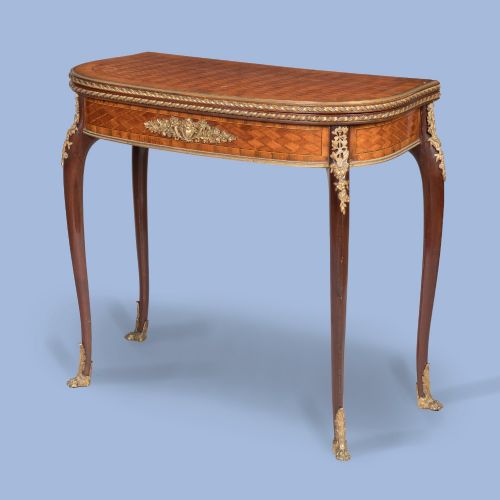
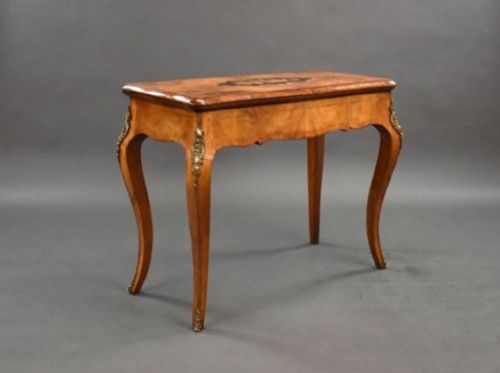
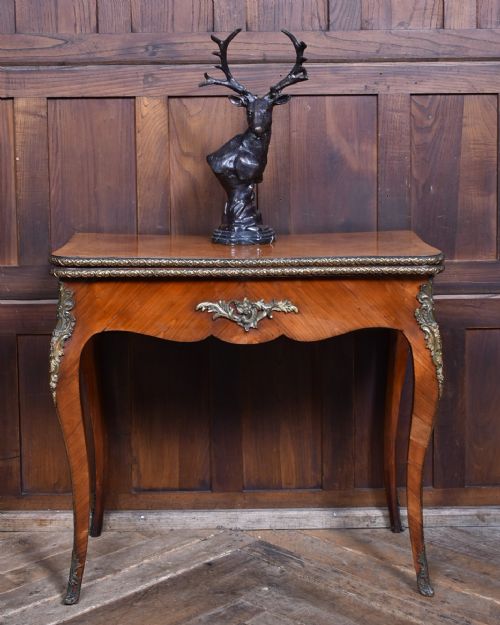
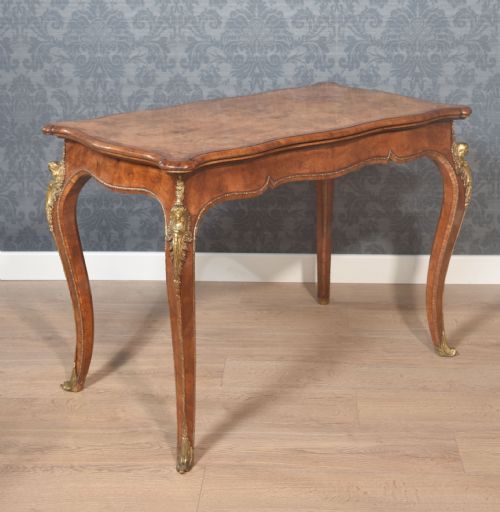
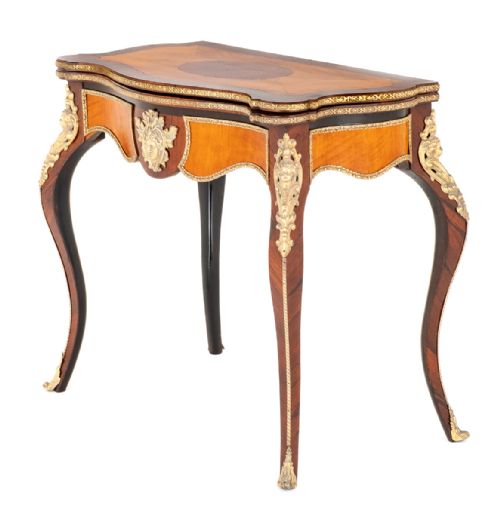
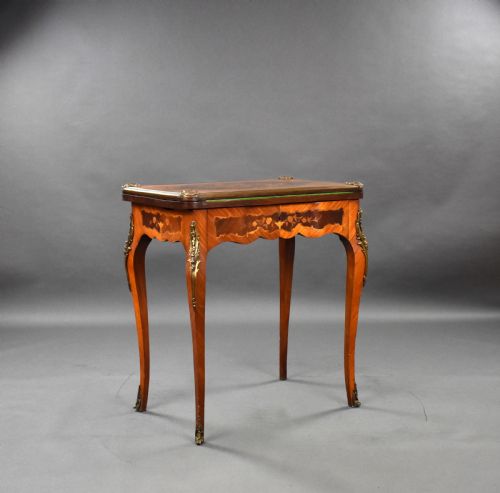
These french revival card table examples are versatile nineteenth-century pieces that fold open for play and display rich marquetry.
French Revival Card Table
A french revival card table brings nineteenth-century drawing-room elegance into modern spaces by combining a dual-purpose folding top with decorative styling. These pieces appear frequently across Victorian and nineteenth-century periods, often adopting Louis XV, Louis XVI, or Rococo revival aesthetics.
Most examples function as side or console tables when closed, featuring shaped or rectangular tops that swivel and fold outward to reveal a baize-lined playing surface. The form bridges functional games furniture with high-status reception room display, drawing directly on eighteenth-century French court designs.
How They Were Made
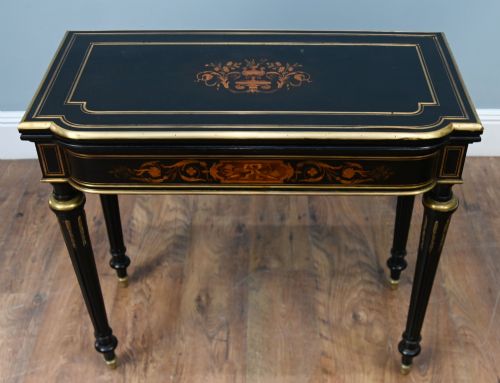
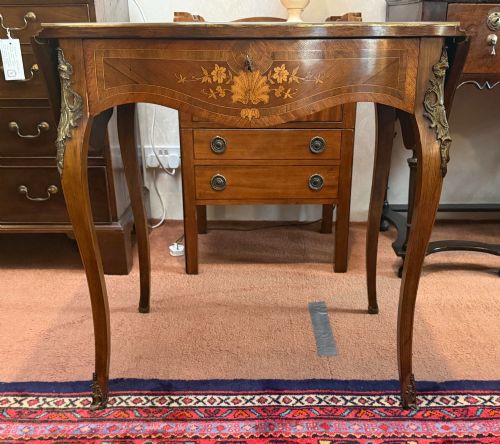
Cabinetmakers built these tables using robust carcases of walnut, mahogany, or burr walnut, overlaid with intricate veneers of kingwood, rosewood, and exotic woods arranged in floral or geometric marquetry patterns. Parquetry and Boulle marquetry involving tortoiseshell and brass inlay also appear on select high-status examples from the period.
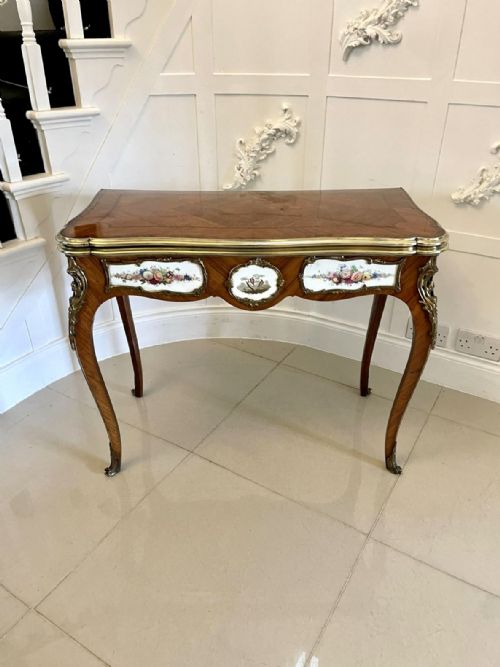
Gilded bronze or brass ormolu mounts punctuate the corners, aprons, and cabriole legs, accentuating the curvaceous outlines typical of Louis XV styles. Secondary timbers like oak or mahogany commonly line the interior framing and drawer structures.
Listings feature walnut, kingwood, rosewood, and mahogany, frequently enhanced by ormolu mounts and intricate floral marquetry.
What Varies in Quality
The sophistication of the timber selection and the precision of the marquetry define the upper tier of these pieces, where contrasting grains and hand-cut veneers form complex floral sprays or geometric cubes. Simpler versions rely on plain walnut or mahogany surfaces with minimal stringing.
Mount quality separates standard production from exceptional workshops, visible in the sharpness of the cast ormolu details and the smoothness of the pivoting mechanisms. Maker attribution to notable London or Paris firms further elevates the standing of specific pieces.
Antoine Lampre·G T Morant·François Linke·Edwards & Roberts
The French Revival Card Table Glossary
- Marquetry
- The art of applying pieces of veneer to a structure to form decorative patterns and pictures. It differs from inlay by covering the entire surface rather than being set into recesses.
- Ormolu
- Gilded bronze mounts applied to furniture edges and legs. This technique provides metallic contrast against dark exotic woods.
- Kingwood
- A dense, richly grained tropical timber utilised extensively for high-end nineteenth-centuryveneering. Its dark violet-brown tones feature characteristic lighter streaks.
- Boulle
- A form of marquetry using contrasting brass and tortoiseshell developed in France. It adds reflective depth to cabinet surfaces.
- Baize
- A coarse woollen fabric traditionally used to line the playing surfaces of card tables. It provides a soft, non-slip area for cards.
French Revival Card Table: Frequently Asked Questions
How do these tables open?
The top section typically pivots on a central hinge and unfolds to rest upon a swing-out leg or a gateleg frame mechanism concealed beneath the frieze. This action doubles the surface area to reveal the baize-lined interior.
Once opened, the internal compartment often provides shallow storage space for playing cards and counters when the table is closed again.
Where were they placed?
Victorian and nineteenth-century households positioned these pieces against drawing room walls as decorative console or side tables when not in use for games. Their finished backs and elaborate marquetry ensured they looked presentable from any angle within a principal reception room.
During evening gatherings, they were moved outward into the room to accommodate card players around the expanded surface.
What is Boulle marquetry?
Boulle work involves cutting interlocking patterns from thin sheets of brass and tortoiseshell simultaneously, creating two contrasting panels of decoration. Cabinetmakers applied these ornate sheets to the surfaces of luxury tables.
The technique originates from seventeenth-century French royal workshops and experienced a major revival during the nineteenth century.
How do I distinguish Louis styles?
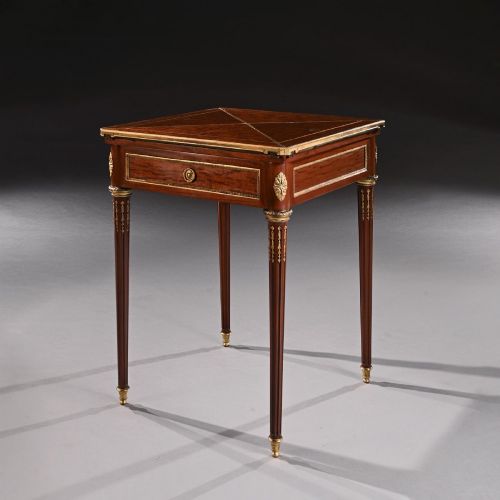
Louis XV revival pieces feature asymmetric curves, flowing cabriole legs, and elaborate rococo floral motifs without straight lines. Louis XVI revival items introduce neoclassical restraint, straight tapered fluted legs, and rectangular proportions.
Understanding these distinct structural outlines helps date the design inspiration behind nineteenth-century English and French cabinetmaking.