


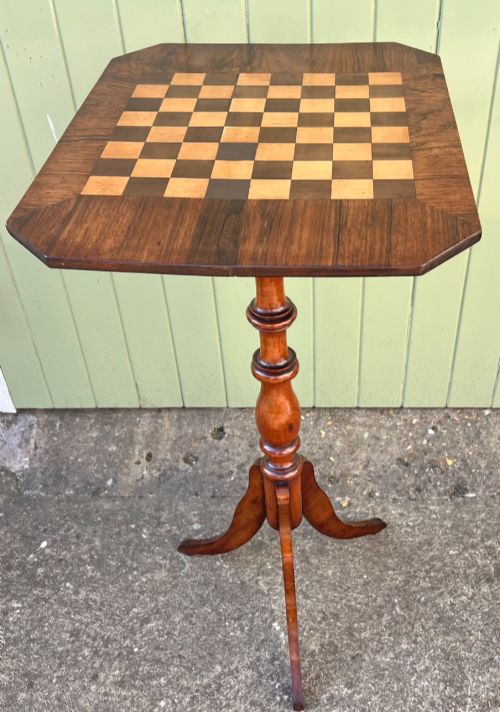
Inlay Games Table
An inlay games table brings sociable craft into a room, offering a folding top for cards and chess that hides its purpose until play begins.
Inlay Games Table
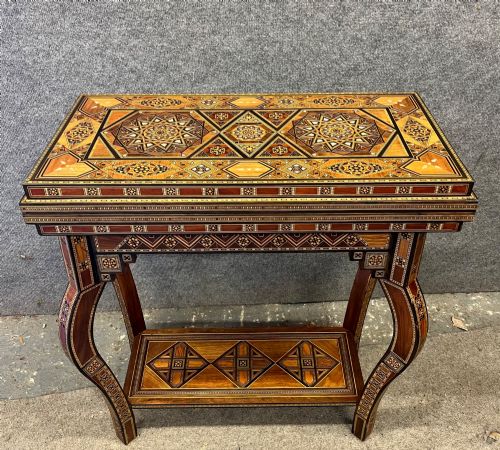
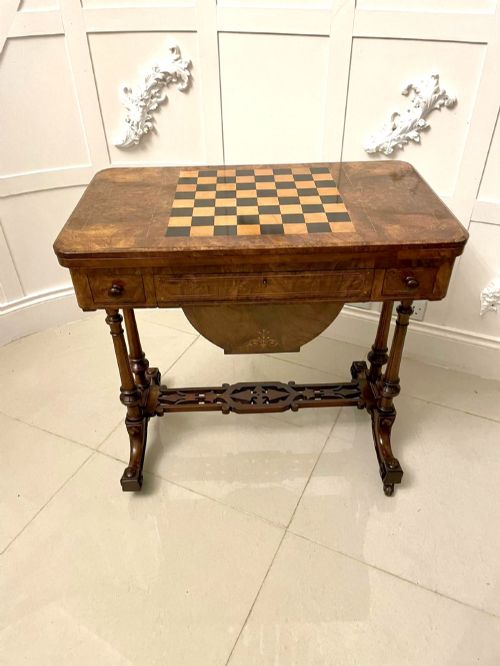
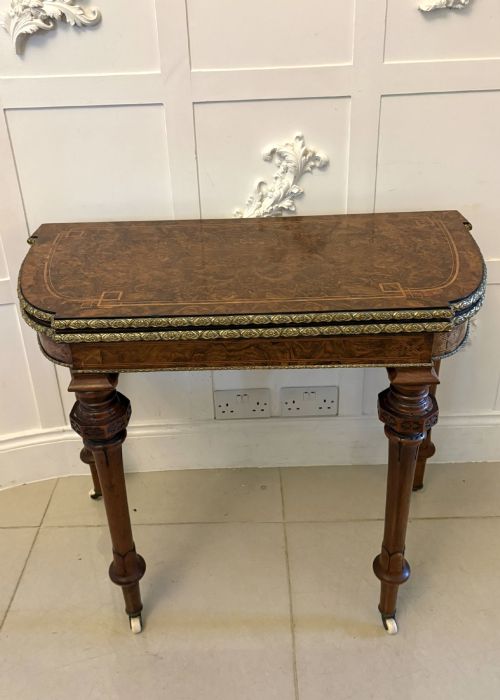
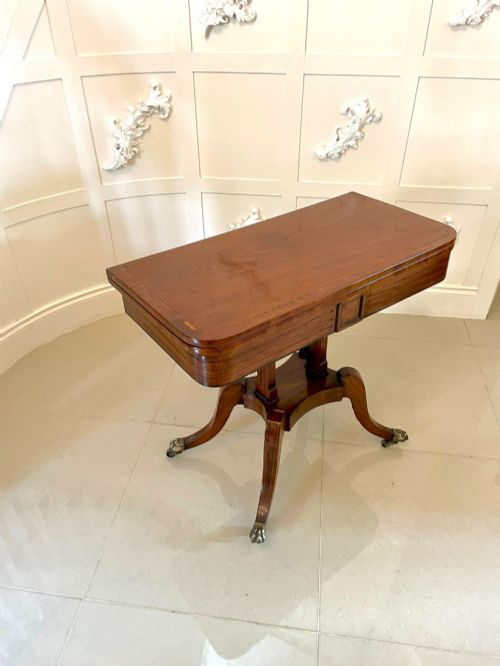
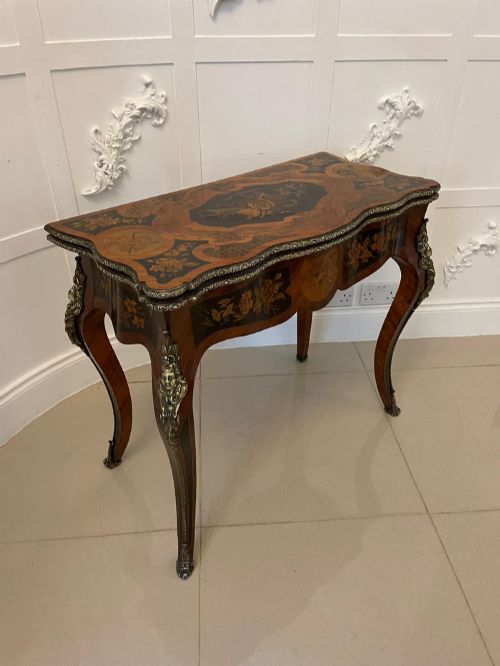
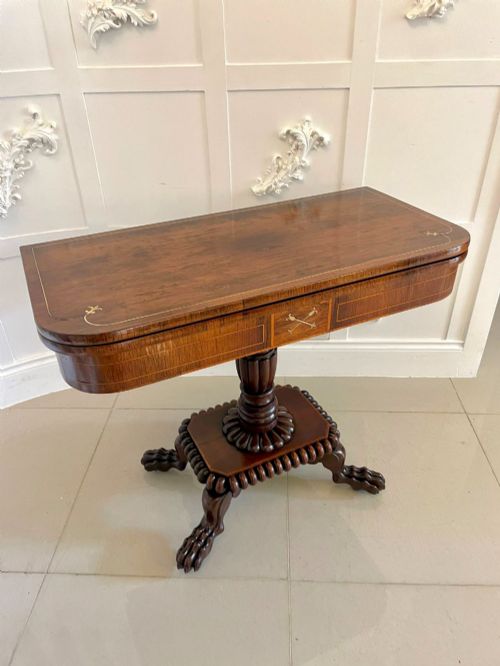
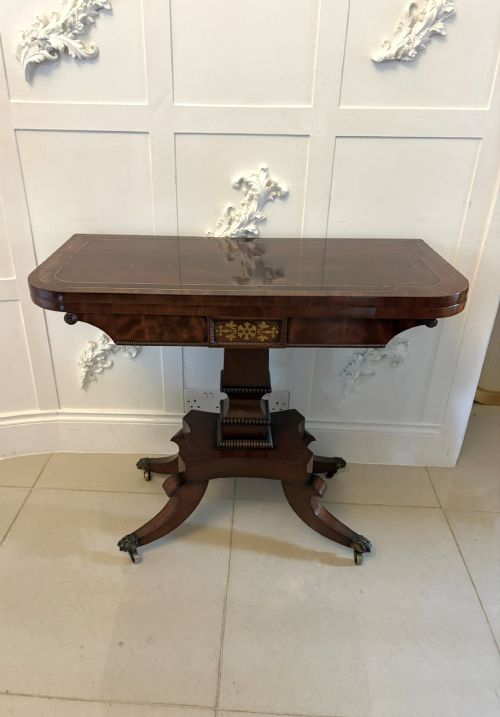
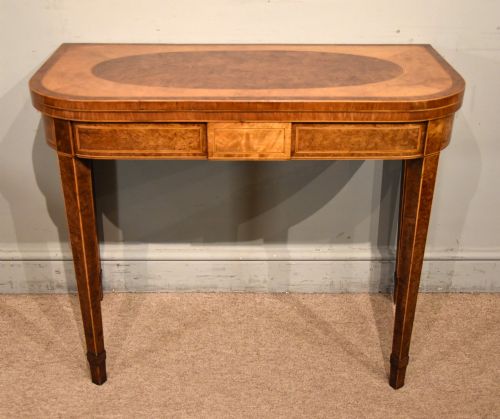
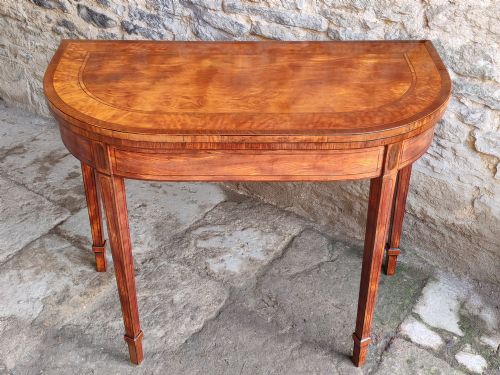
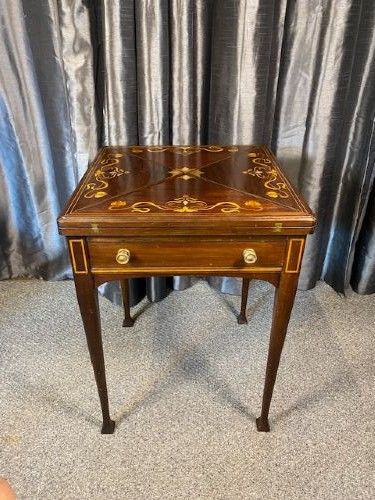
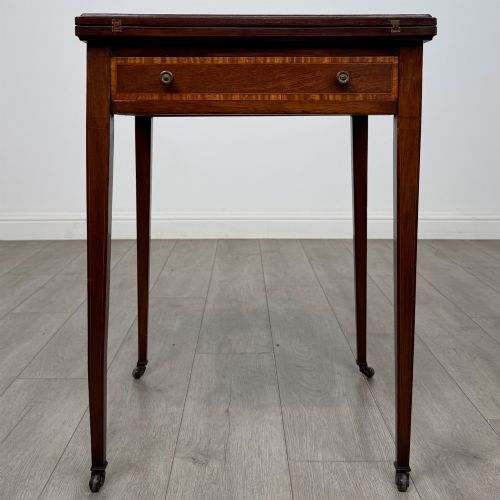
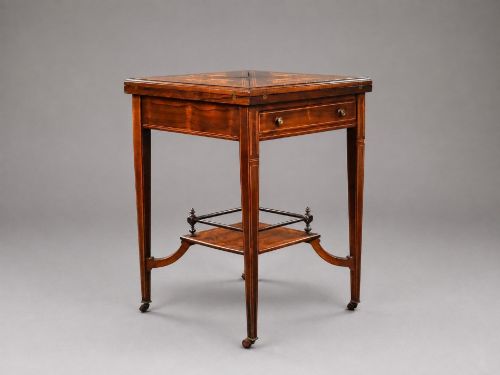
An inlay games table is a piece of furniture designed for leisure, featuring decorative wood work or brass set into the surface to mark out chess boards or decorative motifs. These tables appear across Georgian, Regency, Victorian, and Edwardian periods, taking forms such as fold-over card tables, envelope tops, and occasional tables.
The versions most common on this page are mahogany and rosewood examples from the Regency and Victorian eras, often featuring satinwood, boxwood, or brass details. Many survive as fold-over console or demi-lune tables that double as side tables when closed.
How they were made
Cabinet makers utilised dense hardwoods like mahogany, rosewood, and walnut as a base, applying veneers of burr yew, kingwood, or satinwood to the top surfaces. Timber frames were often shaped into demi-lune, rectangular, or octagonal forms before receiving their surface ornament.
Inlay work relied on contrasting strips of boxwood, ebony, and brass let into channels cut into the solid wood or veneer. Marquetry employed different tinted wood veneers assembled to form pictorial or geometric designs, while ormolu mounts were added to later Victorian pieces.
The periods represented span from the late 18th century through the Georgian, Regency, and Victorian eras into the Edwardian period.
What varies in quality
The standard of timber selection and figure dictates much of the visual weight, with highly figured burr walnut, amboyna, or Honduras mahogany marking the more ambitious examples. Plain straight-grained secondary woods sit at the simpler end of the range.
The precision of the inlay work separates standard production from finer cabinet making. Crisp mitres around chess squares, tight juxtaposition of boxwood and ebony lines, and cleanly seated brass stringing show the hand of a skilled maker.
George Bullock·Bruce & Burns of Edinburgh
The Inlay Games Table Glossary
- Demilune
- Half-moon shape. These tables sit flat against a wall with a straight back edge and a curved front.
- Crossbanding
- A border of veneer laid around the edge of a table top with the grain running perpendicular to the central panel.
- Marquetry
- The art of forming decorative patterns from fitted pieces of wood veneer.
- Stringing
- Thin lines of contrasting wood or brass inlaid into channels to outline panels or borders.
- Envelope top
- A table top formed of four triangular flaps that swivel and fold open to reveal the playing surface.
Inlay Games Table: Frequently Asked Questions
How do I tell a card table from a tea table?
Card tables usually feature a lined interior surface intended for playing cards, sometimes with small corner wells for counters. Tea tables often display plain polished wood on the inside of the fold-over top.
Many tables served both purposes interchangeably depending on the domestic needs of the household.
What woods were used for inlay?
Cabinet makers used contrasting pale and dark timbers such as boxwood, satinwood, and ebony to create sharp visual borders. Brass stringing was also common during the Regency period.
Geometric parquetry often incorporated walnut and rosewood to form repeating patterns.
Where were these tables placed?
These tables stood against drawing room walls as console or side tables when not in use for gaming. When guests arrived, the top folded out or swirled around into the centre of the room.
Their dual function made them practical for entertaining in period homes.