
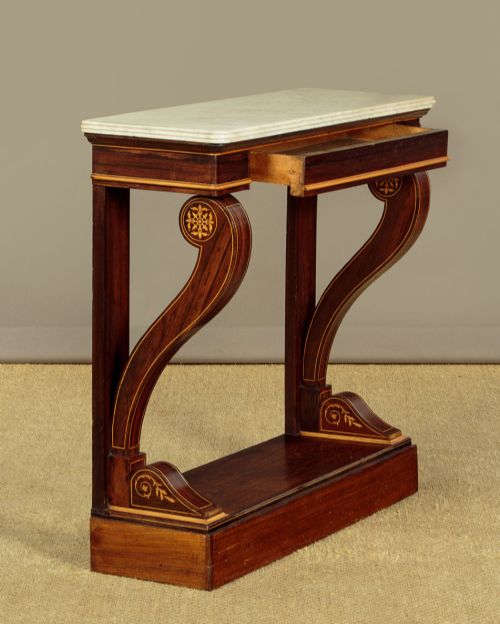
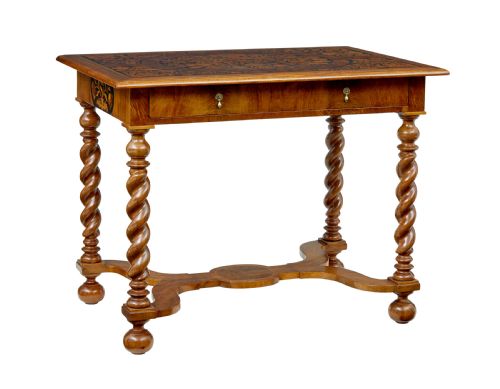
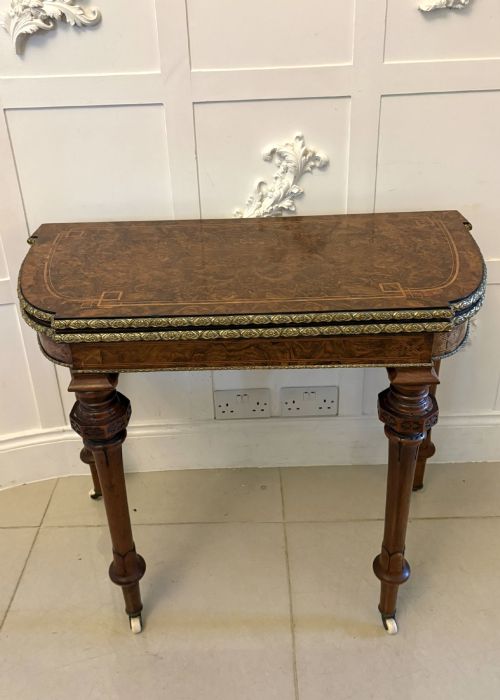
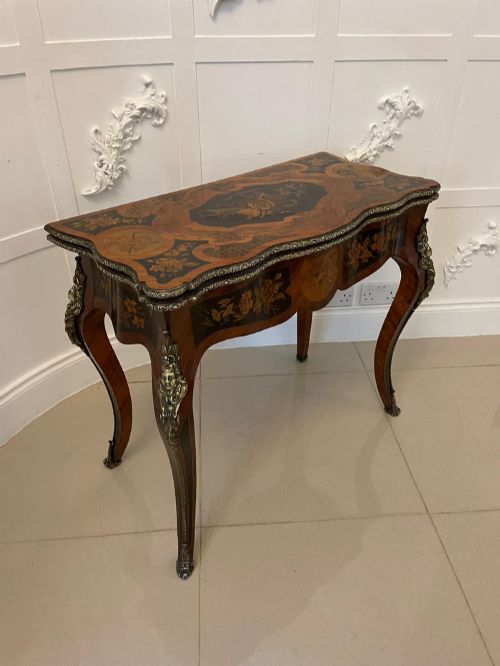


Victorian Marquetry Console Table
When you choose a victorian marquetry console table, you bring home a piece of nineteenth-century craftsmanship designed to anchor a formal room.
Victorian Marquetry Console Table
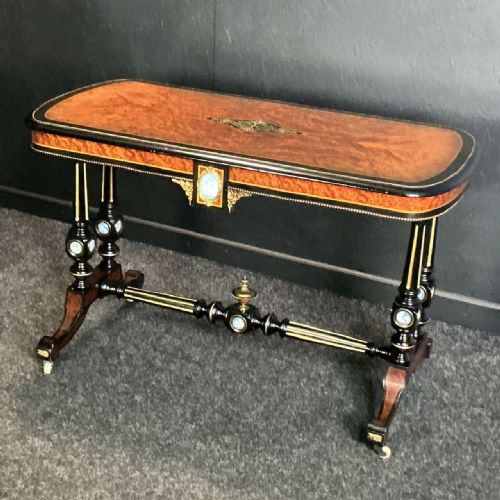
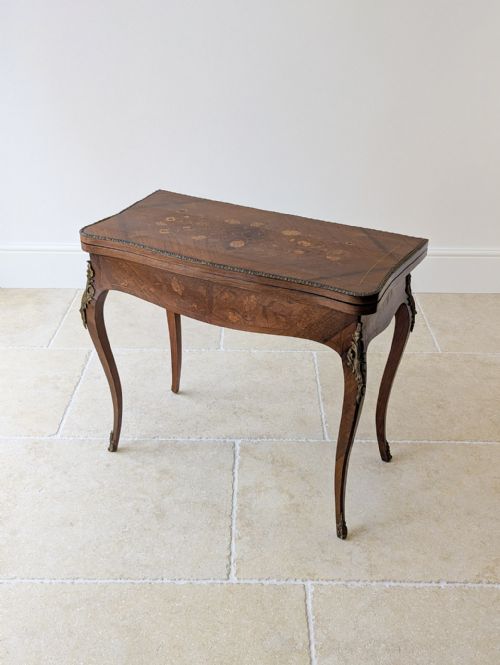
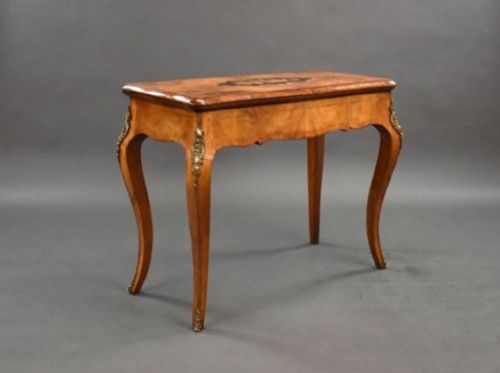
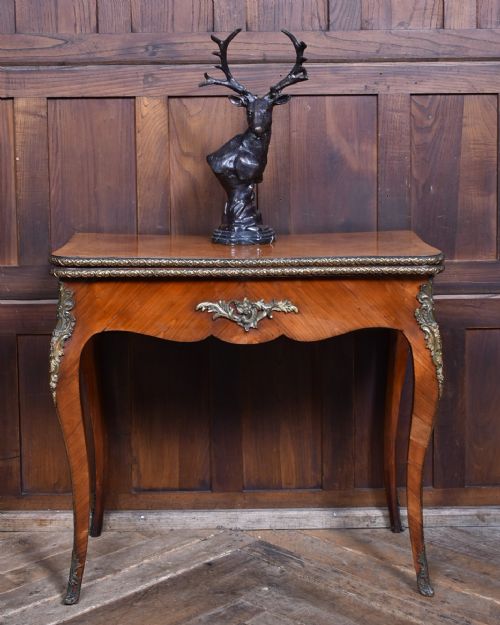
A victorian marquetry console table encompasses varied forms designed for display and entertainment, appearing frequently as card tables, games tables, and pier tables. These pieces date across the nineteenth century, with strong representation from the middle and late decades.
The materials span burr walnut, walnut, mahogany, rosewood, and kingwood, enriched by complex marquetry inlay and exotic woods. Many examples incorporate brass and ormolu mounts, reflecting diverse stylistic influences including French Louis XV revival and Napoleon III designs.
How They Were Made
Cabinet makers utilised foundational timbers such as walnut, burr walnut, mahogany, and rosewood, applying contrasting veneers and marquetry inlay across the surfaces. Exotic woods supplied the varied tones required for intricate floral and geometric marquetry patterns.
Metalwork played a structural and decorative role, with ormolu mounts, brass details, and occasional mother-of-pearl embellishments integrated into the timber frames. Ebonised wood and kingwood also appeared in specific revival pieces requiring darker framing.
Joinery techniques supported complex folding mechanisms for card and games tables alongside rigid frames for side and console pieces. The application of brass inlay and Tunbridge ware details required precise hand-fitting into the primary wood.
Some nineteenth-century card tables hide secret compartments beneath their folding tops, originally designed for stashing stray sixpences.
What Varies in Quality
The ambition of the marquetry design separates standard production from exhibition pieces, with multi-wood floral compositions and intricate exotic wood detailing marking the upper tier. The precision of the inlay cutting and the integration into the surrounding burr walnut or kingwood define the visual standard.
The presence of substantial ormolu mounts and cast brass details elevates a piece, particularly when combined with secondary materials like mother-of-pearl or Boullework. Maker attribution to established firms like Edwards and Roberts or Henry Dasson distinguishes high-end workshops from anonymous production.
The selection of timber, such as highly figured burr walnut or richly grained rosewood, dictates the base quality of the construction. Tables demonstrating refined proportions in serpentine, kidney-shaped, or demi-lune forms achieve a higher grade than simpler rectangular formats.
Edwards & Roberts·Henry Dasson·Donald Ross
The Victorian Marquetry Console Table Glossary
- Marquetry Inlay
- Decorative patterns formed by fitting small pieces of veneer into a primary wood ground. This technique creates pictorial or geometric designs across tabletops.
- Ormolu
- Gilded bronze used for decorative mounts and framing on nineteenth-century furniture. It accents the corners, aprons, and legs of revival pieces.
- Burr Walnut
- Timber taken from the wart or growth on a walnut tree, producing swirling grain patterns. It served as a primary decorative surface for Victorian tables.
- Pier Table
- A table designed to stand against a wall, typically between two windows. These pieces often sat beneath a mirror.
- Boulle
- A form of marquetry using brass and tortoiseshell inlay developed in France. It appears on Napoleon III and Victorian revival pieces.
Victorian Marquetry Console Table: Frequently Asked Questions
How were these tables used?
Victorian households utilised these tables for multiple functions, serving as side pieces for display or opening up into card and games tables for evening entertainment. Writing tables and lamp tables provided dedicated surfaces for correspondence and illumination.
The versatile design allowed homeowners to move versatile card tables into the centre of a room when guests arrived. Their dual nature as ornamental furniture and practical surface made them central to nineteenth-century interior arrangements.
How do I identify French revival styles?
French revival pieces incorporate sweeping serpentine lines, elaborate ormolu mounts, and kingwood veneers that echo Louis XV aesthetics. Elements like Boullework and ebonised finishes point specifically toward Napoleon III influences.
English interpretations often retain sturdier proportions while adopting continental floral marquetry. Examining the specific combination of woods and metal mounts helps clarify the stylistic origin of each table.
Where should I place a console table?
These tables find a natural home against hallway walls, living room perimeters, or beneath large wall mirrors as traditional pier tables. Folding card tables function effectively closed against a wall or opened in an open space.
Their decorative marquetry tops benefit from locations with adequate ambient light to highlight the grain and exotic wood inlay. Care should be taken to avoid direct sunlight to protect the polished burr walnut and rosewood surfaces.