




Antique Rococo Card Table
An antique rococo card table brings theatrical carved flourish and ingenious fold-over timber engineering into a drawing room.
Antique Rococo Card Table
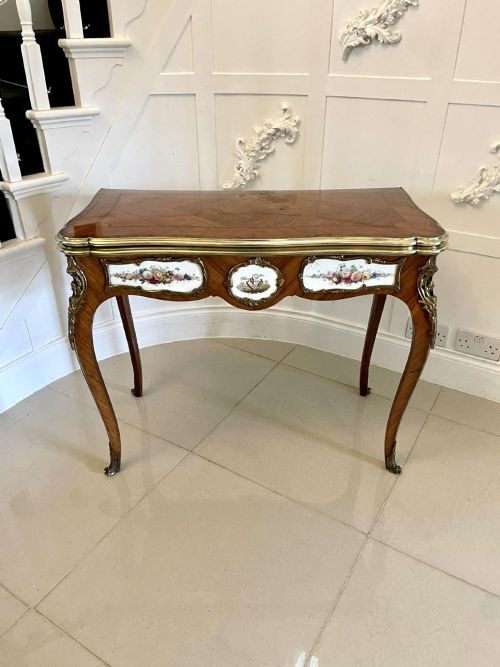
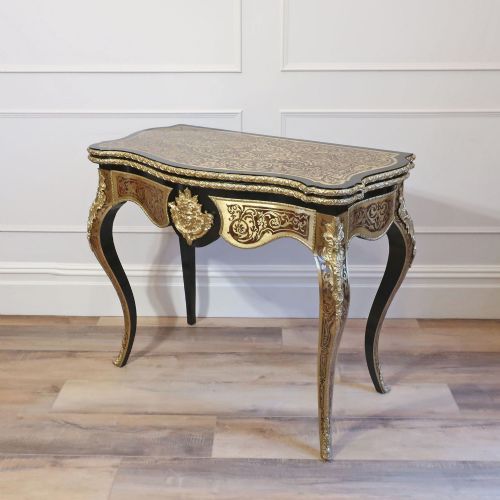
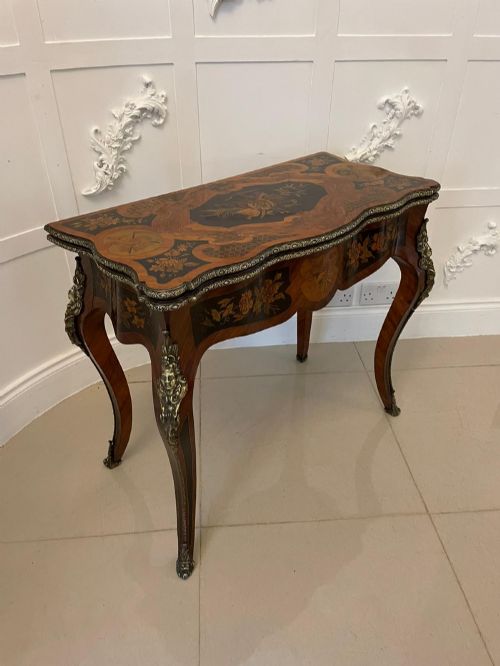
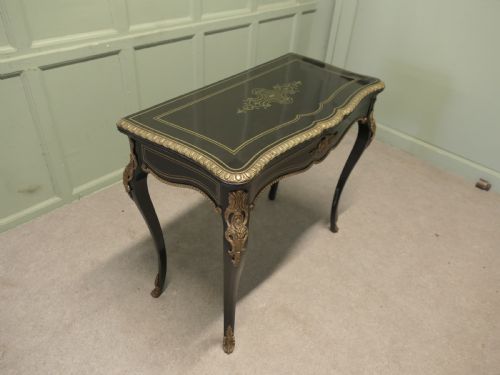
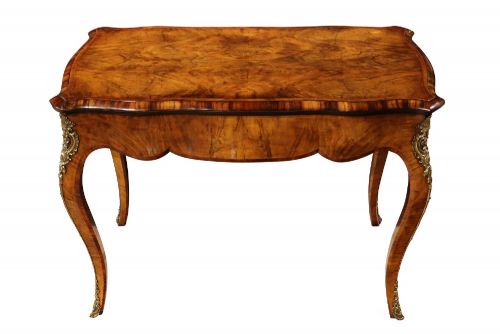
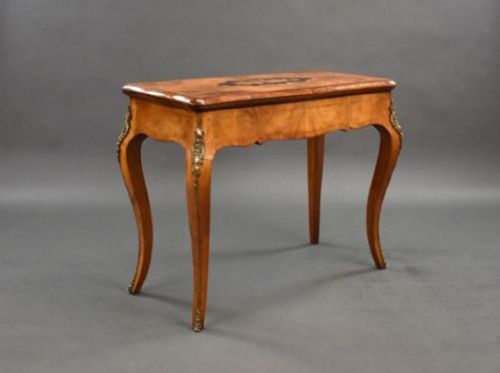
An antique rococo card table is a multi-functional piece of furniture designed for parlour games, tea, and social gatherings, featuring the exuberant curves and asymmetrical natural motifs characteristic of the revival styles. These tables typically present a fold-over top supported on cabriole legs, transforming a compact console into a baize-lined playing surface when opened.
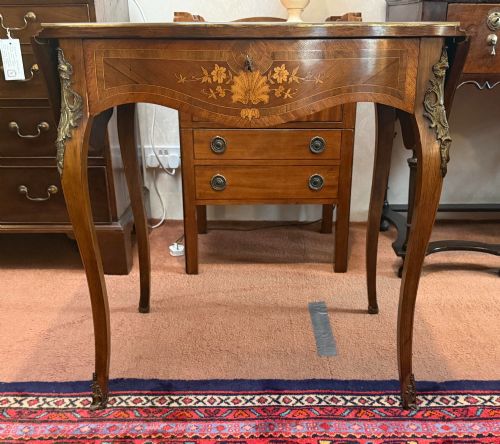
The pieces appearing on this page stem predominantly from the Victorian era and the nineteenth century, with strong representation from French Louis XV revival workshops and English makers. Walnut, burr walnut, rosewood, and kingwood dominate the forms, frequently enriched with marquetry inlay and parquetry patterns.
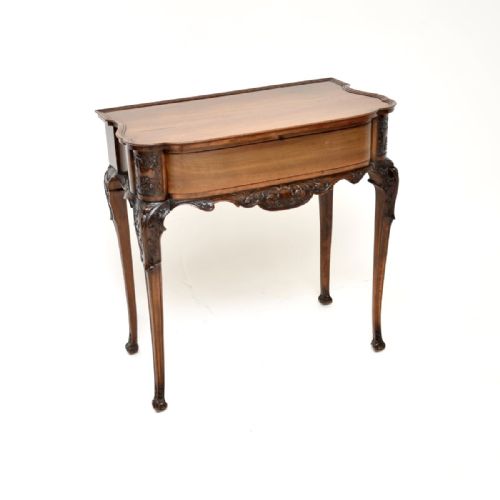
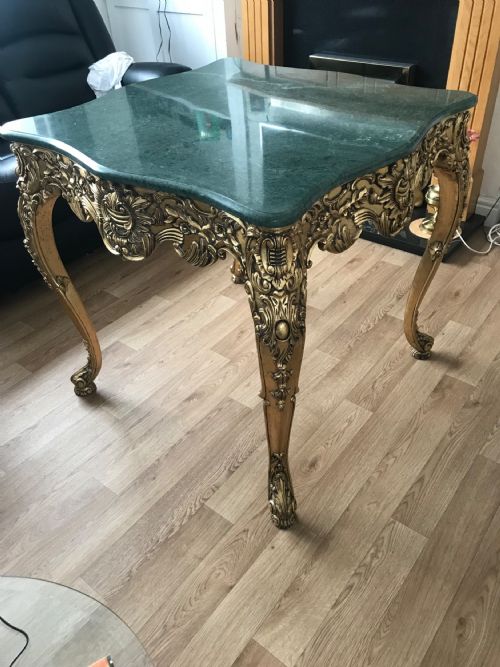
Buyers will most commonly encounter mid-nineteenth-century examples displaying serpentine edges and elaborate floral carving. These range from restrained English walnut versions to highly ornamented French models mounted with ormolu.
Materials and construction methods
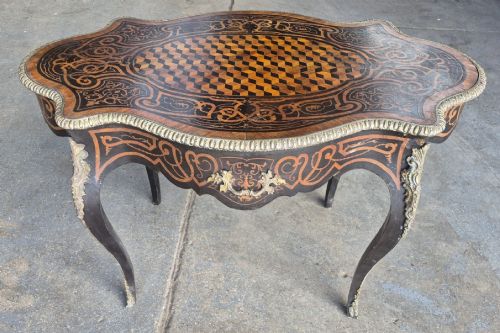
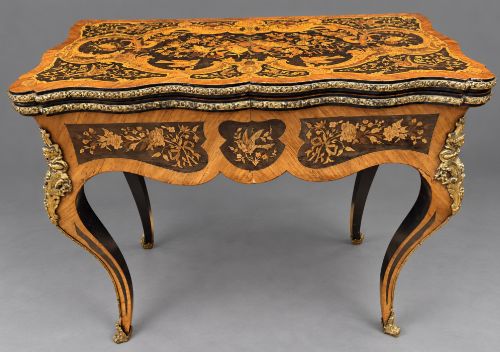
Cabinetmakers constructed these tables using dense structural timbers like mahogany and walnut as a carcase, overlaid with decorative decorative veneers including burr walnut, kingwood, and rosewood. Parquetry and marquetry panels utilised precision-cut contrasting woods to create intricate geometric or floral designs across the fold-over tops.
Cast bronze ormolu mounts, chased and gilt, edge the corners and apron rails of the most ambitious French-influenced pieces. Brass inlay and Boulle work incorporating tortoiseshell and brass further elevate the decorative surface of select games tables.
Antique Rococo Card Table Retail Price Guide 2026
Typical asking prices for rococo card table among the pieces listed under this phrase on Sellingantiques today, from the lower quarter to the upper quarter. They describe what is for sale here now, not the wider market.
Several tables conceal hidden wells beneath their folding tops, originally designed for storing ivory counters and French whist markers.
Distinctions in quality
Quality rests upon the depth and crispness of the timber carving, the choice of veneer figure, and the precision of the marquetry work. Superior examples exhibit tightly figured burr walnut or meticulously matched kingwood veneers that wrap seamlessly around serpentine curves without buckling.
The joinery of the fold-over mechanism and the stability of the cabriole legs dictate structural integrity. Tables bearing signatures from notable cabinet-making firms command attention through superior bronze mounts, heavier gauge ormolu, and refined internal hinge engineering.
G T Morant·Maison Millet·Edwards & Roberts·Maple & Co
The Antique Rococo Card Table Glossary
- Ormolu
- Gilded bronze mounts applied to furniture. This technique added decorative metallic highlights to the corners and aprons of revival pieces.
- Marquetry
- Inlaid wood patterns forming pictorial or floral designs. Artisans used various tinted woods to create contrasting scenes on the table tops.
- Parquetry
- Geometric patterns formed by small pieces of wood veneer. This technique frequently decorated the playing surfaces and borders.
- Serpentine
- A curved line bending inward then outward, resembling a snake. This contour defined the characteristic shaped edges of the table tops.
- Boulle
- A form of marquetry utilising brass and tortoiseshell. This technique appeared on French-style tables produced during the nineteenth century.
Antique Rococo Card Table: Frequently Asked Questions
How do you open an antique card table?
The hinged top rotates or unfolds to reveal a concealed compartment for cards and counters, supported by a swing leg or a pivoting frieze drawer.
Care must be taken to lift the top cleanly before pivoting the supporting leg to avoid straining the original wooden hinges.
What is baize and how is it used?
Baize is a coarse woollen fabric traditionally used to line the interior playing surface of games tables. It provided a soft, non-slip texture for dealing cards and rolling dice.
Many surviving tables retain their original green or red baize, though some have been professionally relined over the decades.
How do you date a Victorian card table?
Dating relies on timber choices, structural forms, and stylistic revivals, with burr walnut and rosewood peaking during the mid-nineteenth century. Cabinetmaker stamps, brass lock plates, and screw types offer further clues to the decade of manufacture.
French influence intensified during the 1850s and 1860s, yielding ornate ormolu mounts and intricate marquetry.
Can these tables be used daily?
These tables adapt well to modern living as console or side tables when closed, requiring only occasional opening for display or light use. Excessive weight or moisture should be kept away from the polished veneered surfaces.
Placing them away from direct sunlight preserves the rich tones of the walnut and kingwood veneers.