

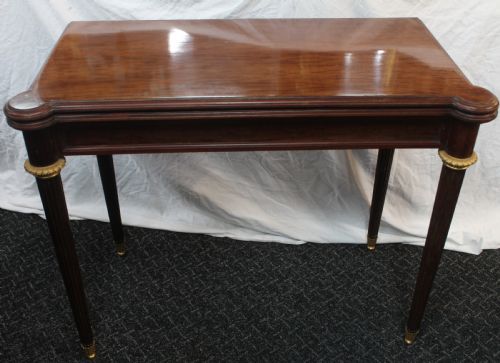
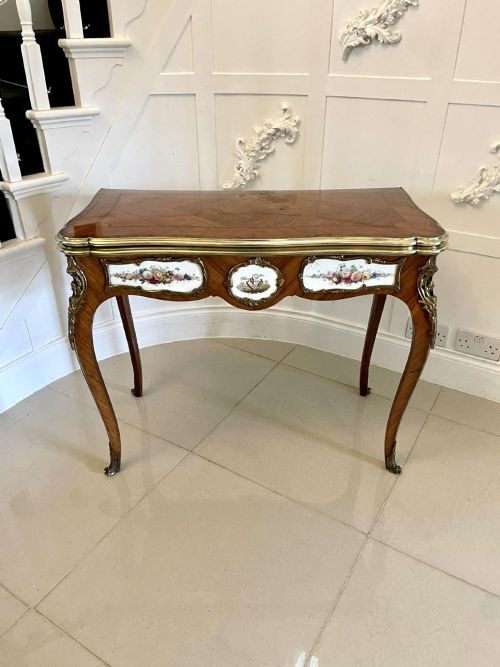
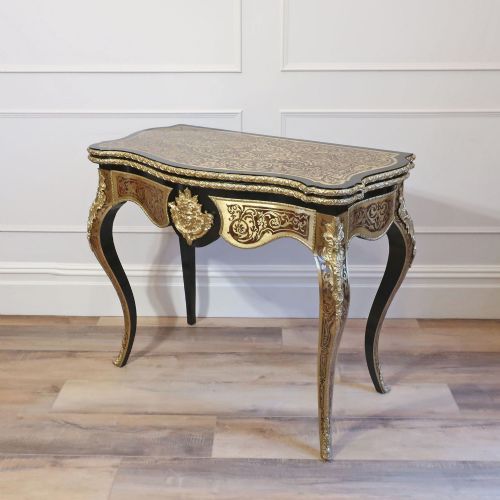
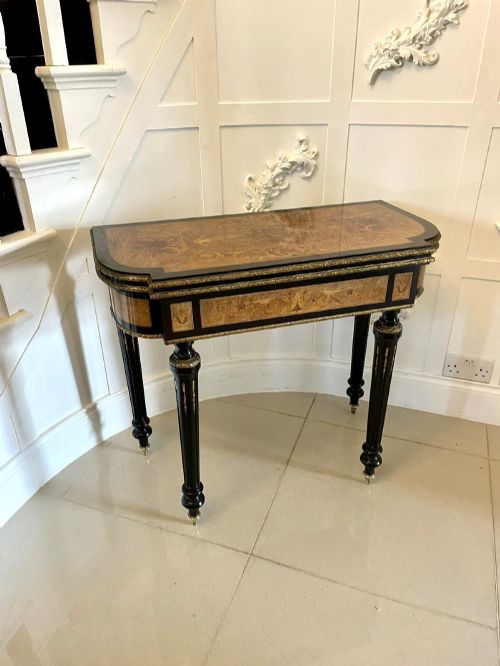




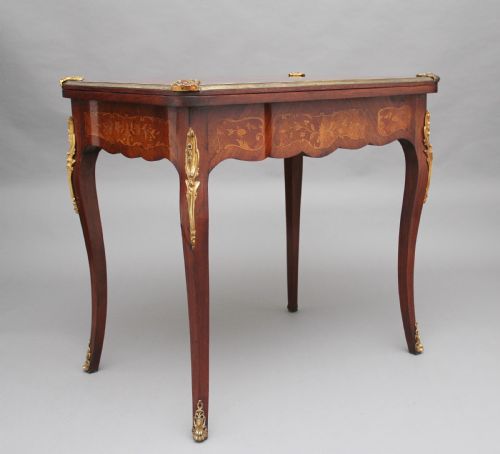


Gilt Mounted Card Table
A gilt mounted card table brings the rich display of nineteenth-century French and Victorian reception rooms straight into a modern drawing room.
Gilt Mounted Card Table
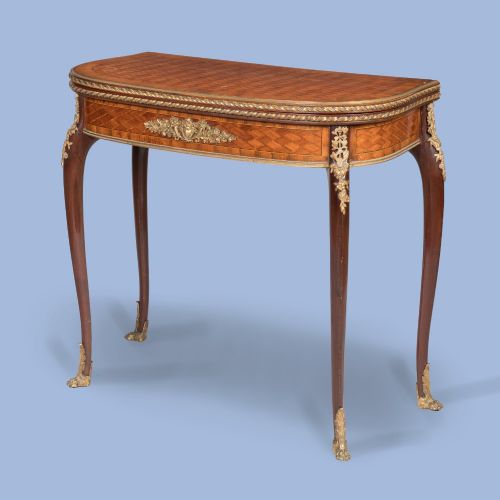
A gilt mounted card table combines a fold-over or console top designed for gaming with decorative bronze or ormolu mounts, predominantly stemming from the nineteenth century. These tables emerge from periods of enthusiastic revival, translating earlier French royal aesthetics into Victorian drawing-room furniture.
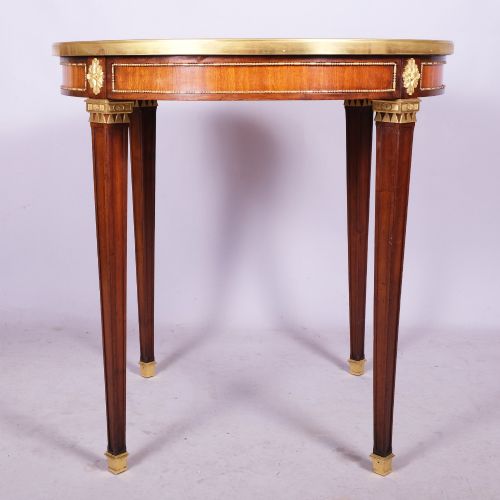
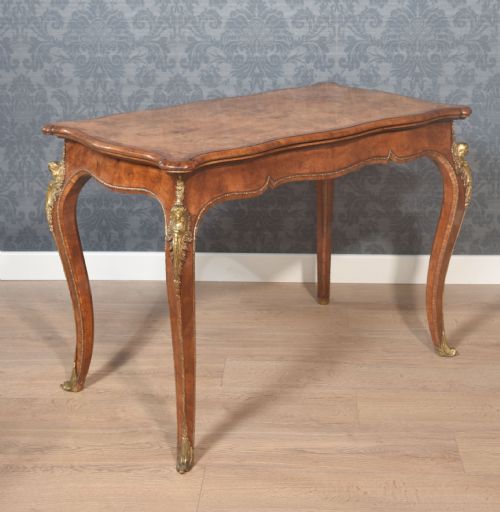
The versions most commonly met on this page span the Victorian era and late nineteenth century, often reflecting Louis XV and Louis XVI styles through curved cabriole legs or straight tapered supports. Alongside dedicated card and games tables, buyers encounter side tables and bouillotte forms adapted for domestic entertainment.
Makers and designers of the period, from established ateliers to prominent cabinet-makers, employed rich timbers such as kingwood and walnut beneath their gilt mounts. The resulting pieces served both a functional purpose for evening card parties and a purely decorative role against a parlour wall.
How they were made
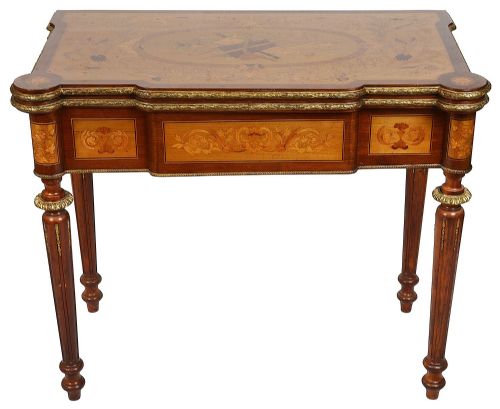
Cabinet-makers constructed the carcase of a gilt mounted card table using structural woods like mahogany or walnut, then overlaid them with decorative veneers such as kingwood and intricate parquetry or marquetry patterns. Ebonised wood also appears as a contrasting ground for metallic and ceramic elements.
Gilt bronze and ormolu mounts were cast and hand-chased before being applied to corners, apron rails, and legs to highlight the structural lines of the French Napoleon III and revival pieces. Porcelain plaques, marble tops, and brass stringing were integrated into the surface design to complete the opulent effect.
Gilt Mounted Card Table Retail Price Guide 2026
Typical asking prices for gilt mounted card table among the pieces listed under this phrase on Sellingantiques today, from the lower quarter to the upper quarter. They describe what is for sale here now, not the wider market.
These tables spent their youth holding earnest hands of whist while hiding secret felt interiors beneath polite French veneers.
What varies in quality
The distinction between standard production and exhibition quality rests heavily on the crispness of the ormolu chasing and the complexity of the wood marquetry. Finely cast mounts possess sharp definition and deep, even gilding, whereas lesser examples show softer edges and flat surfaces.
Construction methods also set pieces apart, particularly the precision of the hinge mechanisms allowing the fold-over tops to operate smoothly. Superior tables display balanced timber selection across the interior and exterior surfaces, alongside attributed craftsmanship from known workshops.
G T Morant·Maison Millet·François Linke·Joseph-Emmanuel Zwiener
The Gilt Mounted Card Table Glossary
- Ormolu
- Gilded bronze used for decorative mounts and accents on furniture. It provides a bright metallic contrast to dark woods.
- Kingwood
- A dense, richly figured tropical timber favoured for French cabinet-making. Its distinctive grain patterns define fine nineteenth-century marquetry.
- Parquetry
- Geometric wood inlay work arranged in patterns such as cubes or chequers. It decorates the surface of many revival card tables.
- Boulle
- A technique of inlaying brass and tortoiseshell into wood. It takes its name from the master cabinet-maker André-Charles Boulle.
- Bouillotte
- A small round card table with a raised gallery edge designed for a specific French card game. Examples often feature marble tops and inset candle sconces.
Gilt Mounted Card Table: Frequently Asked Questions
How do you open a fold-over card table?
The top leaf pivots or hinges open, frequently supported by a swinging rear leg or a concertina frame hidden within the frieze. This reveals a lined playing surface underneath.
Care must be taken to support the weight evenly during the action to prevent strain on the antique hinges and internal wooden pivots.
Can these tables still be used for cards?
Many of these tables retain their original baize or cloth-lined interiors, making them suitable for light use during games evenings. However, modern collectors often protect the antique surfaces with custom glass or felt covers.
Checking the stability of the folding mechanism helps ensure the table can safely bear the weight of normal social use without risking damage to the antique timber.
How should I clean ormolu mounts?
Ormolu requires gentle dusting with a soft, dry brush to prevent the accumulation of dirt in the recessed areas of the chasing. Moisture and abrasive metal polishes should be strictly avoided.
Professional conservation cleaning is recommended if the original mercury or fire gilding shows heavy tarnishing or dark oxidation.