
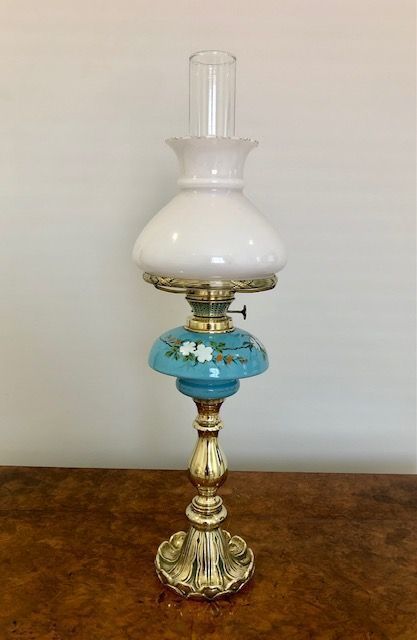
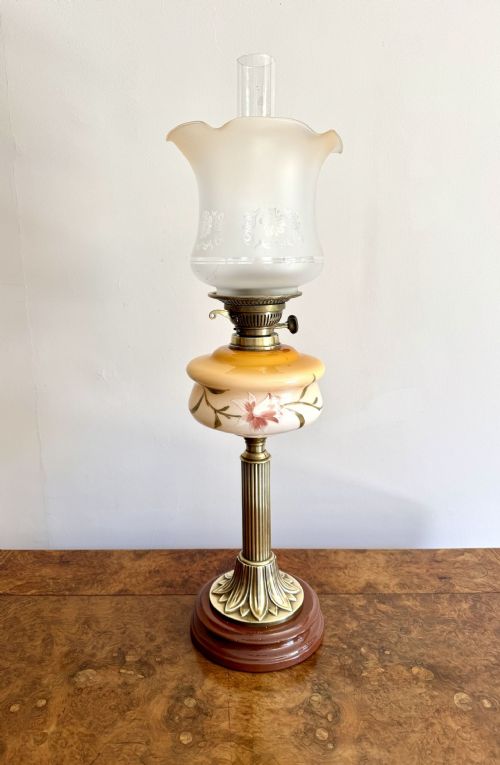
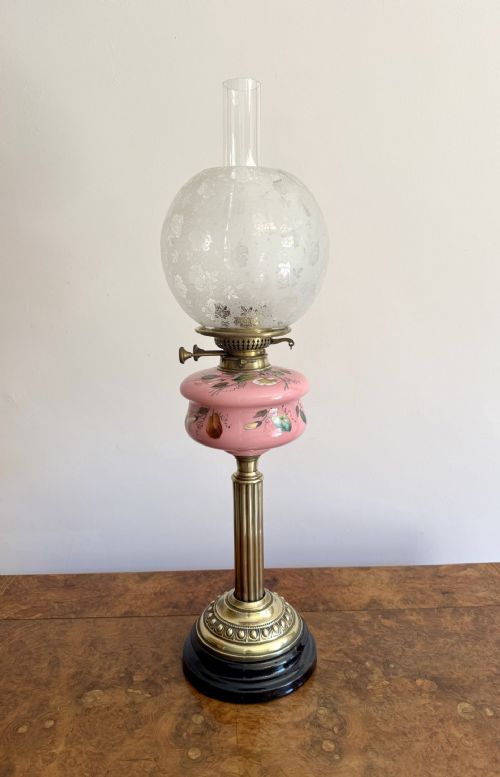
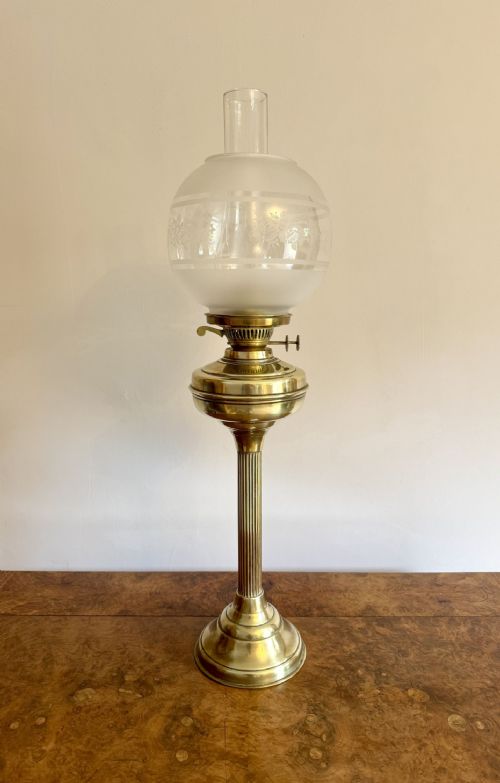
Victorian Column Oil Lamp
These Victorian column oil lamps bring solid brass engineering, cut crystal, and coloured glass together to illuminate a room with genuine period warmth.
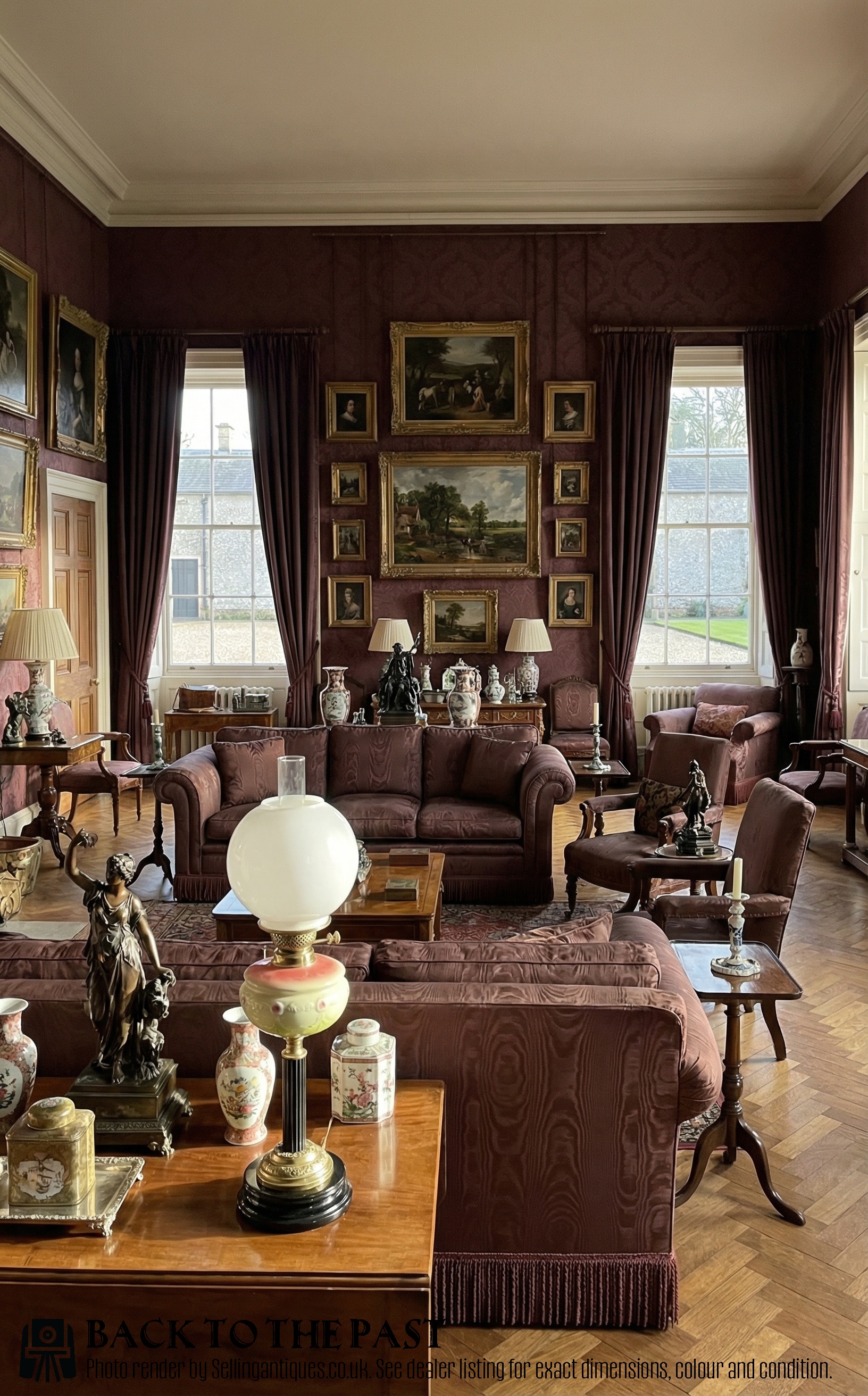
Victorian Column Oil Lamp
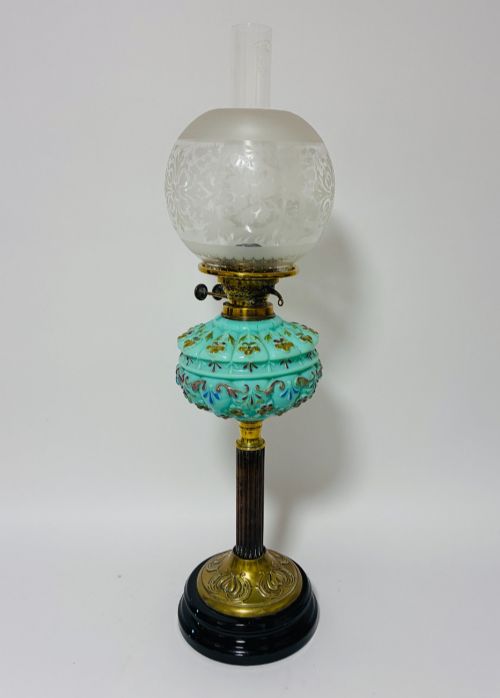
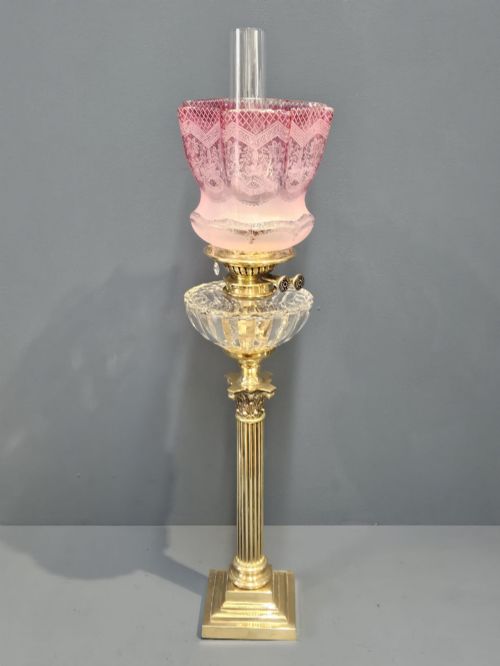
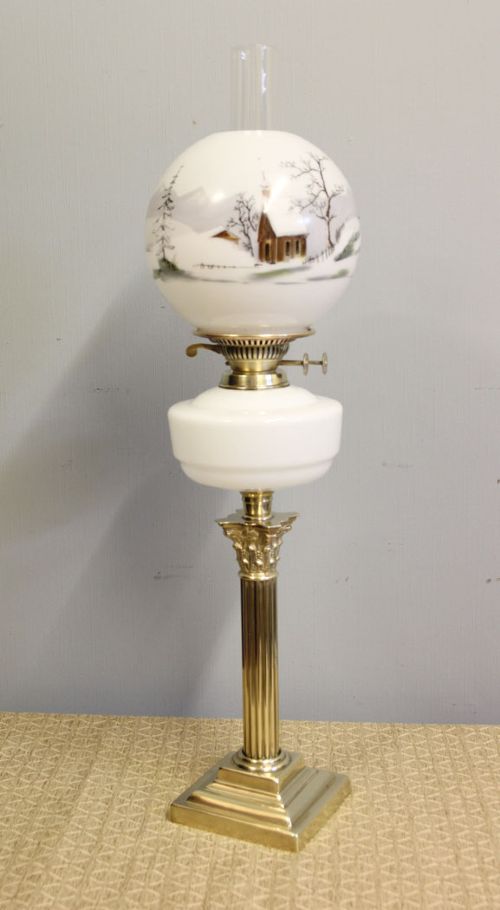
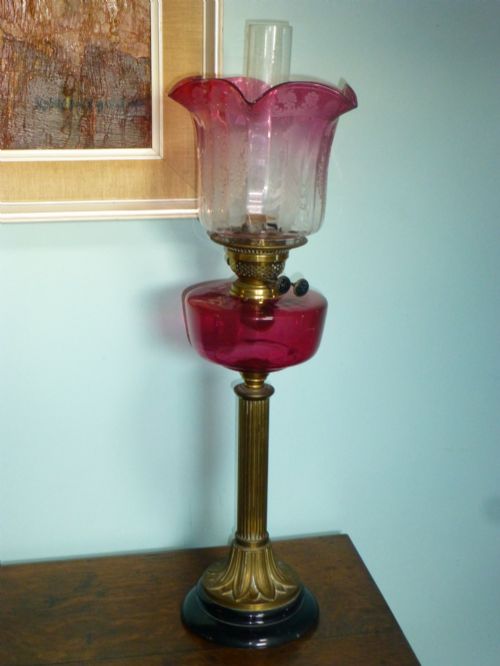
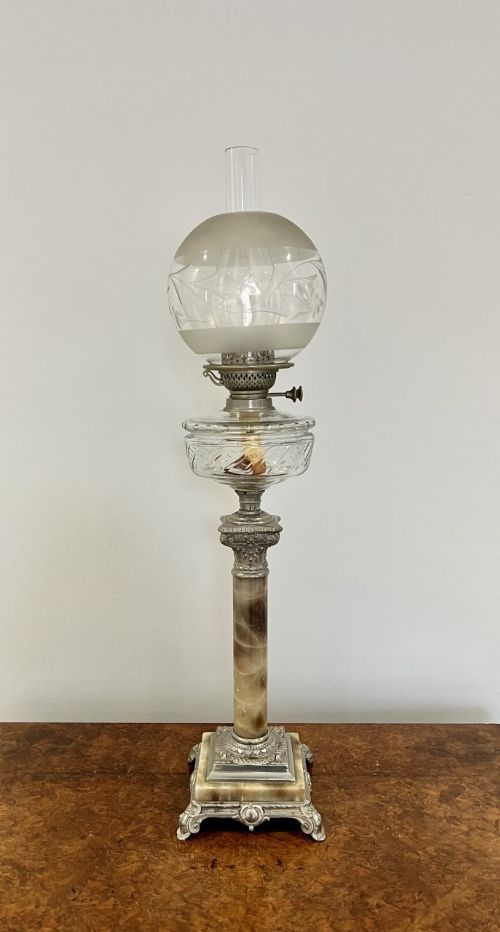
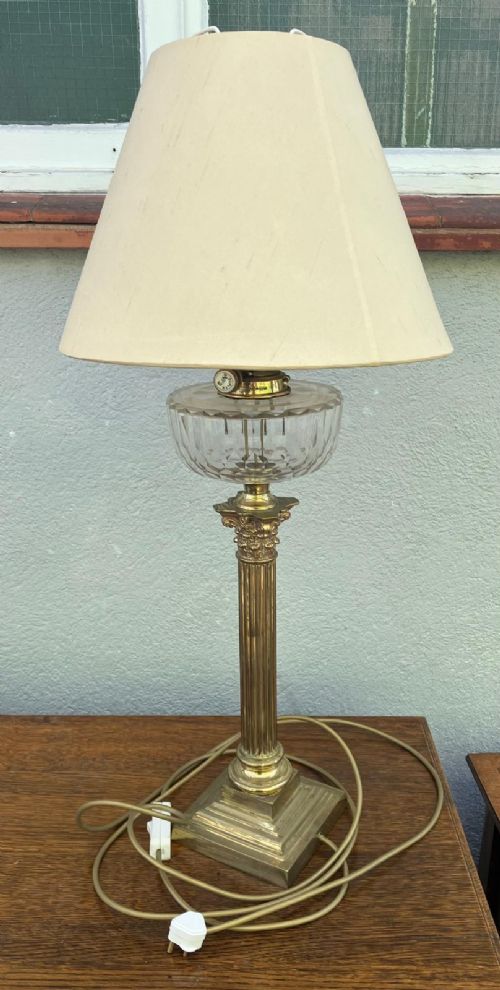
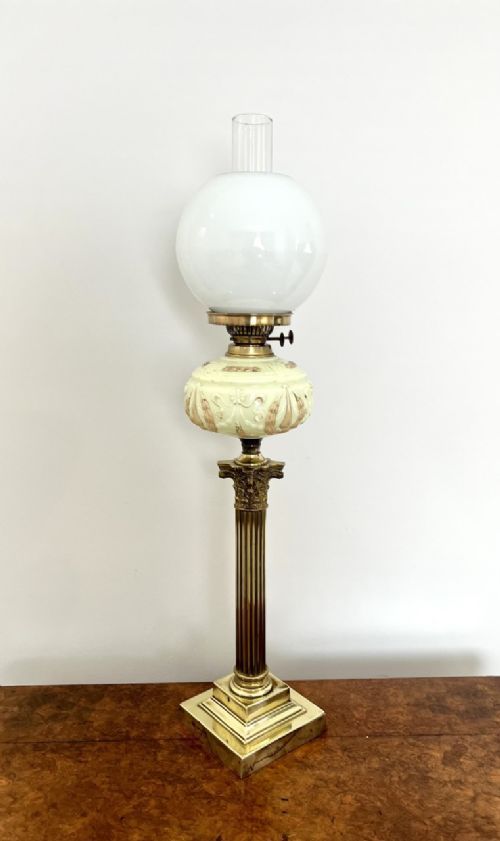
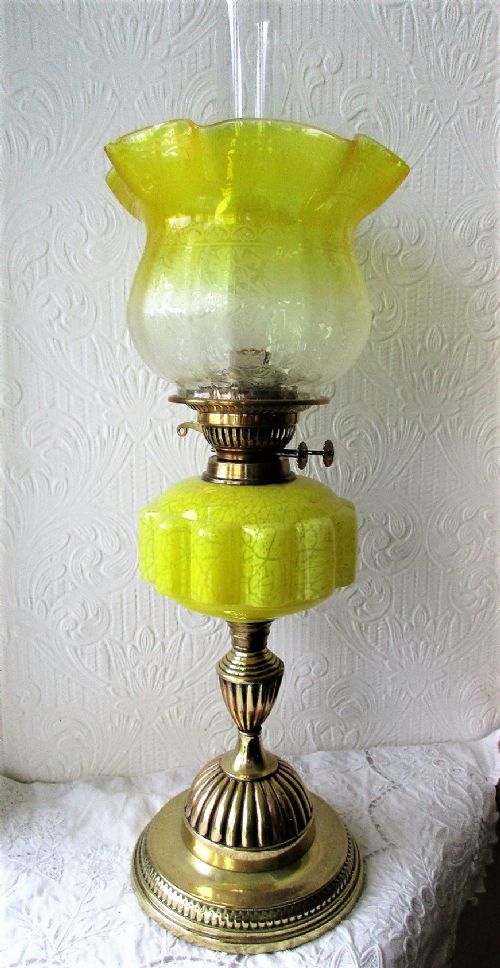
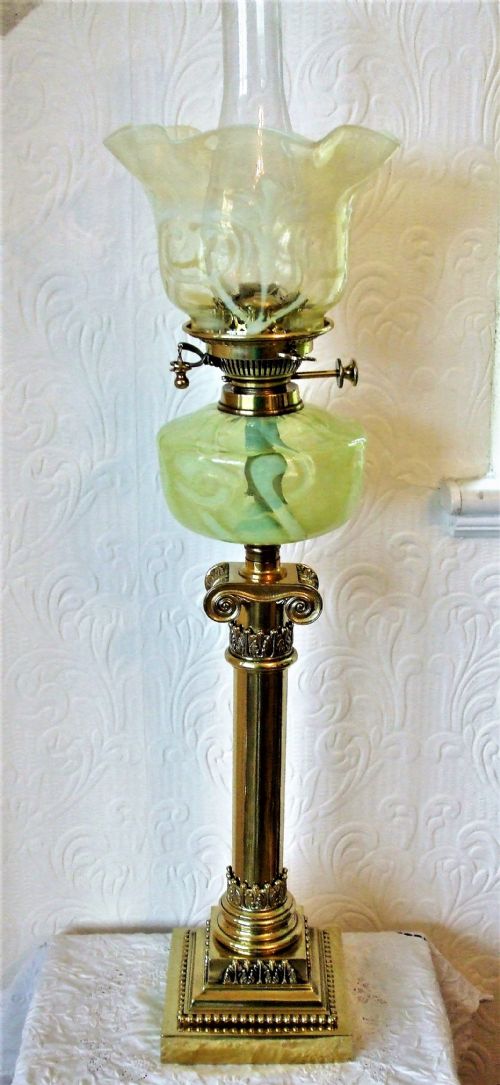
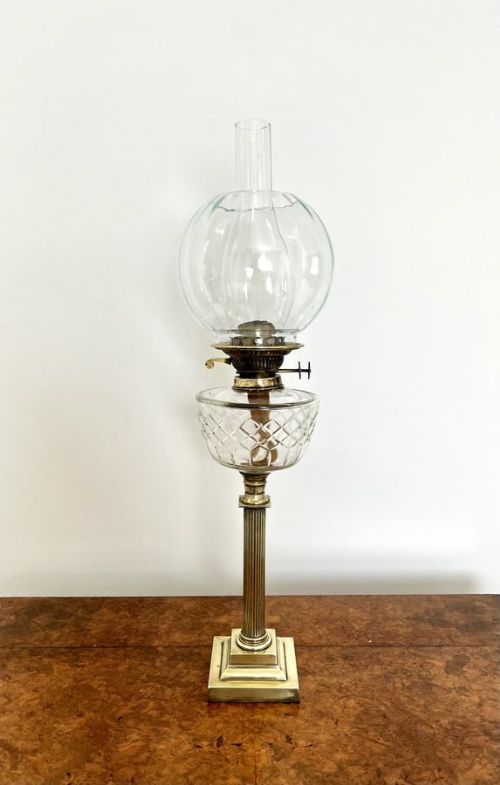
When searching for a victorian column oil lamp, collectors encounter stately lighting fixtures that combine architectural metal shafts with decorative glass fonts and fabric or etched shades. The most common examples seen here feature Corinthian or reeded brass columns rising from heavy square bases, often paired with ruby, cranberry, opaline, or blue glass reservoirs.
These pieces originated primarily in the nineteenth century as functional domestic lighting, utilising twin-burner systems like the duplex mechanism to provide bright illumination before the widespread adoption of electricity. Many survive in their original oil-burning configuration, while others have been carefully converted for modern table or floor use.
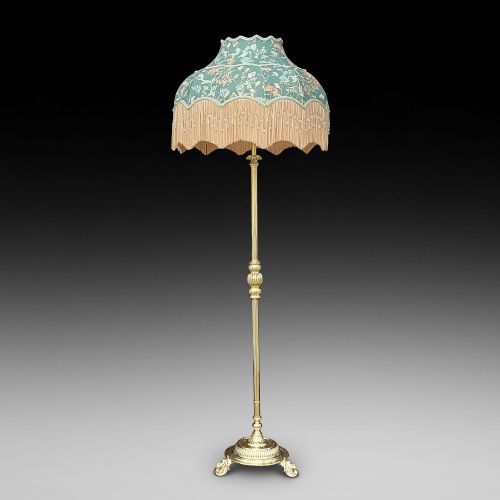
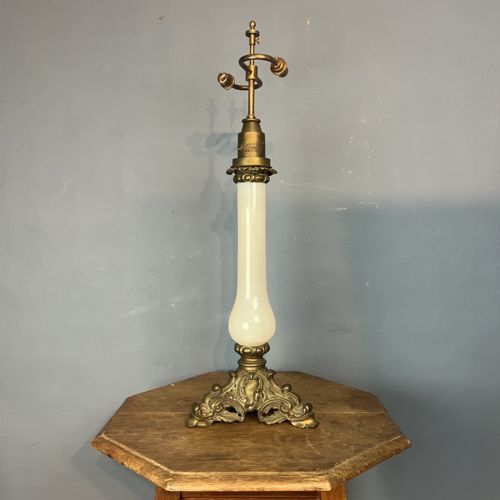
The materials reflect the Victorian penchant for mixed media, pairing heavy metalwork with delicate glass and ceramic components. Standards range from modest table heights to taller floor-standing oil lamp formats designed to sit directly on the carpet.
How they were made
Makers constructed these columns from cast and turned brass, bronze, or silver plate, often detailing the capitals with classical acanthus leaves and fluted shafts. Glass fonts and tulip shades were mouth-blown, sometimes cased in cranberry or opaline layers, and wheel-cut with floral or geometric motifs.
Mechanisms were cast with precision brass engineering, incorporating complex duplex burners and adjustable gallery rings designed to hold fabric or etched glass shades securely. Heavy iron or weighted metal bases were concealed beneath the brass footplates to provide stability for the tall, top-heavy structures.
Victorian Column Oil Lamp Retail Price Guide 2026
Typical asking prices for victorian column oil lamp among the pieces listed under this phrase on Sellingantiques today, from the lower quarter to the upper quarter. They describe what is for sale here now, not the wider market.
Listings feature brass, silver plate, and bronze columns paired with cranberry, opaline, cut crystal, and blue glass fonts.
What varies in quality
Quality rests upon the crispness of the classical casting in the brass capital and the weight of the column itself. Finer examples show sharp, well-defined detailing on the Corinthian leaves rather than soft, worn edges from secondary casting moulds.
The distinction also lies in the glass font and shade combination, where heavy hand-cut crystal or deeply saturated cranberry and opaline glass elevates the piece above standard plain glass reservoirs. Original maker signatures stamped into the brass burner galleries or collars mark the work of notable firms.
Hinks of Birmingham·Goldsmiths and Silversmiths Company·Mc Gary·Osler
The Victorian Column Oil Lamp Glossary
- Corinthian column
- A classical architectural shaft topped with ornate acanthus leaves, frequently utilised for the main stem of these lighting standards.
- Duplex burner
- A double-wick mechanism that produced a brighter flame than single-wick predecessors and became standard on high-end Victorian lighting.
- Opaline glass
- An opaque, milky-white glass popular in the nineteenth century for both fonts and decorative shades.
- Tulip shade
- A flared glass shade shaped like an opening flower, frequently etched with winter scenes or floral patterns.
Victorian Column Oil Lamp: Frequently Asked Questions
Can I still burn oil in them?
Many retain their original mechanisms and burners, allowing them to function with traditional lamp oil if inspected carefully.
However, numerous examples have been converted to electricity for safer, everyday domestic use.
How do I clean the glass fonts?
Glass fonts and shades should be washed gently in warm soapy water using a soft cloth.
Harsh abrasives and submerging plated metal parts must be avoided to preserve the original finishes.
Are these lamps very heavy?
The combination of solid brass columns and weighted internal bases makes these pieces remarkably substantial.
This weight was an intentional engineering feature to prevent the tall standards from tipping over.
How do I date a Victorian lamp?
Dating relies on stylistic clues, patent marks stamped on the brass burners, and the specific colours of glass popular during particular decades.
Records from firms like Hinks help narrow the production era precisely.