





Victorian Coastal Seascape Art
Victorian coastal seascape art brings nineteenth-century shorelines, harbours, and fishing vessels into focus through period paintings and watercolours.
Victorian Coastal Seascape Art
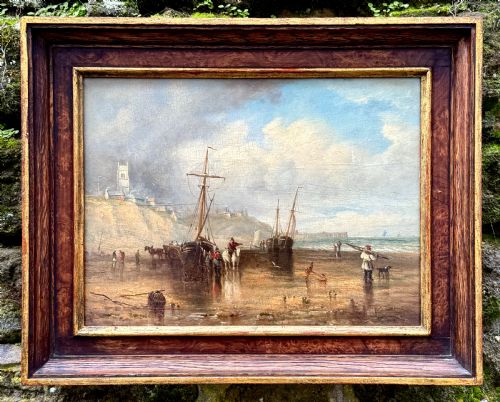
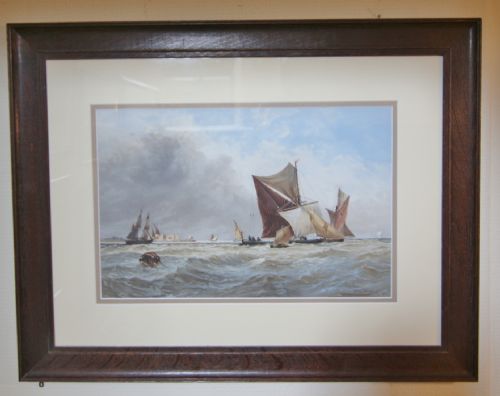
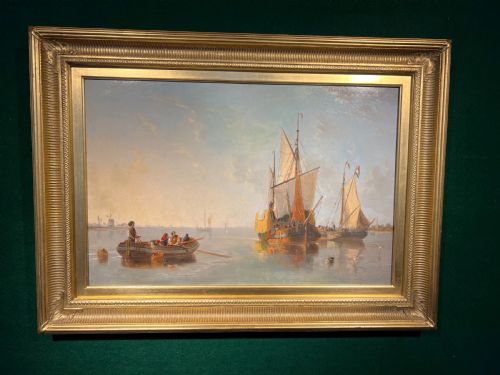
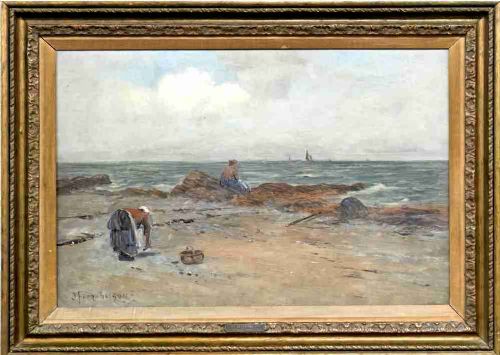
Victorian coastal seascape art encompasses nineteenth-century paintings and watercolours depicting British and Irish shores, river mouths, and busy fishing ports. These works capture specific maritime locations such as St Ives, Scarborough, and Dublin Bay during a period of intense coastal commerce and shifting artistic tastes. Most pieces on this page originate from the mid-nineteenth century through to the early decades of the twentieth century, reflecting the era's fascination with marine subjects.
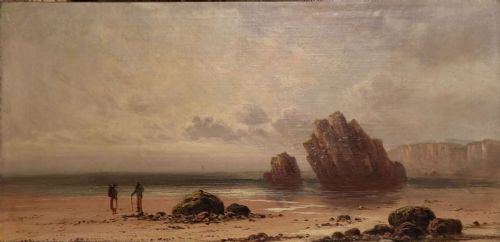
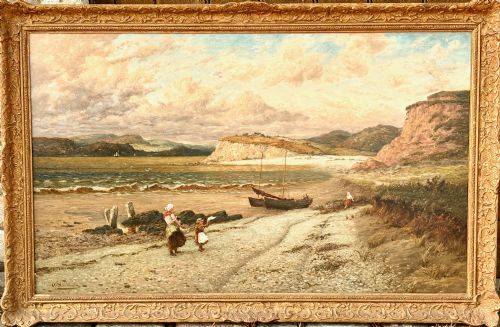
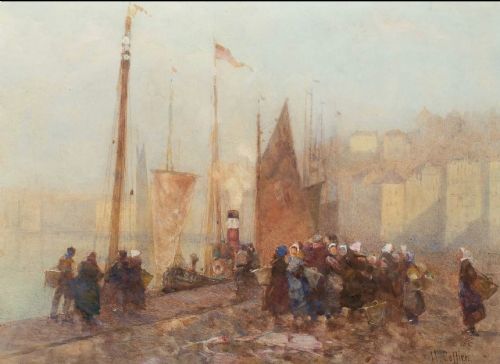
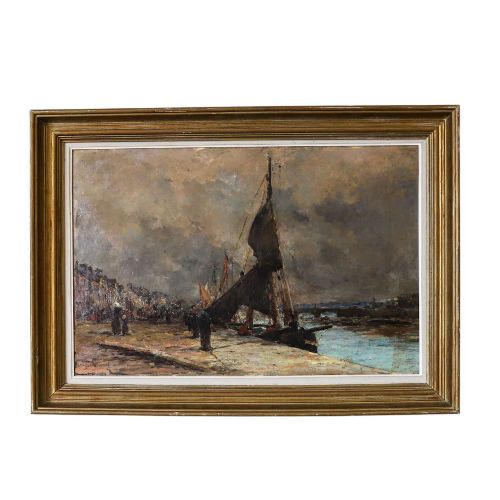
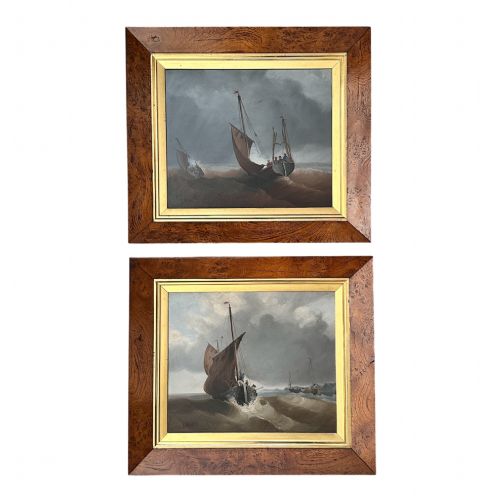
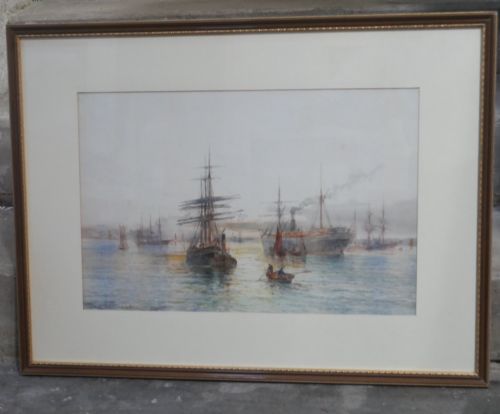
The common forms encountered here are oil paintings on canvas or board and watercolours on paper, often retained in their original gilt wood frames. Subjects range from calm harbours with resting vessels to dramatic coastal waters beneath stormy skies. Painters of the period frequently documented working boats, clippers, and local fishermen alongside recognisable landmarks like the River Tyne or the Isle of Man.
Materials and methods
Artists relied primarily on oil paint applied to canvas, board, or card, and watercolour pigments worked onto paper sheets. Oil mediums allowed for rich layering to render turbulent seas and atmospheric skies, while watercolour offered translucent tones well-suited to bright coastal light and open water. Gilt wood framing completed these works, providing a traditional nineteenth-century presentation that often survived alongside the artwork itself.
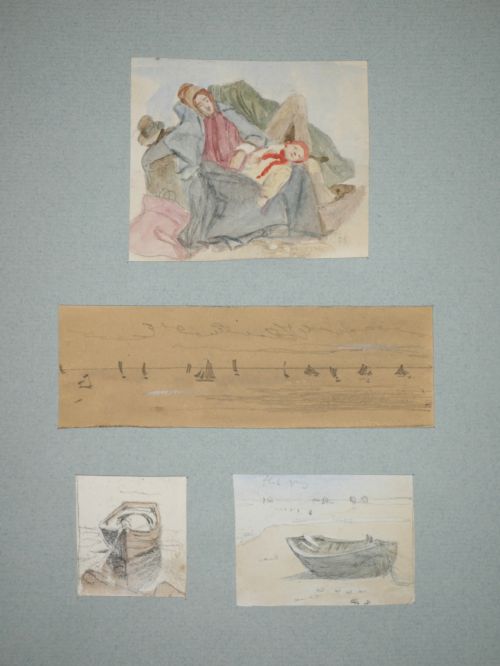
Techniques varied between the precise draughtsmanship seen in detailed maritime watercolours and the broader, expressive brushwork characteristic of late nineteenth-century British impressionism. Painters utilised studio work based on field sketches to capture the precise rigging of shipping vessels and the shifting colours of coastal waters.
Several artists braved stormy northern tides just to paint the exact angle of a returning fishing boat.
Quality and execution
Quality in these coastal scenes rests on the artist's command of light, water movement, and the accurate depiction of maritime architecture and vessel rigging. Stronger examples display confident brushwork that conveys the weight of waves and the specific atmosphere of a named harbour or estuary. Weaker pieces often lapse into formulaic repetition without establishing a convincing sense of place or weather.
The handling of atmospheric perspective separates accomplished works from standard decorative productions of the era. A skilled hand creates genuine depth between foreground fishing boats and distant headlands, whereas lesser works treat sea and sky as flat, disconnected planes.
James Orrock·Thomas Creswick·TB Hardy·John Wilson Carmichael·Abraham Hulk I·George Stanfield Walters
The Victorian Coastal Seascape Art Glossary
- Watercolour
- A painting method using water-soluble pigments on paper. This medium was widely used for detailed coastal sketches and finished marine scenes.
- Oil on canvas
- Pigments bound in drying oil applied to stretched woven fabric. This combination provides durability and rich colour depth for major marine paintings.
- Gilt wood
- Timber frames coated with a thin layer of gold leaf or metallic gilt paint. These surrounds are typical of nineteenth-century picture framing.
- Marine art
- Artistic representation of ships, maritime scenes, and coastal environments. This genre encompasses both calm harbour views and stormy sea battles.
- British Impressionism
- A late nineteenth-century painting style focusing on light and spontaneous brushstrokes. It influenced how coastal artists recorded changing weather and water.
Victorian Coastal Seascape Art: Frequently Asked Questions
What subjects appear in these coastal scenes?
Paintings typically show working fishing boats, sailing clippers, harbour entrances, and specific coastal towns around Britain and Ireland. Artists recorded both tranquil tidal waters and turbulent seas.
Views often feature named locations such as Scarborough, St Ives, or the River Tyne, capturing the maritime activity of the nineteenth century.
How do watercolours differ from oil paintings here?
Watercolours utilise pigments on paper to create lighter, transparent effects that suit bright coastal views and delicate sky studies. Oil paintings use thicker paint on canvas or board to build heavy textures for waves and clouds.
Both mediums were popular throughout the Victorian period for marine subjects.
Are original frames common on these works?
Many nineteenth-century paintings and watercolours retain period gilt wood frames that complement the style of the artwork. These frames often show traditional moulding and surface decoration appropriate to the date of execution.
Original framing helps preserve the historical context of the piece.
How can I tell the date of a seascape?
Dates are often established through artist signatures, biographical records, and stylistic clues within the clothing of figures or the rigging of the depicted vessels. Mid-nineteenth-century works tend towards tighter detail, while later pieces adopt looser brushwork.
Inscribed titles on the reverse or mount frequently confirm the specific location and year.