




Original Watercolour Sea Painting
An original watercolour sea painting captures the shifting moods of the coast through fluid pigments on paper.
Original Watercolour Sea Painting
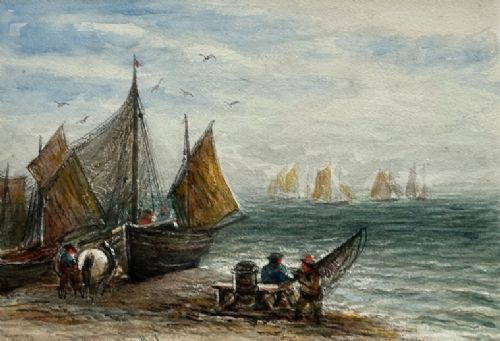
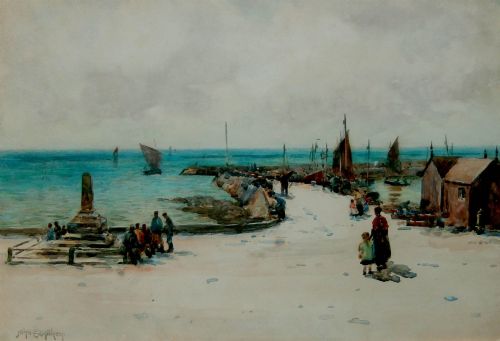
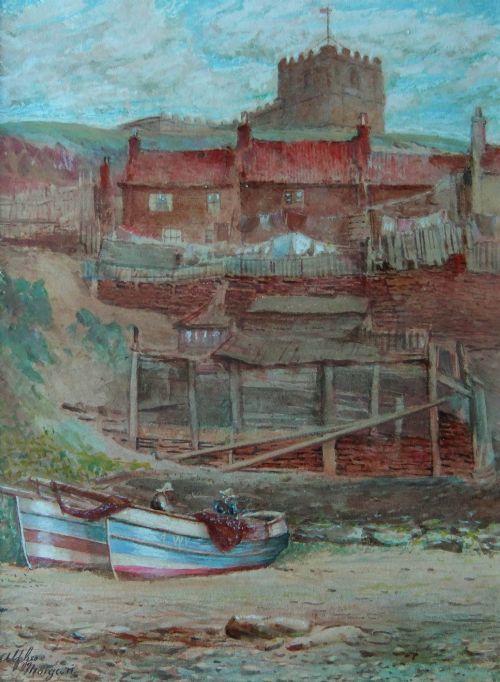
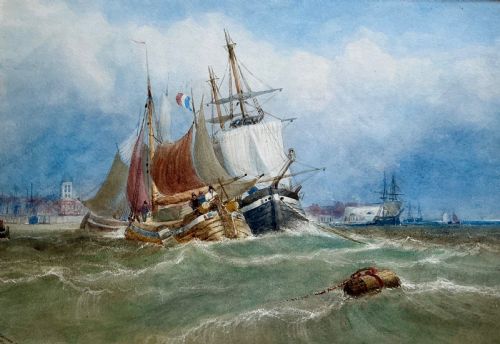
Original watercolour sea painting selections encompass coastal scenes, harbour views, and marine traffic recorded across the nineteenth and twentieth centuries. These works span Victorian maritime art, British Impressionism, and mid-century interpretations of the sea.
Buyers encounter depictions of Cornish harbours, Yorkshire fishing fleets, and bustling estuaries rendered by named artists and regional schools. The physical supports consist primarily of watercolour paper housed within period wood and gilt frames under glass.
How They Were Made
Artists applied watercolour pigment and occasional ink onto paper supports, utilising the natural white of the sheet to create luminosity in skies and breaking waves. Works from the Victorian period onward frequently combine transparent washes with opaque bodycolour to define shipping rigging and coastal architecture.
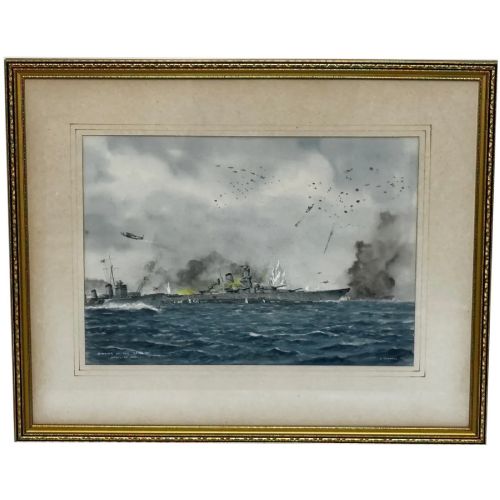
Framing involved traditional wood mouldings and gilt surrounds paired with protective glass to shield the delicate water-soluble pigments from atmospheric moisture and light degradation.
Listings feature paper supports, watercolour pigment, and ink enclosed within period wood and gilt frames under glass.
What Varies in Quality
Quality rests upon the artist's handling of transient light, atmospheric perspective, and the fluid properties of the pigment. Superior examples demonstrate confident brushwork that conveys the weight of water and movement of shipping without excessive overworking.
The precision of maritime detail, from correct rigging on a man-of-war to local architectural forms in coastal villages, separates accomplished professional works from amateur sketches.
James Orrock·John E. Aitken·Eric Tufnell·William Banks Fortescue·Alfred G. Morgan·Henry Barlow Carter·George F Pennington·William Lee Hankey·William Frederick Settle·William Tuck·John McDougal·Samuel Owen·Frederick Stuart Richardson·William Kay Blacklock·Eugene Boudin·Joseph Newington Carter·Peter Ghent·Edmund Gouldsmith·Snaffles·Fred Lawson·Edward Aubrey Hunt·Edward Wesson·Joseph West
The Original Watercolour Sea Painting Glossary
- Watercolour
- A painting method where natural pigments are suspended in a water-based solution and applied to paper. This medium relies on the transparency of washes to build luminous tones.
- Gilt Wood
- Timber framing coated with a thin layer of gold leaf or metallic paint. This treatment was standard for framing finished fine art pieces in the nineteenth century.
- Bodycolour
- Watercolour paint mixed with a white pigment to render it opaque. Artists used this technique to add solid highlights to crashing waves and ship sails.
- Marine Art
- Works depicting ships, naval engagements, harbours, and coastal scenery. This genre encompasses documentary shipping records and impressionistic coastal views.
- Provenance
- The documented history of a painting's ownership and origin. Clear attribution links a sheet to a specific regional school or named practitioner.
Original Watercolour Sea Painting: Frequently Asked Questions
How should I hang an antique marine watercolour?
Position the framed painting away from direct sunlight and damp environments to protect the paper support and water-based pigments from fading.
Use picture wire secured to studs with appropriate wall fixings to support the weight of the timber and glass assembly safely.
What subjects appear in these coastal watercolours?
Common subjects include fishing vessels navigating rough seas, calm harbour inlets in Yorkshire and Cornwall, and naval shipping off the British coast.
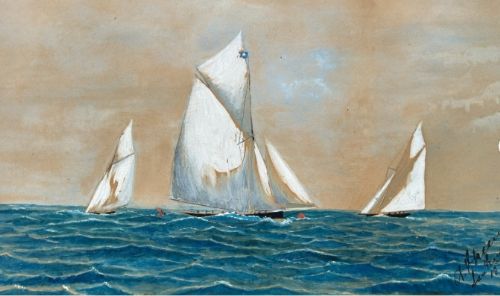
Artists also recorded foreign harbours, racing yachts, and quiet sandy bays during the nineteenth and twentieth centuries.
How can I tell the period of a painting?
Examine the framing materials, paper stock, and costume details of any figures present within the coastal scene.
Stylistic shifts from detailed Victorian maritime precision to looser British Impressionist and mid-century approaches provide further chronological markers.
Are these works signed by the artists?
Many examples feature artist signatures or monograms directly on the front of the paper, occasionally accompanied by dated inscriptions.
Unsigned works are attributed through stylistic comparison, period documentation, or inscriptions written on the reverse of the frame.