



Victorian Coastal Art
Victorian coastal art brings the salt air, bustling harbours and rugged shores of the nineteenth century straight into your interior.
Victorian Coastal Art
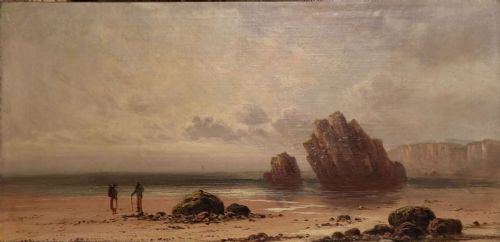
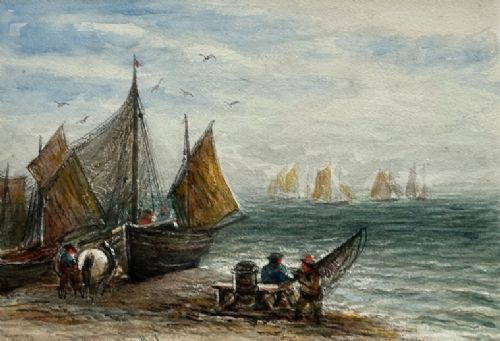
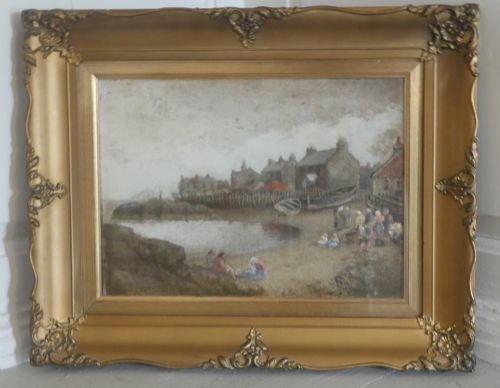
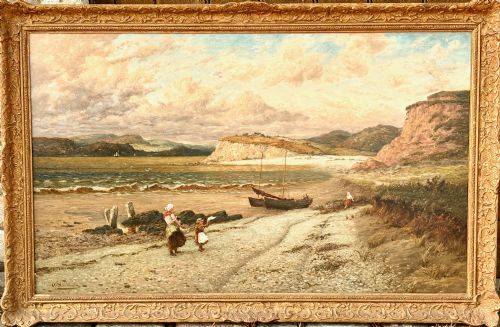
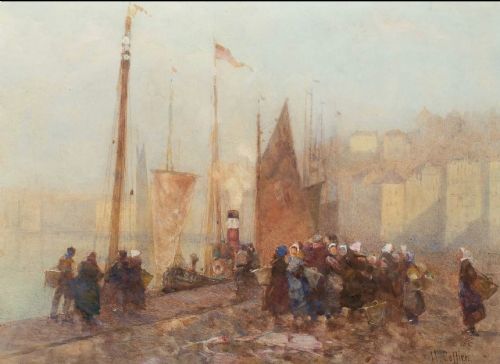
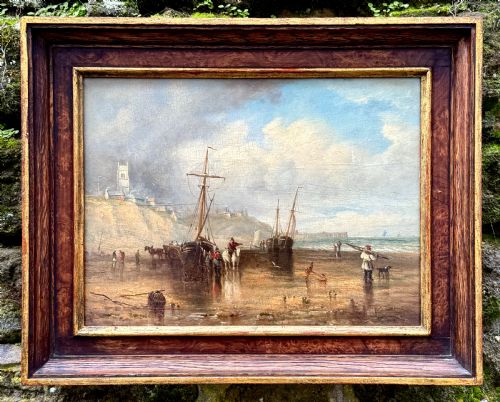
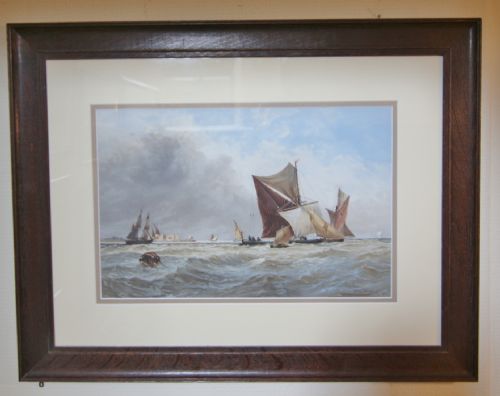
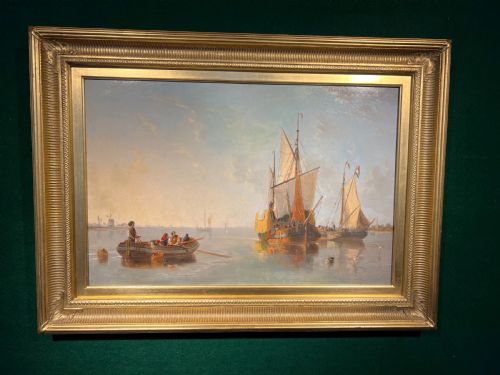
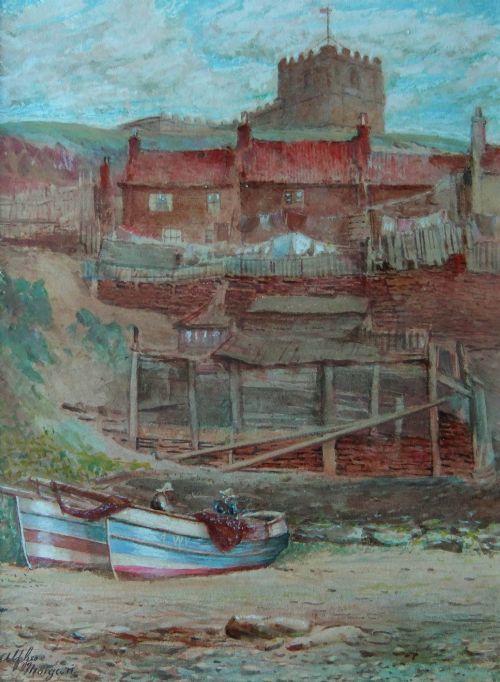
Victorian coastal art encompasses marine paintings, harbour scenes and coastal watercolours created during the nineteenth century and the turn of the twentieth century. These works capture the maritime life, fishing fleets and coastal topography of Britain and beyond, ranging from tranquil estuary views to dramatic stormy seas.
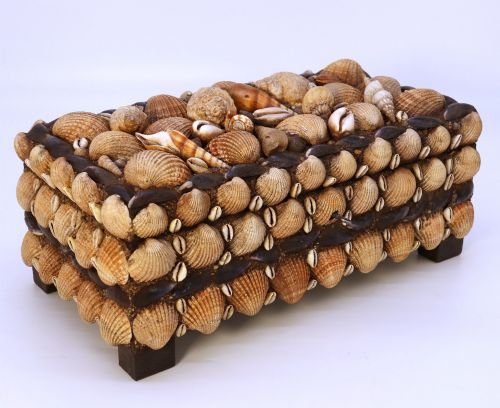
The version most commonly encountered on this page is the framed watercolour or oil painting on canvas and board, often depicting recognizable fishing ports such as Whitby, St Ives or Scarborough. Alongside traditional paintings, the selection includes folk art objects decorated with seashells, reflecting the era's fascination with seaside souvenirs and maritime culture.
How they were made
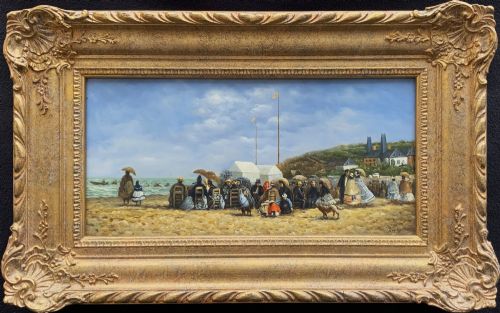
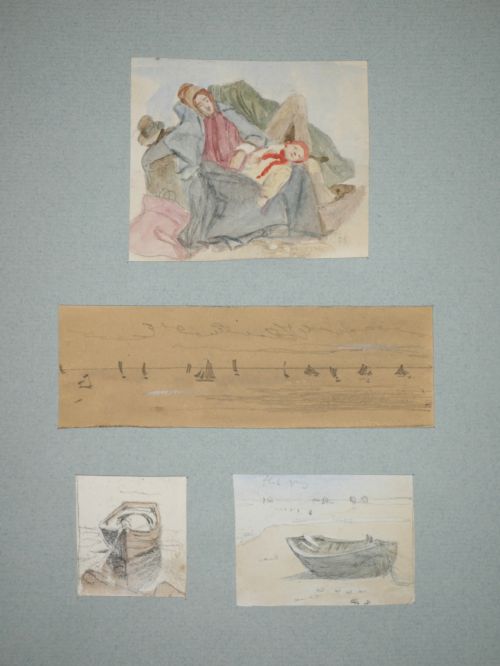
Painters of this era worked with oil paint on stretched canvas or wooden board, and watercolour on paper, frequently framing their finished works in moulded gilt wood. Oil pigments provided depth and luminosity for turbulent seas and shifting skies, while watercolour allowed artists to capture rapid atmospheric changes on location along the shore.
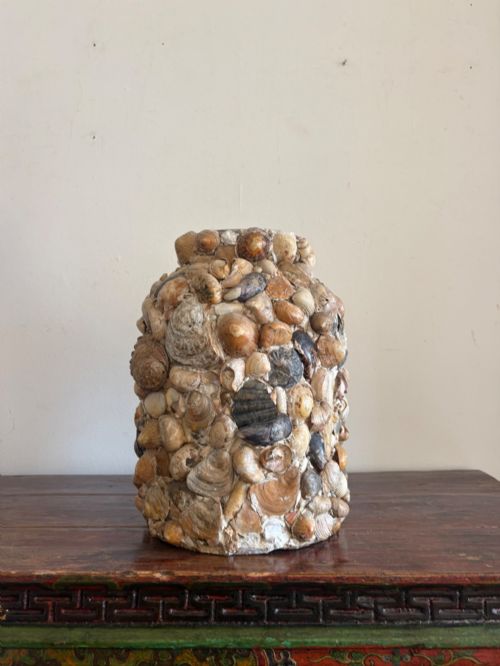
Folk art pieces such as boxes and jars utilised natural seashells applied meticulously to structural wooden or papier-mâché bases using adhesives of the period. These decorative items required patience and precision, transforming humble coastal finds into ornate household ornaments.
Victorian Coastal Art Retail Price Guide 2026
Typical asking prices for victorian coastal art among the pieces listed under this phrase on Sellingantiques today, from the lower quarter to the upper quarter. They describe what is for sale here now, not the wider market.
Listings feature works from the 1860s through to the Edwardian era, executed in watercolour and oil paint on canvas and board.
What varies in quality
The distinction between standard works and exceptional examples lies in the artist's command of light, atmosphere and maritime detail. Master painters rendered rigging, hull construction and water movement with absolute authority, whereas lesser hands produced formulaic compositions with stiff vessels and flat, unconvincing seas.
Condition and presentation also dictate the standing of a piece, particularly the preservation of the original pigment and the integrity of period frames. Works retaining their original gilt wood frames and clear artist signatures command greater regard than anonymous, heavily restored canvases.
James Orrock·James Smetham·Edward Mills·William Banks Fortescue·Hector Caffieri·Bernard Benedict Hemy·Thomas Creswick·TB Hardy·John Wilson Carmichael·Alfred G. Morgan·Abraham Cooper RA·Joseph Farquharson RA·John Moore of Ipswich·William Henry Williamson·John Holland·George Stanfield Walters·Abraham Hulk I·Henry Barlow Carter·John Moxon·William Frederick Settle·Alfred George Morgan·John Bedloe Goddard·Charles William Adderton·William Edward Webb
The Victorian Coastal Art Glossary
- Seascape
- A work of art depicting the sea, coastal views, ships or maritime activity. These compositions focus primarily on open water or coastal environments rather than inland topography.
- Watercolour
- A painting method where fine pigment is suspended in a water-soluble binder and applied to paper. It was widely utilised by nineteenth-century artists for rapid coastal sketching and finished exhibition pieces alike.
- Oil on Canvas
- A traditional painting medium consisting of pigments bound in drying oil applied to a stretched woven fabric support. This technique allowed artists to build rich textures and deep tones suitable for dramatic marine scenes.
- Gilt Wood
- Timber framing finished with a thin layer of gold leaf or metallic gilt paint. These frames were designed to complement the artwork and enhance the presence of Victorian paintings.
- Shellwork
- A decorative craft involving the arrangement of natural seashells onto surfaces to create intricate geometric or pictorial designs. Popular during the Victorian era, it was often employed for keepsake boxes and ornamental vessels.
Victorian Coastal Art: Frequently Asked Questions
What subjects do Victorian coastal paintings typically show?
These artworks generally depict working harbours, fishing vessels landing their catch, merchant shipping and dramatic shorelines. Artists frequently recorded specific coastal towns and maritime landmarks across Britain.
Scenes range from tranquil estuary anchorages with calm tides to turbulent depictions of sailing ships battling rough seas off rocky headlands.
How should I care for a nineteenth-century watercolour?
Watercolours on paper are sensitive to ultraviolet light and excessive moisture, which can cause pigments to fade and paper to degrade. Display them away from direct sunlight on interior walls.
Ensure framing uses acid-free mounts and conservation-grade glass to protect the delicate paper surface from atmospheric pollutants and humidity.
What is Victorian shellwork?
Victorian shellwork involves decorative boxes, frames and vessels encrusted entirely with tiny natural seashells gathered from beaches. Makers arranged the shells into intricate floral or geometric patterns.
These pieces served as popular seaside souvenirs and parlour ornaments, celebrating Britain's growing cultural connection to the coast during the nineteenth century.
How can I identify the date of a coastal oil painting?
Dating relies on examining the canvas type, stretcher construction, framing materials and the artist's signature where present. Stylistic clues such as the rig of the vessels and the clothing of figures on the shore also provide strong chronological indicators.
Many nineteenth-century works include inscriptions on the reverse or stretcher bars naming the specific coastal location and date of creation.