


Victorian Ceramic Tile
These Victorian ceramic tile pieces bring hand-glazed colour and period design directly into modern interiors, offering a tangible link to nineteenth-century domestic artistry.
Victorian Ceramic Tile
When you search for Victorian ceramic tile, you are looking at glazed earthenware works spanning from the eighteen-seventies through to the Edwardian era, often mounted into larger furnishings or framed as individual artworks.
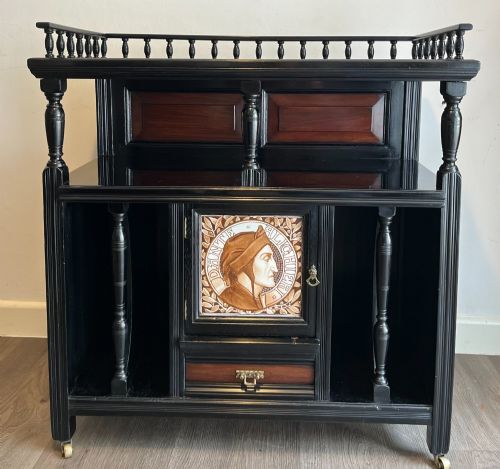
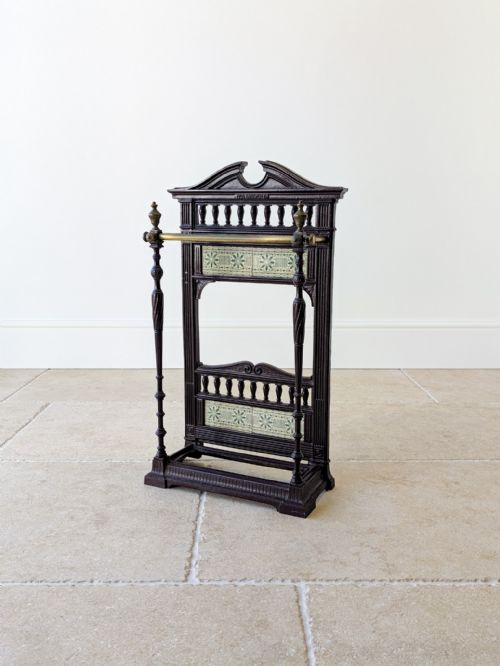
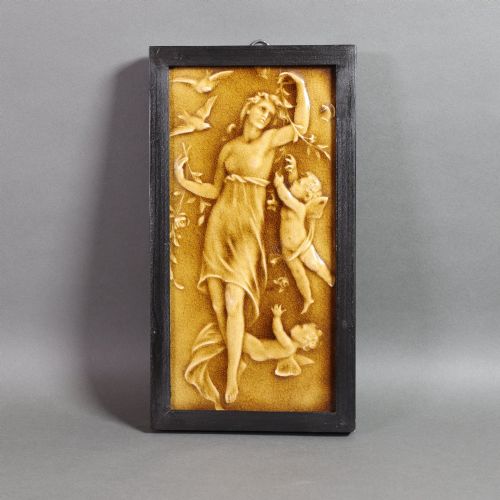
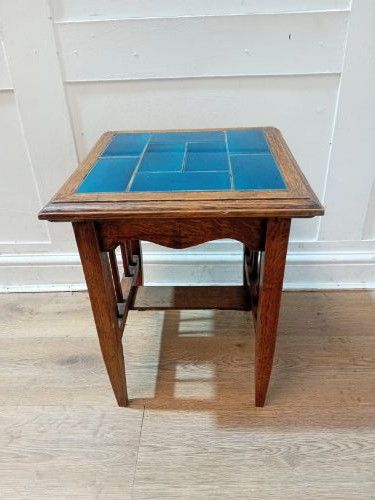
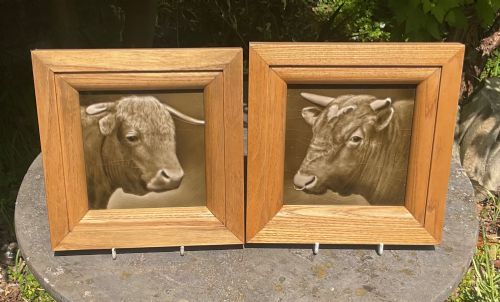
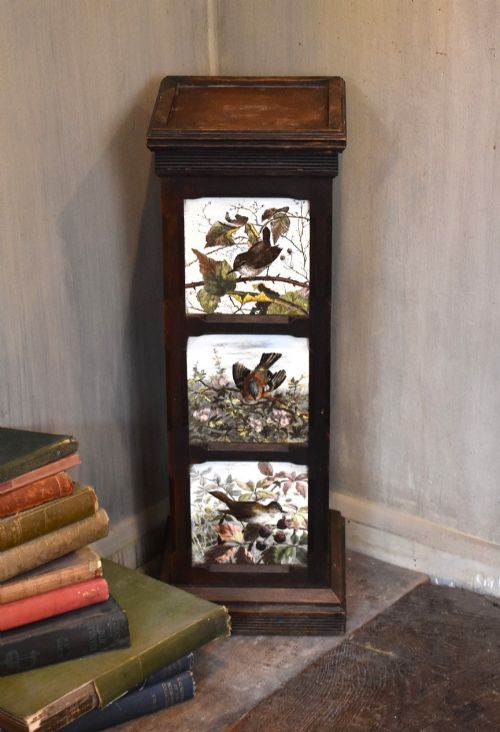
The pieces you meet most frequently on this page include framed decorative tiles and tile-topped side tables, alongside hall chairs and umbrella stands featuring inset panels.
Origins stretch across the Victorian and Edwardian periods, taking in specific design movements such as the Aesthetic Movement and Arts and Crafts.
Materials and construction
Makers utilised ceramic and earthenware bodies as the foundation for rich surface glazes.
Mountings frequently incorporate oak, mahogany, and ebonised wood to house the heavy ceramic panels securely.
Listings feature ceramics combined with oak, mahogany, and brass across various domestic forms.
Evaluating the range
The standard of glaze application and the clarity of transfer-printed or hand-painted motifs distinguish finer examples from simpler production pieces.
The integrity of the surrounding woodwork, whether oak tables or ebonised frames, plays a major part in the overall merit of the piece.
Coalbrookdale·Sherwin and Cotton·Minton Hollins·William De Morgan
The Victorian Ceramic Tile Glossary
- Earthenware
- A porous pottery body fired at lower temperatures, commonly used for nineteenth-century wall and decorative tiles.
- Glaze
- A glassy coating fused to the ceramic body by firing, providing colour, shine, and a protective seal.
- Aesthetic Movement
- A late nineteenth-century design style emphasising visual beauty and artistic motifs over strict narrative content.
- Arts and Crafts
- A movement valuing traditional craftsmanship, hand-working, and simple design, frequently seen on tiled plaques and furniture.
Victorian Ceramic Tile: Frequently Asked Questions
How were these tiles used originally?
Many of these pieces served practical domestic functions, inset into hall stands, umbrella holders, and washstands where a waterproof surface was necessary.
Others functioned purely as decorative wall art, framed plaques, or tabletop surfaces within affluent Victorian homes.
Can I hang a tile plaque on the wall?
Framed tiles and designated wall plaques were often produced with hanging in mind, allowing homeowners to display intricate pictorial designs.
Heavier mounted pieces or those fixed into furniture frames require structural assessment before wall mounting.
How do I distinguish Arts and Crafts examples?
Arts and Crafts pieces typically feature stylised plant motifs, animals, or figural subjects executed with an emphasis on handcrafted expression.
They often appear alongside solid oak furniture frames rather than heavily polished mahogany.
What is the difference between Victorian and Edwardian pieces?
Victorian examples date from the nineteenth century and frequently engage with Revivalist or early Aesthetic Movement styles.
Edwardian pieces extend into the early twentieth century, carrying forward similar ceramic techniques with slight shifts in colour palettes and mounting designs.