



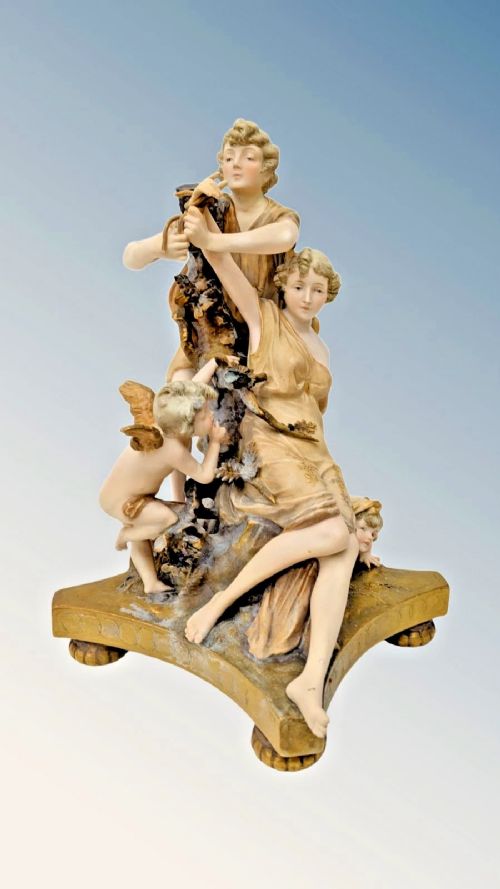


Victorian Ceramic Group
These victorian ceramic group pieces bring multiple figures together in earthenware and porcelain, capturing mid-nineteenth century portraiture and domestic narrative.
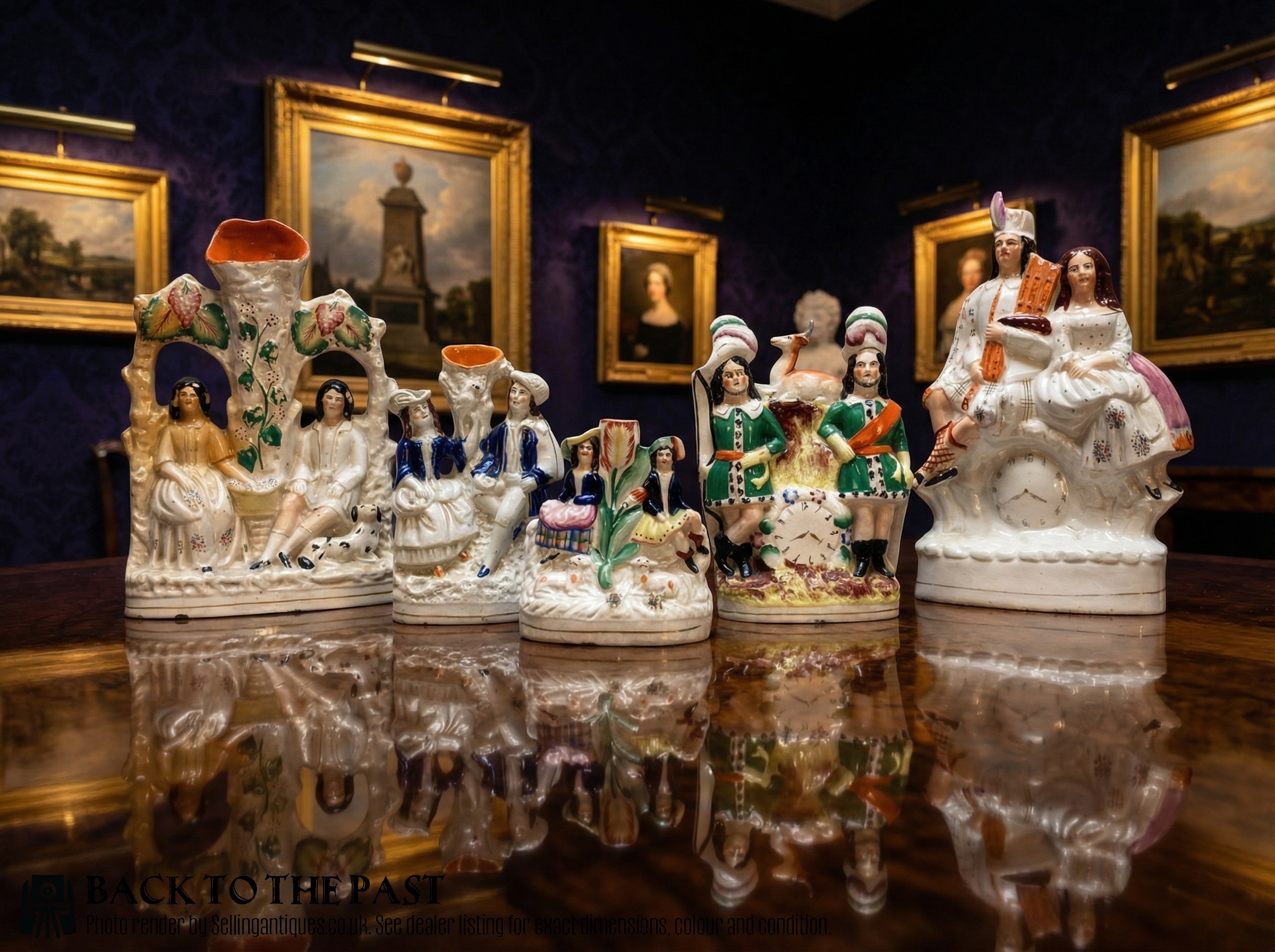
Victorian Ceramic Group
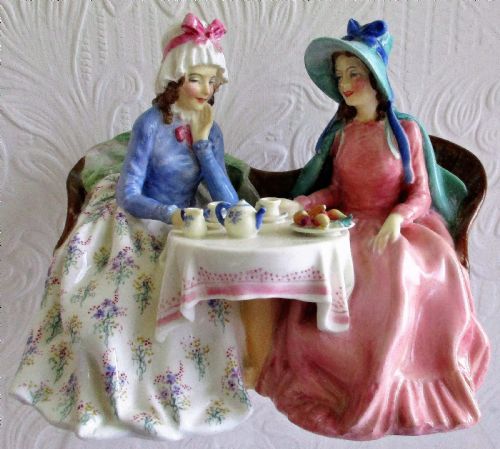
A victorian ceramic group brings together multiple figures or animals on a single base, spanning portrait groups of royalty, literary pairs and pastoral scenes. You meet Staffordshire flatbacks depicting historical events alongside continental porcelain groupings of musicians and mythological subjects.
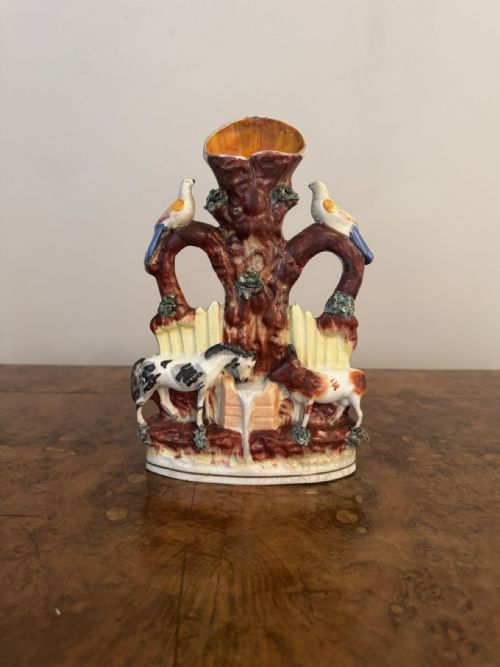
Makers utilised earthenware and hard-paste porcelain to shape spill vases, clock groups and figural sculptures. The domestic interior shaped these objects, designed for mantelpieces and side tables to display moral, political or romantic narratives.
Materials and Technique
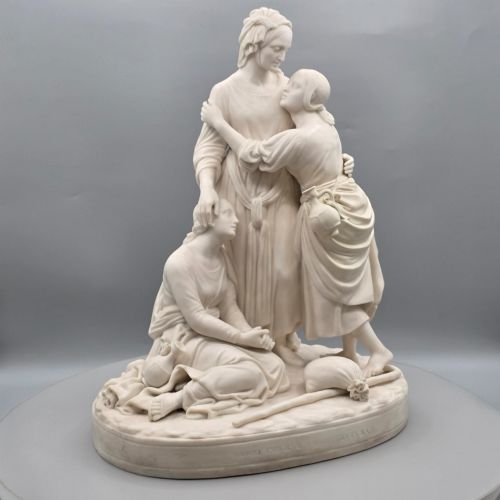
Potters shaped these objects from earthenware and hard-paste porcelain, applying lead glaze and enamel paint by hand. Biscuit porcelain, known as Parian ware, captured neoclassical detail without a glazed surface.
Moulds formed the base shapes of figures and animals, followed by hand-applied details such as gold leaf highlights and enamelled garments before firing in kilns.
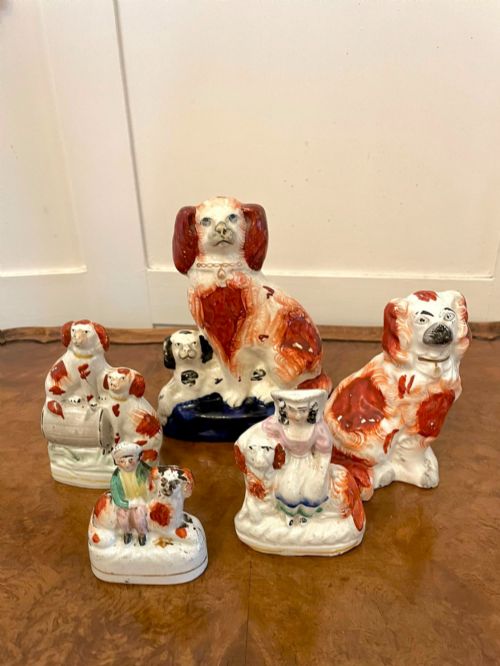
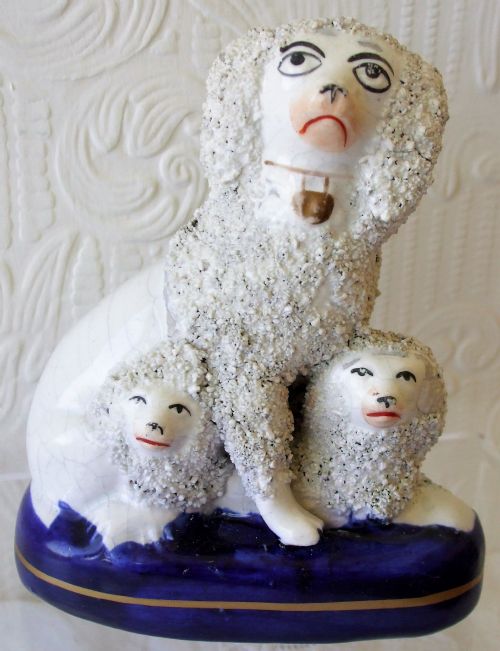
Nineteenth-century Staffordshire potters occasionally rendered domestic poodles with actual shredded clay fur to mimic manicured poodles.
Design and Execution
Model fidelity separates standard output from superior examples, visible in the sharpness of facial expressions and the modelling of hands and drapery. Hand-painted enamels applied with precision elevate a group above simpler factory production.
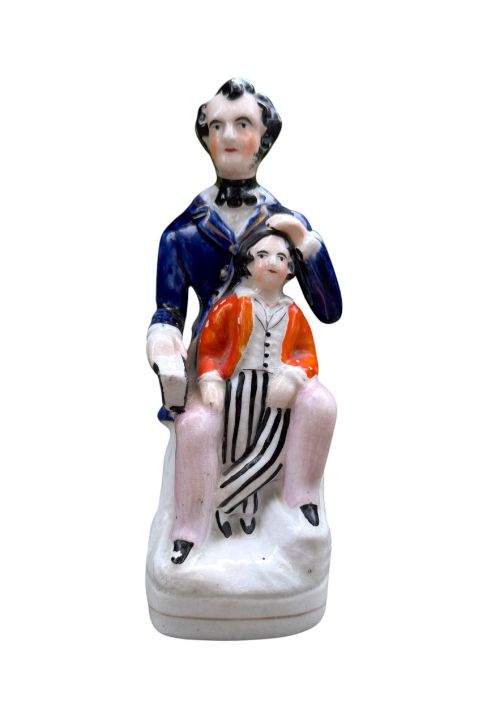
The sophistication of the composition dictates the standing of a piece, whether a complex multi-figure allegorical group or a simpler Staffordshire portrait pair.
Minton·Royal Doulton·Meissen·Triebner Ens And Co·Vion Et Baury
The Victorian Ceramic Group Glossary
- Flatback
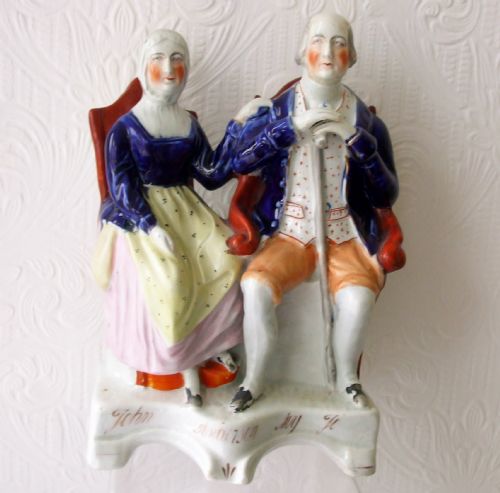
- A Staffordshire figure modelled with a finished front and a largely unpainted, flat reverse intended to stand against a wall.
- Parian ware
- A fine-grained unglazed biscuit porcelain resembling marble, developed in the mid-nineteenth century for sculptural groups.
- Spill vase
- A hollow cylindrical holder integrated into a ceramic group, designed to hold taper spills for lighting fires or pipes.
- Earthenware
- Porous pottery fired at lower temperatures, forming the primary body for nineteenth-century Staffordshire figures.
Victorian Ceramic Group: Frequently Asked Questions
What subjects appear on these figures?
Makers modelled these groups after contemporary political events, theatrical characters, royalty and pastoral scenes involving animals or children. Staffordshire potteries recorded historical moments like the Crimean War alongside domestic poodles and lions.
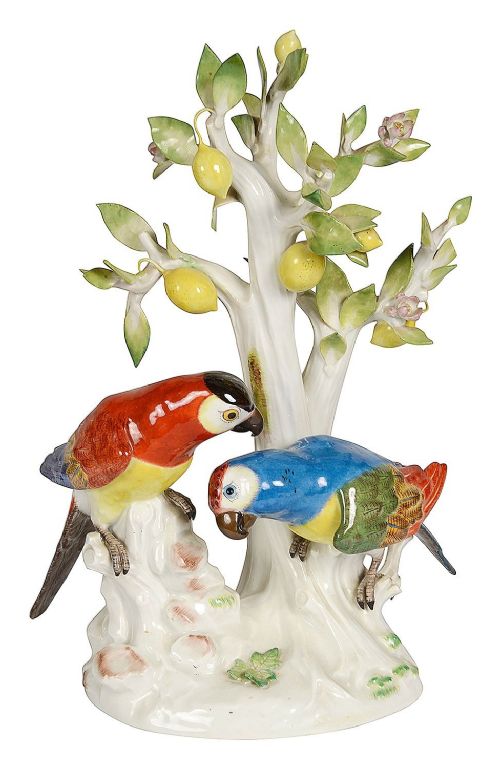
Continental factories produced classical mythological subjects, romantic couples and musical gatherings. These narratives reflected the cultural interests and political loyalties of nineteenth-century households.
Where did people display these groups?
Households placed these ceramic groups upon mantelpieces, console tables and inside glass cabinets where visitors could view them. Flatback figures suited narrow mantel ledges because their unadorned backs rested directly against the wall.
Larger porcelain groups served as centrepieces for dining tables or decorative ornaments in drawing rooms. Their placement depended on their scale and fragility, with delicate porcelain kept away from high-traffic areas.
How do I distinguish earthenware from porcelain?
Earthenware displays an opaque body under a lead glaze, often showing crazing or thicker potting typical of Staffordshire workshops. It feels heavier and less refined than porcelain.
Hard-paste porcelain and Parian ware present a denser, vitrified body that does not absorb moisture and resists chipping. Parian specifically offers a matte, marble-like biscuit surface without any glaze.
Are all flatback figures from Staffordshire?
The flatback technique is strongly associated with the Staffordshire potteries of northern England during the nineteenth century. These regional workshops produced large quantities of portrait figures and animal groups for the domestic market.
Continental factories utilised mould-pressed construction as well, but their output tended to feature glazed porcelain figures finished on all sides rather than the characteristic flat, unpainted back of English earthenware.