

Victorian Cast Iron Rack
When you search for a victorian cast iron rack, you enter a sturdy world of heavy hall stands and umbrella holders built to endure.
Victorian Cast Iron Rack
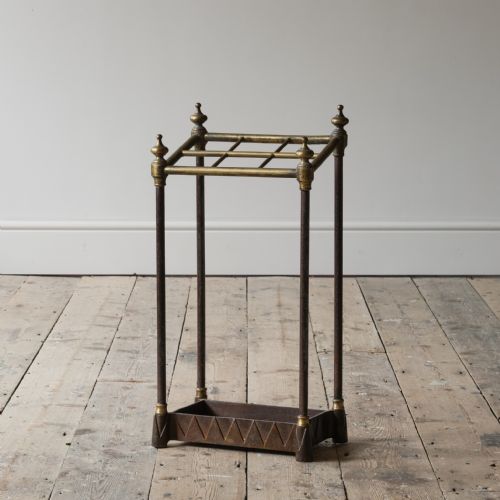
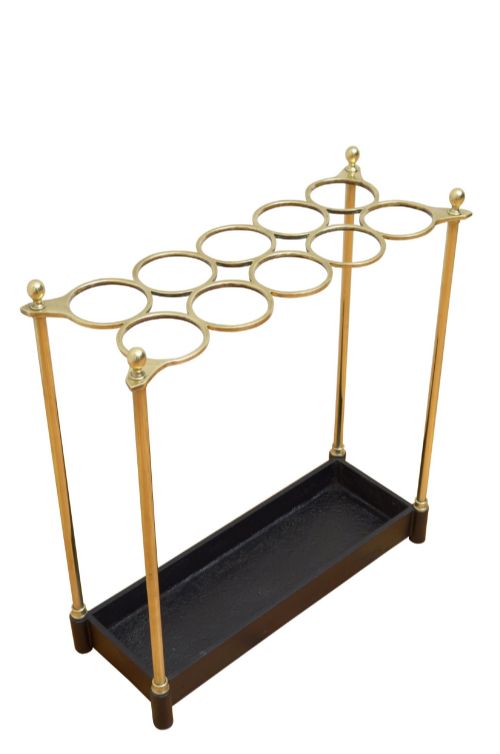
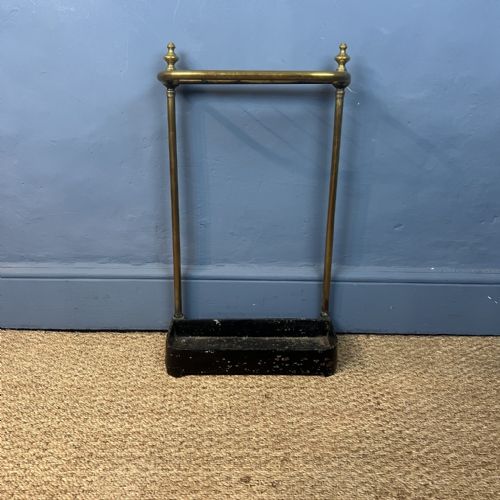
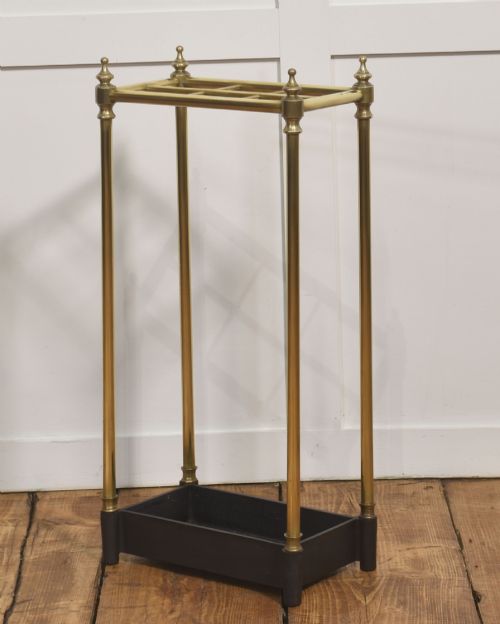
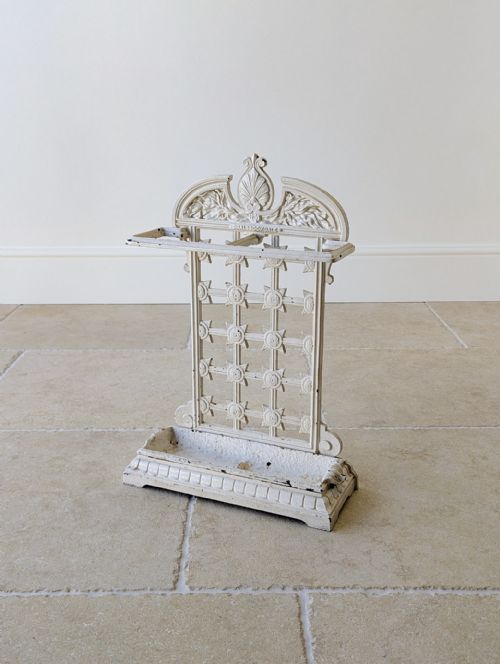
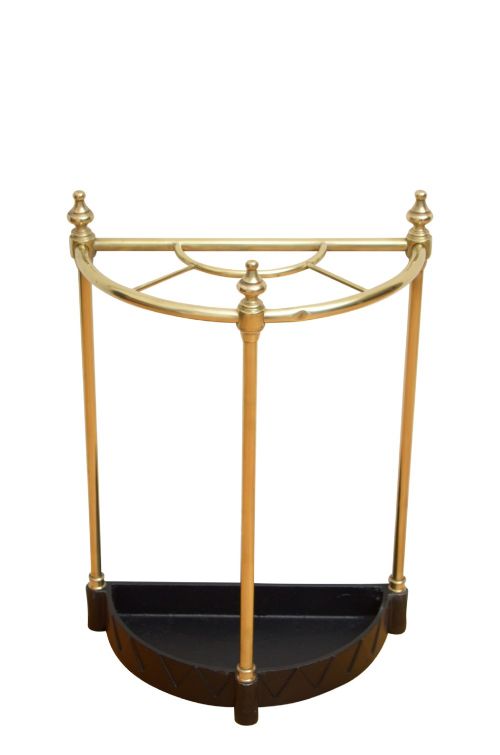
A victorian cast iron rack most commonly appears on this page as an umbrella or stick stand designed for an entrance hall. These utilitarian yet decorative pieces organise walking sticks and wet umbrellas using heavy moulded frames.
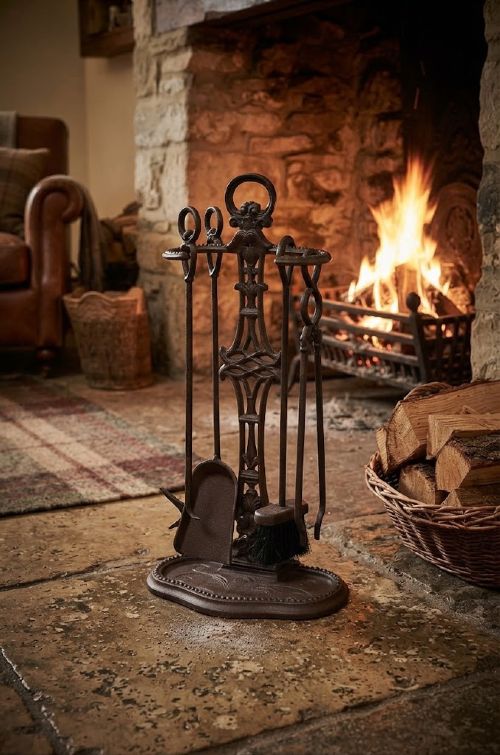
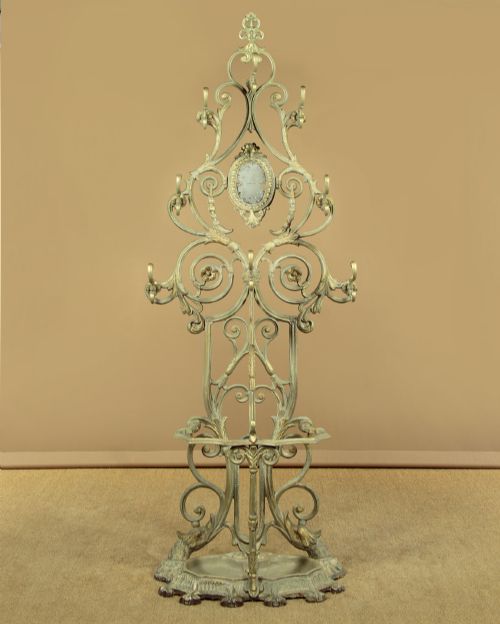
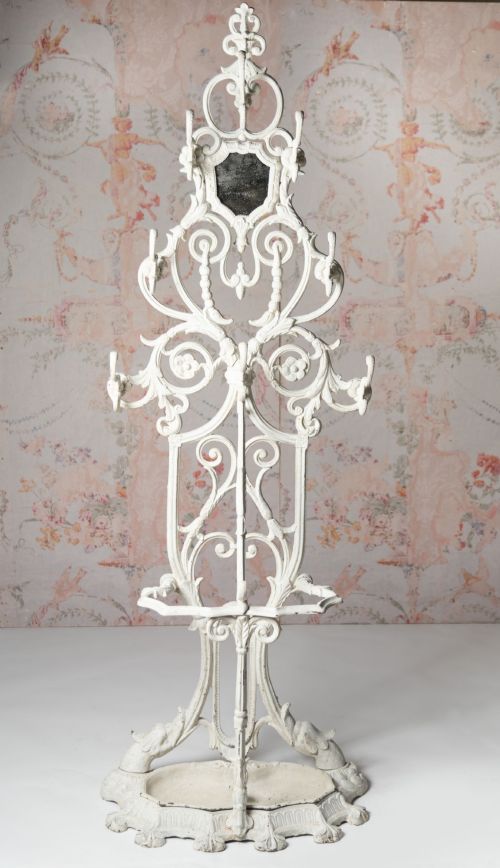
Beyond simple umbrella holders, the listings reveal larger hall stands that combine coat hooks with drip trays, alongside occasional variations such as saddle racks or pan stands. Most examples date from the nineteenth century, spanning Victorian and Edwardian periods.
Materials and casting methods
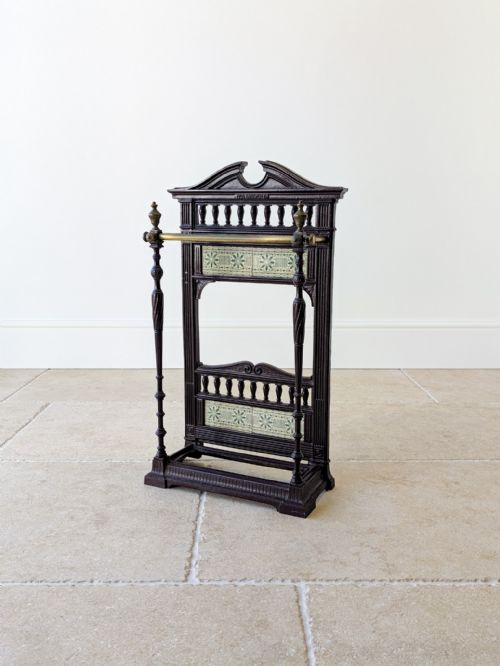
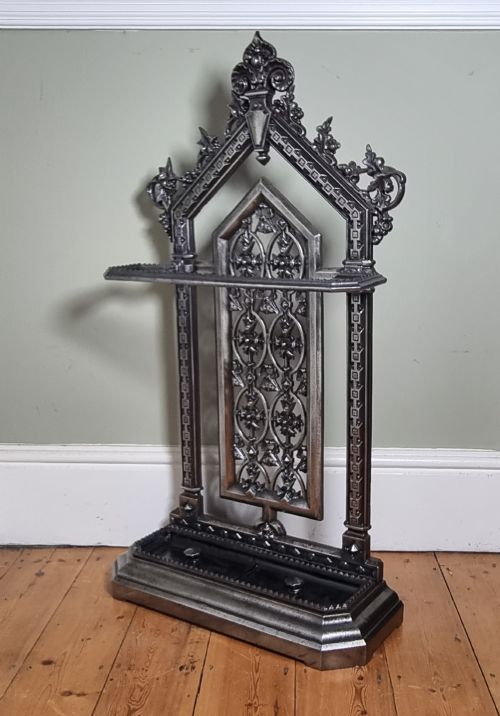
Foundries utilised cast iron as the primary structural material, often pouring the molten metal into ornate moulds featuring Rococo revival curves or Aesthetic movement geometry. Wrought iron, brass elements and painted finishes frequently complement the main iron structure.
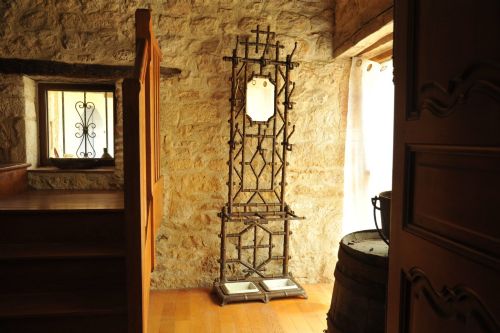
Certain French pieces utilise a faux bamboo technique in cast iron, mimicking organic plant stems with precise moulding. Removable drip trays in metal or enamel capture water from wet umbrellas beneath the open framework.
A cast iron footballer stands ready among the umbrellas, bringing an unexpected sporting presence to the Victorian hallway.
Defining quality in ironwork
Quality rests in the crispness of the casting and the ambition of the design, moving from plain utility models to elaborate foundry work attributed to notable makers. Sharp relief in floral, avian or figurative motifs distinguishes superior examples.
The integration of secondary materials such as brass finials, ceramic tile accents or sturdy iron drip pans elevates an ordinary hallway utility into a considered piece of interior metalwork.
Coalbrookdale·Falkirk Ironworks·A. Kenrick and Sons
The Victorian Cast Iron Rack Glossary
- Demi-lune
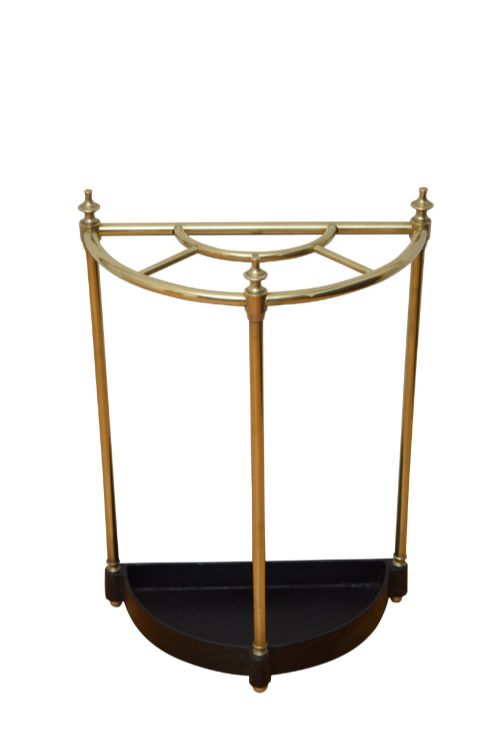
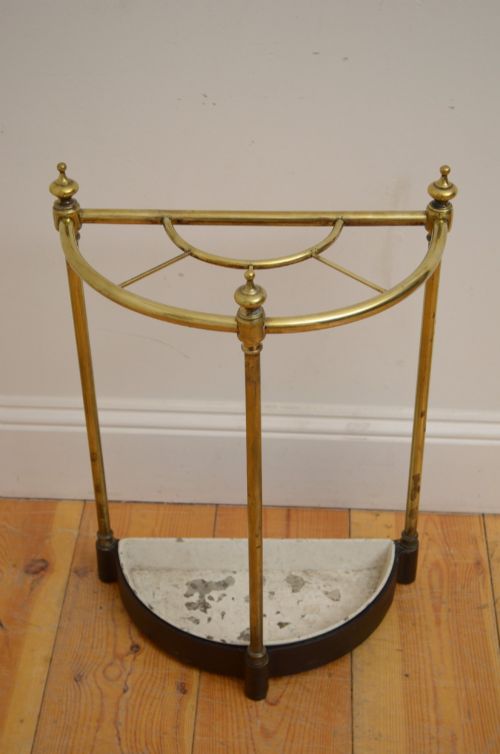
- A half-moon shape common in brass and cast iron stick stands designed to sit flush against a hallway wall. This curved footprint saves valuable floor space in narrow entrance passages.
- Drip tray
- A removable metal or enamel pan positioned at the base of a stand to catch water from wet umbrellas. It protects floorboards from moisture damage.
- Aesthetic movement
- A late nineteenth-century design style focusing on visual beauty over narrative meaning. Pieces from this movement often display stylised botanical or geometric motifs.
- Finial
- A decorative ornamental terminal mounted on top of posts or uprights. In these pieces, brass ball finials often cap the corners of iron umbrella frames.
- Faux bamboo
- A decorative technique mimicking the segmented stems of natural bamboo. Victorian foundries cast iron to replicate this popular exotic plant form.
Victorian Cast Iron Rack: Frequently Asked Questions
Where should I place a cast iron umbrella stand?
These heavy stands suit entrance halls, boot rooms, and porches where wet walking sticks and umbrellas require an organised drop zone.
Ensure the floor beneath can support the substantial weight of the cast iron structure and its accompanying drip tray.
How do I maintain cast iron and brass?
Dust the iron framework regularly with a dry cloth and check that the lower drip tray remains clean and dry to prevent corrosion.
Polish brass elements gently with a suitable metal cleaner if you wish to maintain their bright metallic lustre over time.
Are all these stands strictly for umbrellas?
While the majority function as umbrella and walking stick holders, the broader category includes coat racks, pan stands, and equestrian saddle rests.
Foundries adapted the durable properties of cast iron to serve multiple domestic and utility storage roles throughout the nineteenth century.
How can I tell a Victorian stand from a later copy?
Examine the crispness of the casting detail and look for registration marks, foundry stamps, or back stamps cast directly into the base metal.
Nineteenth-century examples typically exhibit heavier metal mass and authentic wear patterns compared to modern reproductions.