
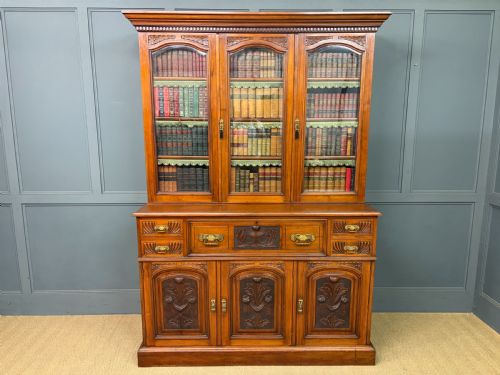


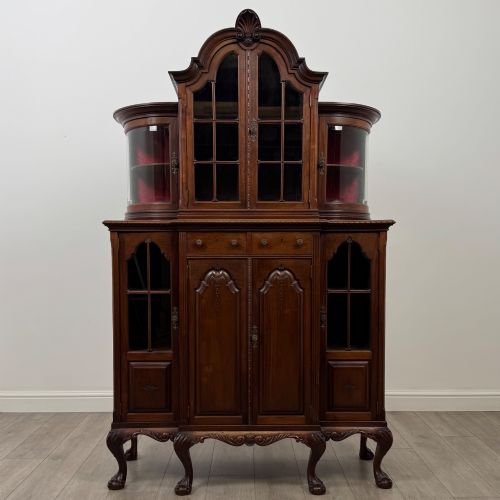
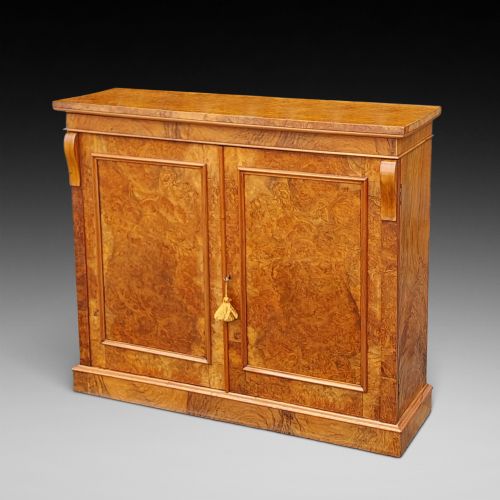
Victorian Carved Walnut Cabinet
A victorian carved walnut cabinet brings dense timber and sculptural relief into a room, offering both display and storage.
Victorian Carved Walnut Cabinet
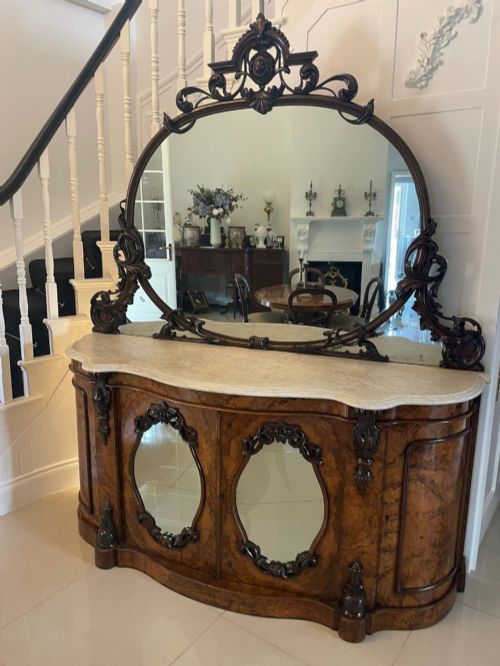
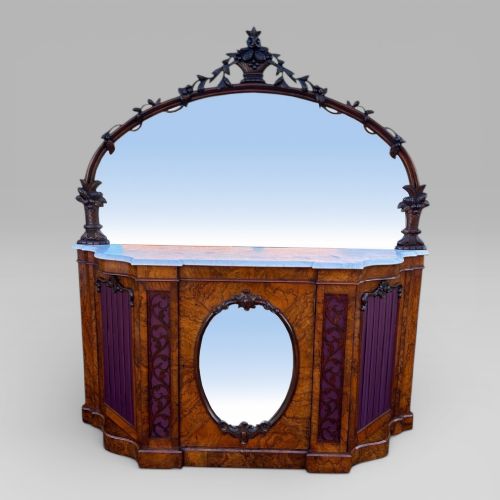
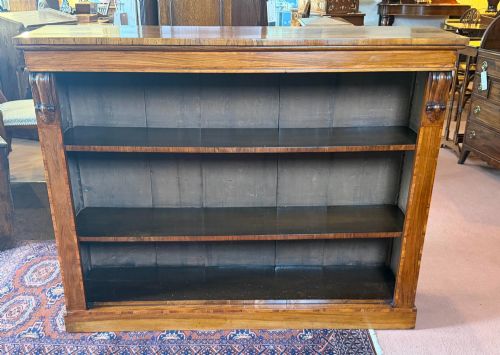
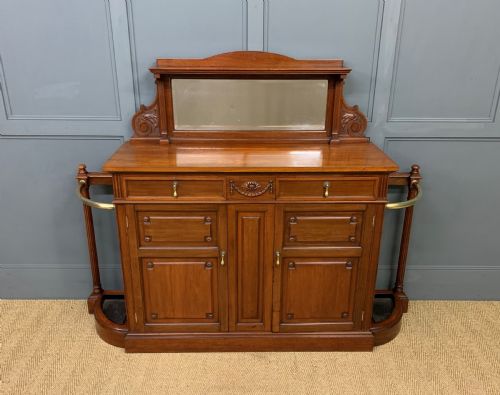
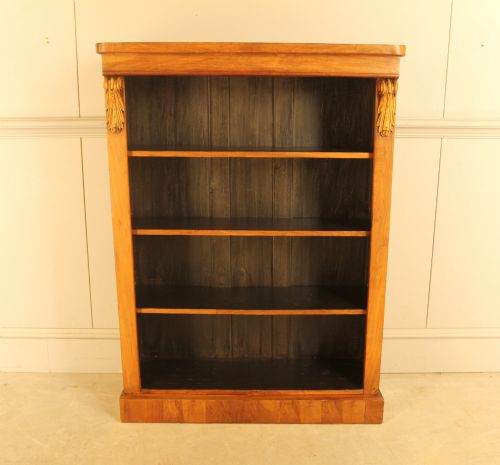
The version most commonly met on this page is the mirror-backed credenza or sideboard featuring elaborate carvings and burr walnut veneers, alongside smaller bedside pieces and open bookcases.
Originating largely from the Victorian period, these items also reflect revival styles and continental influences such as Gothic Revival and French Provincial, spanning decades from mid-century to the late eighteen-nineties.
Materials and Construction
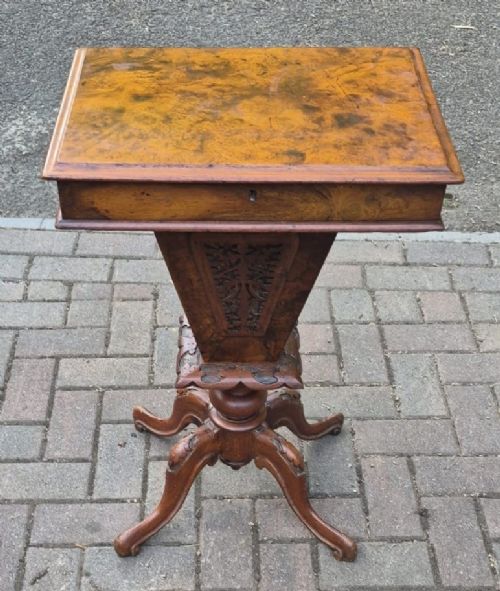
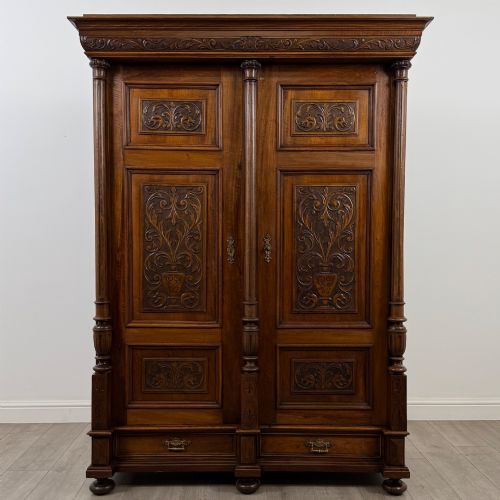
Cabinet makers utilised solid walnut and decorative burr walnut veneers applied to secondary timbers, often accentuating the grain patterns with hand-carved relief details and mouldings.
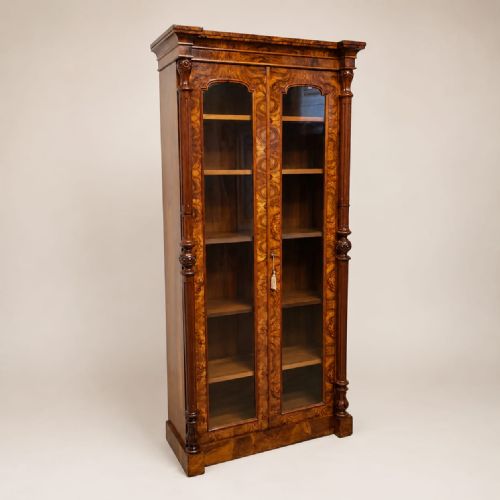
Secondary materials such as marble tops, brass hardware, glazed doors, inset ceramic tiles, and leather writing surfaces appear regularly across desks, sideboards, and smaller cabinets.
Joinery methods of the era combined dovetailed drawer construction with framed panel doors, supporting heavy stone slabs and mirrored glass superstructures safely within the carcase.
Listings feature walnut, burr walnut, brass, glass, marble, leather, and ceramic across forms like bookcases, desks, sideboards, canterburys, and music cabinets.
Distinctions in Standard
The standard of carving distinguishes standard production furniture from exhibition pieces, shifting from repetitive machine-finished motifs to deep, crisp, hand-chiselled foliage and figures.
Selection of the walnut veneer dictates visual depth, where highly figured burr timber or matched book-ended panels create symmetry across doors and drawer fronts.
Integration of secondary materials like thick slab marble, bevelled mirror glass, and heavy brass mounts separates simpler utility cupboards from high-status reception room furniture.
Gabriel Viardot·Shoolbred & Co.·Waring & Gillows
The Victorian Carved Walnut Cabinet Glossary
- Burr walnut
- A specialised timber cut from walnut tree growths that produces highly intricate, swirling grain patterns. It was frequently sliced into thin veneers for cabinet doors.
- Credenza
- A low dining room or parlour sideboard, often featuring mirrored backs and glass-fronted display cupboards. This form became a centrepiece for Victorian entertaining.
- Canterbury
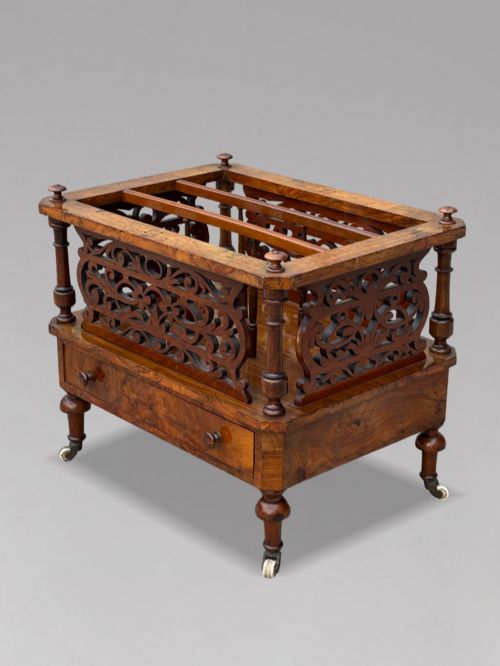
- A low multi-tiered stand originally designed for holding sheet music or folios, often incorporating partitioned sections and a small drawer below.
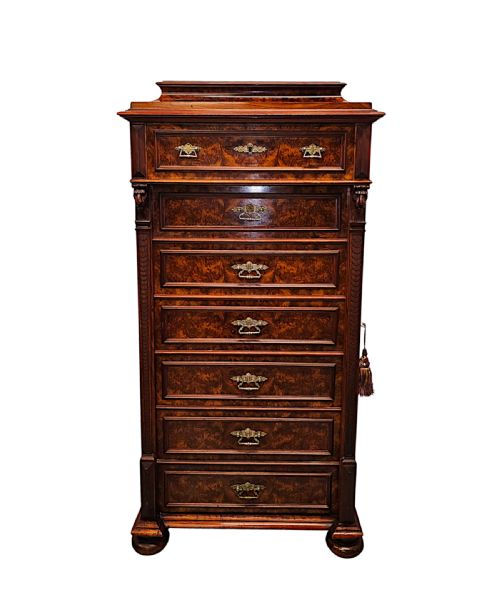
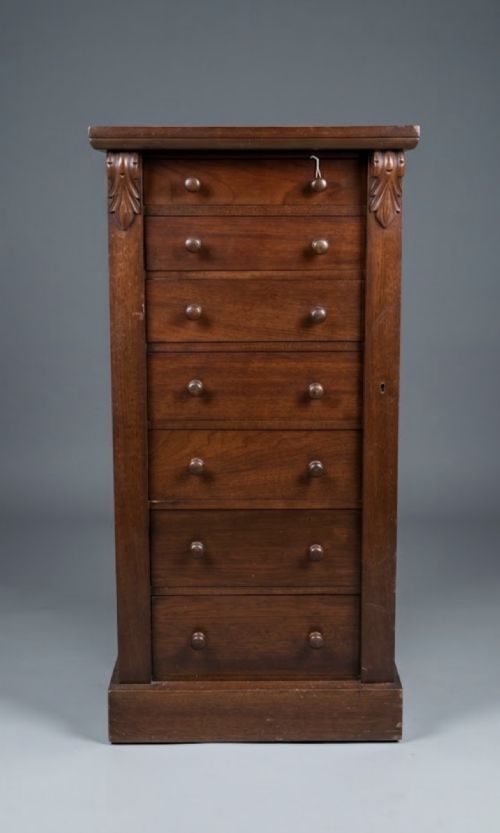
- Wellington chest
- A tall, narrow chest of drawers secured by a locking hinged side stile that fastens over the drawer edges. It typically holds seven or eight graduated drawers.
- Marquetry
- The art of applying decorative veneer pieces in wood, metal, or shell to form pictorial or geometric designs on a cabinet surface.
Victorian Carved Walnut Cabinet: Frequently Asked Questions
How do I clean a walnut cabinet?
Dust the carved surfaces regularly with a soft, dry cloth to prevent grit accumulation in the recesses. Apply a quality beeswax polish occasionally to nourish the timber and maintain the lustre of the walnut grain without building up heavy residue.
Avoid placing these cabinets near direct heat sources or strong sunlight, as temperature fluctuations cause the walnut timber and burr veneers to dry out and split over time.
Where should I place a mirror-backed credenza?
A credenza with a carved mirror back works best against a solid wall in a dining room, hallway, or principal reception space. The mirror serves to reflect natural light and open up smaller domestic interiors.
Ensure the floor beneath is level, particularly with heavier pieces carrying marble tops, to prevent the carcase from twisting and straining the door hinges.
Can I use a music cabinet as a bedside table?
Compact music cabinets and small cupboards adapt well to bedside use thanks to their enclosed shelving and modest footprints. Their internal partitions originally meant for folios easily accommodate books and personal items.
Check the internal dimensions of the cabinet before purchase to ensure the shelving layout matches your intended storage needs.
How do I identify the Victorian period?
Look for characteristic construction methods such as hand-cut dovetails, secondary softwood linings, and distinct revival styles including Gothic elements or Queen Anne motifs. Walnut gained immense popularity during this era for both solid furniture and decorative veneering.
Cabinet hardware, lock mechanisms, and the presence of original mirror glass or marble tops also offer clues to the approximate decade of manufacture.