
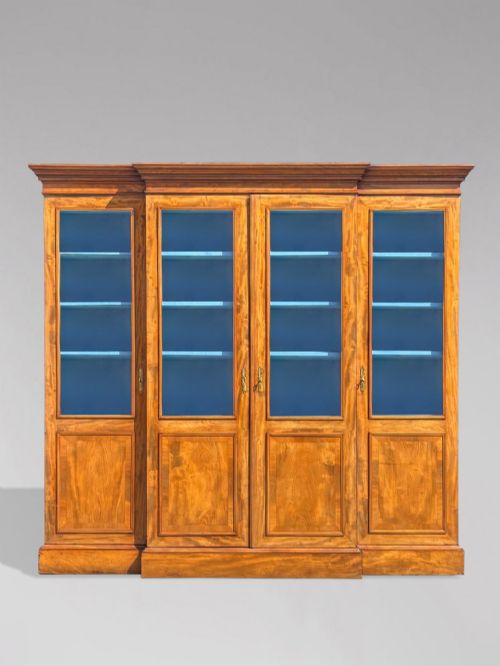
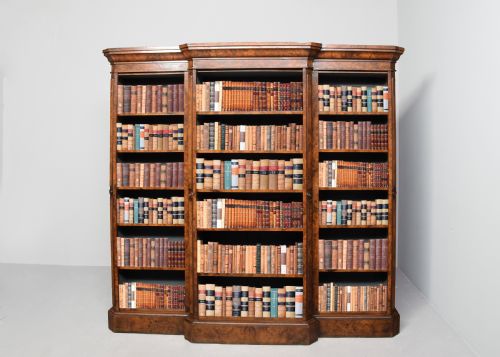
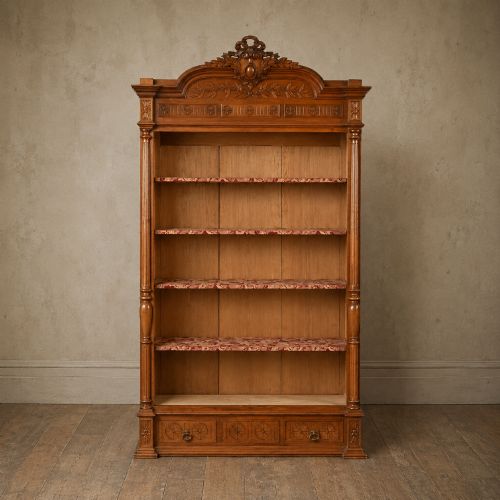
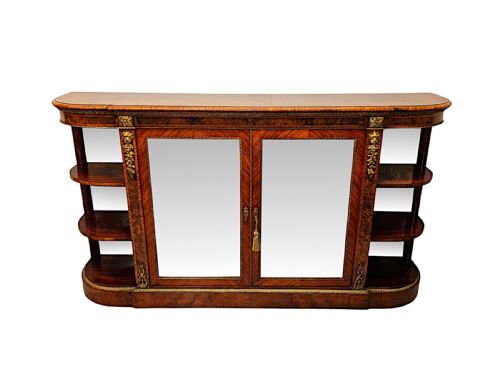
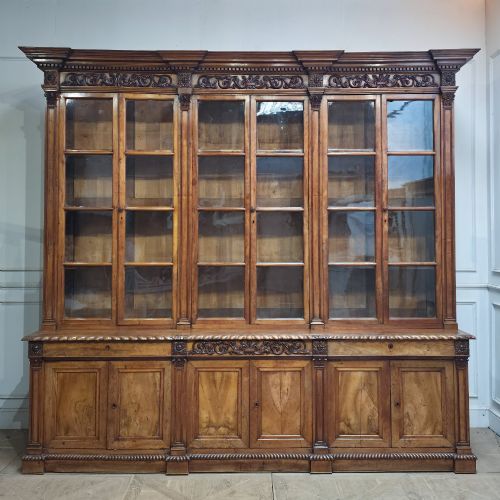
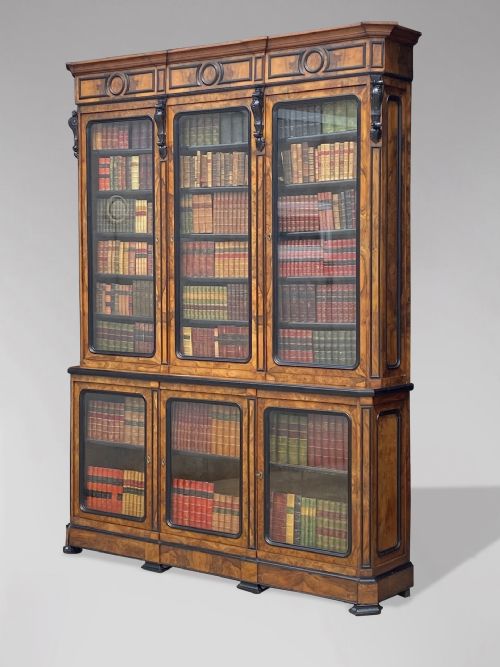
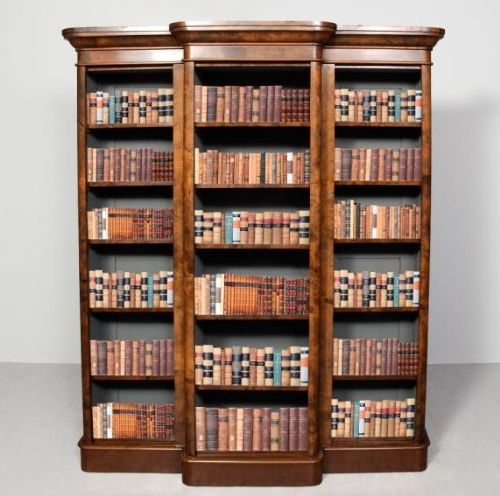
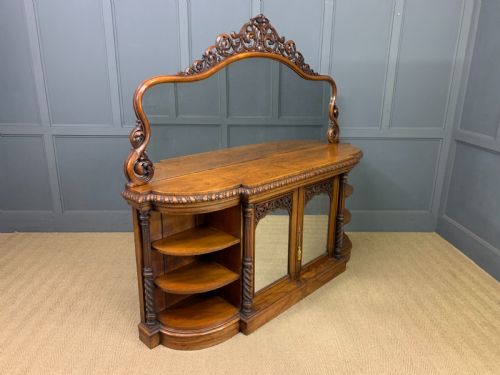


Large Walnut Display Cabinet
A large walnut display cabinet combines generous storage with transparent presentation, making it the ideal centrepiece for a substantial collection.
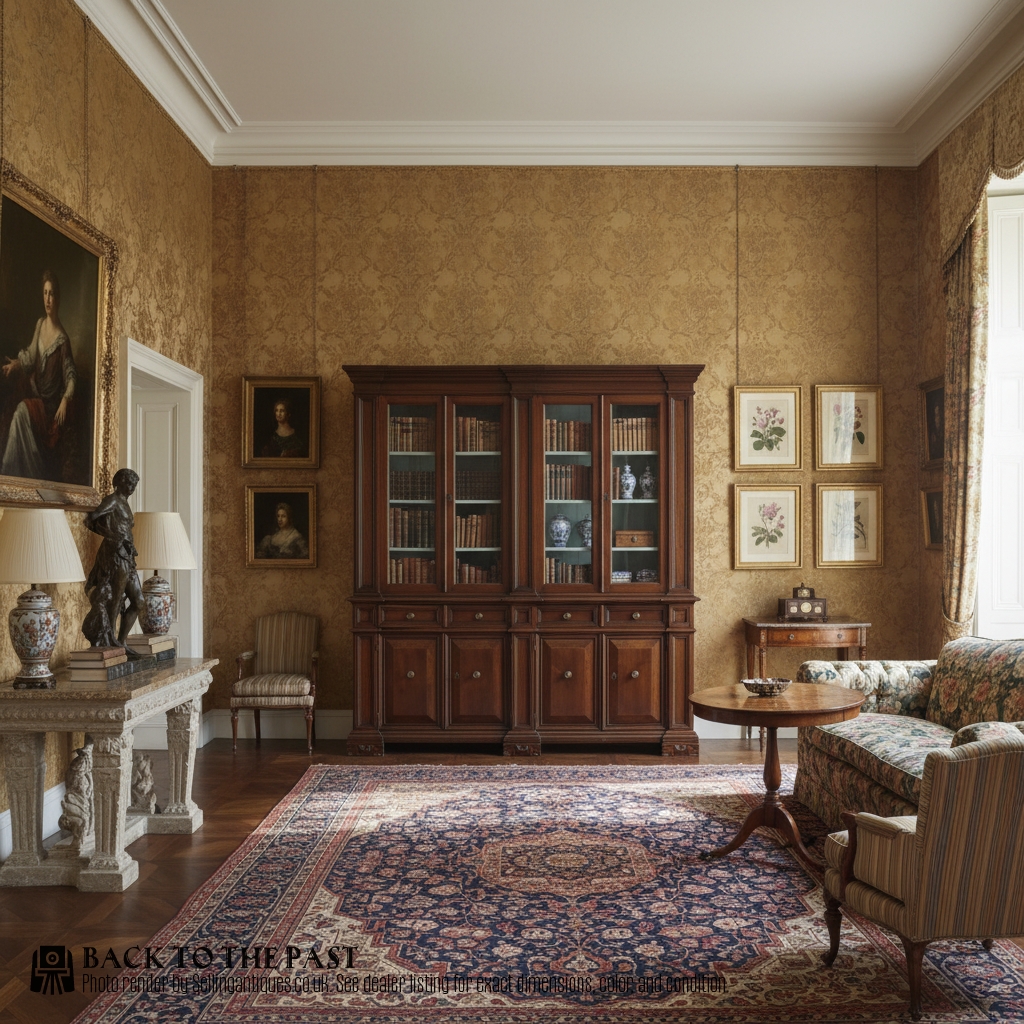
Large Walnut Display Cabinet
A large walnut display cabinet serves primarily to house and exhibit fine books, porcelain, or curiosities behind glazed doors. You will frequently encounter Victorian, Edwardian, and nineteenth-century Continental examples on this page.
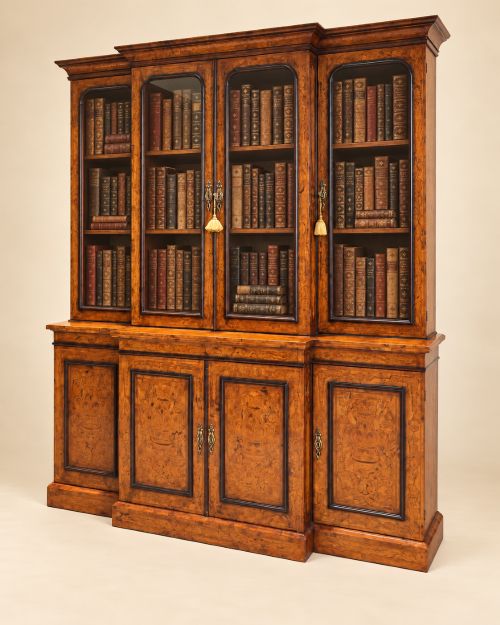
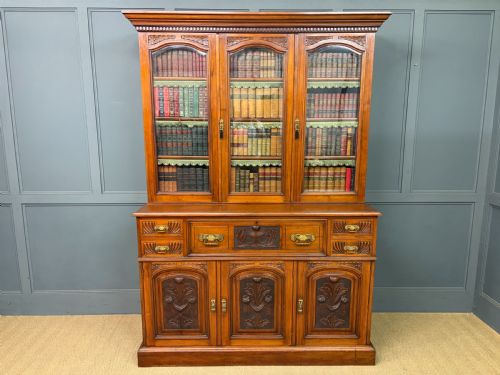
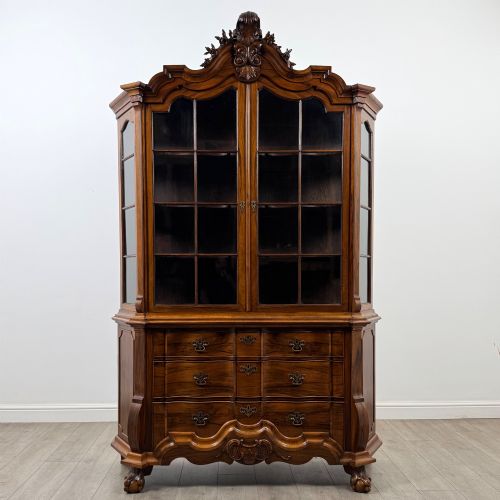
The forms range from breakfront bookcases and credenzas to bombé cabinets and vitrines. These large pieces were built to command significant wall space in principal rooms.
Many variants integrate open shelving, mirrored backs, or enclosed cupboards beneath the main display section. Their origins span English workshops, French ateliers, and Italian or Dutch makers.
Materials and construction
Makers utilised solid walnut alongside highly figured burr walnut veneers to achieve rich, patterned surfaces across expansive doors and panels. Floral marquetry, brass stringing, and ebonised details frequently enrich the primary timber.
Glazed panels required precise joinery to support large expanses of glass within timber frames. Ormolu mounts, cast bronze details, and carved solid wood elements reinforce the structural proportions.
Large Walnut Display Cabinet Retail Price Guide 2026
Typical asking prices for large walnut display cabinet among the pieces listed under this phrase on Sellingantiques today, from the lower quarter to the upper quarter. They describe what is for sale here now, not the wider market.
Forms include glazed display cabinets, breakfront bookcases, credenzas, and bombé shaped cabinets with brass and ormolu mounts.
Judging quality and finish
Quality rests upon the selection of timber, where tightly figured burr veneers and continuous grain matching separate superior pieces from plain stock. The depth of the hand-applied polish and the crispness of any marquetry inlay or carved wood dictate the visual standard.
Internal execution matters as much as exterior presentation, seen in adjustable shelving, original brass hardware, and sound joinery on large doors. Superior examples retain maker stamps and unified mounts that show no sign of later replacement.
Gillows·Waring and Gillow·Holland and Sons·Druce and Co
The Large Walnut Display Cabinet Glossary
- Burr walnut
- A figured timber obtained from the wart-like growths on walnut trees, prized for its swirling, organic grain patterns. It is typically sliced into thin veneers for cabinet doors.
- Ormolu
- Gilded bronze mounts applied to furniture for decorative enrichment, particularly prominent on nineteenth-century pieces. They add architectural weight and metallic contrast to dark timber.
- Breakfront
- A cabinet facade where the central section projects forward from the flanking wings. This architectural layout creates depth and shadow across large furniture forms.
- Marquetry
- The art of forming decorative patterns by fitting together contrasting veneers of wood or other materials. Floral motifs are especially common on Dutch and continental pieces.
- Bombe
- A swelling, outward-curving furniture profile that creates a rounded, bulging front or sides. It demands exceptional woodworking skill to construct successfully in solid wood and veneer.
Large Walnut Display Cabinet: Frequently Asked Questions
What rooms suit a large walnut display cabinet?
These imposing cabinets suit principal reception rooms, libraries, or dining spaces where their generous scale can be appreciated properly. They require sufficient wall space and ceiling height to sit comfortably without dominating the room.
Position them away from direct sunlight to protect the walnut timber and any vulnerable veneers from fading over time.
How do I care for walnut veneer?
Maintain walnut surfaces by dusting gently with a dry, soft cloth and avoiding silicone-based polishes or harsh chemical cleaners. Keep the room at a stable humidity to prevent the underlying timber from expanding and cracking the veneer.
Occasional application of appropriate wax feeds the wood and preserves the depth of the nineteenth-century finish.
Can I adjust the internal shelves?
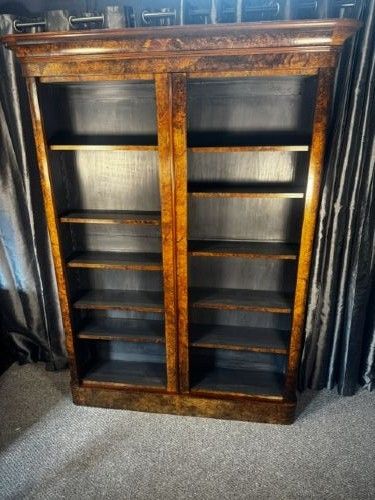
Many period breakfront bookcases and display cabinets feature adjustable wooden shelves supported on traditional wooden sliders or metal ratchets. This allows you to accommodate books or objects of varying heights.
Take care when repositioning heavy shelves to avoid marking the interior lining or glazed panels.
How do I distinguish Victorian from Edwardian pieces?
Victorian cabinets often display heavier carving, darker finishes, and elaborate ormolu mounts, reflecting mid-to-late nineteenth-century tastes. Edwardian examples tend to show lighter proportions and more restrained inlay work.
Examining the construction methods inside the drawers and behind the backboards helps confirm the period of manufacture.