
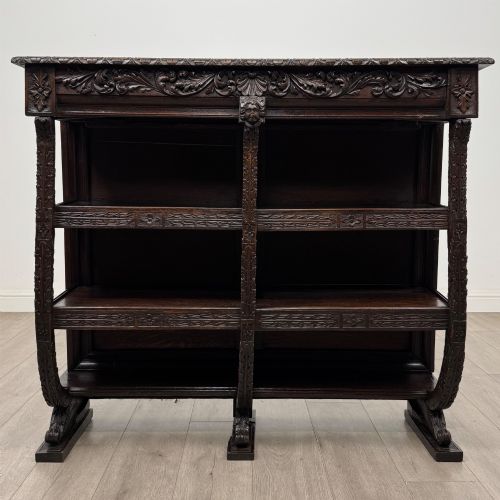
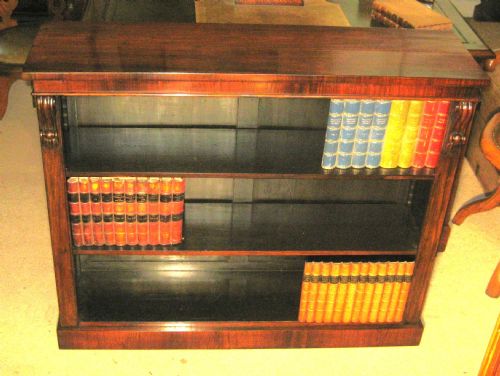
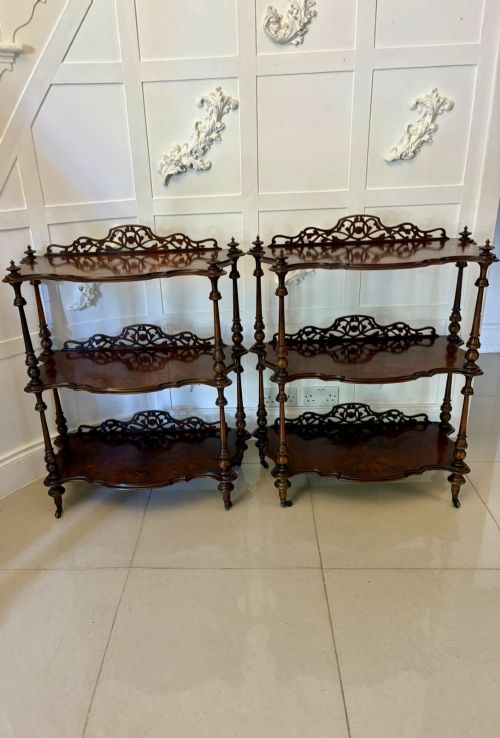
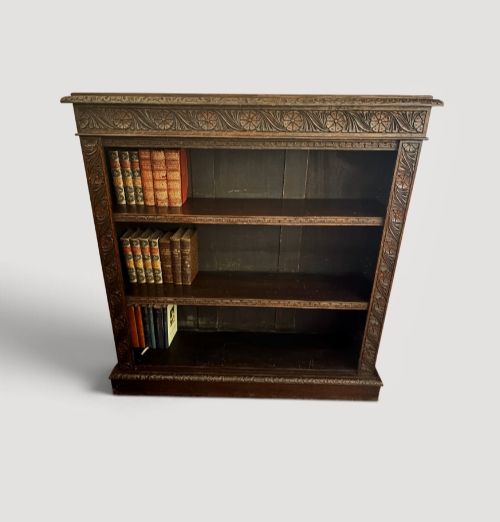
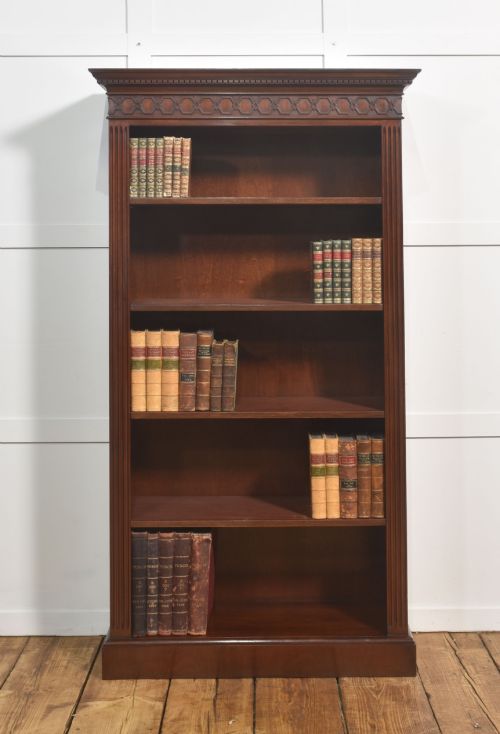
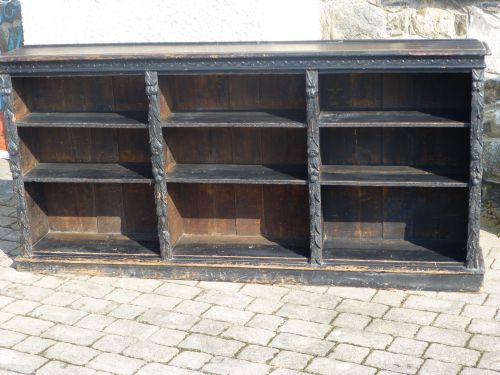
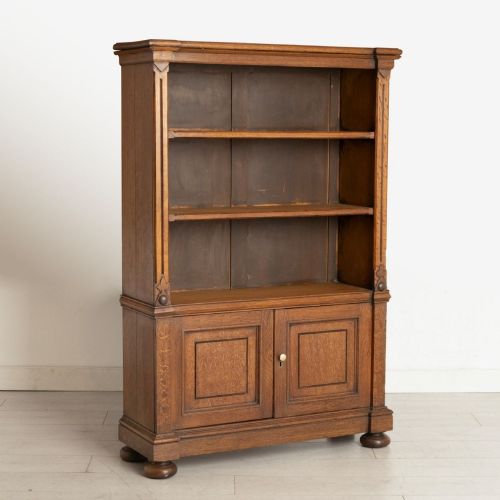
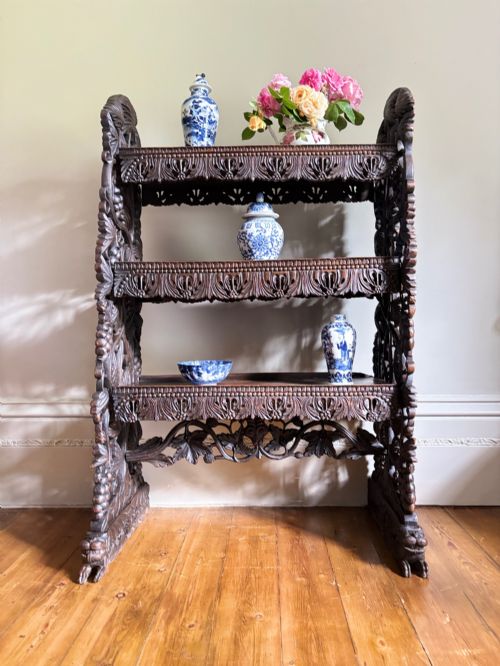
Victorian Carved Shelving Unit
These Victorian carved shelving unit options bring architectural depth and practical display space to a room, spanning open bookcases, whatnots and wall shelves.
Victorian Carved Shelving Unit
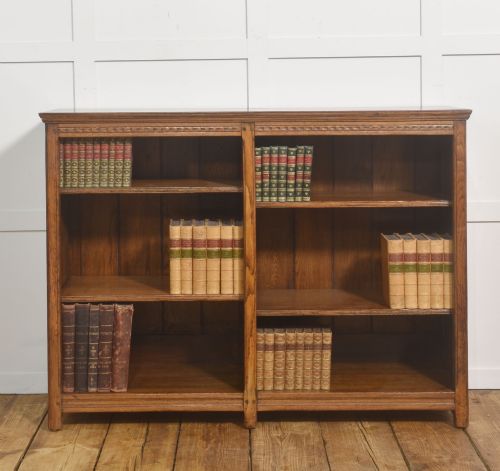
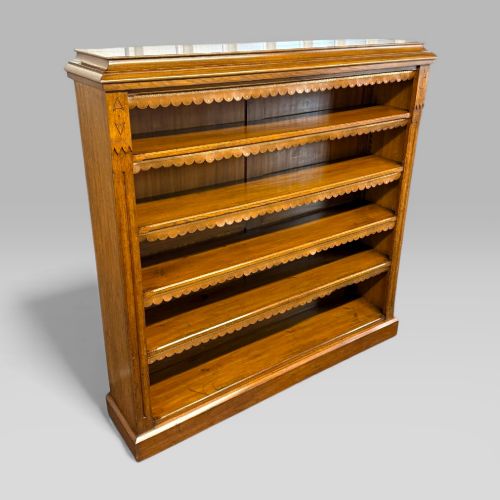
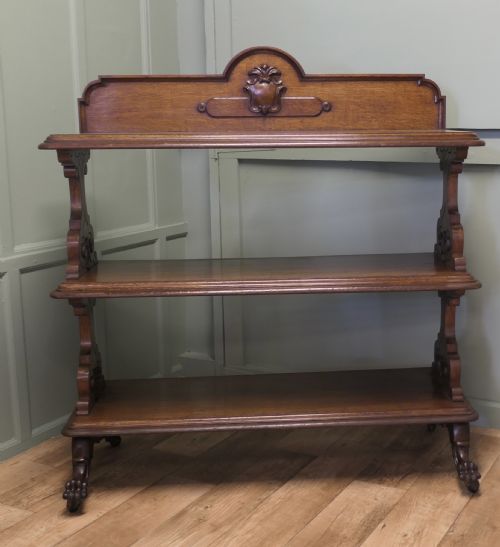
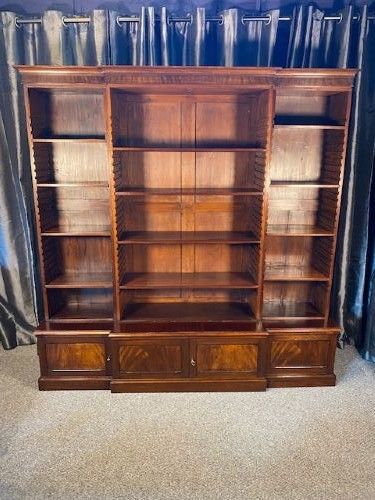
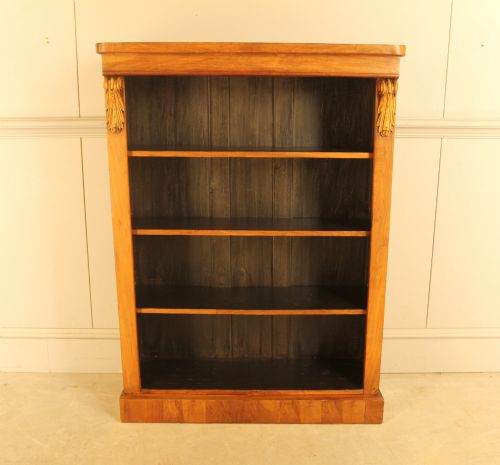
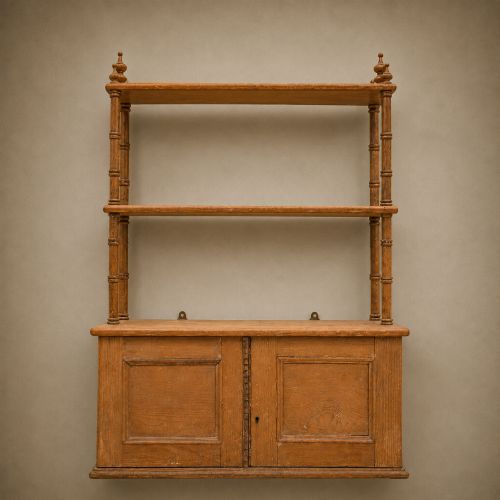
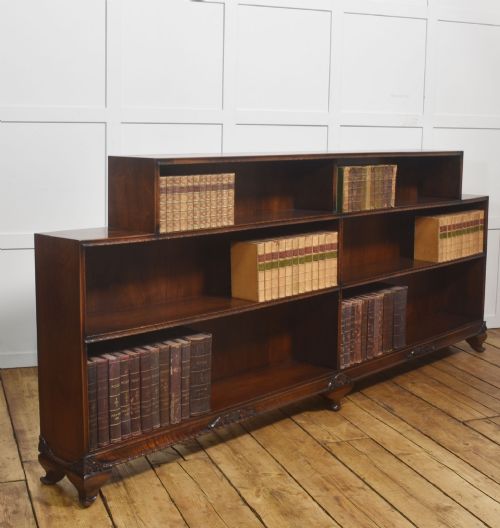
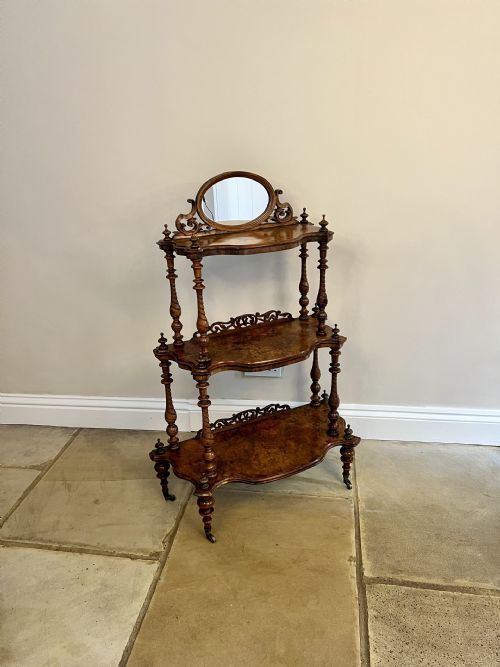
A victorian carved shelving unit encompasses open library bookcases, tiered whatnots, corner shelves and wall-mounted racks designed for display and storage. The examples on this page range from compact walnut whatnots to large oak library bookcases and breakfront cabinets.
The dominant periods span the nineteenth century, including specific decades such as eighteen sixty, eighteen eighty and nineteen ten, alongside pieces influenced by the aesthetic movement and gothic revival. Buyers encounter both low dwarf bookcases and tall stepped configurations built for domestic interiors.
Origins and timber choices vary widely, featuring regional British workshop pieces alongside Anglo-Indian padauk shelves and Sorrento inlaid olive wood. These items served distinct domestic purposes, from holding household libraries to exhibiting ornamental collections in parlours.
Materials and construction
Cabinet makers utilised dense hardwoods such as oak, mahogany, walnut, burr walnut and rosewood, frequently applying veneers to accentuate natural grain figures. Pine appears in utility wall shelves, while exotic woods like padauk, teak and olive wood mark specialised regional output.
Construction techniques combined solid timber framing with adjustable shelving systems supported by wooden ratchets or brass pins. Ornate detailing relied on hand carving, ebonising, ormolu mounts and Sorrento intarsia inlay work rather than moulded composites.
Listings feature woods such as walnut, oak, mahogany, rosewood and pine alongside periods spanning the nineteenth century.
Quality variations
The standard of a piece depends on the depth and crispness of the hand carving, the choice of timber figurations such as burr walnut or figured mahogany, and the integrity of the original joints. Superior examples exhibit refined proportions, balanced grain matching across veneers, and robust internal shelving systems.
Accessory elements like original brass mounts, working locks on associated cupboards, and well-executed inlaid details distinguish finer workshop output from simpler utilitarian shelving. The presence of adjustable shelving mechanisms and secondary timbers chosen with care further separates standard items from exceptional ones.
Edwards & Roberts
The Victorian Carved Shelving Unit Glossary
- Whatnot
- An open tiered piece of furniture with multiple shelves supported by pillars or uprights, used for displaying ornaments. These were popular in nineteenth-century drawing rooms for books and decorative objects.
- Breakfront
- A piece of furniture whose central section projects forward from the flanking wings. This architectural arrangement creates visual depth and breaks up long flat walls.
- Ebonised
- Wood finished with a dark stain or polish to imitate ebony. This treatment was common in nineteenth-century aesthetic movement furniture to achieve a striking contrast with gilded or carved details.
- Padauk
- A heavy, durable tropical hardwood with a reddish hue, often found in Anglo-Indian furniture. It accepts fine carving and holds structural strength over long spans.
- Intarsia
- A form of wood inlay using different coloured woods fitted into a carved wooden support. Sorrento pieces frequently utilised this technique to create pictorial or geometric surface patterns.
Victorian Carved Shelving Unit: Frequently Asked Questions
What is a whatnot shelf?
A whatnot is a multi-tiered shelving unit designed specifically for displaying ornaments and small decorative objects in Victorian reception rooms.
These pieces typically feature slender upright supports and can stand independently or fit neatly into room corners.
How do I adjust the shelves?
Many nineteenth-century open bookcases utilise adjustable shelving systems supported by wooden side ratchets or metal shelf pins.
Library bookcases often incorporated these mechanisms to accommodate books of varying heights without altering the main structural frame.
What woods were used?
Cabinet makers predominantly worked with native and imported hardwoods including oak, mahogany, walnut, burr walnut and rosewood.
Exotic timbers such as padauk, teak and olive wood also appear, reflecting global trade networks during the nineteenth century.
Where were they placed?
These units found homes in libraries, parlours and studies to house expanding household book collections and display decorative porcelain.
Wall-mounted shelves and corner units were specifically chosen to maximise vertical space in smaller domestic rooms.