
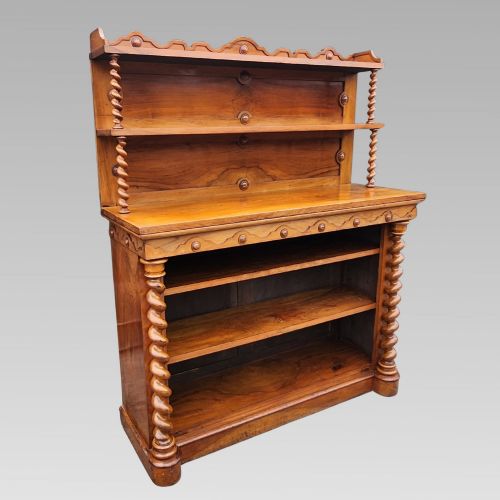


Late Victorian Carved Buffet
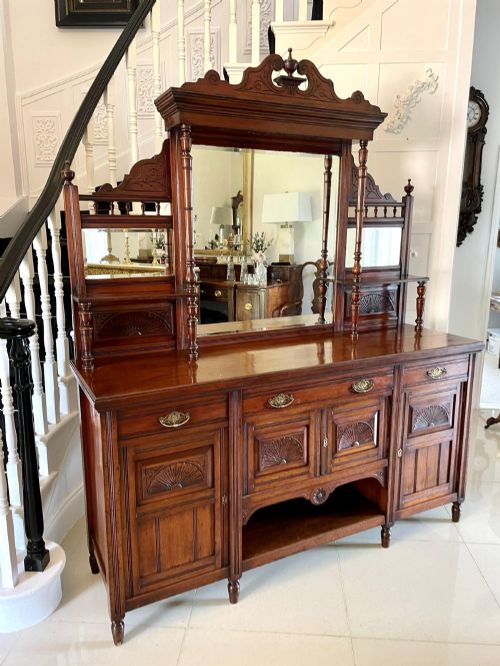
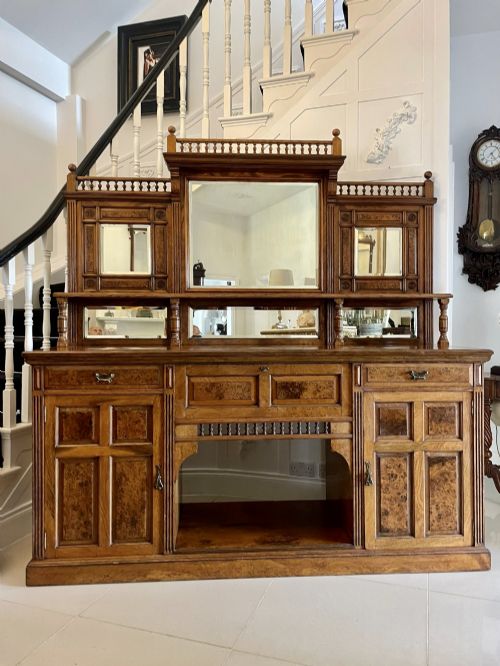
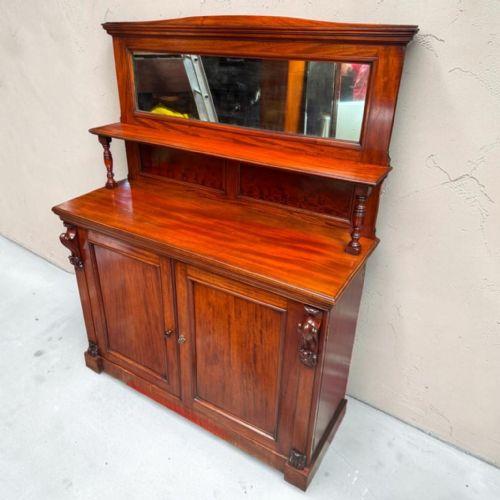
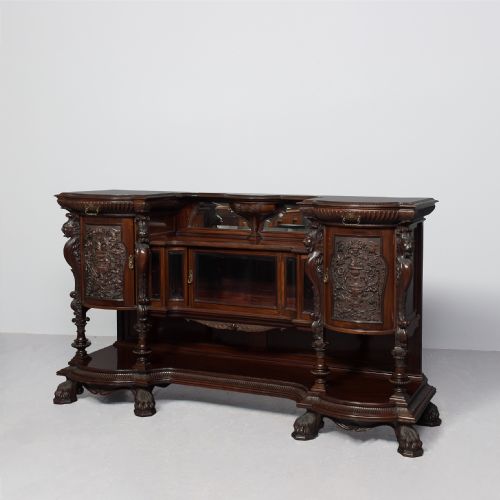
A late victorian carved buffet offers substantial storage and architectural presence, anchoring a dining room with heavy timber and confident decoration.
Late Victorian Carved Buffet
A late victorian carved buffet is a heavy dining room furniture piece designed for serving food and storing tableware. These pieces appear primarily from the eighteen eighties and eighteen nineties, reflecting the later Victorian era alongside Arts and Crafts and Gothic Revival influences.
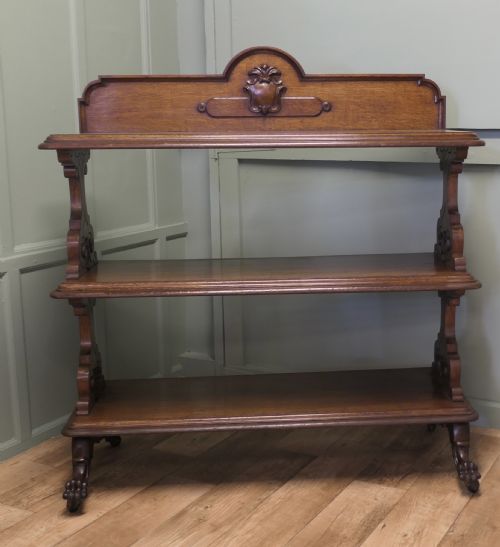
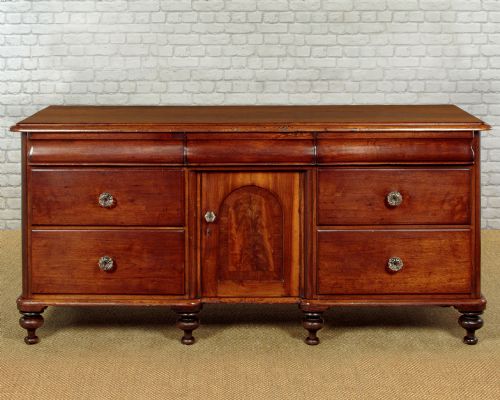
Buyers encounter forms described variously as sideboards, side cabinets, and dresser bases. Oak and walnut dominate the selection, frequently incorporating mirror backs, cupboards, and serving surfaces into the design.
Craftsmanship and design
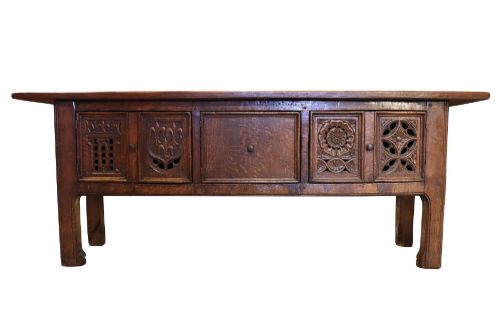
The standard of carving defines the distinction between standard production items and exceptional commissions. Crisp, deep relief work executed by skilled hands separates superior examples from mechanical or shallow tooling.
Timber selection and secondary wood use reveal the original maker's intent. Matching face veneers, substantial brass fittings, and integrated mirror plates indicate higher workshop standards.
Listings feature oak, walnut, mahogany, and rosewood as primary materials across the late nineteenth century.
Gillows·James Plunckett·Holland and Sons
The Late Victorian Carved Buffet Glossary
- Mirror back
- An upright wooden superstructure holding a glass mirror plate attached to the rear of the sideboard. This feature reflects light and displays decorative ceramics.
- Dresser base
- A low cabinet form with cupboards and drawers beneath a broad top surface. It provides heavy storage capacity for dining rooms.
- Gothic Revival
- A nineteenth century architectural and decorative style drawing on medieval ecclesiastical forms. Pieces display pointed arches, tracery, and heavy chamfered framing.
- Arts and Crafts
- A design movement prioritising honest construction, visible joinery, and natural materials. It reacted against industrial mass production by valuing visible hand craftsmanship.
Late Victorian Carved Buffet: Frequently Asked Questions
How do I style a buffet?
Position the piece against a principal dining room wall where its height and mirror back can anchor the space. Use the top surface for serving dishes during meals or displaying ceramic collections.
Allow sufficient clearance around the cabinet doors and drawers to function without obstruction. Pair the heavy timber tones with complementary dining chairs from the same period.
What wood types are used?
Oak and walnut form the bulk of the surviving inventory, complemented by mahogany and rosewood. Pollard oak and burr walnut appear as decorative veneers on prominent door panels.
Secondary timbers support the heavy carcass construction beneath these finished surfaces. Brass hardware and glass inserts complete the material palette.
Are mirror backs original?
Most mirror backs are integrated into the original design of the sideboard or buffet. They were constructed as a single architectural unit with the base during the late nineteenth century.
Examine the framing joints where the superstructure meets the counter to confirm original assembly. Original mirror plates often exhibit light foxing consistent with age.
How do I date these pieces?
Dating relies on combining stylistic evidence from Gothic Revival, Arts and Crafts, or Aesthetic movements with construction techniques. The presence of specific maker stamps or registration marks provides precise chronological markers.
Most examples date from the eighteen eighties and eighteen nineties, though related forms extend into the early twentieth century. Hardware styles and secondary wood choices further narrow the manufacturing window.