

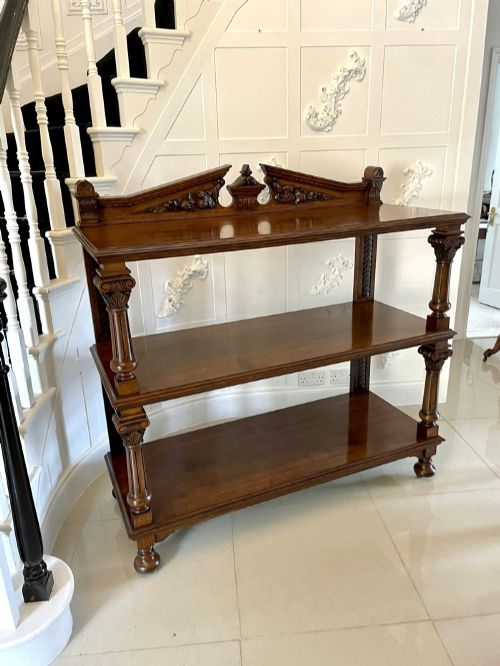
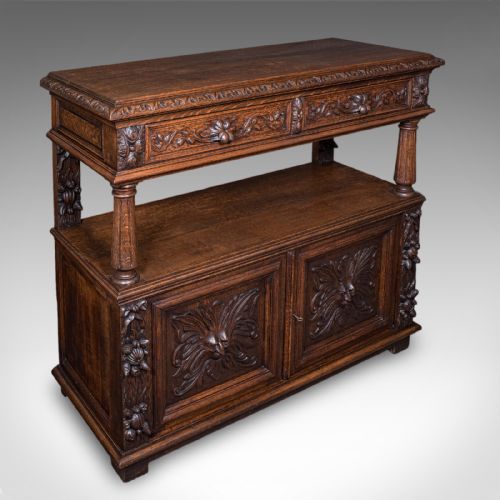
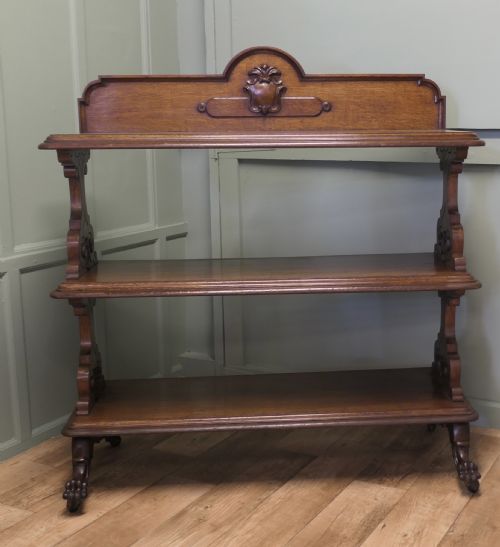


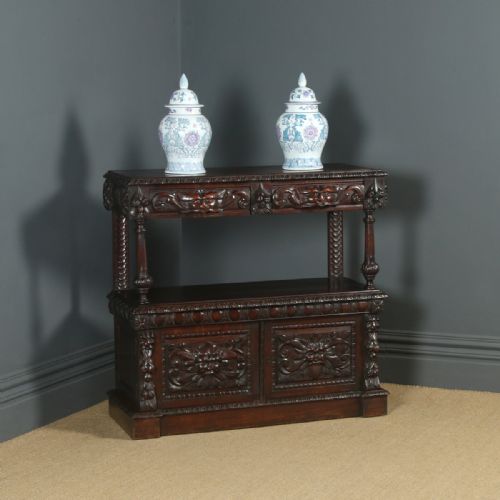


Victorian Oak Tiered Server
These victorian oak tiered server pieces offer tiered display and heavy timber construction, bringing practical serving surfaces to any dining room.
Victorian Oak Tiered Server
A victorian oak tiered server spans several forms including dumbwaiters, buffets, serving tables, and side tables designed for dining rooms and large parlours. These items emerge from the nineteenth century, with specific examples dated around eighteen seventy to eighteen ninety.
The pieces on this page lean heavily towards the Victorian and Gothic Revival styles, alongside Aesthetic Movement designs. You will encounter tiered rectangular tables, sideboards with top shelves, and rise and fall dumb waiters.
Makers and craftsmen of this period utilised solid timber to build sturdy multi-level surfaces intended for holding dishes and serving food. The forms combine storage cupboards or drawers with open tiers for display.
How they were made
Carpenters constructed these servers using solid oak, pollard oak, and occasionally walnut, selected for durability and pronounced grain patterns. Brass hardware such as handles, brackets, and mechanisms added functional strength and visual contrast to the dark wood.
Carving defines the decoration, featuring profuse relief work and specific motifs like the Green Man on structural elements and panels. Joinery techniques of the era ensured that multi-tiered frameworks and heavy top shelves remained stable under weight.
Victorian Oak Tiered Server Retail Price Guide 2026
Typical asking prices for victorian oak tiered server among the pieces listed under this phrase on Sellingantiques today, from the lower quarter to the upper quarter. They describe what is for sale here now, not the wider market.
Listings feature items spanning the nineteenth century, predominantly from the Victorian period, utilising oak, pollard oak, brass, and walnut.
What varies in quality
Depth and crispness of the carved ornamentation separate standard production items from superior examples. Sharply defined Green Man faces and intricate foliage indicate skilled hand-carving by competent nineteenth-century artisans.
The selection of timber grain, particularly in pollard oak sections, dictates the visual richness of the piece. Robust structural integrity across multiple tiers and smooth operation in rise and fall mechanisms determine everyday utility and craftsmanship standard.
The Victorian Oak Tiered Server Glossary
- Tiered server
- A multi-level furniture piece used for presenting food or displaying tableware during the Victorian period. These items feature two or more horizontal surfaces supported by pillars or cabinet bases.
- Dumbwaiter
- A multi-tiered serving table designed to hold dishes without requiring servants in the room. They appear as standing tables with graduated shelves or rising mechanisms.
- Pollard oak
- Timber taken from trees that were pollarded, producing a distinctive clustered grain pattern with dense knots. Cabinetmakers valued this wood for decorative veneering and panel accents.
- Green Man
- A sculptural motif depicting a human face surrounded by or entwined with leaves and vines. This ancient symbol enjoyed a significant revival in Victorian and Gothic architecture and furniture.
- Gothic Revival
- An architectural and decorative style drawing inspiration from medieval forms, pointed arches, and heavy proportions. Furniture in this taste displays deep chamfering and ecclesiastical carved details.
Victorian Oak Tiered Server: Frequently Asked Questions
What is a tiered server?
A tiered server is a multi-level wooden piece designed to hold plates, serving dishes, and food during meals.
Originating in the nineteenth century, these pieces provided extra surface space in dining rooms when hosting guests.
How were dumbwaiters used?
Dumbwaiters held extra courses, silverware, and glassware close to the dining table so diners could serve themselves.
Some examples feature rise and fall mechanisms to adjust shelf heights according to need.
What is pollard oak?
Pollard oak is a specialised timber cut from trees pruned close to the trunk to encourage dense, highly figured branch growth.
Cabinetmakers prized this wood for its swirling grain patterns on cabinet doors and tabletops.
How do I spot a Gothic Revival piece?
Gothic Revival pieces show heavy proportions, pointed arches, and deep relief carvings often depicting foliage or architectural tracery.
These items date predominantly to the Victorian era and use dark oak or walnut.
Where should I place a server?
A server suits a dining room or large hallway where it can hold lamps, plants, or serving trays.
The multiple tiers provide vertical display space without taking up excessive floor area.