
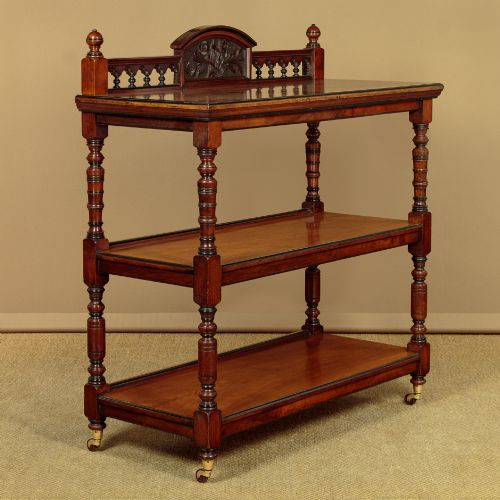


Victorian Dinner Waggon
A victorian dinner waggon is a tiered serving piece designed for dining room service, offering practical elegance and rich timber tones for modern interiors.
Victorian Dinner Waggon
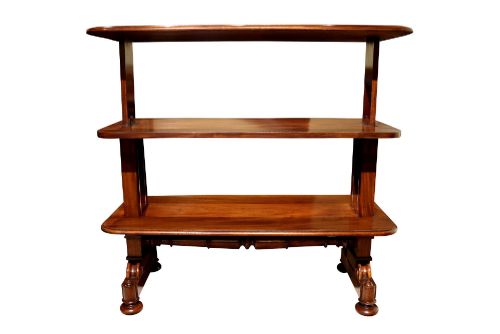
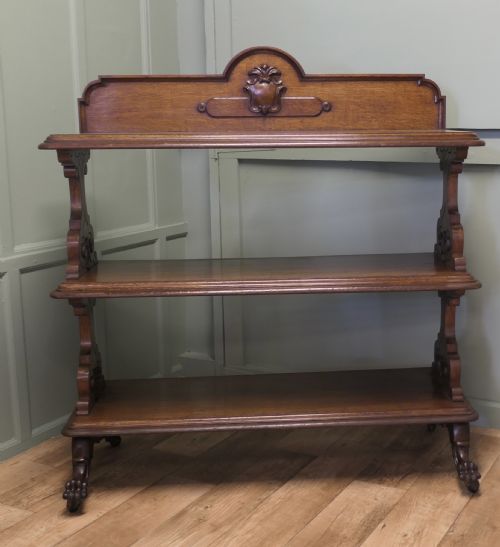
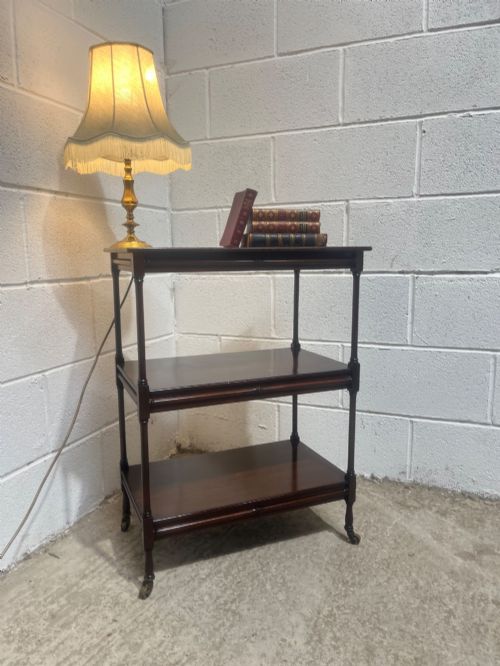
A victorian dinner waggon is a substantial serving piece constructed to hold dishes and silver during dining room service. Buyers exploring this category encounter multi-tiered servers, sideboards, and dumb waiters designed for display and utility.
The pieces appearing here span the nineteenth century, including specific dates such as eighteen fifty, eighteen sixty, and eighteen eighty, alongside pieces from the William IV and Edwardian eras. Mahogany, walnut, oak, and pollard oak dominate the selection, often accompanied by brass castors.
Forms range from three-tier trolleys and buffet tables to serving tables and buffets featuring cabinets. Aesthetic Movement designs and carved details appear frequently among these dining room furnishings.
How they were made
Craftsmen shaped these serving pieces from dense hardwoods like mahogany, walnut, and oak, selecting pollard oak for distinct grain patterns. Timber surfaces received careful polishing to highlight the natural figuring of the wood.
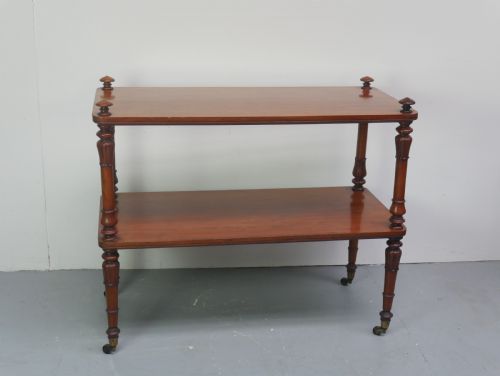
Structural elements include turned supports, carved ornamentation, and tiered shelving assembled to bear the weight of heavy ceramics and metalware. Brass castors were fitted to bases to ensure mobility across dining room floors.
Original brass castors ensure that even the heaviest three-tier mahogany server glides smoothly across the floor.
What varies in quality
The calibre of timber selection and depth of carving distinguish finer examples from standard production pieces. Superior items display well-figured mahogany or walnut with crisp, detailed carving rather than mechanical execution.
Original hardware such as brass castors and the integrity of multi-tiered shelf joints influence the overall standard of construction. Pieces retaining their original surfaces and structural stability command greater appreciation.
Gillows of Lancaster and London
The Victorian Dinner Waggon Glossary
- Dumb waiter
- A multi-tiered serving stand utilised for holding food and tableware near the dining table without requiring servant attendance. These pieces feature two or three graduating shelves on central pillars or turned supports.
- Pollard oak
- Timber taken from trees that were pollarded, resulting in a dense, highly figured grain pattern prized for decorative cabinet work. This material appears on select nineteenth-century server fronts.
- Castor
- A small wheel mounted on a swivel assembly attached to the base of furniture to allow easy movement. Brass versions are common on nineteenth-century trolleys and serving tables.
- Aesthetic Movement
- A late nineteenth-century design style emphasising visual beauty and artistic reform over heavy historicism. Pieces from this movement utilise simpler lines and refined timber tones.
- Buffet
- A side table or sideboard used for serving food or displaying plate during meals. Nineteenth-century versions frequently incorporate multiple tiers and lower cabinets.
Victorian Dinner Waggon: Frequently Asked Questions
What is a victorian dinner waggon used for?
A victorian dinner waggon serves as an auxiliary table in the dining room for holding dishes, glassware, and serving pieces during meals. The multiple tiers allow hosts to organise courses and keep items accessible near the main dining table.
In contemporary settings, these pieces function effectively as display surfaces for ceramics, books, or plants while maintaining their traditional dining room utility.
What is the difference between a dumb waiter and a buffet?
A dumb waiter traditionally refers to a multi-tiered stand with circular or rectangular shelves designed primarily for holding dishes during a meal without servants present. A buffet frequently incorporates enclosed cabinet space or drawers alongside serving surfaces.
Both forms belong to the broader category of dining room server furniture produced throughout the nineteenth century.
How do I care for nineteenth-century mahogany furniture?
Maintain nineteenth-century mahogany surfaces by dusting regularly with a soft cloth and avoiding exposure to direct sunlight or extreme temperature fluctuations. Apply traditional beeswax periodically to nourish the timber and preserve the polished finish.
Avoid placing damp items directly onto unsealed wood surfaces to prevent water rings and staining on the antique polish.