
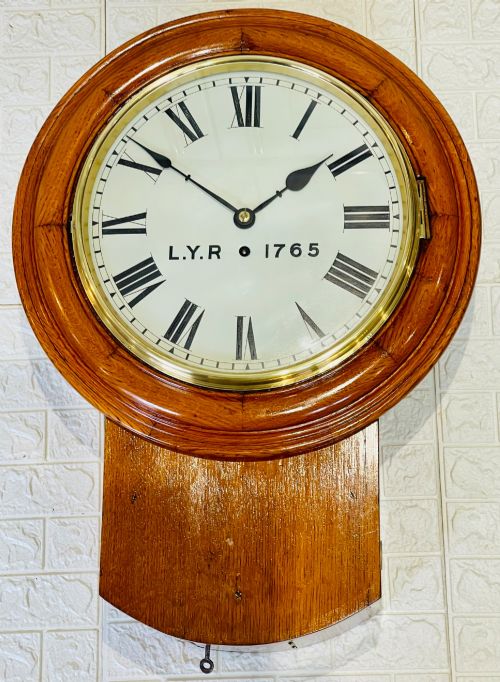
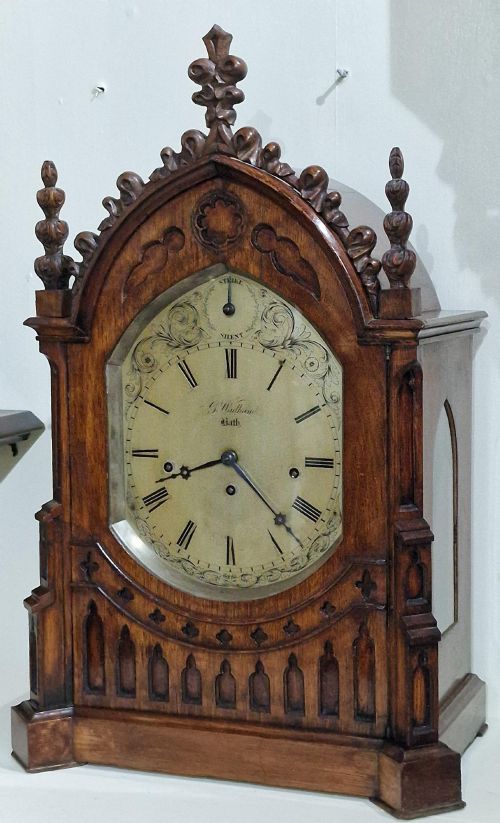
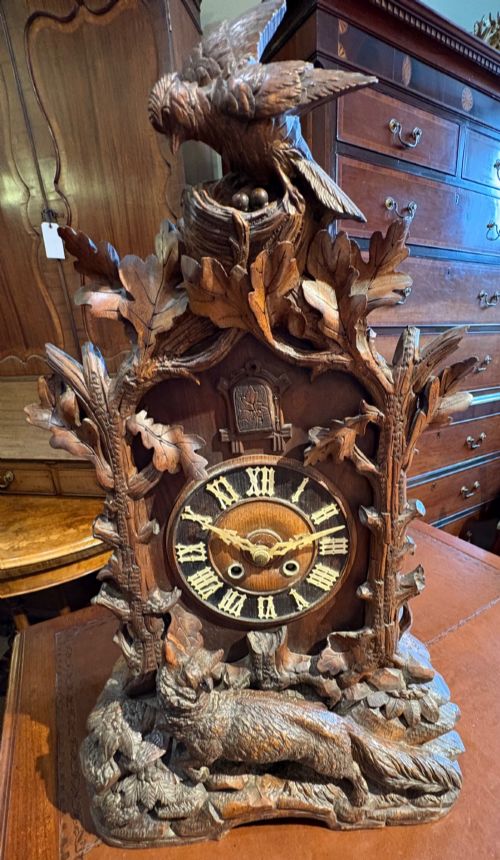

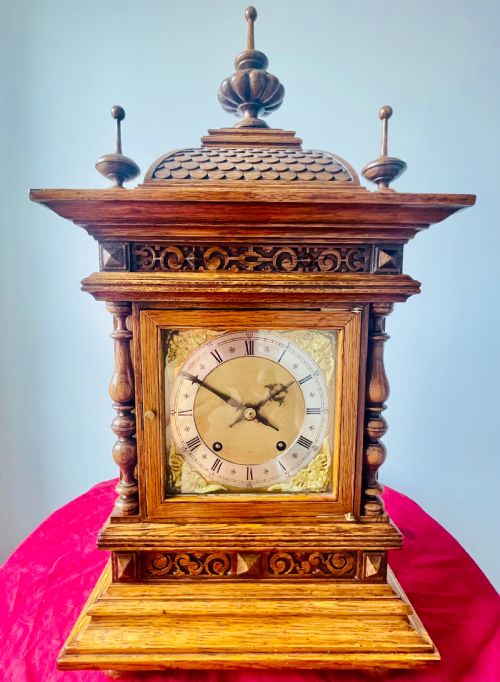
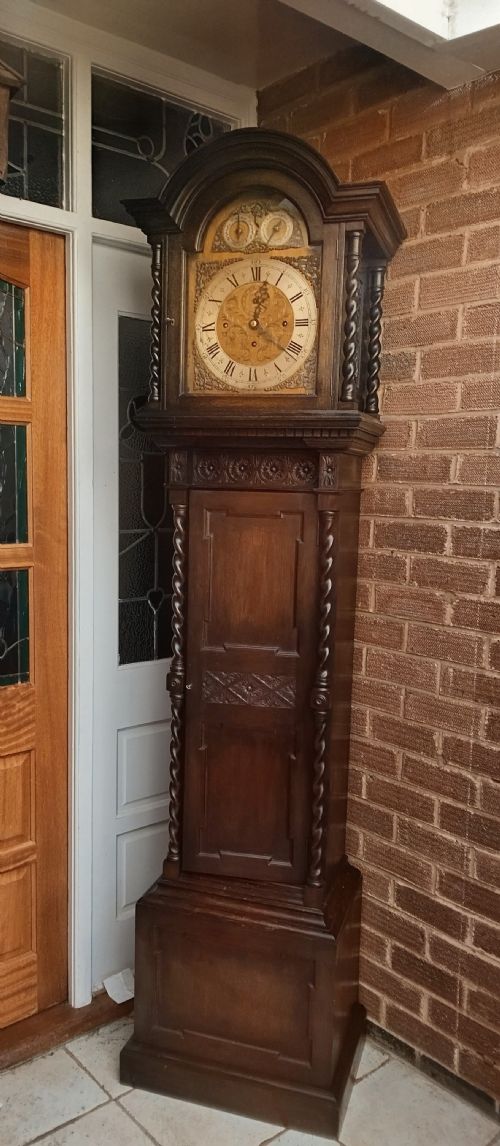
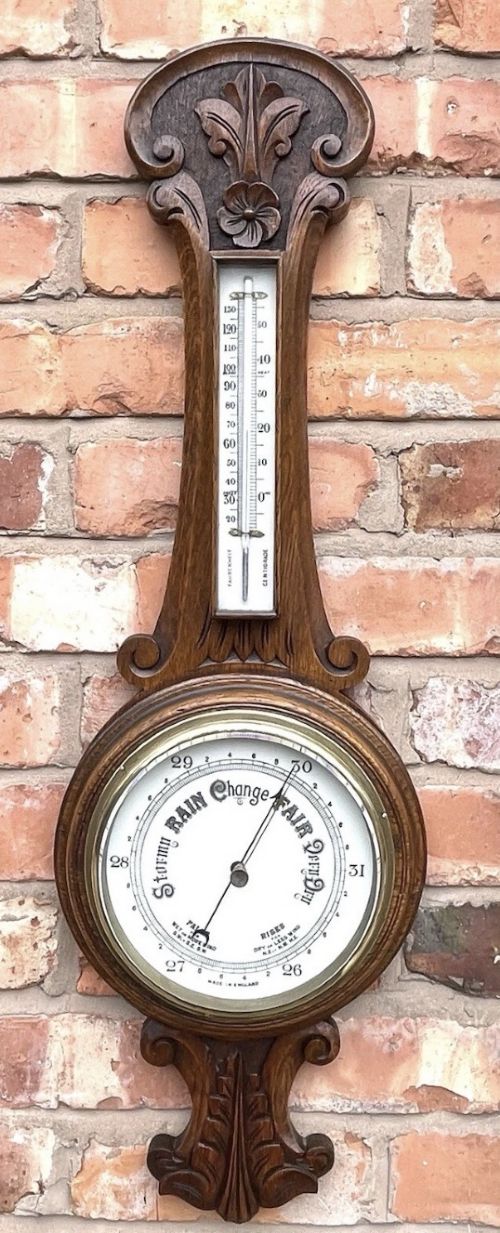


Victorian Carved Oak Clock
A victorian carved oak clock brings dense architectural detail and robust timber into a room, driven by brass movements that have ticked for generations.
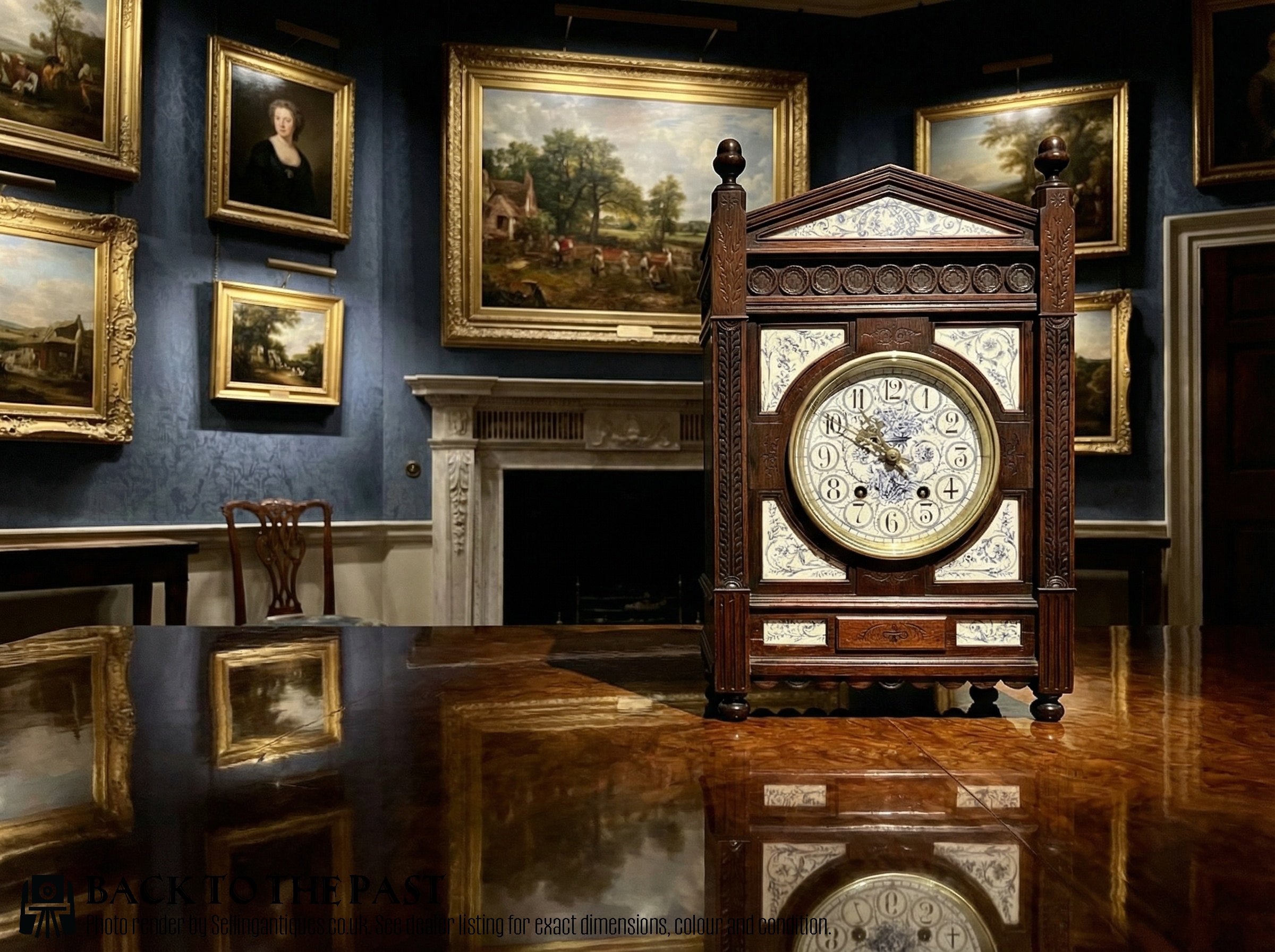
Victorian Carved Oak Clock
A victorian carved oak clock spans several distinct domestic and public forms, ranging from wall-mounted Vienna regulators to substantial bracket clocks and longcase grandfathers. The materials and periods appearing here show a heavy reliance on solid oak timbers shaped with deep relief carving, alongside walnut and mahogany alternatives.
Wall clocks and bracket clocks dominate the selection, often incorporating brass dials, glass covers, and mechanical fusee movements. Pieces from this era frequently merge timekeeping with barometers and thermometers, reflecting a Victorian appetite for multi-functional household instruments.
Origins stretch across British workshops as well as continental centres such as the Black Forest, bringing regional variations in carving styles from gothic revival to architectural desk forms.
How they were made
Makers utilised dense native oak, selected for its ability to hold crisp chisel work during deep relief carving. Cabinets were constructed using traditional joinery, housing brass gear trains, enamel or brass chapter rings, and bevelled glass bezels.
Movements relied on spring-driven fusee mechanisms or weight-driven pendulum systems, requiring precision hand-finishing of metal cogs and escapements to maintain accurate time over eight-day or month-long runs.
Periods represented span the Georgian era through the Victorian decades into early twentieth-century designs.
What varies in quality
The distinction between ordinary and exceptional examples rests in the crispness of the hand-carved relief and the architectural ambition of the oak case. Superior pieces display deeply undercut foliage, figures, or gothic tracery executed by skilled hands rather than mechanical routers.
Internally, the complexity and finish of the movement dictate worth. Three-train chiming bracket clocks and signed fusee movements represent a higher tier of horology compared to standard time-only spring drives.
George Wadham Bath·Winterhalder and Hofmeier·Dent of London·David Craig·Beha
The Victorian Carved Oak Clock Glossary
- Fusee
- A conical pulley used in spring-driven clocks to maintain even force on the gear train as the mainspring unwinds. This mechanism ensures consistent timekeeping throughout the duration of the winding cycle.
- Bracket clock
- A portable household clock designed to sit on a table, shelf or dedicated wall bracket. Despite the name, many examples function independently without requiring a wall mount.
- Vienna regulator
- A precision wall clock developed in Austria, characterised by a long glass-panelled case that displays a swinging pendulum and weight cords. These clocks are prized for their accurate movement and clean architectural lines.
- Aneroid barometer
- An atmospheric pressure gauge that uses a small, flexible metal box instead of liquid mercury to measure weather changes. They frequently appear paired with clock faces in Victorian combination instruments.
- Chapter ring
- The outer ring on a clock face that bears the numerals marking the hours. They are often cast in brass, silvered, or painted with enamel.
Victorian Carved Oak Clock: Frequently Asked Questions
How do I wind a fusee clock?
Insert the winding key into the dial aperture and turn it gently clockwise until you feel firm resistance, taking care not to overwind the mainspring.
Most eight-day fusee movements require a steady hand and should be wound on a consistent day each week to maintain tension stability.
Where should I place a longcase clock?
Position the case against an interior load-bearing wall where temperature fluctuations and floor vibrations remain minimal. Placing the clock away from direct sunlight protects the oak finish and prevents wood movement.
Ensure the base rests squarely on the floor so the pendulum swings with an even, regular beat.
Why does the clock lose time?
Changes in ambient room temperature and humidity can alter the length of the pendulum rod or thicken the lubricating oils within the gear train. A simple adjustment of the rating nut at the bottom of the pendulum bob usually corrects minor timekeeping errors.
Persistent running issues generally indicate that the movement requires professional cleaning and fresh oil.