


Ebonised Wooden Mantel Clock
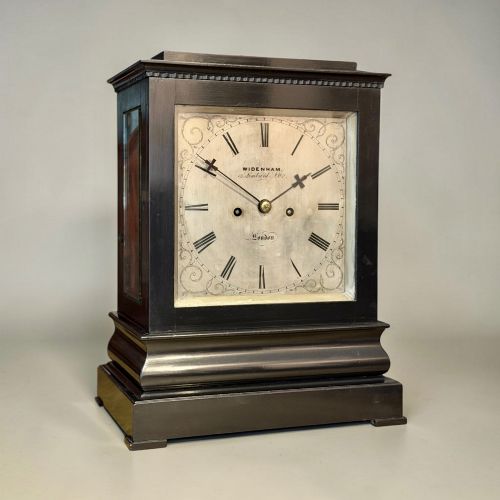
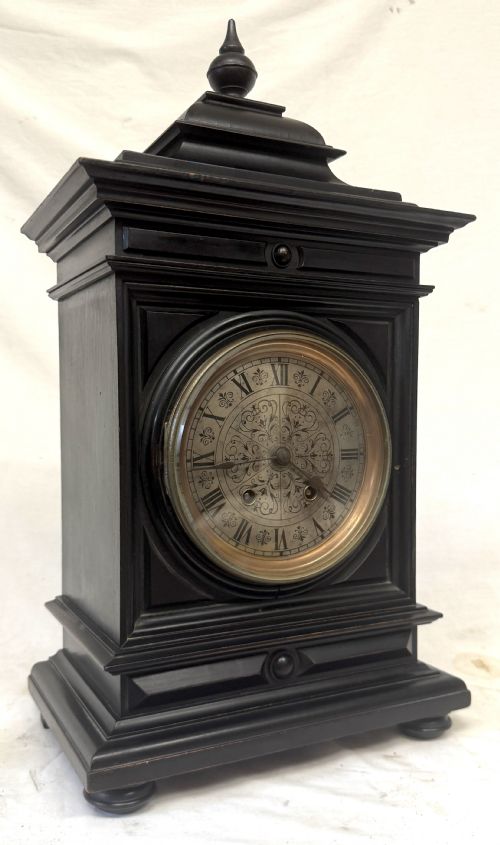
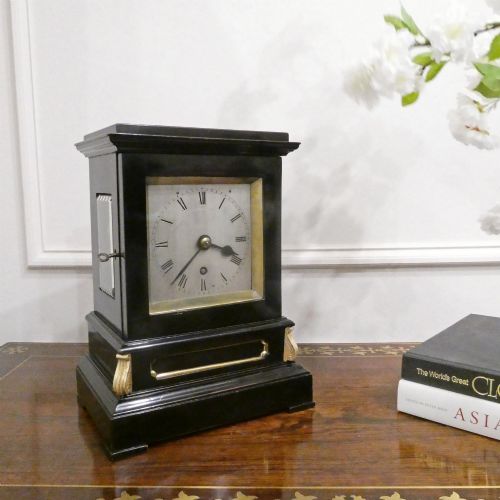
An ebonised wooden mantel clock brings dark elegance to a room, offering the steady tick and striking chime of 18th, 19th and early 20th century horology.
Ebonised Wooden Mantel Clock
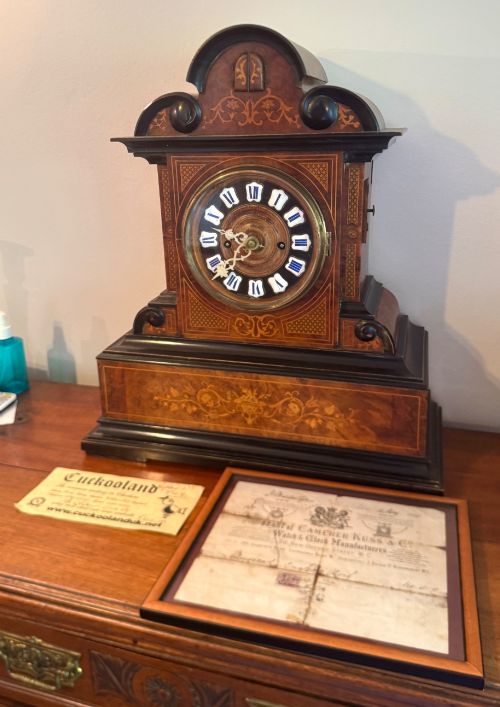
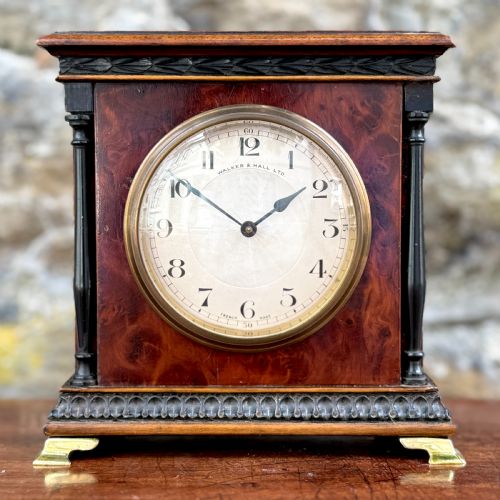
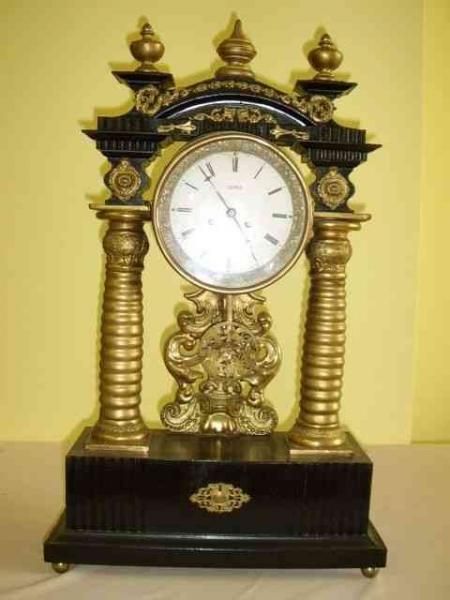
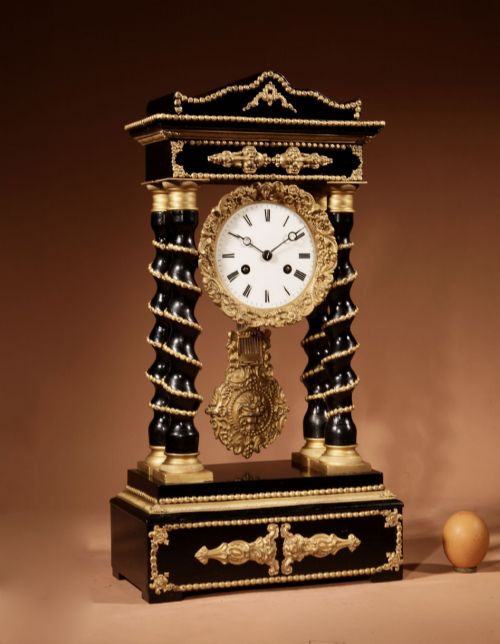
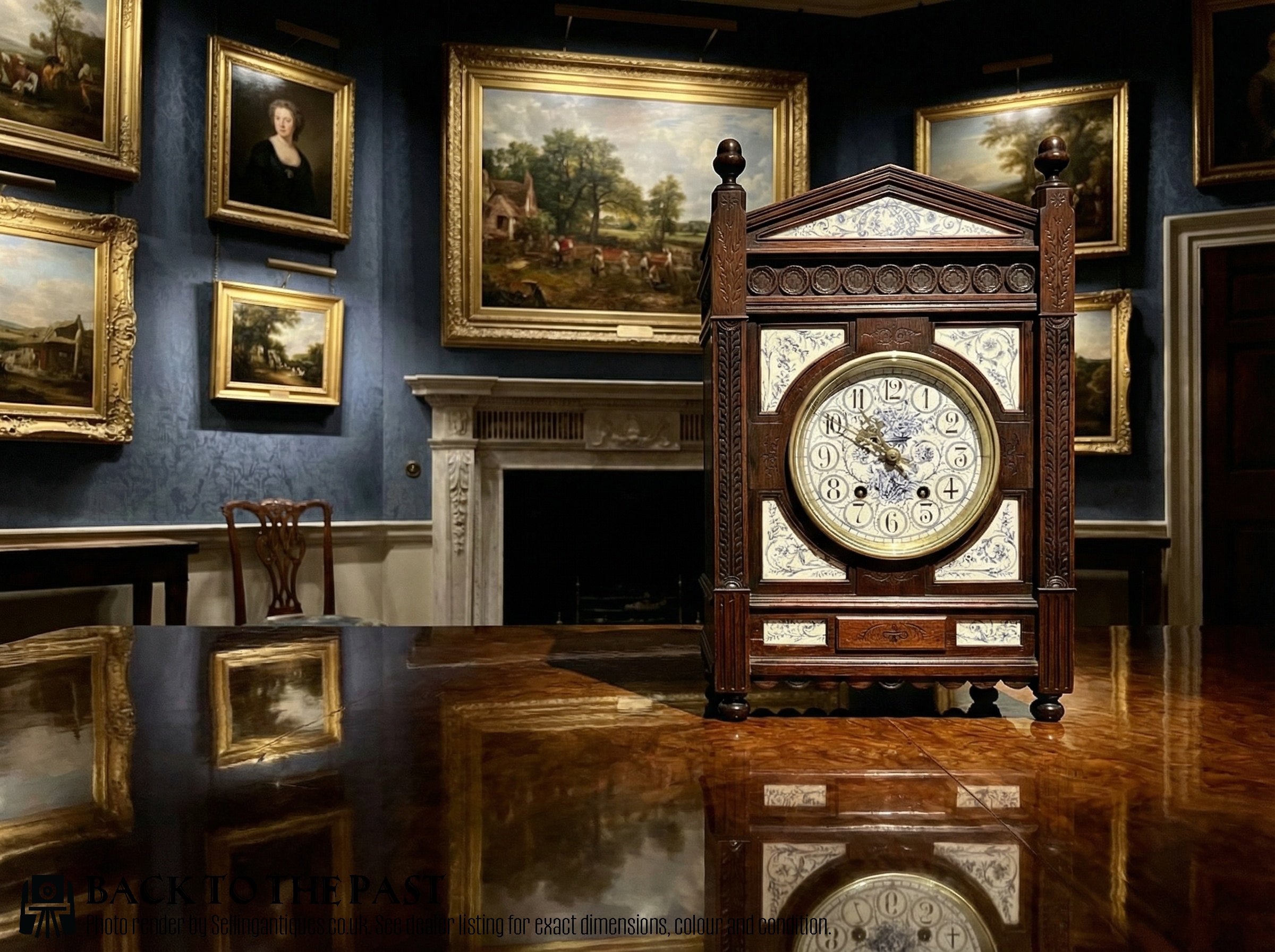
When you search for an ebonised wooden mantel clock, you encounter timepieces housed in dark, darkened or simulated ebony cases that span the Georgian, Victorian, Edwardian and French Empire periods. These works appear in forms ranging from traditional bracket clocks and bell top cases to portico clocks and library clocks.
The version you are most likely to meet on this page is a Victorian or 19th century ebonised mantel clock, often featuring brass details, silvered metal dials, or enamel faces. Pieces originate from English workshops as well as French makers, bringing varied striking and chiming movements to the shelf.
Makers and houses such as Widenham, Lenzkirch, Walker and Hall, Des Granges, Andrew Marchant, Barraud & Lunds, Joseph Lum and Wm. Gilbert represent the horological traditions found across these listings. Alongside standard bracket and mantel formats, you also find display domes, cloches, desk clocks and balloon clock variants.
Materials and construction
Cases are constructed from wood, specifically walnut, marquetry combinations, or timber treated with an ebonised finish to mimic solid ebony. Gilded elements, ormolu mounts, and brass bezels frequently accent the dark wooden surfaces.
Listings feature periods from the 18th century through to 1910, spanning Georgian, Victorian, Edwardian, and French Empire styles.
Judging quality in ebonised clocks
The sophistication of the internal movement dictates much of the standing of an ebonised wooden mantel clock, with single, twin, or triple fusee systems and musical chime complications showing higher technical ambition. Verge escapements and quarter-repeating mechanisms further distinguish advanced horological output from standard striking models.
Cabinetwork and secondary materials also set pieces apart, seen in the crispness of inlaid marquetry, the depth of the ebonised finish, and the presence of fine ormolu mounts or engraved silvered dials. Signed movements by notable London or continental makers carry distinct weight compared to unmarked commercial production.
Widenham of London·Lenzkirch·Walker and Hall·Des Granges of London·Andrew Marchant of London·Barraud & Lunds·Joseph Lum of London·Wm. Gilbert U.S.A.
The Ebonised Wooden Mantel Clock Glossary
- Ebonised wood
- Timber stained or treated to resemble dense, black ebony. This finish became particularly fashionable during the Victorian and Aesthetic Movement periods.
- Fusee
- A conical pulley used in clock movements to maintain even driving force as the mainspring unwinds. It ensures more accurate timekeeping throughout the power reserve.
- Verge escapement
- An early type of clock and watch escapement that controls the release of the gear train. It produces a distinctive ticking rhythm in older bracket clocks.
- Portico clock
- A monumental clock style shaped like a classical architectural portico, supported by pillars. These French designs often feature pendulum visibility through the central frame.
- Bracket clock
- A portable table clock originally designed to sit upon a matching wall bracket. Many examples retain a classical arched or bell top case shape.
Ebonised Wooden Mantel Clock: Frequently Asked Questions
What is a fusee clock movement?
A fusee movement uses a conical pulley to equalise the pull of the mainspring as it runs down. This mechanical arrangement helps the clock maintain steady accuracy.
Such systems are commonly found in better quality English bracket and library clocks from the 18th and 19th centuries.
How do I wind my mantel clock?
Winding requires a matching key inserted into the winding holes on the dial face. Care must be taken not to overwind the mainspring.
Different models require attention every eight days, while fusee clocks may run for longer periods depending on their gear train setup.
Where should I place a bracket clock?
These timepieces suit sturdy mantelpieces, sideboards, or dedicated wall brackets away from direct heat and dampness. Level surfaces help the pendulum swing evenly.
Placing them securely ensures the strike and chime mechanisms operate without interference.
What period are these clocks from?
The listings span the 18th, 19th, and early 20th centuries, covering Georgian, Regency, Victorian, and Edwardian eras. French Empire and Aesthetic Movement styles also appear.
Design details like dial lettering, case silhouettes, and marquetry help distinguish the various decades.