
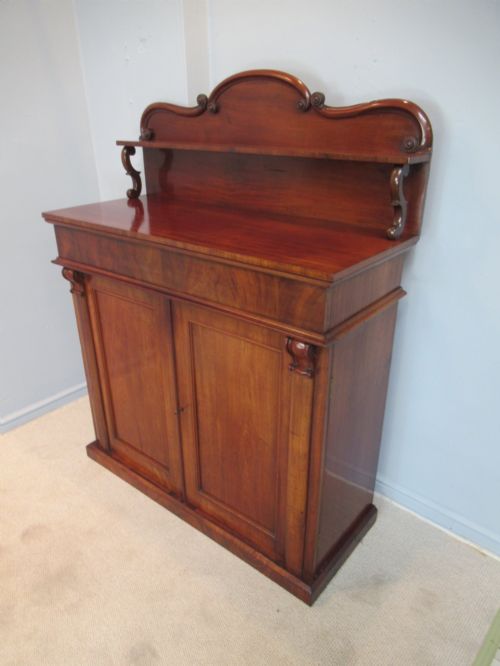
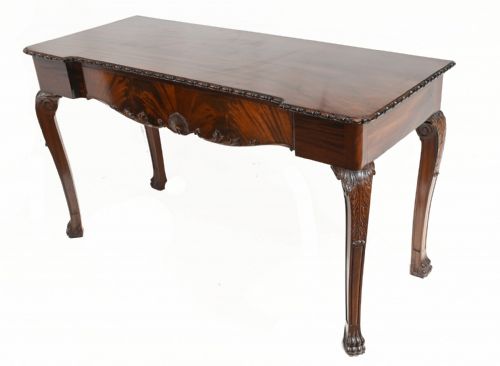


Victorian Carved Mahogany Buffet
These robust pieces of dining room furniture bring substantial presence and practical storage.
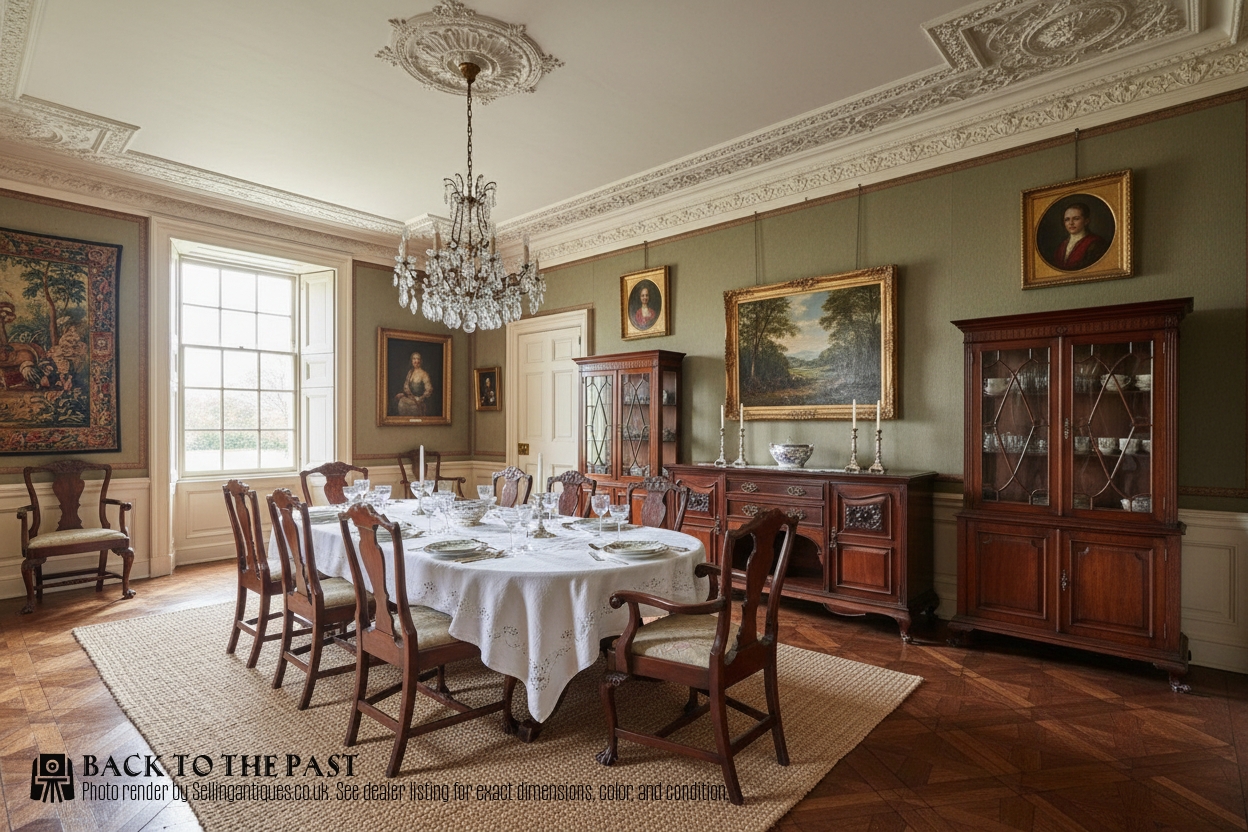
Victorian Carved Mahogany Buffet
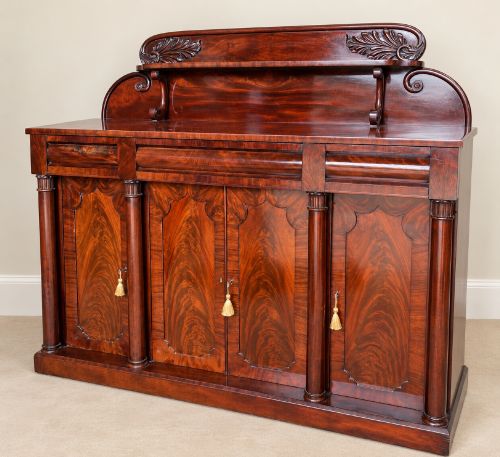
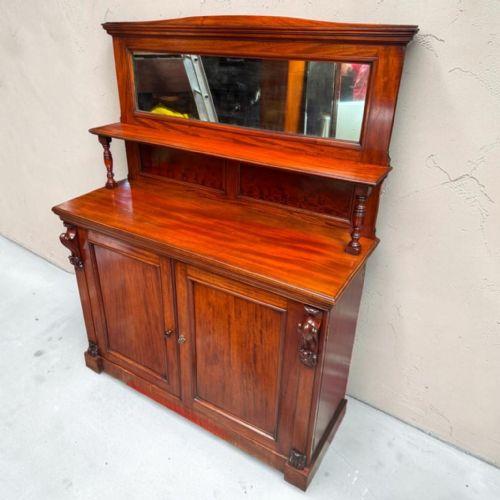
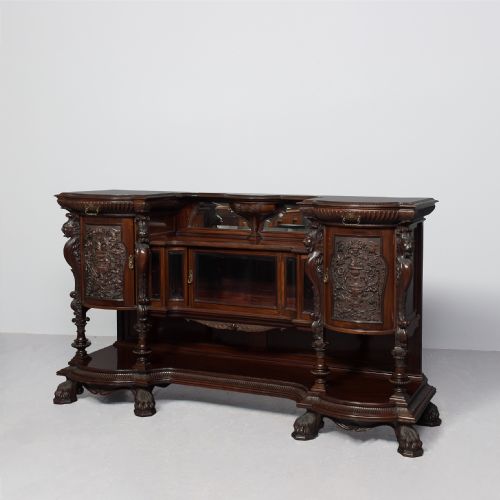
A victorian carved mahogany buffet is a heavy dining room serving piece designed for storage and display during the nineteenth century. These items appear across the decades from the eighteen-fifties through the eighteen-nineties, often constructed as sideboards, chiffoniers, or serving tables.
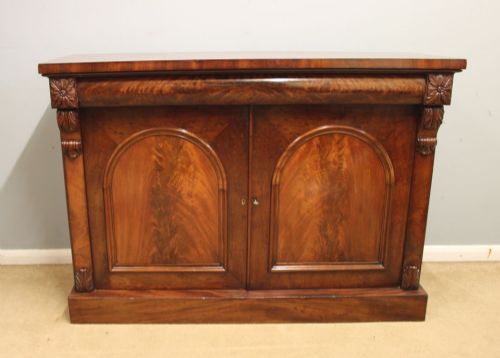
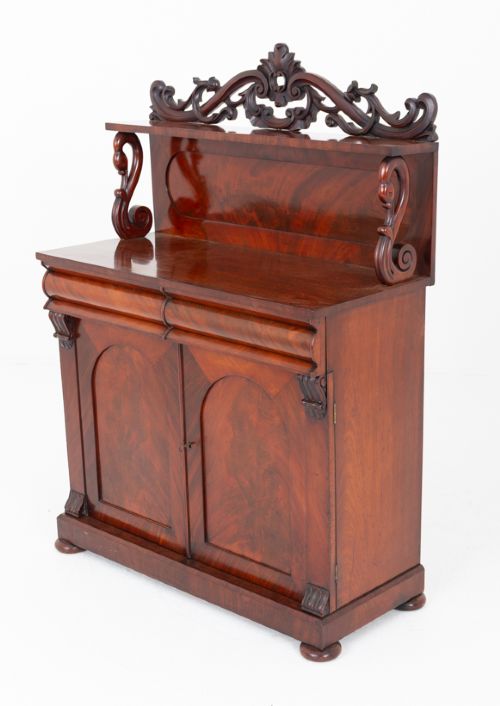
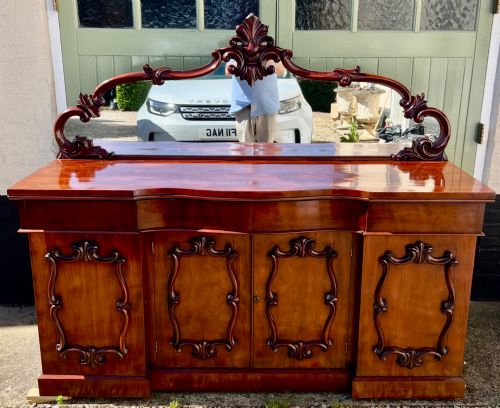
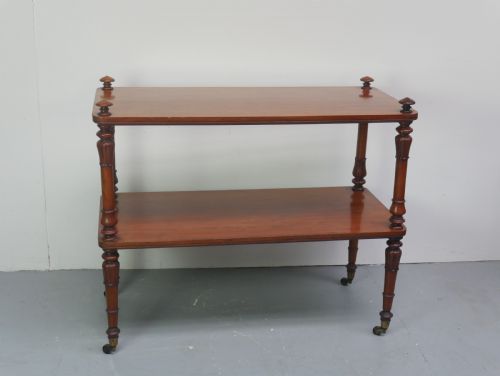
The material vocabulary centres on solid mahogany and flame mahogany veneer, sometimes accented with brass fittings or mirror glass. Formats range from modest two-door chiffoniers to large breakfront cabinets and revolving dumb waiters.
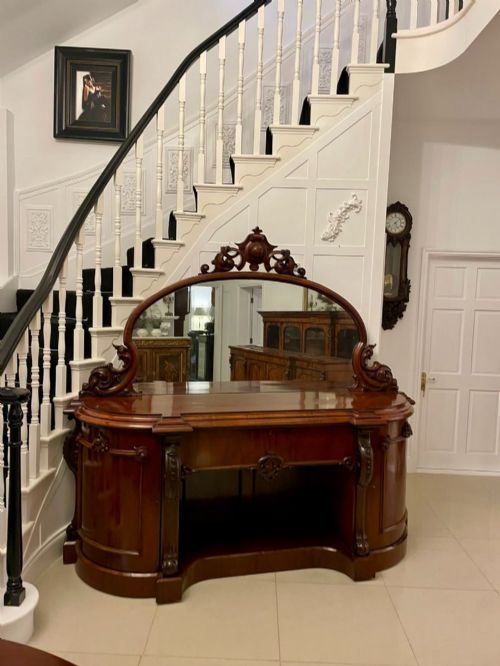
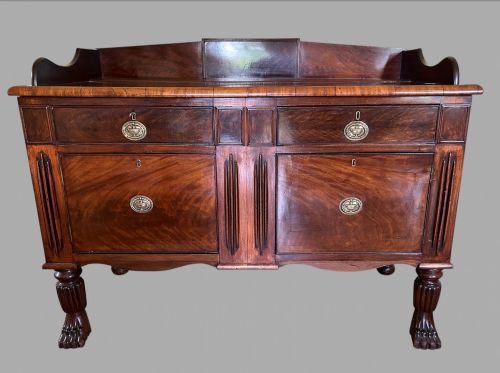
Makers and regional workshops in this selection follow British revival styles such as Chippendale and Victorian Rococo, alongside Regency influences. Buyers frequently encounter mirror-back iterations and pedestal configurations dating from mid-century onwards.
Judging the standard of execution
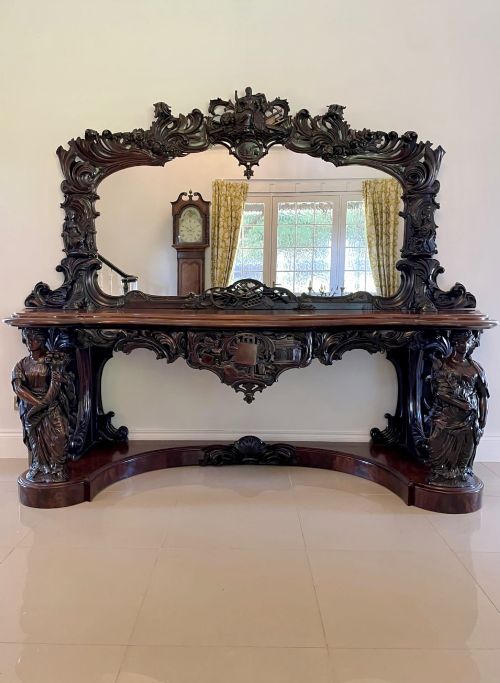
The standard of a victorian carved mahogany buffet depends upon the depth and crispness of the hand-carved ornamentation. Superior examples display sharply defined foliage and scrolls rather than soft or shallow moulding.
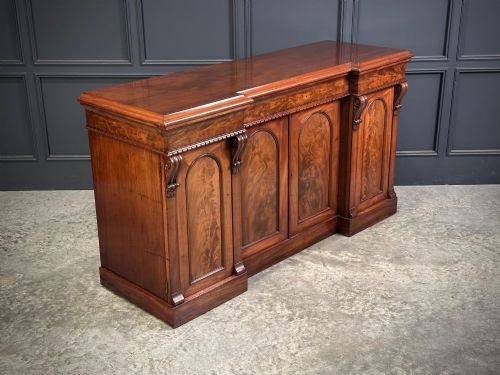
Selection of the veneer grain marks the difference between standard and exhibition pieces, with book-matched flame figures creating symmetrical patterns across doors. Heavier carcass construction and original mirror glass further elevate the tier of a piece.
Rotating two-tier dumb waiters let Victorian diners reach their afternoon biscuits without calling for assistance.
Gillows·Robert Strahan And Co
The Victorian Carved Mahogany Buffet Glossary
- Flame mahogany veneer
- A thin slice of timber cut from wood where branches join the trunk, producing a distinctive flickering flame pattern. Cabinet makers laid this over stable secondary woods to create decorative fronts.
- Chiffonier
- A compact sideboard featuring enclosed cupboards below, often surmounted by a raised shelf or mirror back. These appeared frequently in nineteenth-century dining and drawing rooms.
- Breakfront
- A piece of furniture where the central section projects forward from the flanking outer cabinets. This configuration adds architectural depth to large sideboards.
- Dumb waiter
- A tiered serving stand fitted on a revolving or static central pillar with a tripod base. Diners utilised these to hold dishes without requiring constant service from staff.
- Pedestal sideboard
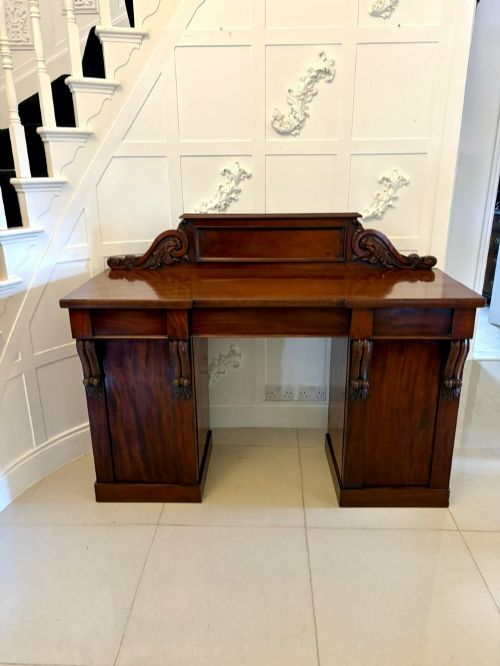
- A heavy storage unit featuring two substantial columnar cupboards flanking a recessed central drawer or serving surface.
Victorian Carved Mahogany Buffet: Frequently Asked Questions
How do I date a Victorian buffet?
Dating relies on stylistic shifts recorded in the timber work, hardware, and overall proportions of the piece. Mid-century examples often feature heavy scrolling and simpler lines, while later iterations incorporate elaborate mirror backs.
Construction methods also provide clues, as earlier nineteenth-century items utilise specific hand-cut joinery before later industrial standardisation took hold in workshops.
Where were these buffets used?
These items served primarily in nineteenth-century dining rooms as functional storage for silver, glassware, and serving dishes. They provided a surface for laying out food during large meals.
Beyond the dining room, smaller chiffonier variants found placement in parlours and drawing rooms to display ornaments and house books.
How should I clean mahogany veneer?
Maintenance requires gentle dusting with a soft, dry cloth to prevent the accumulation of grit on the polished surface. Avoid modern silicone sprays that can penetrate old finishes.
Applying a traditional beeswax polish periodically helps nourish the timber and maintain the deep reddish-brown sheen characteristic of nineteenth-century cabinet work.
What is a mirror-back sideboard?
A mirror-back sideboard incorporates an upright wooden frame holding a glass mirror attached to the rear of the serving surface. This design reflected candlelight and made smaller rooms appear larger.
Carved wooden crests and scrollwork typically crown the top of the mirror frame, matching the decorative vocabulary of the cabinet base.