

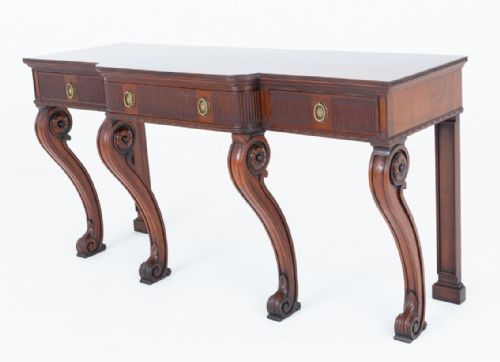


Traditional Mahogany Buffet Server
A traditional mahogany buffet server brings formal dining storage and substantial timber grain into a room, grounded in centuries of cabinet-making skill.
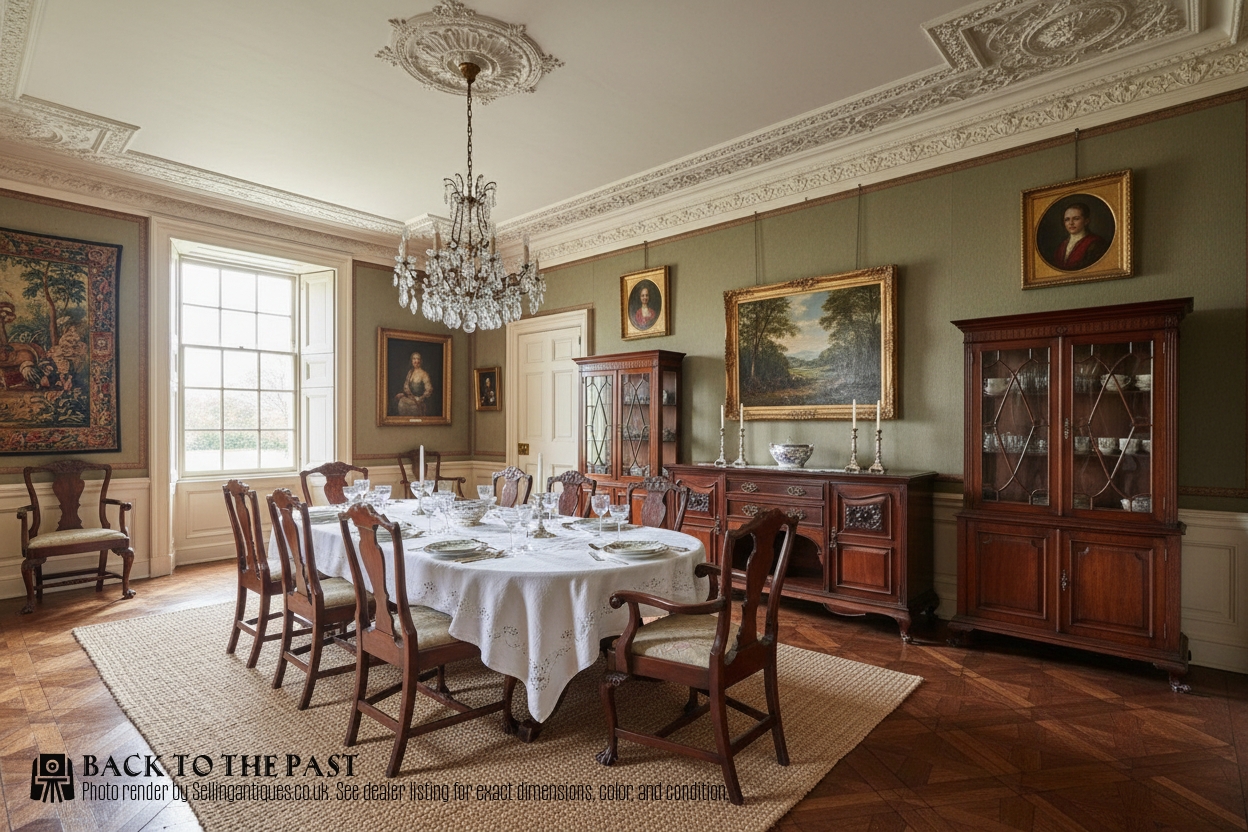
Traditional Mahogany Buffet Server
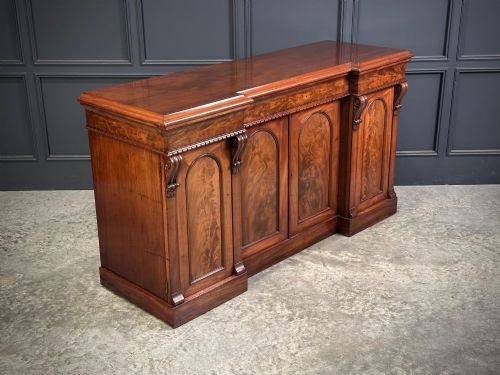
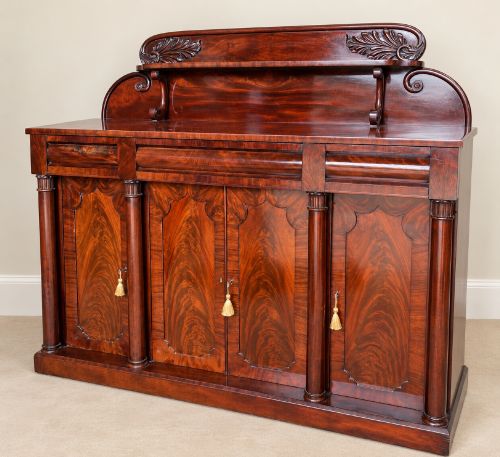
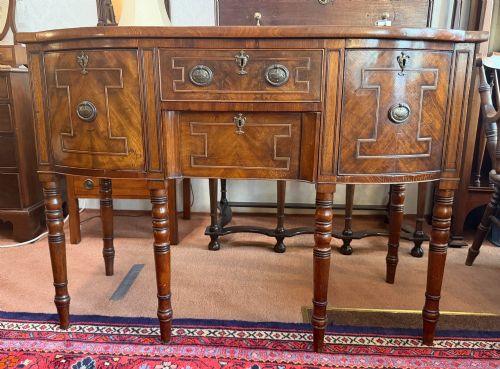
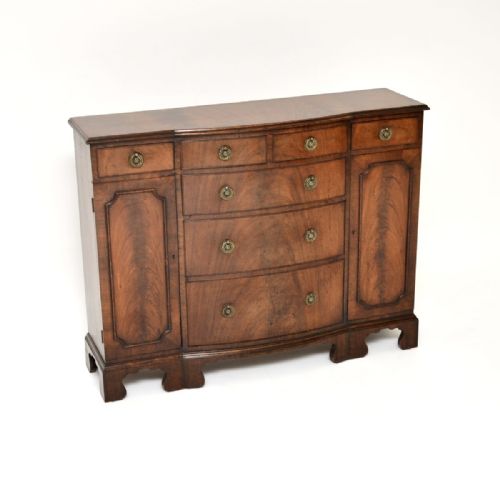
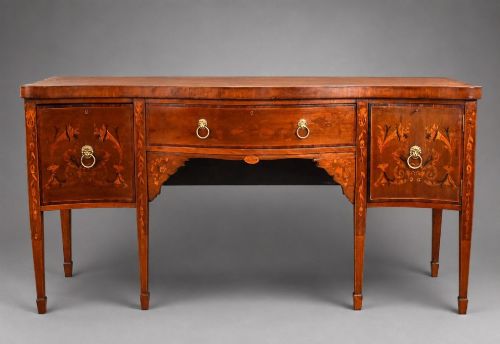
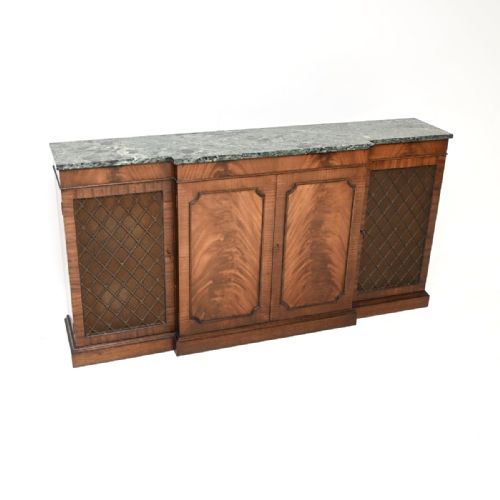
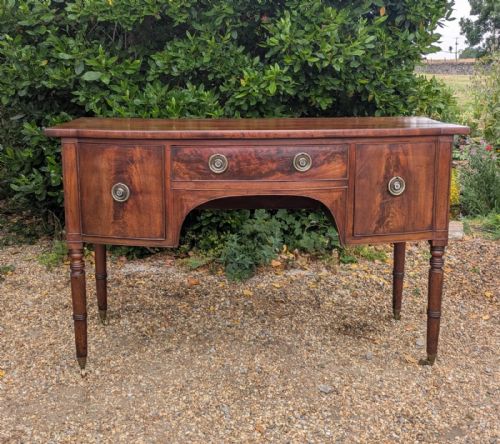
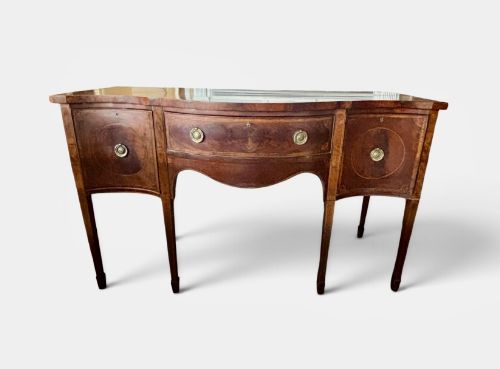
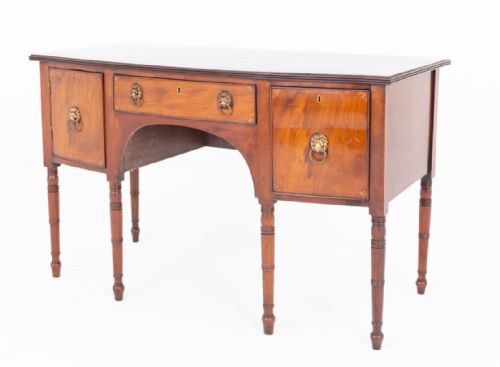
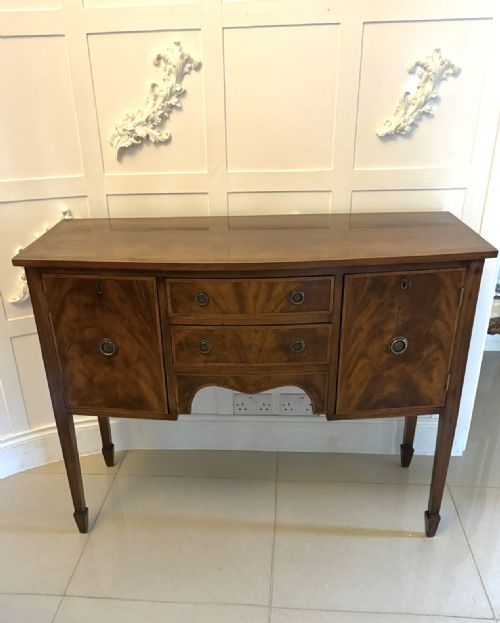
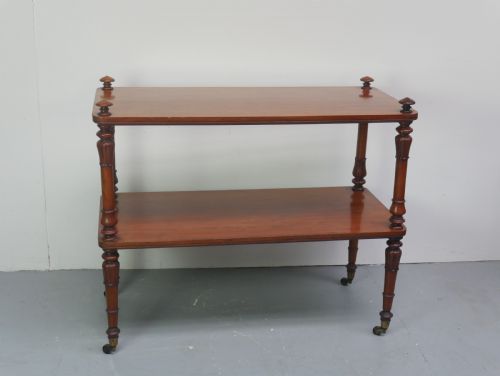
A traditional mahogany buffet server encompasses heavy dining storage forms ranging from Georgian and Regency sideboards to Victorian serving tables and two-tier dumb waiters. Buyers seeking a traditional mahogany buffet server will regularly encounter bow-front, breakfront, and serpentine shapes alongside simpler cupboards and servers.
The material runs through the eighteenth, nineteenth, and early twentieth centuries, appearing in Georgian, Victorian, Edwardian, and revival periods. Makers utilised solid timber and veneers, often incorporating brass hardware, satinwood, and boxwood details to finish the design.
Materials and construction methods
Cabinet makers relied heavily on mahogany and flame mahogany veneer over structural timbers, often selecting figured boards for drawer fronts and cupboard doors. Secondary woods received simpler finishes while visible surfaces showcased rich grain patterns.
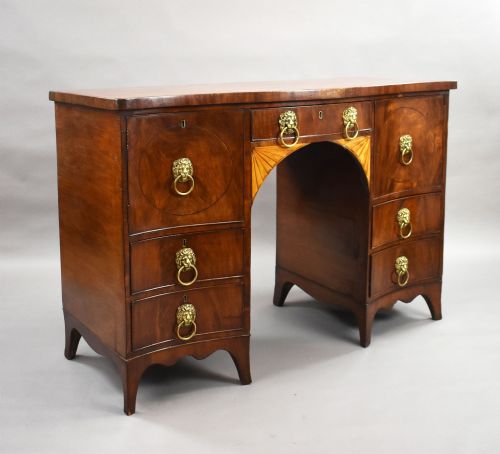
Inlay work incorporated lighter contrasting timbers such as boxwood and satinwood to outline panels and edge borders. Structural hardware frequently involved cast brass handles, escutcheons, and occasional mirror glass elements on backboards.
Listings span the eighteenth, nineteenth, and early twentieth centuries, featuring Georgian, Regency, William IV, Victorian, and Edwardian periods alongside later revival styles.
Judging the standard of execution
Quality rests in the selection of the timber grain, particularly where matched flame mahogany veneers create symmetrical patterns across large cupboard doors and drawer fronts. Superior execution appears in the crispness of inlaid stringing and the integration of curved serpentine or bow-front frames.
The Traditional Mahogany Buffet Server Glossary
- Serpentine
- A front contour characterised by a convex centre flanked by concave curves, demanding high skill from the cabinet maker. This shape often appears on formal Georgian and Edwardian sideboards.
- Breakfront
- A cabinet design where the central section projects forward from the flanking outer sections. This architectural arrangement creates depth and shadow on larger dining room pieces.
- Bow-front
- A convex curved front that swells outward from the corners, softening the heavy geometry of large server cabinets. It is a defining feature of many nineteenth-century designs.
- Chiffonier
- A compact sideboard or low cupboard, often fitted with a shelf or mirror back, designed for serving and storage in smaller spaces. Victorian examples frequently combine display and enclosed storage.
- Dumb waiter
- A tiered revolving serving table supported on a central pillar and tripod base, used to hold dishes beside a dining table. Nineteenth-century versions provide practical multi-level surface space.
Traditional Mahogany Buffet Server: Frequently Asked Questions
What is the difference between a sideboard and a buffet server?
Sideboards and buffet servers share similar storage and serving functions in dining spaces, though servers tend to be more compact or specifically built for presenting food. Both forms utilise heavy mahogany construction and draw on Georgian, Regency, and Victorian design traditions.
Larger sideboards often feature extensive cupboard space and drawer arrangements, whereas servers can take the form of console tables, side cabinets, or smaller serving tables designed for ease of access during meals.
How do I date a mahogany sideboard?
Dating relies on examining the overall style, structural proportions, veneer patterns, and secondary timbers used within the drawers and internal framing. Georgian and Regency pieces favour clean architectural lines and subtle inlay, while Victorian examples often display heavier mouldings, four-door configurations, or mirror backs.
Revival pieces from later periods can imitate earlier Georgian styles closely, requiring careful inspection of construction methods and timber ageing to determine the actual date of manufacture.
Where should I place a buffet server at home?
A buffet server suits dining rooms, large hallways, and drawing rooms where it can function as a serving surface or display console. Its linear proportions allow it to sit flat against a wall without dominating floor space.
Placing the piece away from direct heat sources and strong sunlight protects the mahogany timber and flame veneer from drying out or fading over time.