
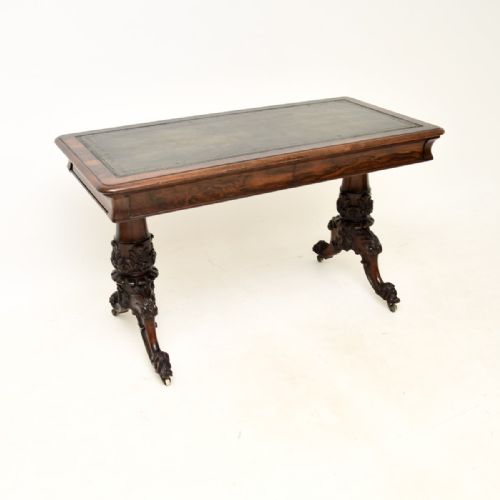
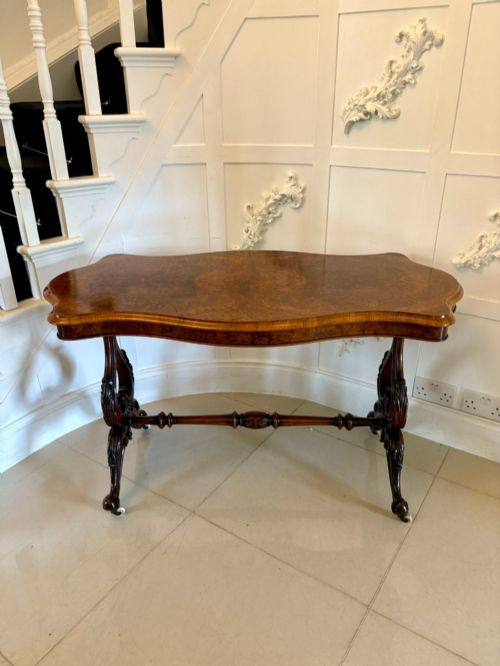
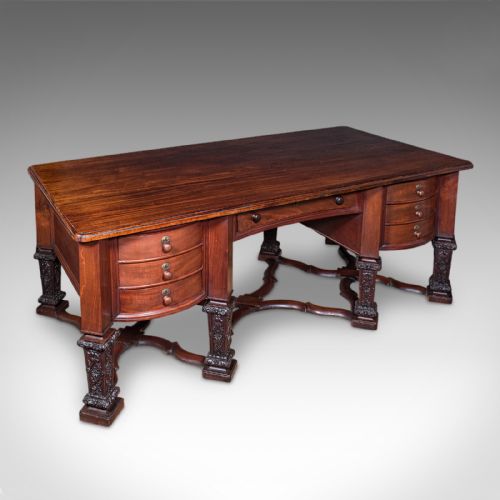
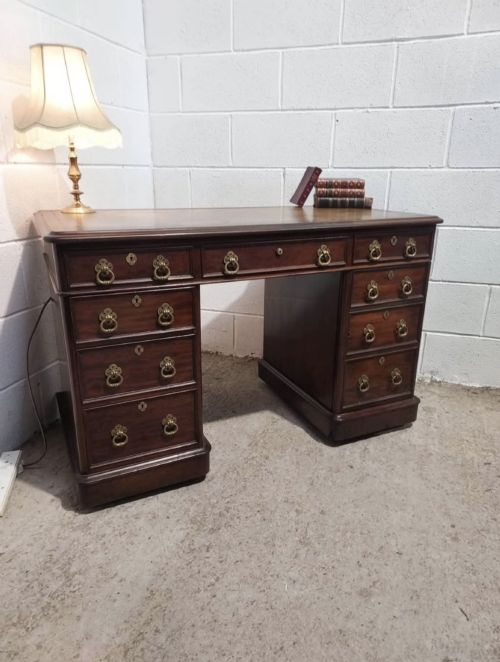
Victorian Carved Library Table
A victorian carved library table brings sturdy timber and generous proportions to a study, standing ready for heavy volumes and daily correspondence.
Victorian Carved Library Table
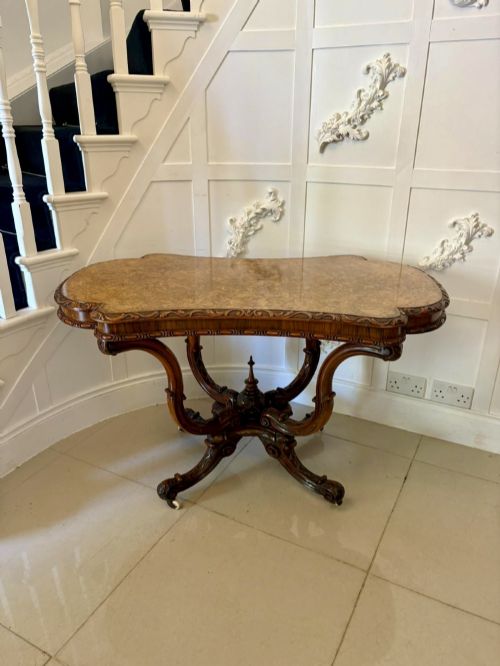
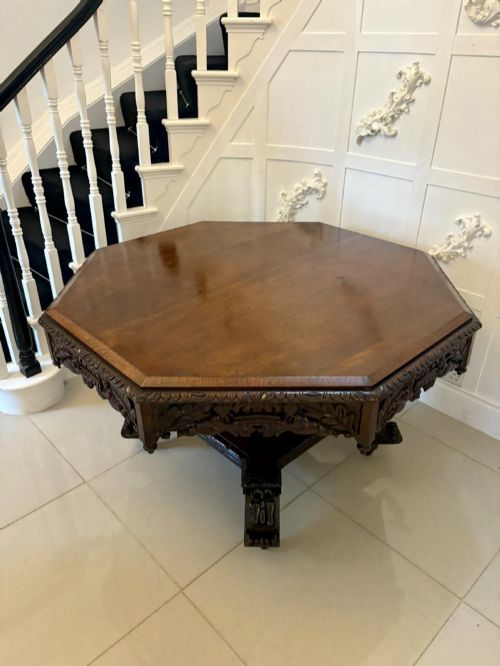
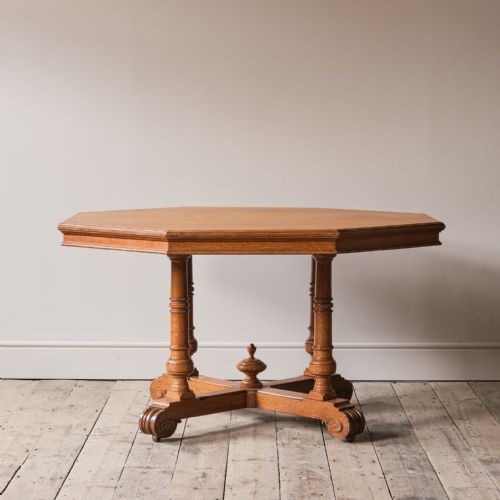
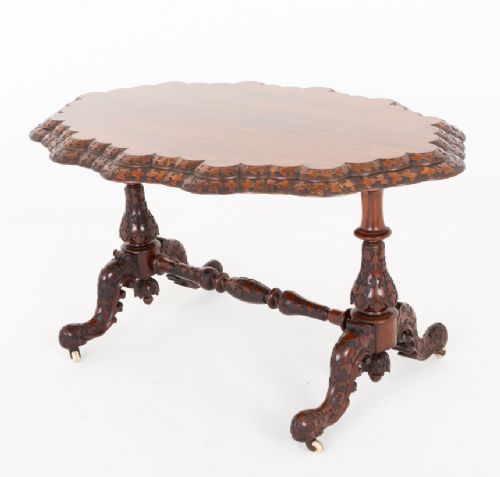
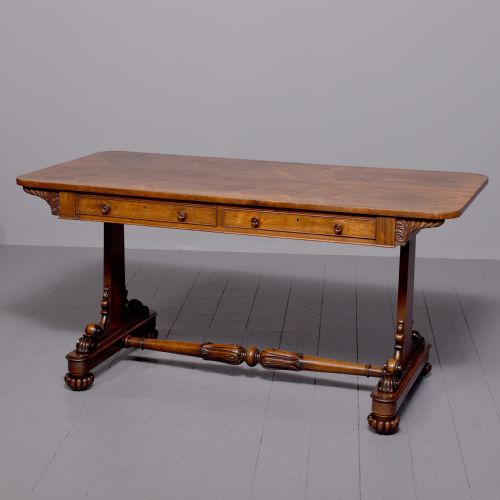
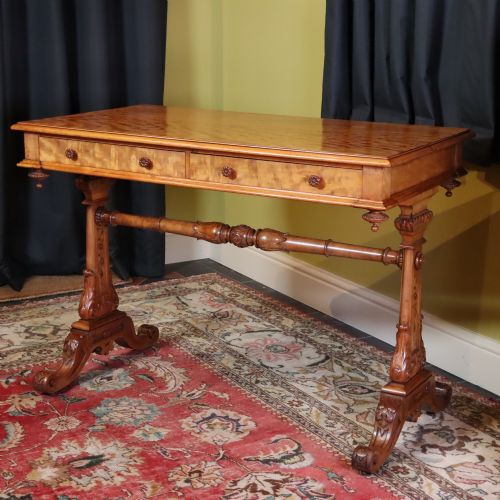
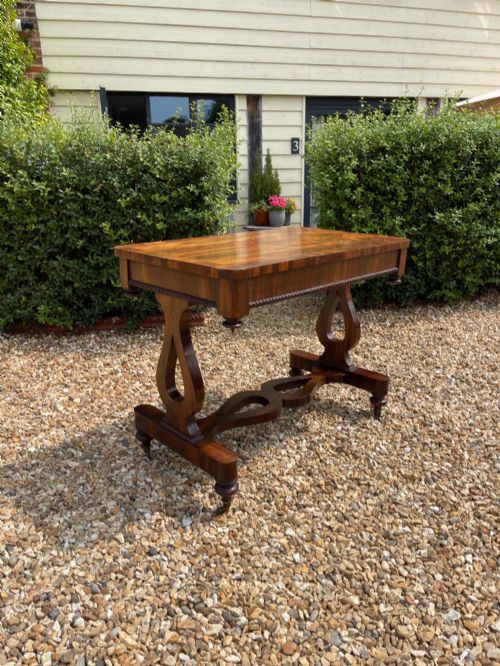
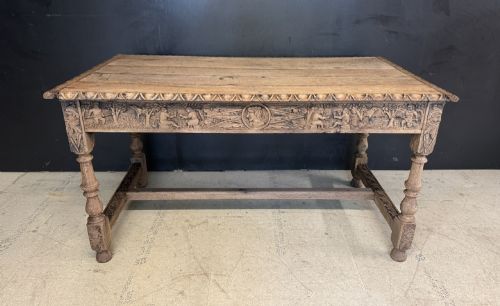
A victorian carved library table is a substantial freestanding piece designed for serious study, often finished on all sides so it can sit proudly in the centre of a room rather than against a wall. The examples on this page span the nineteenth century, ranging from early manifestations through the high Victorian decades to the close of the era.
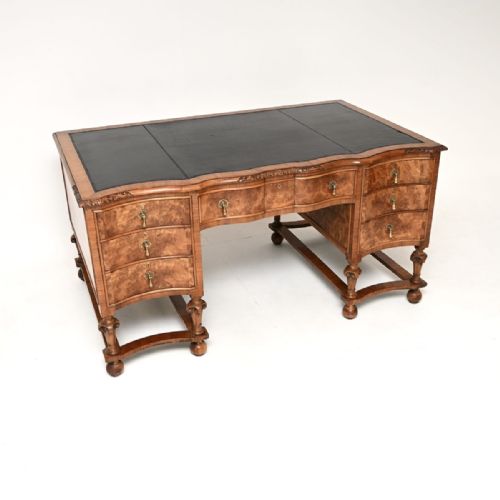
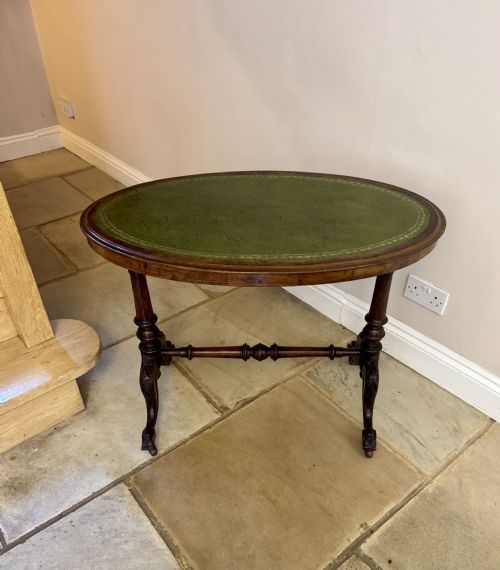
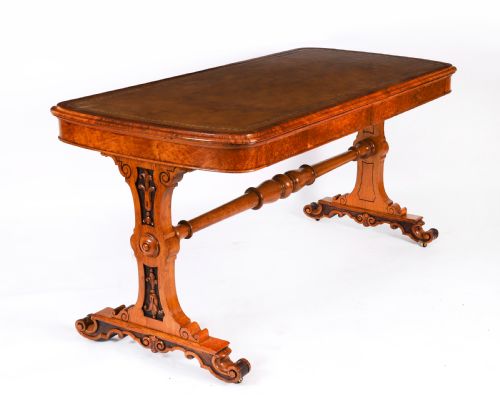
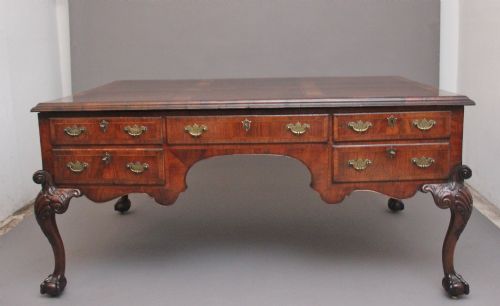
Most pieces encountered here are constructed from dense timbers like oak and walnut, frequently fitted with inset leather writing surfaces and useful frieze drawers for stationery. Forms vary from rectangular writing tables and partner desks to octagonal centre tables and circular library tables resting on heavy pedestals or carved feet.
Materials and Technique
Cabinetmakers of the period relied heavily on solid oak, mahogany, and walnut, frequently enhancing the visual weight with decorative veneers such as burr walnut or exotic woods like rosewood and zebrawood. Carved details - ranging from restrained linenfold and acanthus leaves to bold lion heads and dolphin feet - were executed by hand to accentuate the architectural ambition of the design.
Writing surfaces were typically inset with tooled leather, secured with subtle brass hardware, and joined using traditional techniques that ensured the heavy timber frames could withstand decades of active use.
Several sturdy tables stand upon carved wooden dolphin feet, adding a jaunty nautical flourish to otherwise solemn scholarly furniture.
The Measure of Quality
Quality in these tables is found in the depth and crispness of the timber carving, the choice of figured veneers, and the integrity of the secondary woods used for drawer linings and internal framing. Finer pieces demonstrate careful attention to proportion, balanced grain patterns across large top surfaces, and robust joinery that keeps heavy pedestal bases entirely stable.
Maple and Co·James Shoolbred and Co·Edwards and Roberts
The Victorian Carved Library Table Glossary
- Partners desk
- A large double-sided writing table designed for two people to work opposite one another, typically featuring banks of drawers on both sides.
- Centre table
- A freestanding piece finished equally on all four sides, intended to be placed in the middle of a room rather than anchored to a wall.
- Burr walnut
- A highly prized timber veneer showing intricate, swirling grain patterns formed from the knotted growths of walnut trees.
- Frieze drawer
- A drawer built directly beneath the tabletop, often concealed within the wooden framing of the apron.
Victorian Carved Library Table: Frequently Asked Questions
Where should I place a library table?
These pieces are designed as freestanding items, making them ideal for the middle of a study or a spacious reception room where they can be viewed from all sides.
Ensure there is adequate clearance around the edges for chairs and movement, as their generous proportions require breathing room to look their best.
Did these tables always have leather tops?
Many library and writing tables were built with inset leather writing surfaces to provide a smooth, tactile plane for paperwork and reading.
While some surfaces feature blind or gilt tooling, plain wood tops also appear frequently, particularly on centre tables intended for display rather than active drafting.
How do I care for the timber?
Solid woods and veneers respond best to stable indoor humidity and protection from direct sunlight, which can bleach rich walnut and mahogany over time.
Occasional application of a suitable beeswax polish maintains the natural lustre of the finish without building up heavy chemical residues.
What distinguishes a partner desk from a standard table?
A partner desk incorporates drawers and cupboards accessible from both sides, allowing two individuals to work facing each other across a shared workspace.
Standard library tables usually feature drawers on one or two sides only, with a finished back panel facing the opposite direction.