
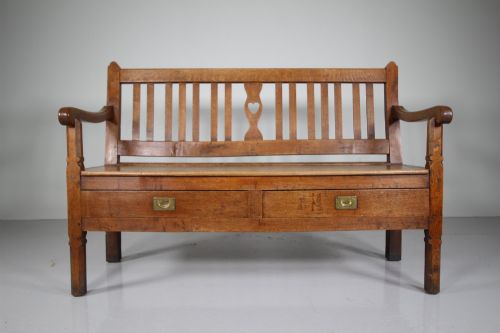
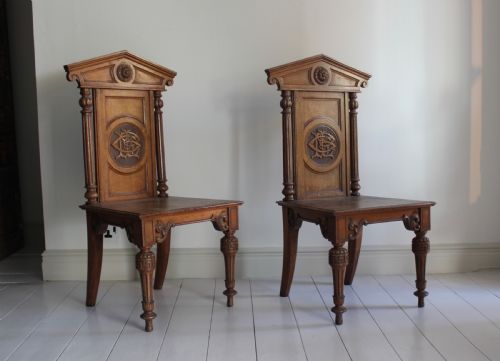
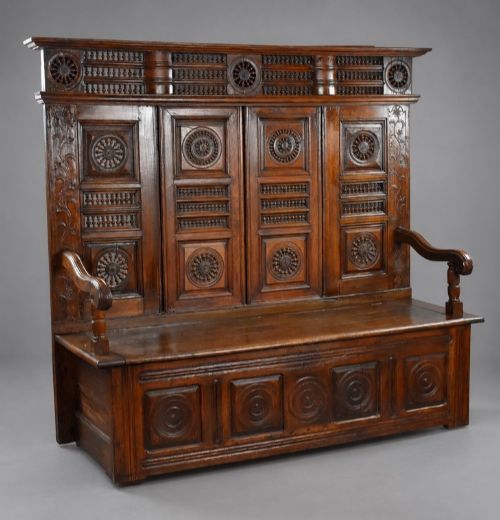
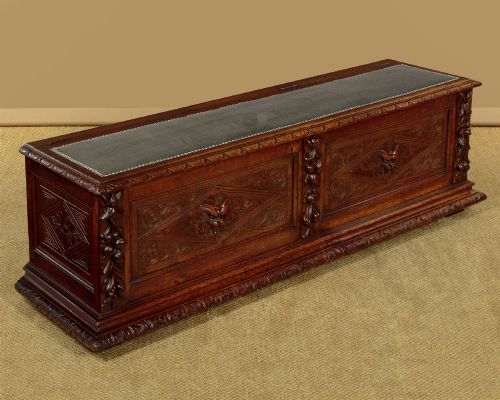
Victorian Carved Hall Seat
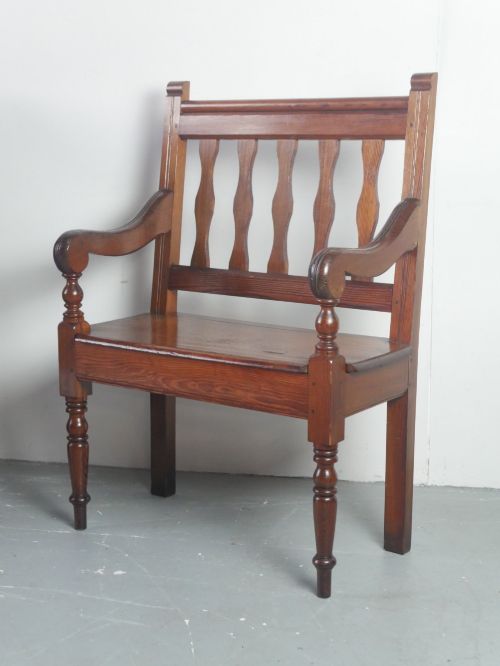
A victorian carved hall seat brings heavy timber and confident ornamentation directly into an entranceway.
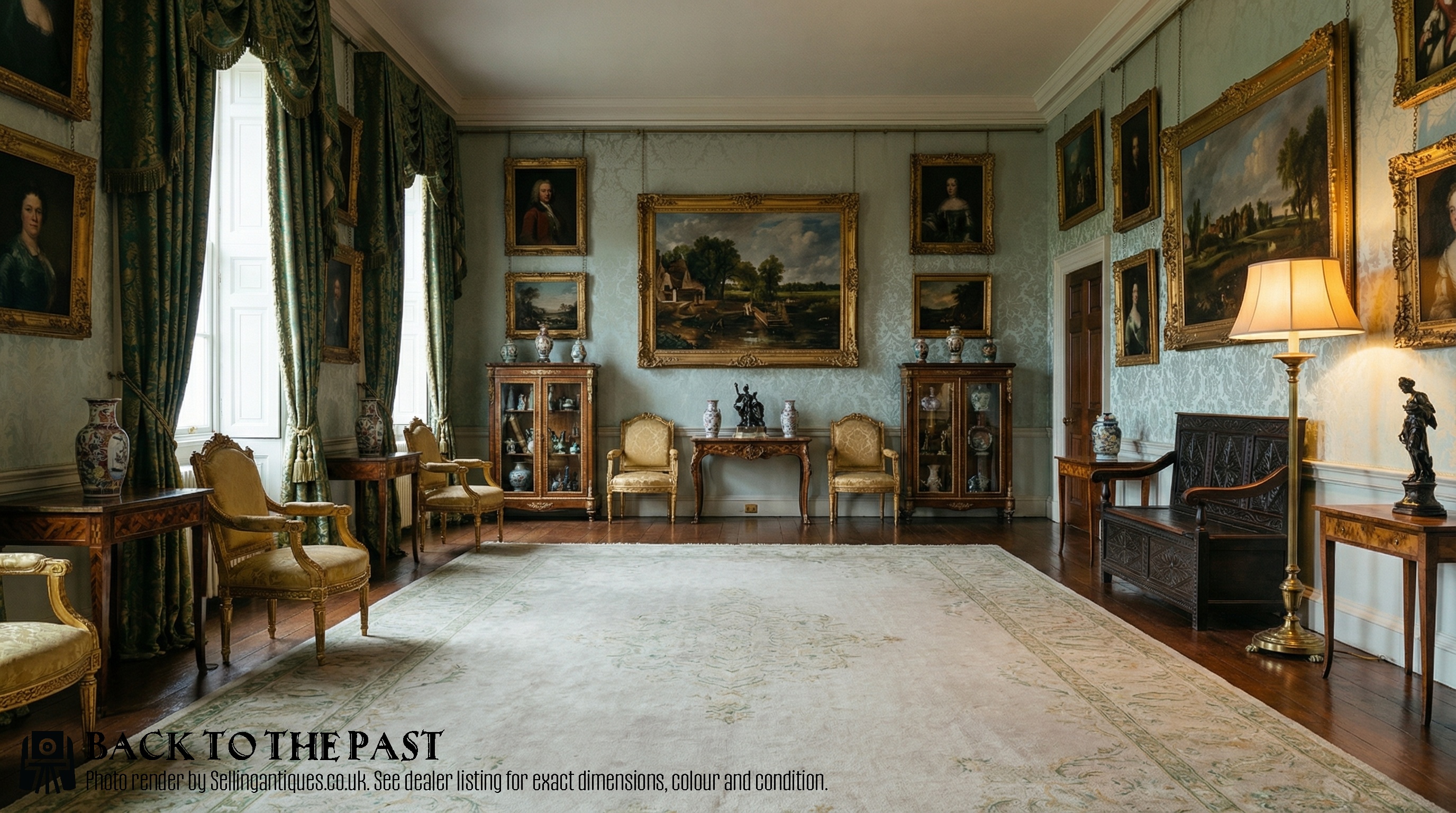
Victorian Carved Hall Seat
A victorian carved hall seat serves as both an architectural anchor for an entrance hall and a practical spot for guests to pause. The pieces appearing here span the nineteenth century, including specific decades such as the eighteen-eighties and eighteen-nineties alongside broader Victorian classifications.
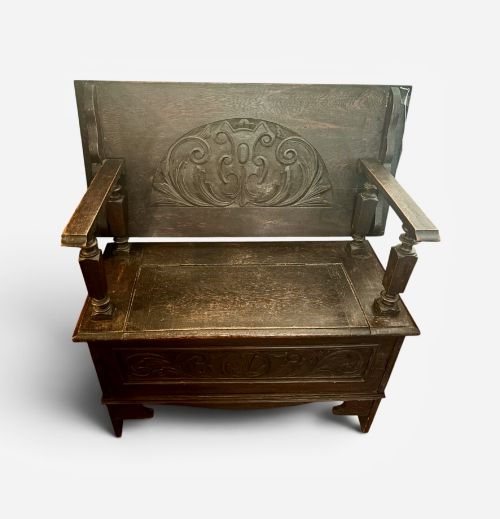
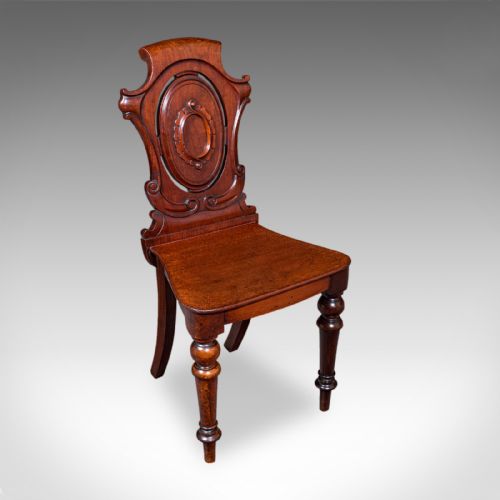
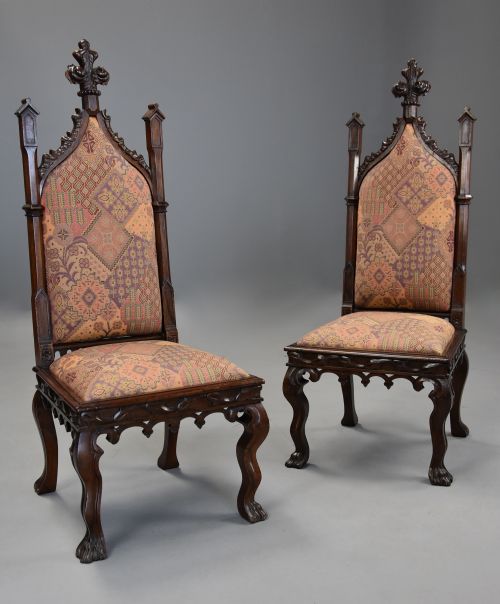
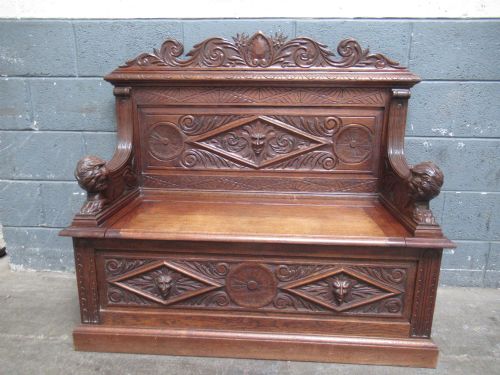
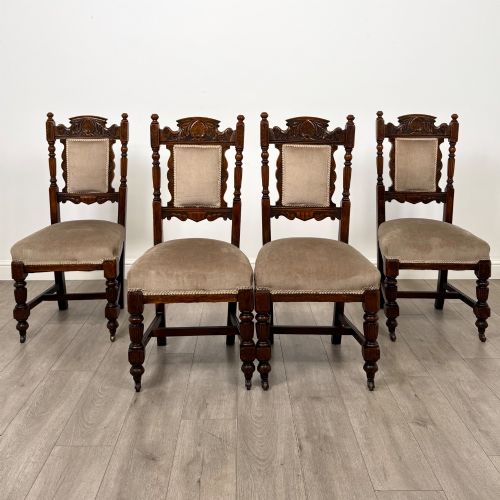
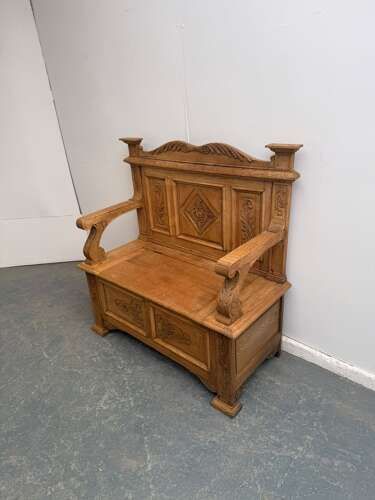
Buyers will encounter various formats ranging from rigid high-backed side chairs and occasional reception seats to substantial settles, monk's benches with lift-up lids, and combined hallstands featuring integrated stick stands.
Oak dominates the selection, appearing in both dark finishes and lighter waxed forms, complemented by occasional examples in mahogany, rosewood, walnut, and pitch pine.
Materials and Construction
Cabinet makers relied primarily on solid oak and mahogany, joining heavy panels with traditional tongue-and-groove and mortise-and-tenon methods to withstand the heavy wear expected in a bustling hallway.
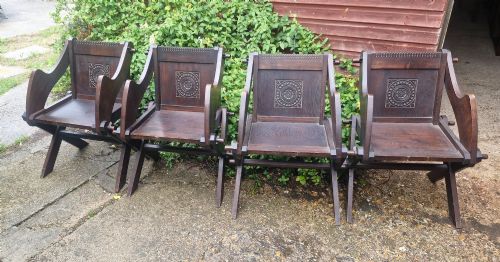
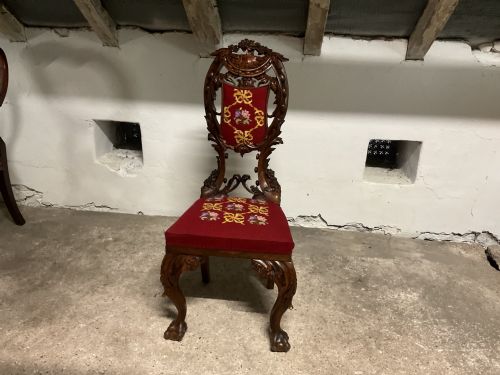
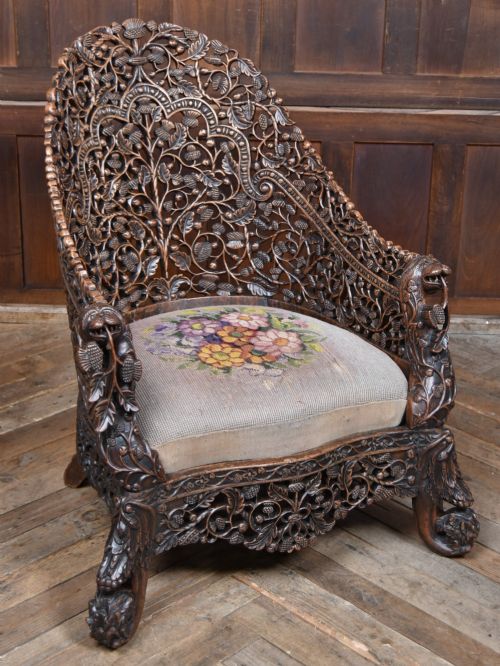
Carving defines the decoration, utilising deep relief work to render gothic tracery, foliate scrolls, and figural motifs such as greenmen directly into the structural timber.
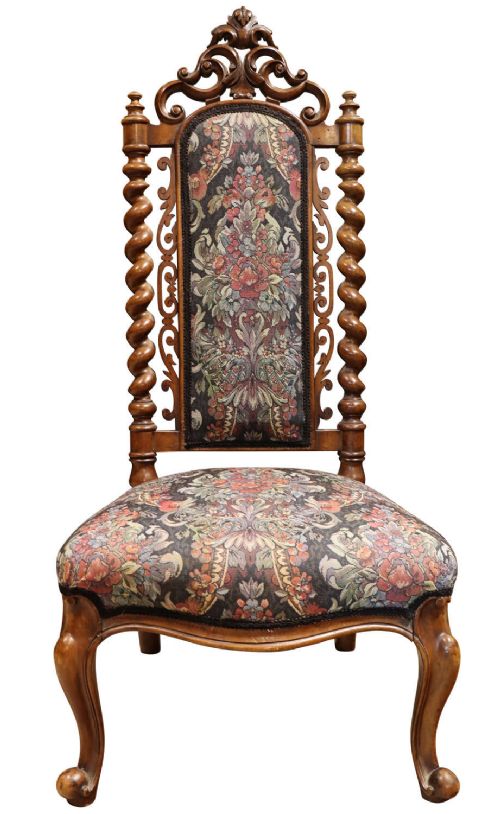
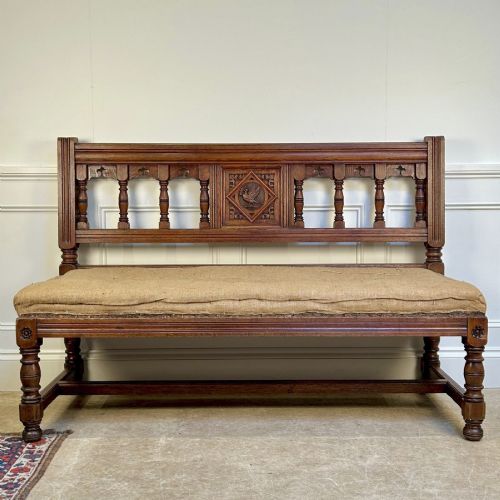
Secondary details involve brass mounts, turned barley-twist supports, and occasional upholstery in leather, fabric, or tapestry secured with iron tacks.
Victorian Carved Hall Seat Retail Price Guide 2026
Typical asking prices for victorian carved hall seat among the pieces listed under this phrase on Sellingantiques today, from the lower quarter to the upper quarter. They describe what is for sale here now, not the wider market.
Listings feature oak, mahogany, rosewood, and pitch pine across nineteenth-century styles including Gothic Revival and Jacobean Revival.
Craftsmanship and Proportion
Superior examples demonstrate crisp, deep hand-carving where details retain sharp edges rather than a softened, mechanical finish. The depth of the timber and the integration of the carving into the actual framework separate workshop pieces from mass-produced items.
Proportion and structural integrity dictate value, with finer benches maintaining tight joints without excessive modern reinforcement. Clever multi-functional designs, such as folding monk's benches and boxes with balanced lid hinges, show superior joinery compared to rigid, plain boxes.
Gillows·James Shoolbred·W.A. Willcocks
The Victorian Carved Hall Seat Glossary
- Settle
- A wooden bench featuring a high solid back and armrests, often incorporating a box seat for storage beneath the hinged lid.
- Monk's Bench
- A convertible piece of furniture whose back folds down flat to transform the seat into a small table.
- Gothic Revival
- A nineteenth-century design movement utilising medieval architectural elements like pointed arches, quatrefoils, and heavy tracery.
- Jacobean Revival
- A later nineteenth-century style mimicking seventeenth-century English furniture through geometric panels, strapwork, and turned legs.
- Barley-Twist
- A decorative turning technique resembling a twisted rope, frequently used for chair legs and vertical supports.
Victorian Carved Hall Seat: Frequently Asked Questions
What is a monk's bench?
A monk's bench is a dual-purpose piece featuring a hinged wooden back that flips forward to create a flat table surface.
Beneath the seat, a deep box provides concealed storage for heavy garments or winter accessories.
Where were hall seats placed?
These pieces sat directly inside domestic entrance halls, vestibules, and reception areas of nineteenth-century homes.
They offered a firm, upright place for visitors to wait or remove outerwear before entering the main rooms.
How do I care for antique oak?
Maintain the timber by applying traditional beeswax periodically to nourish the dry wood and preserve the surface sheen.
Keep the seat away from direct heat sources and sudden temperature shifts to prevent the heavy panels from splitting.
Are these seats comfortable?
Original hall seats prioritize sturdy posture and architectural presence over soft cushioning, featuring rigid upright backs and solid timber planks.
Some variations include upholstered pads or drop-in fabric sections, though many rely purely on carved wooden contours.