

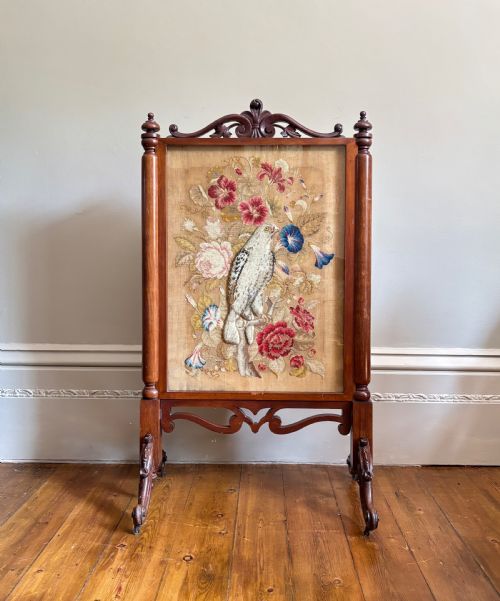


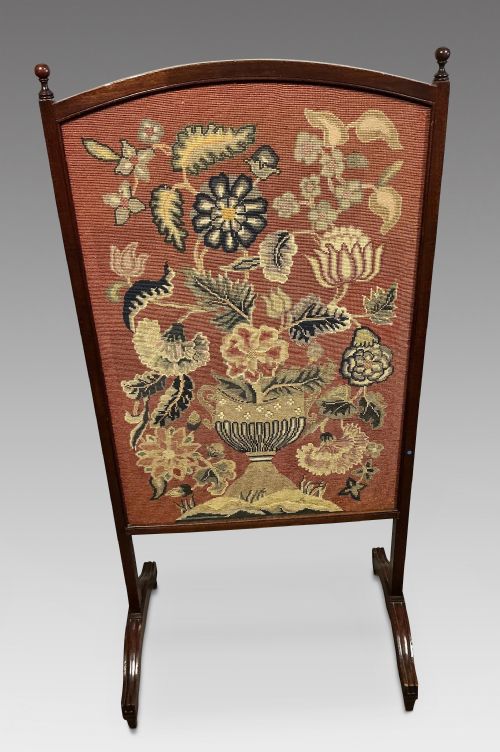


Victorian Carved Fire Screen
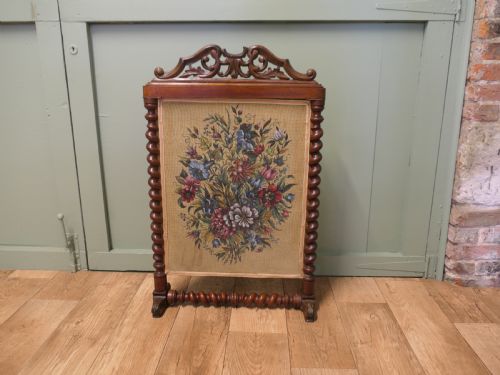
A victorian carved fire screen is a decorative wooden shield designed to deflect hearth heat, combining fine cabinet work with elaborate needlework.
Victorian Carved Fire Screen
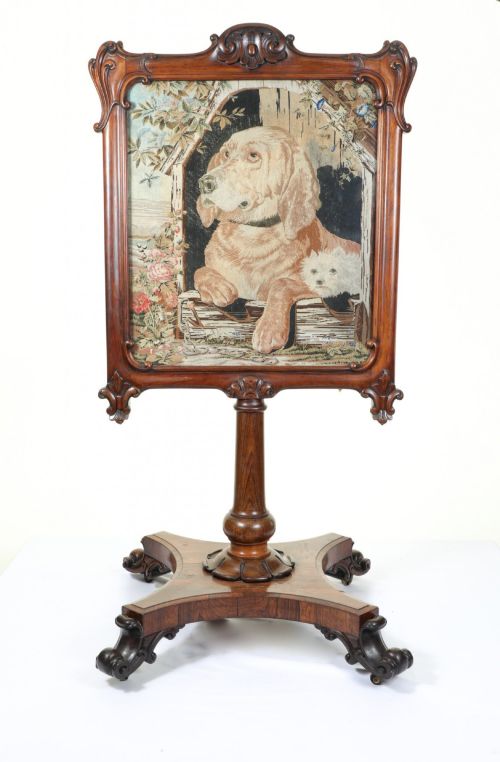
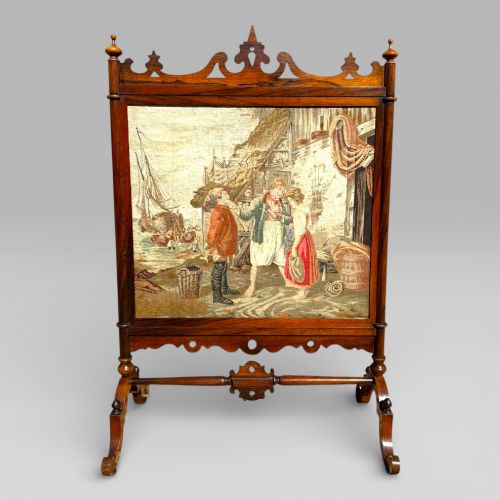
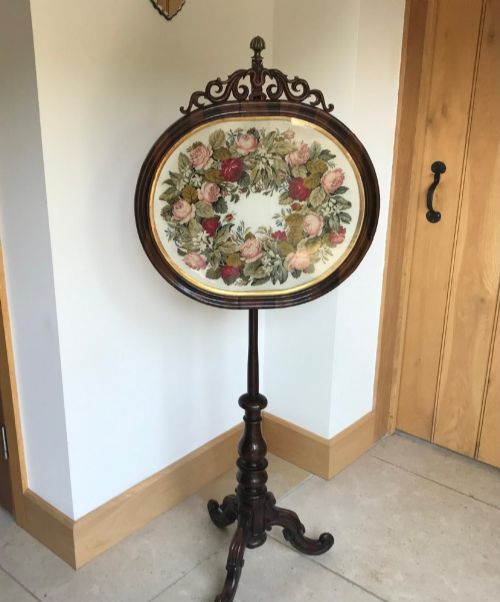
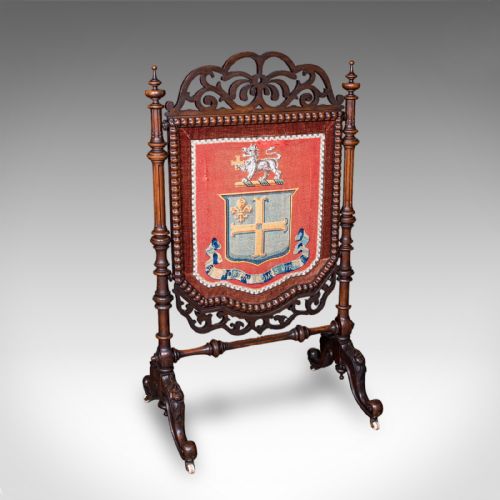
A victorian carved fire screen serves to protect the face from the intense blaze of an open coal fire while adding refinement to a period parlour. These furnishings appear most frequently as upright framed panels or adjustable pole screens supported on tripod or pedestal bases.
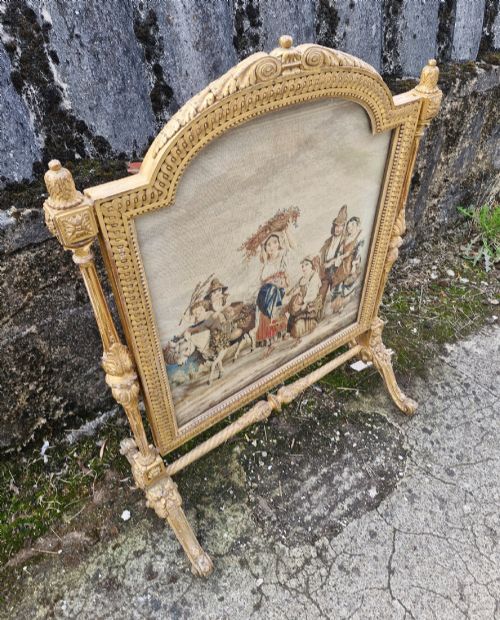
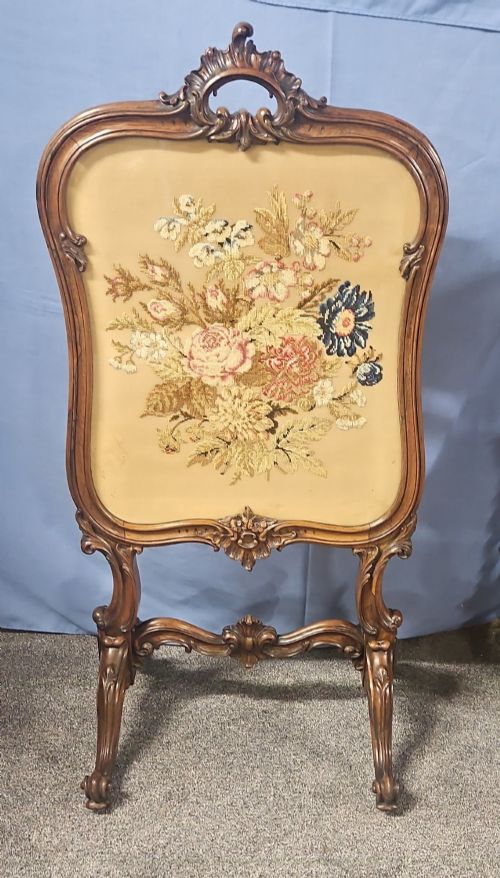
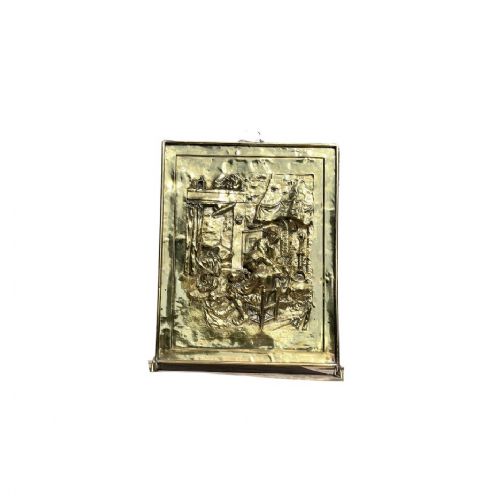
The materials span dense hardwoods such as rosewood, mahogany, walnut, and oak, frequently paired with hand-stitched woolwork, Berlin work, or embroidered tapestry panels. Certain examples utilise brass frames and embossed metalwork to reflect warmth into the room.
The construction dates primarily across the nineteenth century, encompassing early Victorian, William IV, and later revival styles including Rococo and Dutch Renaissance. Makers shaped these objects to stand securely beside the hearth or upon occasional tables.
What varies in quality
The distinction between ordinary and superior pieces rests upon the crispness of the timber carving and the complexity of the needlework panel. Finely articulated floral motifs and dense, well-preserved woolwork tapestries indicate superior workshop execution.
Stability and proportion dictate overall excellence, particularly in pole screens where a balanced tripod base and a smoothly functioning adjustment mechanism matter. Robust joinery in the main frame ensures the piece withstands the dry heat of a working fireplace.
Victorian Carved Fire Screen Retail Price Guide 2026
Typical asking prices for victorian carved fire screen among the pieces listed under this phrase on Sellingantiques today, from the lower quarter to the upper quarter. They describe what is for sale here now, not the wider market.
Listings feature woods including rosewood, walnut, mahogany, and oak, alongside brass and glass elements.
The Victorian Carved Fire Screen Glossary
- Pole screen
- A type of screen featuring a vertical wooden rod mounted on a base, holding an adjustable sliding panel to block radiant heat.
- Berlin work
- A style of needlepoint embroidery popular in the nineteenth century, worked in coloured wools over a squared canvas grid.
- Cheval screen
- A large floor-standing frame supported by two lateral feet, allowing the central panel to tilt on horizontal pivots.
- Needlepoint
- A form of counted-thread embroidery stitched over canvas mesh to create dense, pictorial panels for furniture inserts.
- Bergere
- A closed-arm upholstered armchair style, occasionally adapted to describe woven cane panel inserts within wooden frames.
Victorian Carved Fire Screen: Frequently Asked Questions
What was the purpose of a fire screen?
These screens shielded delicate complexions and expensive wax-based cosmetics from the intense, drying heat of coal fires in nineteenth-century drawing rooms.
Positioned between the hearth and the seated company, they offered practical protection while serving as a decorative focal point for feminine needlework.
What woods were used for fire screens?
Cabinet makers predominantly utilised dense tropical hardwoods such as rosewood and mahogany during the early and mid-nineteenth century.
Walnut and carved oak became increasingly common in later Victorian and revival pieces, often matching other parlour furniture of the period.
How do you date a fire screen?
Dating relies on combining the prevailing furniture style, such as Regency, William IV, or Rococo Revival, with the characteristics of the timber and joinery.
The style of the needlework panel and the presence of specific hardware also help narrow the decade of manufacture.
Can fire screens still be used near fires?
While originally built for active hearths, historic screens are generally placed in non-working fireplaces or against walls to protect fragile textiles and polished wood.
Modern central heating means they now function primarily as decorative interior furnishings rather than thermal shields.