






Rosewood Needlepoint Panel
These rosewood needlepoint panel pieces bring rich Victorian and Regency textile artistry into modern rooms.
Rosewood Needlepoint Panel
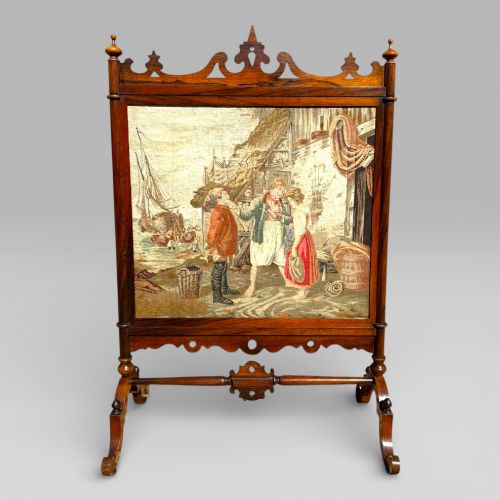
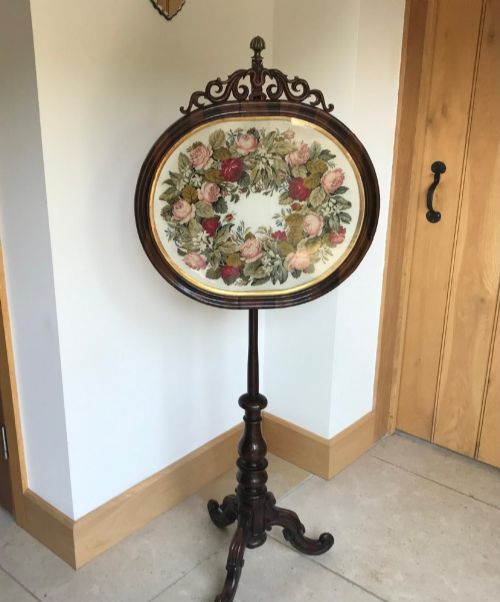
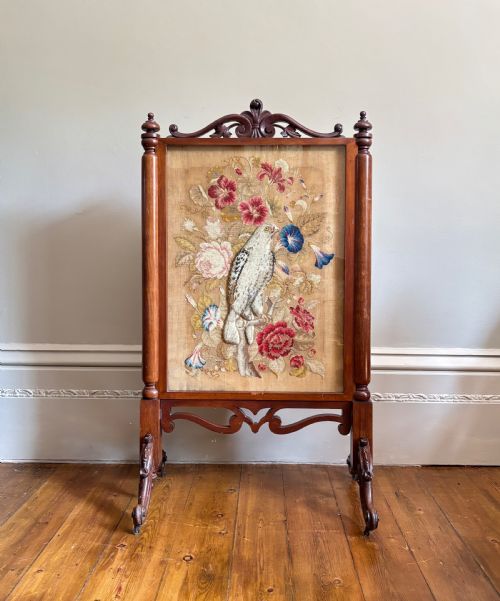
A rosewood needlepoint panel search leads directly to fire screens, pole screens, and framed textile art from the Victorian and Regency periods. These furnishings typically combine dense timber frames with hand-worked wool tapestry or canvas panels.
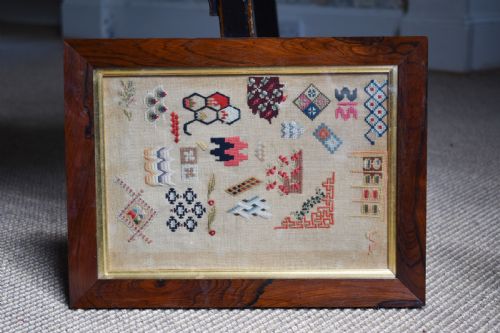
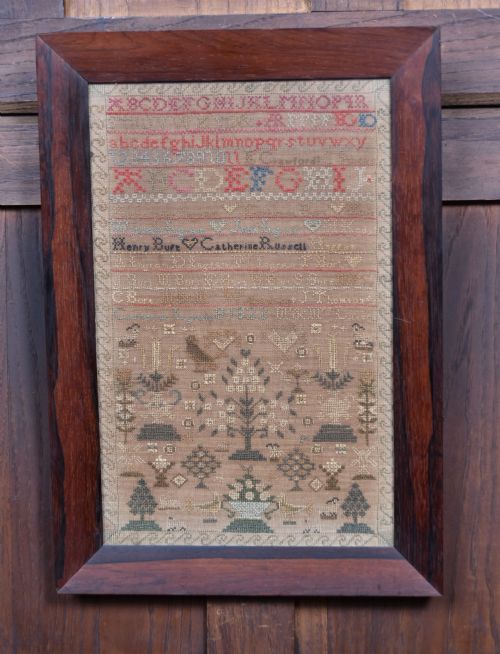
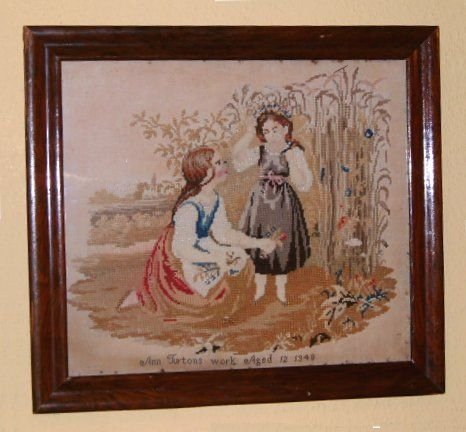
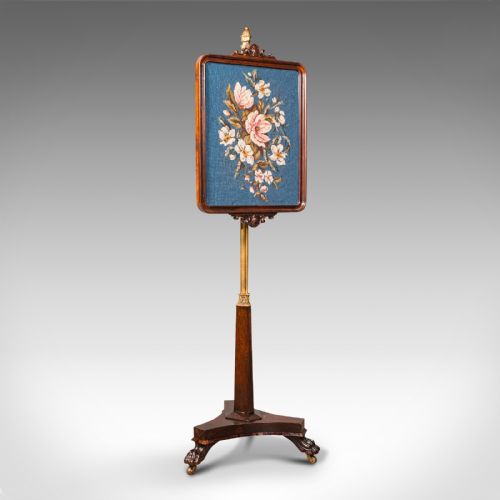
Buyers are most likely to encounter Victorian and 19th-century examples on this page, often presented as floor-standing cheval screens or adjustable pole screens. The wooden frames utilise rosewood, mahogany, and goncalo alves, enclosing intricate floral, pastoral, or sampler needlework.
How they were made
Maker-joiners constructed the structural frames using dense tropical hardwoods such as rosewood and palisander, frequently incorporating turned supports, brass mounts, and carved details. These solid timbers provided the necessary weight to balance the standing frames.
Artisans worked wool and linen threads onto woven canvas grounds using Berlin work and needlepoint techniques to create the pictorial panels. Glazed protection behind glass or simple tension framing kept the delicate textiles secure within their wooden mounts.
Rosewood Needlepoint Panel Retail Price Guide 2026
Typical asking prices for rosewood needlepoint panel among the pieces listed under this phrase on Sellingantiques today, from the lower quarter to the upper quarter. They describe what is for sale here now, not the wider market.
Victorian ladies spent countless quiet hours stitching pastoral wool scenes just so they could avoid melting their makeup by the fire.
What varies in quality
The sophistication of the hand-worked needlepoint distinguishes finer panels, where subtle shading and complex pastoral or sampler motifs demonstrate superior draftsmanship. Simpler geometric patterns or uniform floral repeats sit lower in the range.
The execution of the timber frame marks the primary grade distinction, with deeply carved rosewood supports and balanced proportions outperforming plain, utilitarian structures. Original glass, intact brass fittings, and structural stability elevate the overall standard of the piece.
The Rosewood Needlepoint Panel Glossary
- Needlepoint
- A form of canvas work embroidery stitched with wool or silk threads to cover the entire ground. It forms the central decorative element in these framed textile panels.
- Pole screen
- A standing fireside screen featuring a vertically adjustable panel mounted on a central wooden pole. This design allowed occupants to shield their faces from hearth heat.
- Cheval screen
- A floor-standing fire screen supported by two stable side feet rather than a central pole. The upright frame holds a fixed or swinging tapestry panel.
- Berlin work
- A popular 19th-century style of needlepoint charted on squared paper using coloured wools. It allowed makers to produce intricate, highly detailed pictorial scenes.
- Palisander
- A dense, richly grained exotic timber often grouped with rosewood varieties. Cabinetmakers utilised it for dark, polished furniture frames.
Rosewood Needlepoint Panel: Frequently Asked Questions
What is a rosewood needlepoint panel?
It is a framed textile piece or fireside screen combining a dense hardwood frame with hand-worked wool embroidery. Most examples originate from the 19th century.
These items were designed to serve both decorative and practical purposes in period interiors.
How were pole screens used?
Pole screens stood near fireplaces to shield people's faces from the intense radiant heat of open coal fires. The adjustable panel could be slid up or down the central wooden shaft.
Occupants repositioned the screen as the fire burned down or as seating arrangements shifted.
How do I date a Victorian screen?
Dating relies on stylistic shifts between Regency, William IV, and Victorian periods, alongside the specific character of the needlework. Earlier Regency and William IV pieces often display crisper classical turning and bolder timber grains.
Victorian examples frequently showcase denser floral tapestries, Berlin work, or sampler designs framed in carved rosewood.
Can these screens be wall mounted?
Most pieces on this page are designed as freestanding floor furniture, such as cheval screens or pole screens. However, some items listed are textile samplers or framed tapestry panels intended for wall display.
Check the specific object type in the description to confirm whether the piece has floor feet or hanging mounts.