


Victorian Carved Chiffonier
A victorian carved chiffonier brings solid nineteenth-century timber and enclosed low storage straight into a dining room or hall.

Victorian Carved Chiffonier
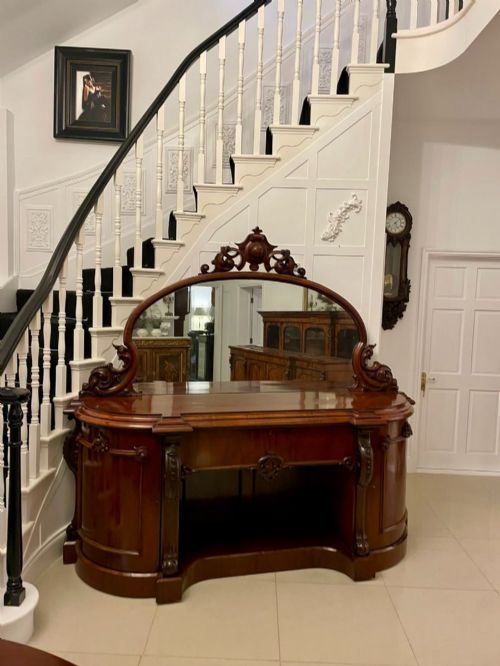
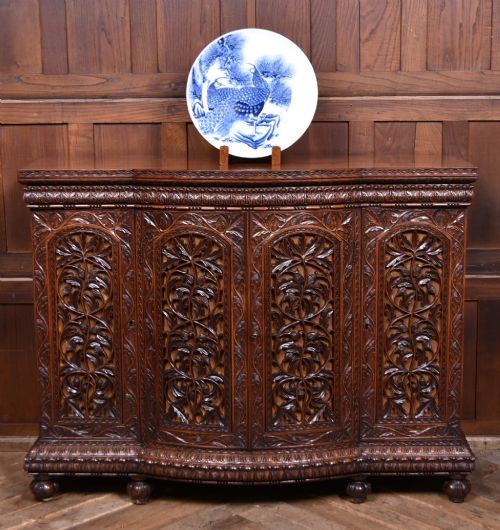
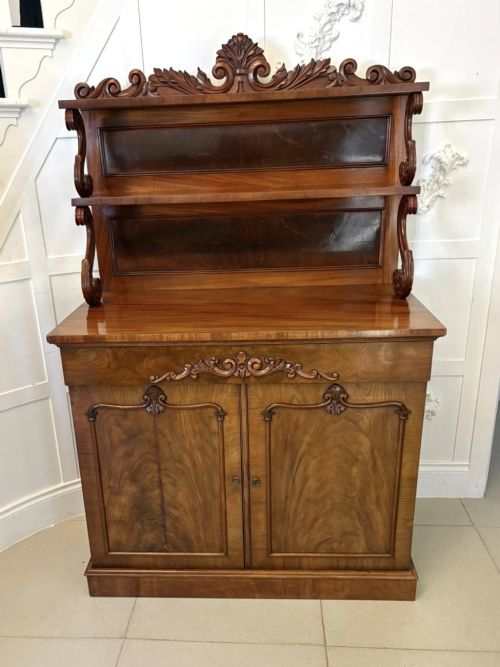
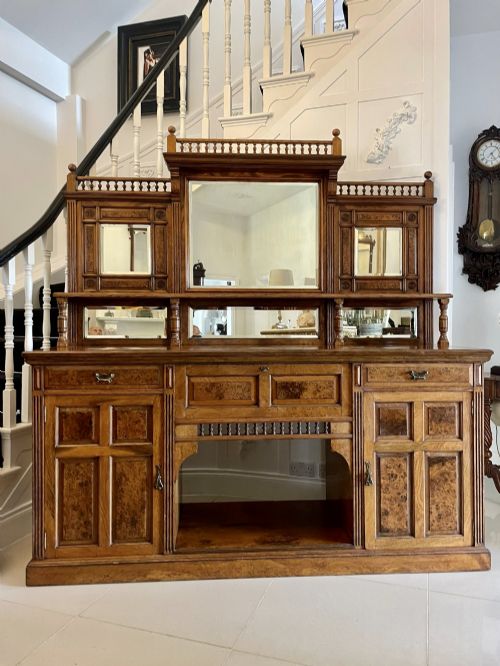
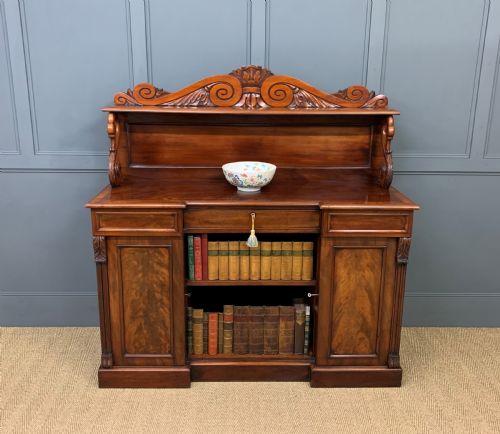
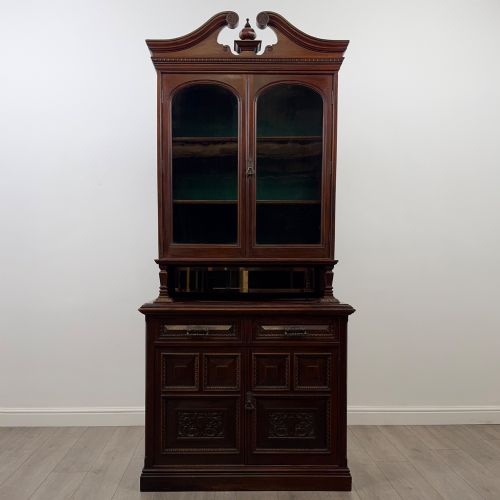
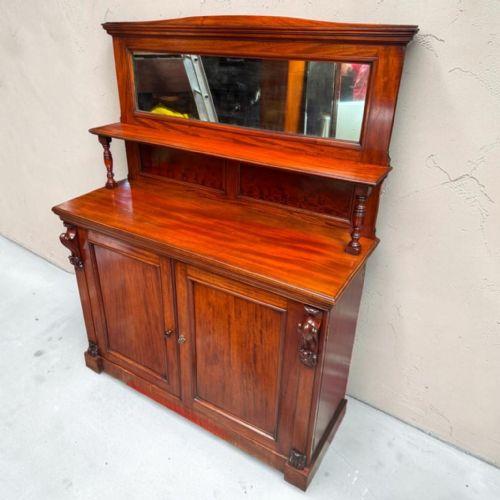
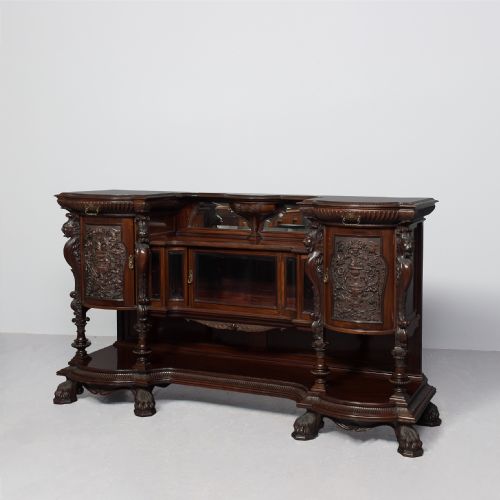
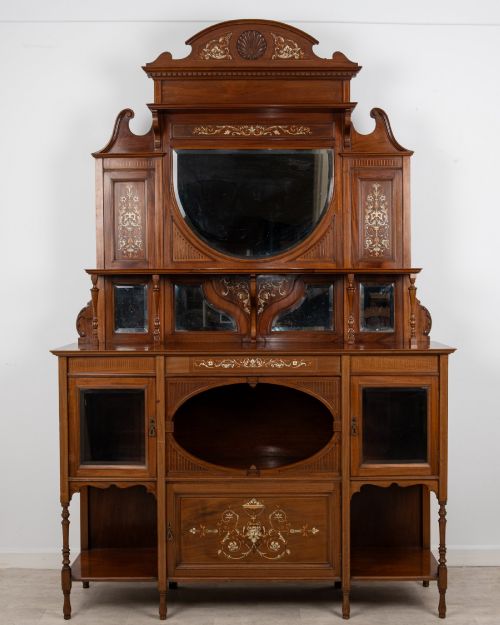
A victorian carved chiffonier combines a low enclosed cupboard base with upper shelves, mirrors or carved pediments, serving as a versatile side cabinet in nineteenth-century interiors. These pieces appear primarily in mahogany, rosewood, burr walnut, and pollard oak, often overlapping in form with sideboards, credenzas, and buffets.
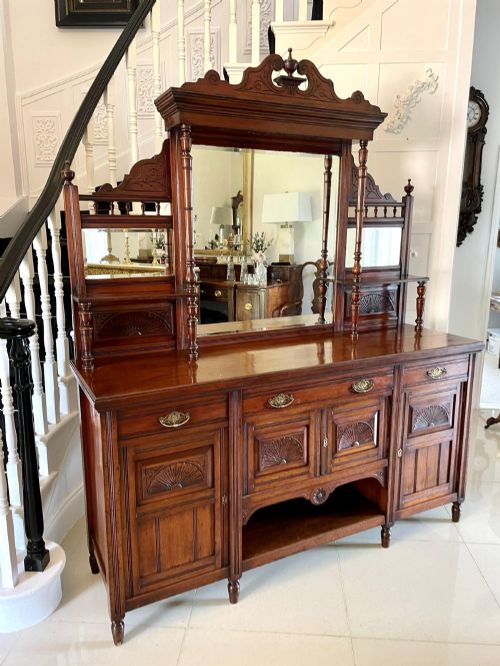
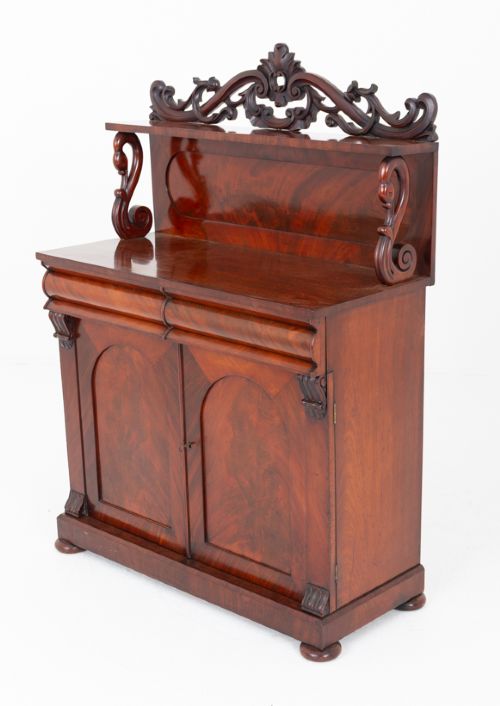
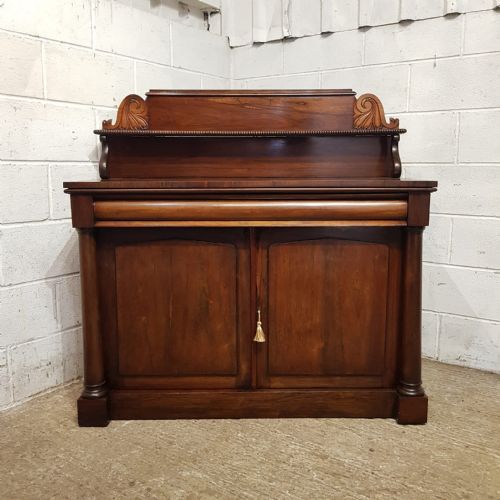
The version most commonly met on this page is the mid-nineteenth-century mahogany or rosewood chiffonier, featuring scrolling console supports, panelled doors, and an arched or mirrored back panel. Cabinetmakers of the period also produced larger mirror-back sideboards and two-tiered variants suited to formal dining spaces.
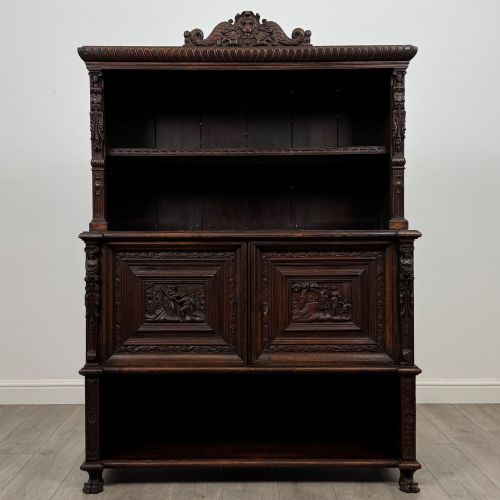
Makers and workshops across Britain and Ireland adapted these cabinets to suit shifting Victorian tastes, incorporating styles ranging from early Victorian classicism to late Victorian Renaissance revival and Gothic oak. Pieces span the decades from the 1800s through the 1890s, recording shifts in domestic utility and decorative carving.
Materials and Technique
Cabinetmakers constructed these pieces using solid timbers like mahogany, oak, and rosewood, frequently applying flame mahogany veneer or burr walnut to create highly figured drawer fronts and cupboard doors. Secondary woods such as pine or cedar appear on interior shelves and carcases.
Glass mirrors and cast brass hardware integrate directly into the carved wooden superstructures, particularly on mirror-back sideboards and credenzas dating from the middle to late nineteenth century.
Victorian Carved Chiffonier Retail Price Guide 2026
Typical asking prices for victorian carved chiffonier among the pieces listed under this phrase on Sellingantiques today, from the lower quarter to the upper quarter. They describe what is for sale here now, not the wider market.
Several Victorian chiffoniers still retain their original brass key escutcheons, having safely locked away nineteenth-century dining secrets for generations.
Evaluating the Pieces
The depth and crispness of the hand-carving separate standard production from exceptional pieces, especially around the scrolling consoles, pediments, and panel mouldings. Finer cabinets display meticulous timber selection, matching grain patterns across multiple doors and drawers.
Structural integrity relies on the original joinery of the plinth, upright supports, and upper mirror frames, alongside the retention of period brass fittings, locks, and glazed panels without replacement.
Robert Strahan
The Victorian Carved Chiffonier Glossary
- Chiffonier
- A low sideboard or cabinet featuring enclosed cupboards below, often surmounted by a shelf or mirror back. It originated in the Regency period and remained a staple of Victorian dining and drawing rooms.
- Credenza
- A low dining-room cabinet designed for serving food and displaying silver, frequently fitted with glass doors and elaborate marquetry or carving. Victorian versions often incorporate mirrored backs.
- Flame mahogany veneer
- A thin slice of mahogany timber cut from the fork of the tree, producing a distinctive flickering flame-like grain pattern. Cabinetmakers applied this to prominent surfaces for decorative impact.
- Pollard oak
- Oak timber taken from trees that were pollarded, resulting in a dense, knotty burl grain full of rich figures. It appears on substantial Victorian sideboards and cabinets.
- Sideboard
- A large dining-room piece intended for storage and serving, encompassing formats with pedestals, cupboards, drawers, and superstructure shelving. Nineteenth-century examples often blur the boundary with chiffoniers.
Victorian Carved Chiffonier: Frequently Asked Questions
What is a Victorian chiffonier used for?
These cabinets served primarily in dining rooms and parlours for storing glassware, linen, and cutlery while displaying ornaments on the top surface or upper shelf.
The enclosed lower cupboards kept dining essentials out of sight, while the decorative back tier accommodated porcelain and decorative objects.
How do I date a Victorian chiffonier?
Dating relies on timber choices, hardware, and stylistic shifts visible across the nineteenth century. Earlier pieces tend to utilise dense rosewood or flame mahogany with restrained classical scrollwork.
Later examples from the 1870s and 1880s frequently incorporate heavy oak, extensive carved panels, and large mirror backs characteristic of the late Victorian era.
Where should I place a chiffonier at home?
A chiffonier fits well in a dining room, hallway, or living space where its low profile allows for surface display beneath a painting or mirror. The enclosed cupboards provide practical concealed storage for modern tableware or books.
Positioning the piece away from direct heat sources protects the polished timber surfaces and delicate wood veneers from drying out.