
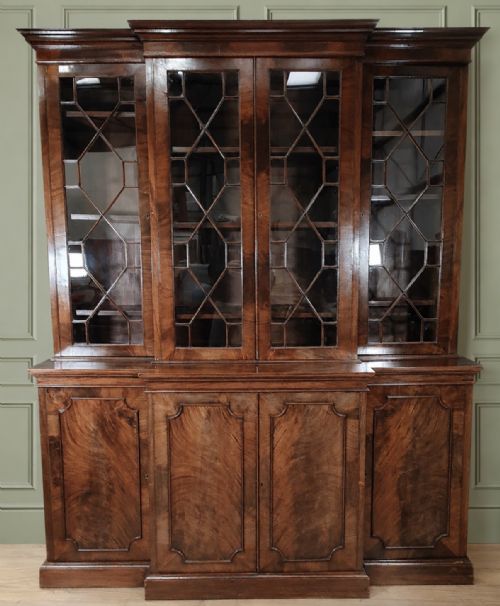
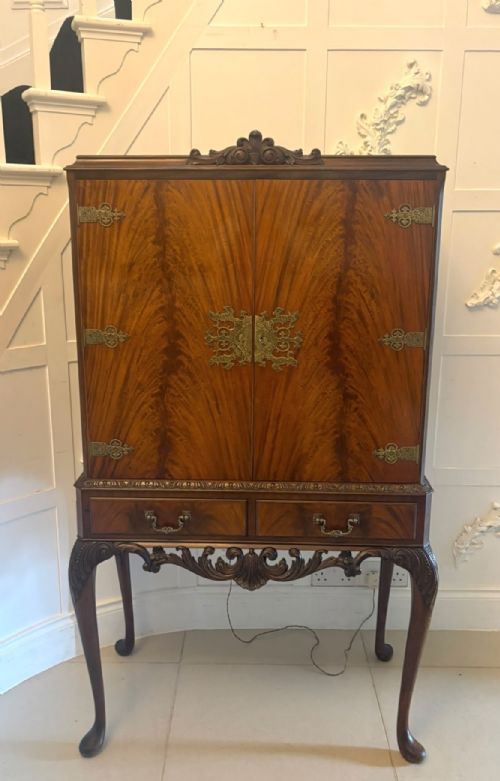
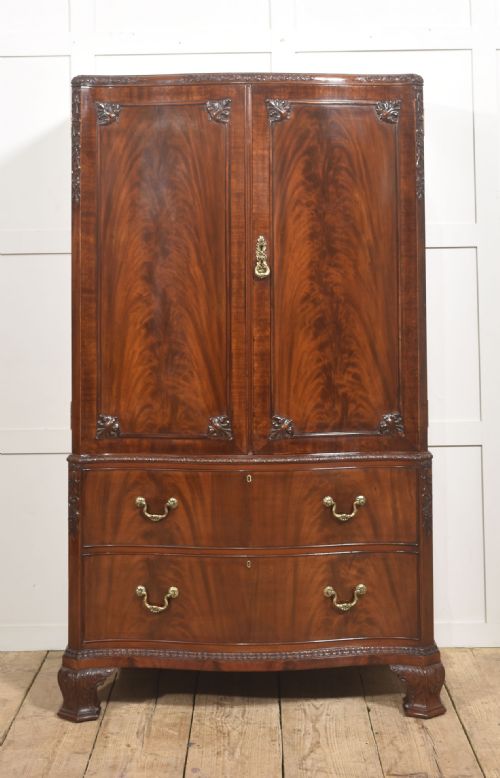


Figured Mahogany Cupboard
A figured mahogany cupboard brings deep timber grain and enduring utility into a room, offering storage grounded in nineteenth-century craftsmanship.
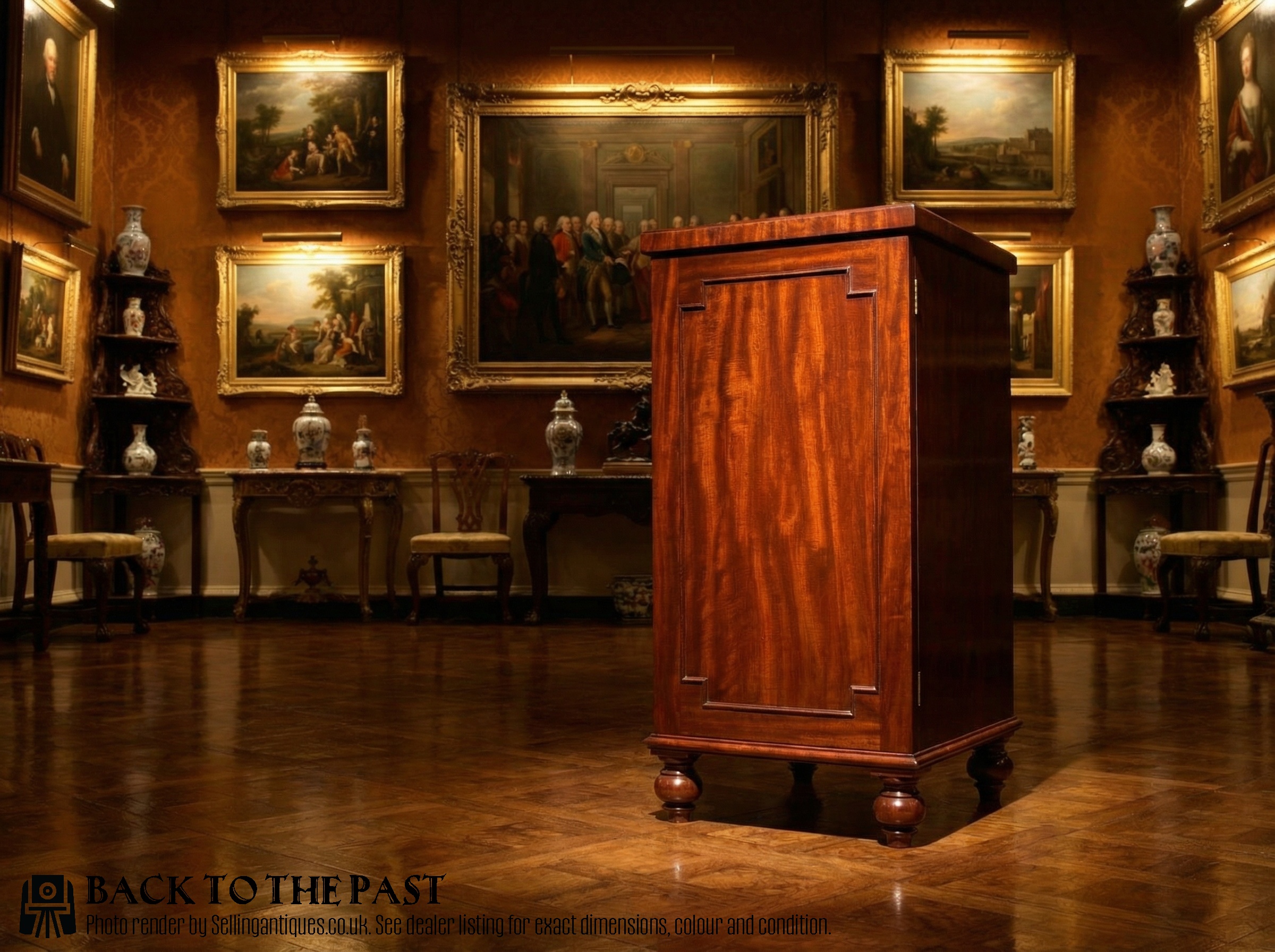
Figured Mahogany Cupboard
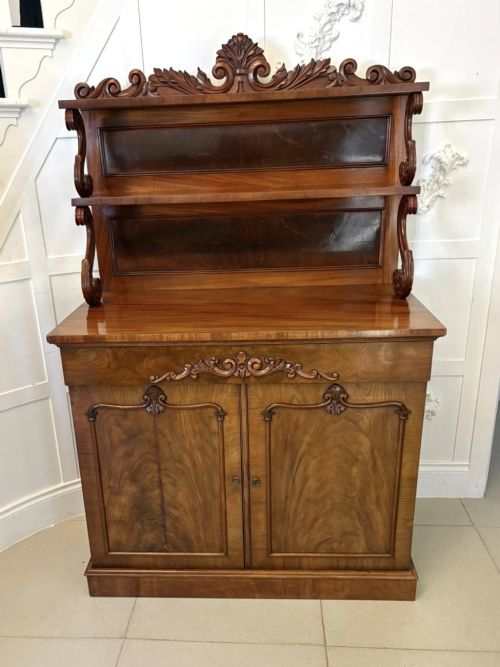
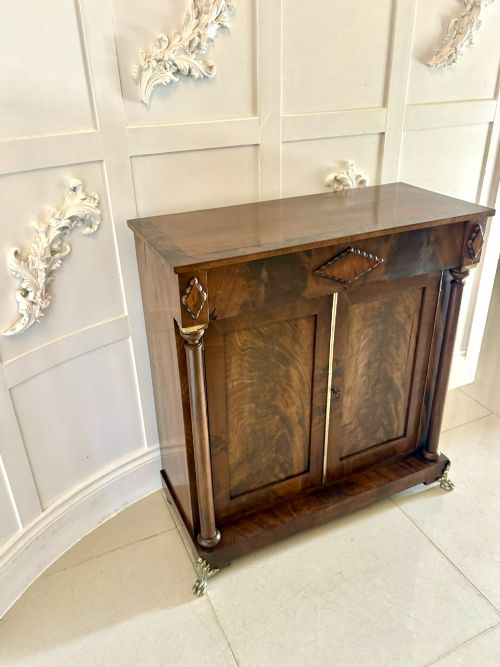
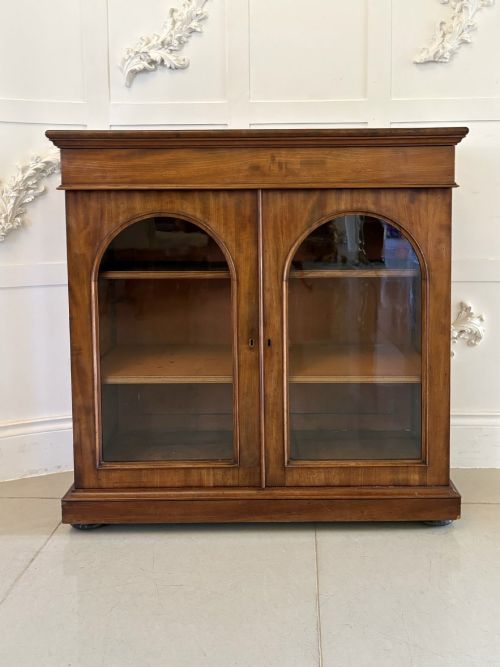
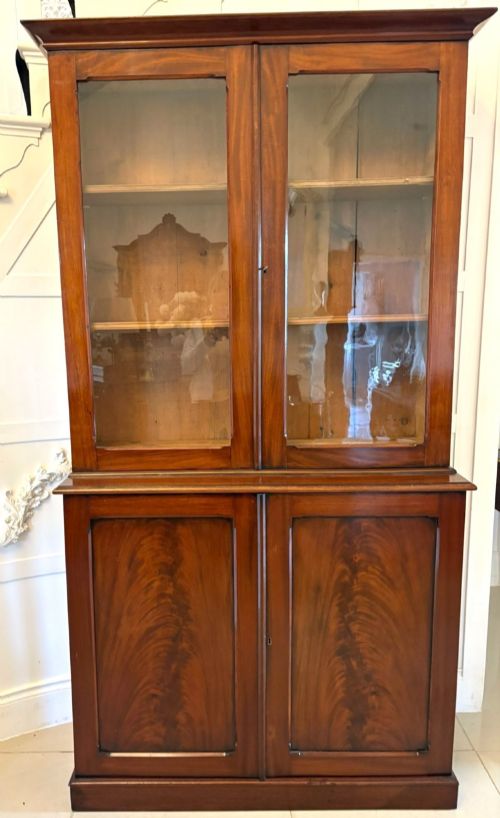
A figured mahogany cupboard encompasses a broad family of storage furniture, from tall library bookcases and linen presses to compact bedside cabinets and chiffoniers. When searching for a figured mahogany cupboard, buyers frequently encounter Victorian and Regency pieces where timber grain takes centre stage.
The selection ranges from grand breakfront bookcases and wardrobes to low side cabinets and pedestals. Smaller bedside versions and chiffoniers appear alongside substantial storage units.
Origins stretch across the nineteenth century, including Georgian, William IV, and later revival styles, alongside early twentieth-century examples such as Art Deco cabinets.
How they were made
Cabinet makers utilised solid mahogany and supporting secondary timbers like oak and walnut, applying carefully selected veneer to display swirling grain patterns. Flame mahogany veneer and figured mahogany panels created dramatic visual movement across large flat doors and drawer fronts.
Construction frequently incorporated brass hardware, glass panels for bookcases, and carved details on cornices or pedestals. Turnery appeared on feet, columns, and gallery supports, balancing decorative grain with structural stability.
Listings span multiple nineteenth-century periods, including Regency, George IV, and Victorian eras, alongside twentieth-century Art Deco pieces.
What varies in quality
Quality rests upon the selection and matching of the timber grain across the visible surfaces. Superior examples display continuous, symmetrical flame patterns that flow logically across doors and drawers.
Construction depth marks the division between standard and exceptional pieces, seen in heavier carcass timbers, secondary wood choices like oak, and the crispness of carved details or brass fittings.
Bowman Brothers
The Figured Mahogany Cupboard Glossary
- Figured mahogany
- Timber exhibiting unusual, highly decorative grain patterns caused by growth irregularities. This wood is sliced into veneers to highlight rich patterns on cabinet doors.
- Chiffonier
- A low sideboard or cabinet featuring shelves or a small superstructure above the main storage base. These pieces gained popularity during the Regency and Victorian periods.
- Linen press
- A tall storage piece traditionally used for household linens, combining upper sliding trays or shelves with lower drawer storage.
- Breakfront
- A cabinet design where the central section projects forward from the flanking wings, creating depth and architectural presence.
- Pedestal cabinet
- A compact standalone cupboard, often designed as a bedside or side table, resting on a single column or pedestal base.
Figured Mahogany Cupboard: Frequently Asked Questions
What is a figured mahogany cupboard?
A figured mahogany cupboard is a storage piece constructed with highly decorative, patterned timber grain. These items range from small bedside cabinets to large bookcases and linen presses.
They combine practical enclosed storage with the visual appeal of rich nineteenth-century wood veneers.
How do I style a cupboard in a modern room?
These wooden cabinets anchor contemporary spaces by introducing warmth and organic grain texture. Pair a low pedestal or chiffonier with neutral walls to let the timber act as a focal point.
Larger bookcases and cupboards provide practical shelving while adding historic character to living areas or home offices.
How do I tell Regency from Victorian pieces?
Regency pieces often exhibit cleaner classical lines, sometimes incorporating brass inlay or delicate classical motifs. Victorian examples tend to feature heavier proportions, deeper mouldings, and more robust turned elements.
Examining secondary timbers like oak inside the carcass helps confirm the manufacturing era.
Where were these cupboards used historically?
Historically, these cabinets served various rooms depending on their form. Tall linen presses and wardrobes functioned in bedrooms, while bookcases and chiffoniers lived in libraries and formal reception rooms.
Small pedestal cupboards typically served as bedside companions or auxiliary stands.