

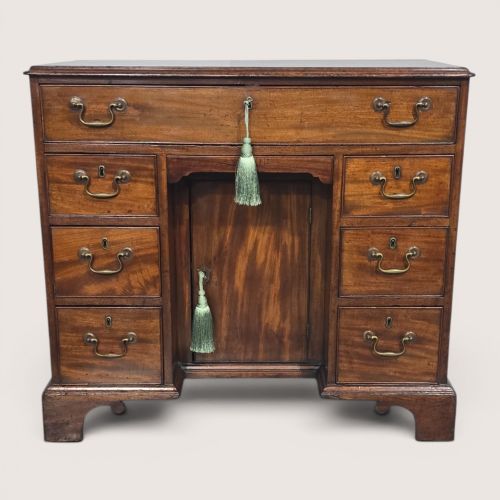
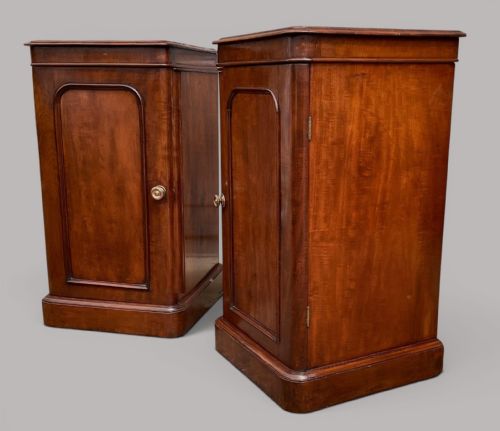
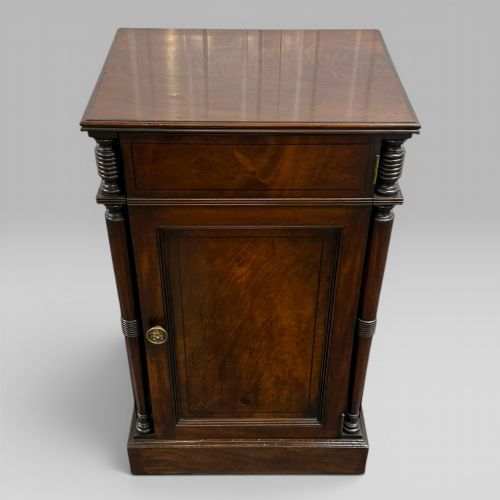
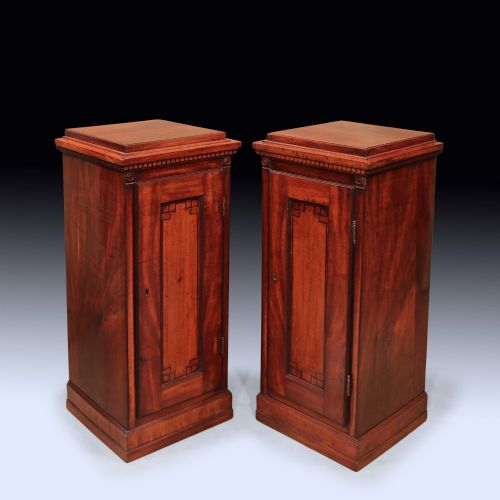
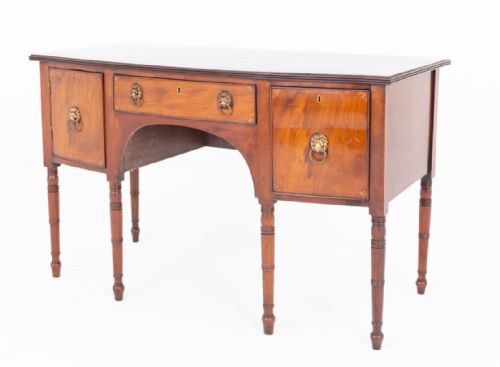
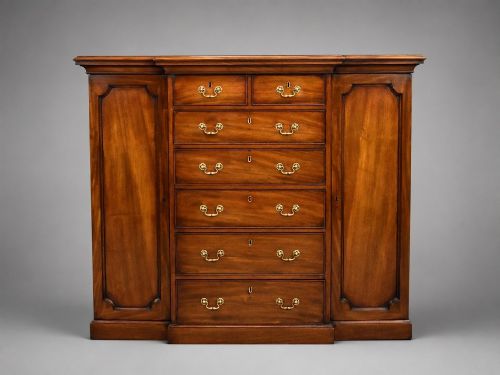
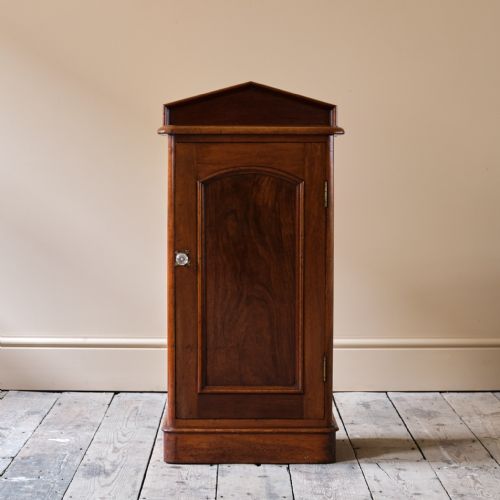
Georgian Mahogany Pedestal Cabinets
Georgian mahogany pedestal cabinets bring solid timber craftsmanship and functional storage to a room, offering period character for daily use.
How they were made
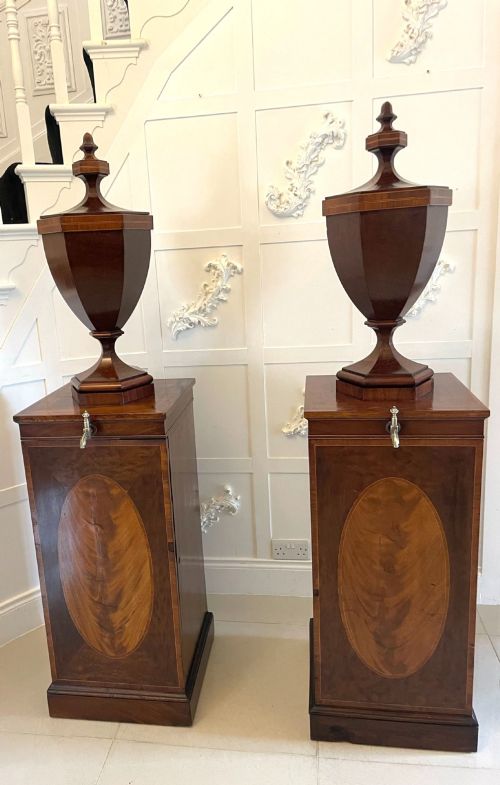
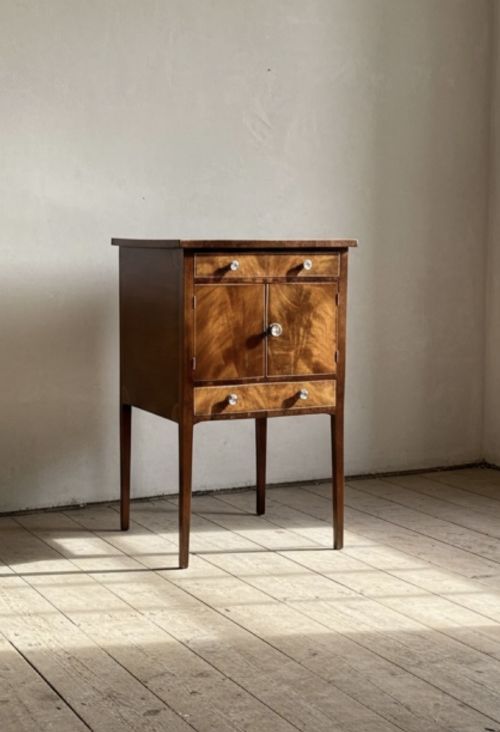
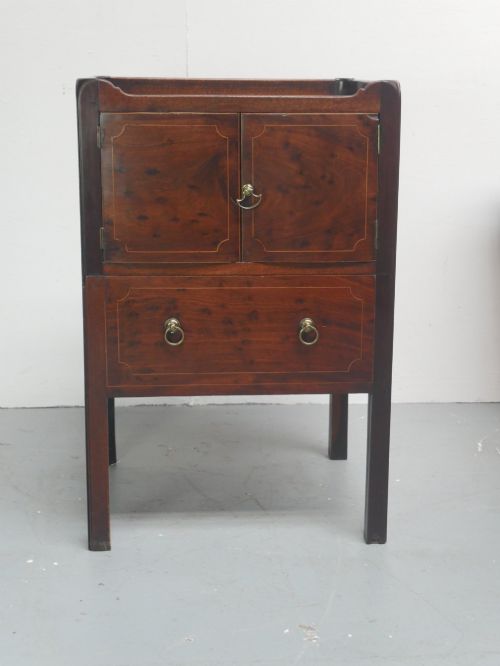
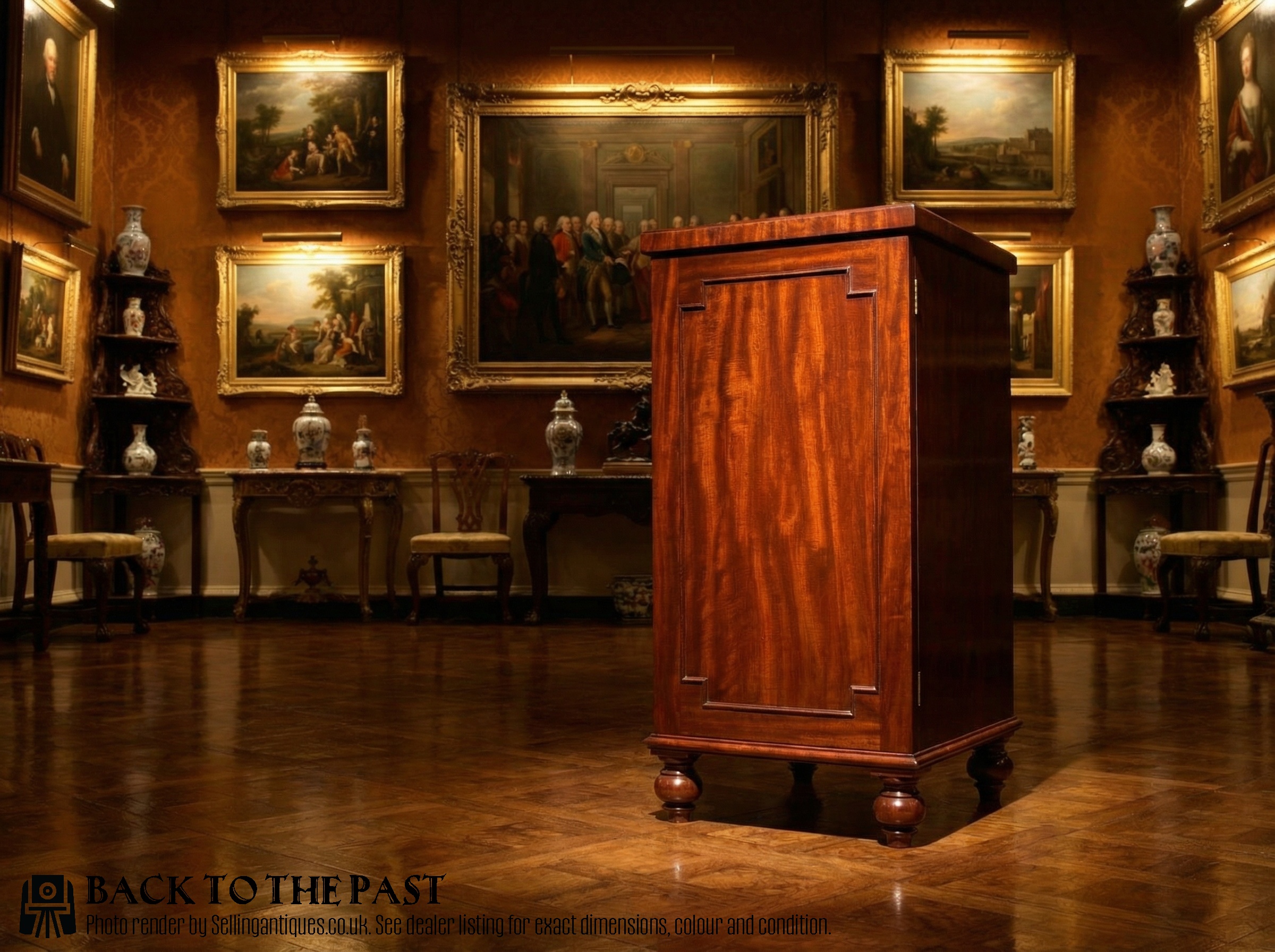
Cabinet makers built these pieces using solid mahogany and flame mahogany veneers over secondary timbers, often accentuating surfaces with boxwood inlay. The selection of timber determined the visual depth of the grain, particularly when polished and waxed.
Brass fittings, such as handles and hinges, provided functional contrast to the dark wood, while specialised elements like boxwood stringing added linear definition. Construction relied on traditional joinery methods suited to daily wear in bedrooms and dining rooms.
What varies in quality
Quality in these cabinets rests upon the choice of timber and the precision of the cabinet work, particularly in the figuring of flame mahogany veneers and the crispness of any inlay. Superior examples display thoughtful grain matching across doors and drawer fronts.
The integrity of the original structure and the restraint shown in subsequent restorations also set pieces apart. Refined proportions and well-executed period details separate standard utilitarian cupboards from finer examples.
Listings feature mahogany, brass, satinwood, and boxwood inlay across eighteenth and nineteenth-century periods.
Holland and Sons·Gillows
The Georgian Mahogany Pedestal Cabinets Glossary
- Flame mahogany
- A veneer cut from timber where the branch meets the trunk, producing a distinctive flickering, flame-like grain pattern.
- Pot cupboard
- A small bedside cabinet originally designed to house a chamber pot, often featuring a single door and enclosed top.
- Boxwood inlay
- Contrasting pale wood inserted into recesses on the mahogany surface to create geometric borders or delicate decorative motifs.
- Pedestal
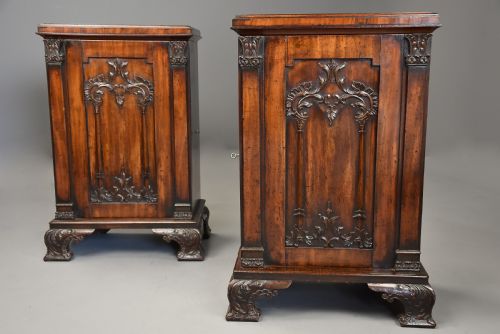
- A structural support column or base section beneath a larger piece of furniture, or a standalone cupboard unit matching a sideboard.
Georgian Mahogany Pedestal Cabinets: Frequently Asked Questions
What is a pedestal cabinet used for?
These cabinets primarily function as bedside storage for holding lamps, books, and personal items behind closed doors.
In larger formats, they operate as dining room pedestals or sideboards for serving and storage.
Are these cabinets found in pairs?
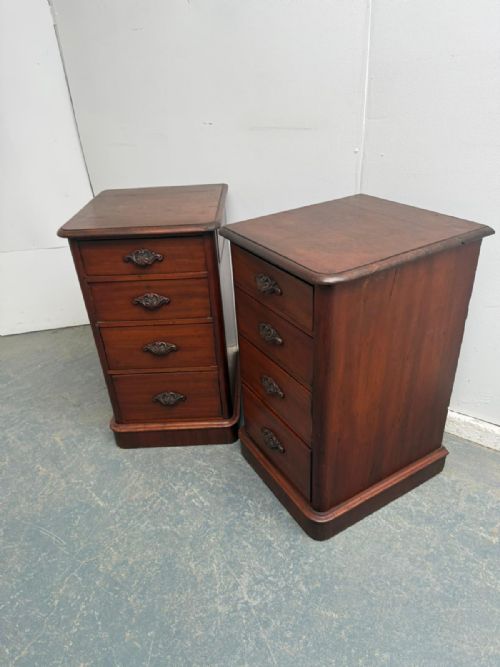
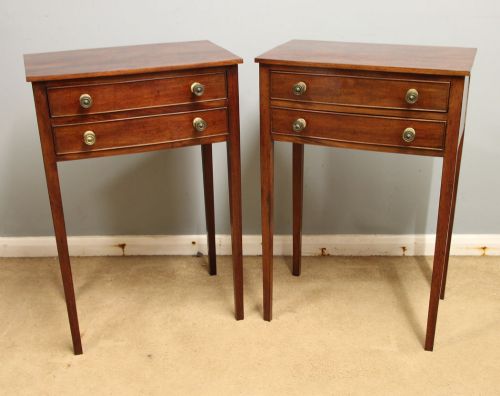
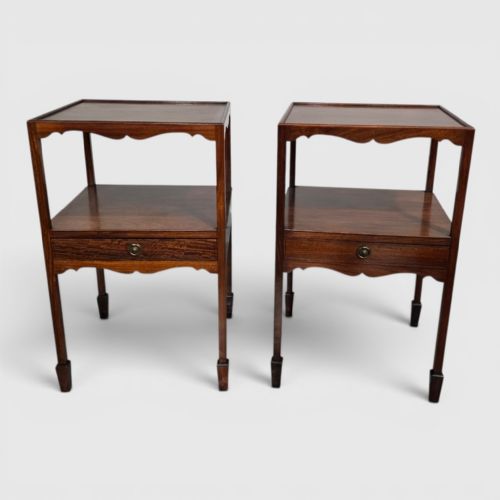
Many bedside cabinets and side cupboards survive as matched pairs, particularly those intended to flank a bed.
Single pieces also appear frequently, reflecting how furniture was originally commissioned or separated over time.
How do I identify a Georgian piece?
Georgian furniture typically displays proportion, classical architectural lines, and traditional timber choices like solid mahogany.
Revival pieces from later centuries often copy these earlier styles while utilising slightly different construction methods.
How should I care for mahogany furniture?
Keep the wood away from direct heat sources and strong sunlight to prevent the timber and polished finish from drying out.
Apply traditional wax polish occasionally to maintain the lustre and nourish the mahogany grain.