


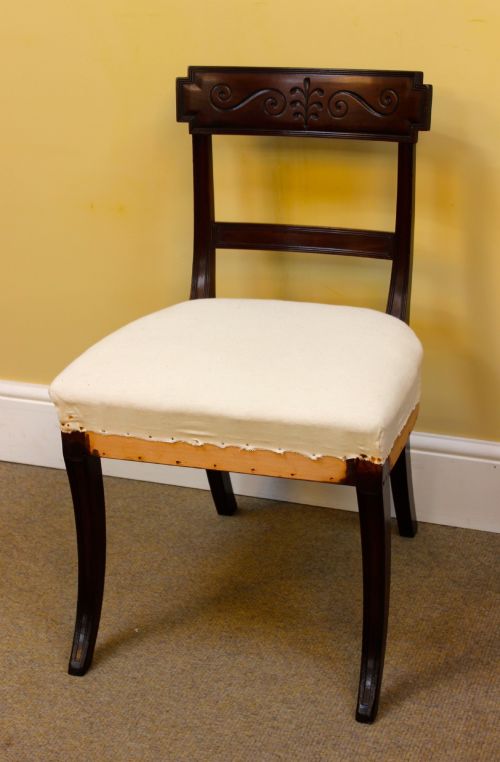
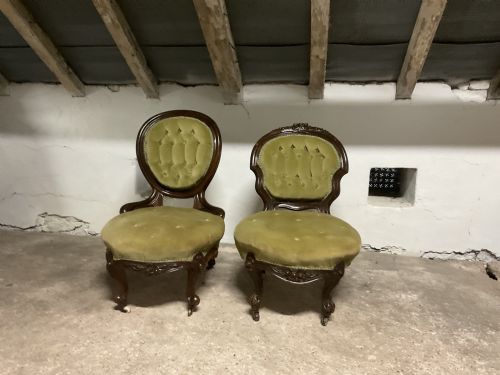
Victorian Carved Back Seat
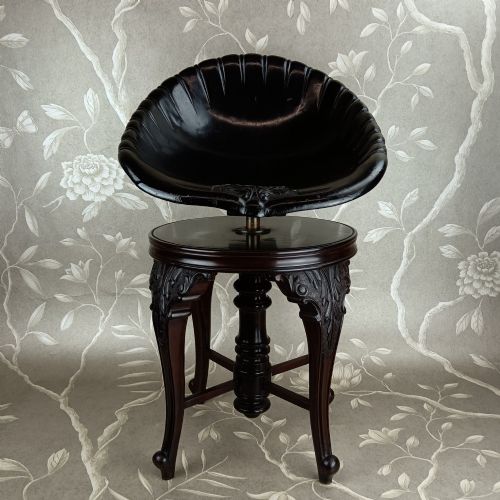
A victorian carved back seat brings substantial presence to a room, offering functional seating shaped by nineteenth-century tastes.
Victorian Carved Back Seat
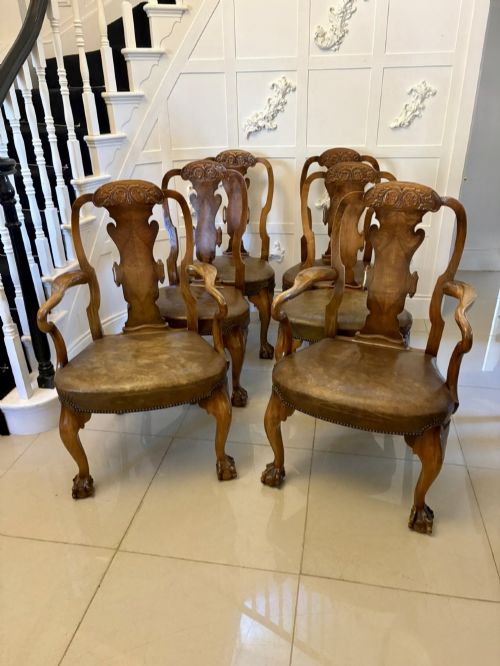
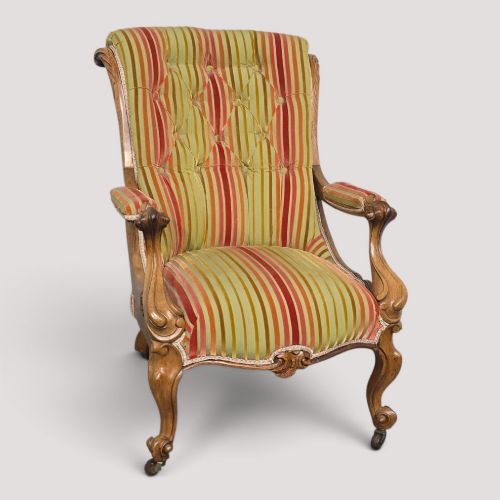
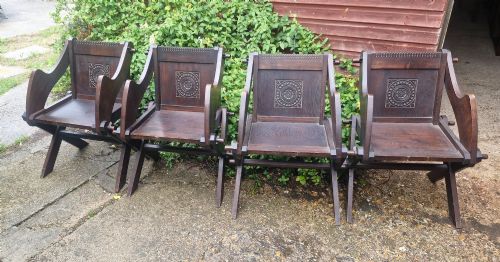
The selection includes specialised seating such as library armchairs, office desk chairs, window seats, and heavy oak settles. Woods and upholstery vary considerably, reflecting the domestic and reception spaces these pieces originally occupied.
Materials and Construction
Makers relied heavily on dense hardwoods, utilising mahogany, walnut, rosewood, and oak for structural frames and intricate backrest carvings. These timbers were often turned, panelled, or moulded to support heavy ornamentation.
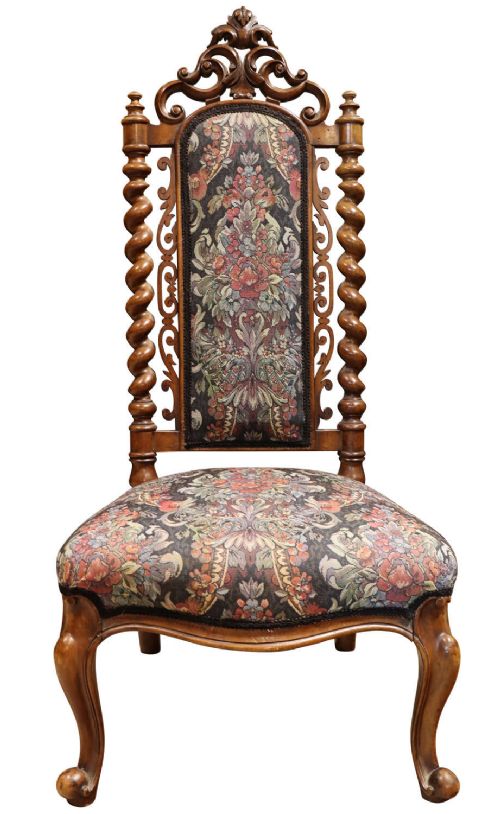
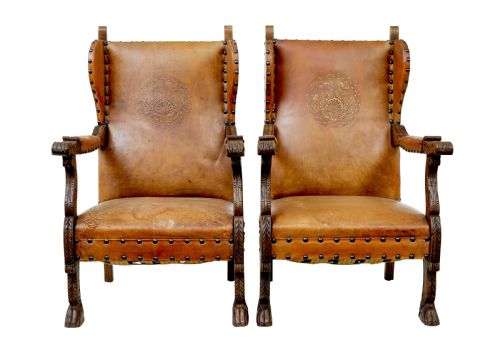
Upholstery and decorative details incorporate leather, velvet, brass accents, tapestry, and cane inserts, matched to the specific style of the chair, whether plain wood or fabric-covered.
Listings feature woods spanning mahogany, walnut, rosewood, and oak, paired with diverse textiles including leather, velvet, and tapestry.
Craftsmanship and Design
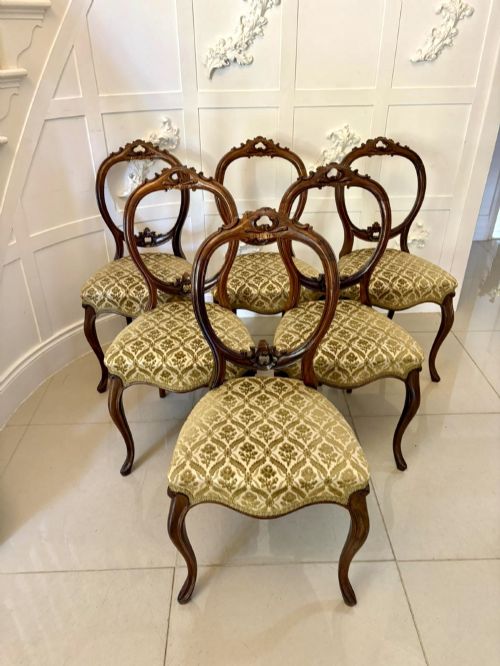
Quality rests in the crispness of the timber carving and the architectural proportion of the frame. Finer examples display deep, deliberate relief work on balloon backs or shield backs, whereas simpler pieces rely on plain turned supports.
The integrity of the timber joints and the selection of figured veneers, such as burr walnut or rosewood, separate standard domestic seating from exhibition-grade dining sets and armchairs.
Jennens and Bettridge·Howard and Sons
The Victorian Carved Back Seat Glossary
- Balloon Back
- A rounded, oval-shaped wooden backrest popular on nineteenth-century chairs. This curved form allowed for elaborate scroll and leaf carvings.
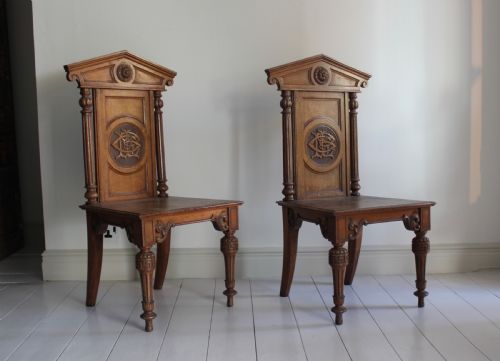
- Hall Chair
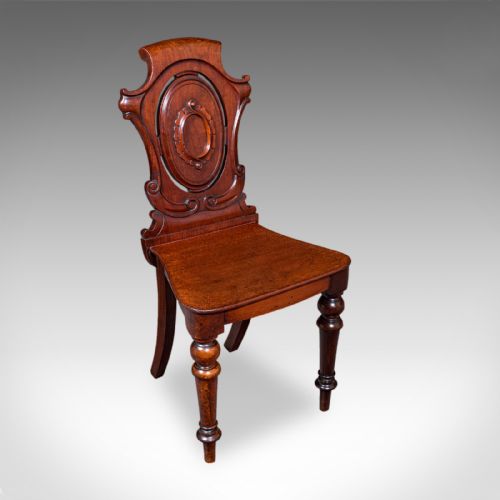
- A rigid wooden seat kept in an entrance hall, often featuring a solid carved back and no upholstery. These pieces frequently display family crests or plain shields.
- Cabriole Leg
- A furniture leg that curves outward and then tapers inward, finishing in a pad or claw foot. This shape mimics the leaping posture of an animal.
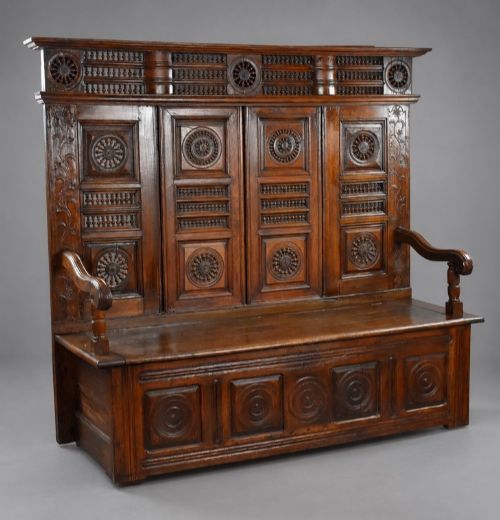
- Settle
- A wooden bench with high backrests, solid arms, and sometimes a box seat beneath. They were designed to block draughts in large hallways and rooms.
- Spoon-Back
- An upholstered chair back hollowed out to resemble the bowl of a spoon. This design contours directly to the human spine.
Victorian Carved Back Seat: Frequently Asked Questions
How were these chairs used historically?
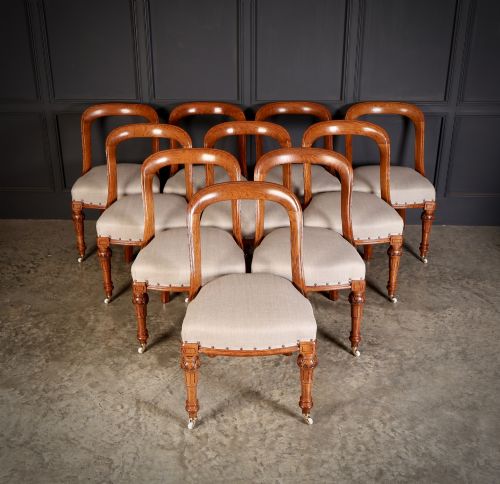
Dining chairs were arranged around large mahogany tables for formal meals, while hall chairs stood in reception spaces for brief use. Other variations like nursing chairs and library armchairs served specific domestic comfort needs.
Heavier settles and settees provided communal seating in hallways and living rooms, often positioned near firesides to block draughts.
How do I care for antique upholstery?
Original leather, velvet, and tapestry require gentle dusting and protection from direct sunlight to prevent fading and drying out. Regular care preserves the textile fibres without damaging the underlying stuffing.
For cane seats, occasional light dampening keeps the material flexible and prevents snapping under normal weight.
How can I tell different revival styles apart?
Gothic Revival pieces utilise pointed arches, heavy oak construction, and quatrefoil motifs borrowed from medieval architecture. Rococo Revival chairs display flowing curves, asymmetrical floral carvings, and cabriole legs.
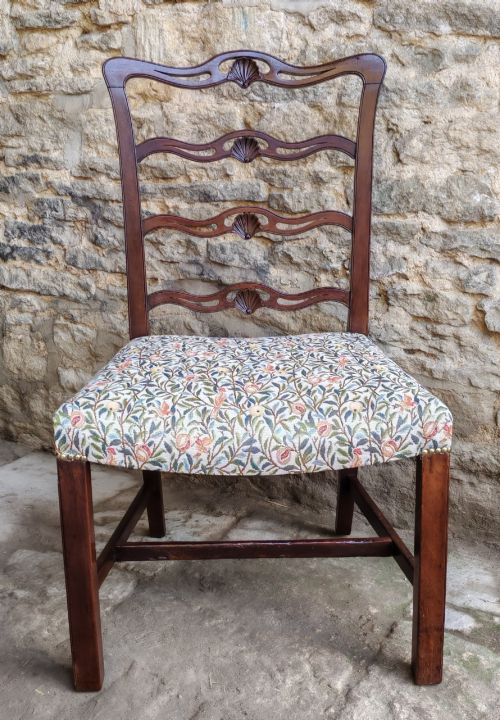
Chippendale Revival items draw on eighteenth-century aesthetics with pierced splat backs and ball and claw feet.