


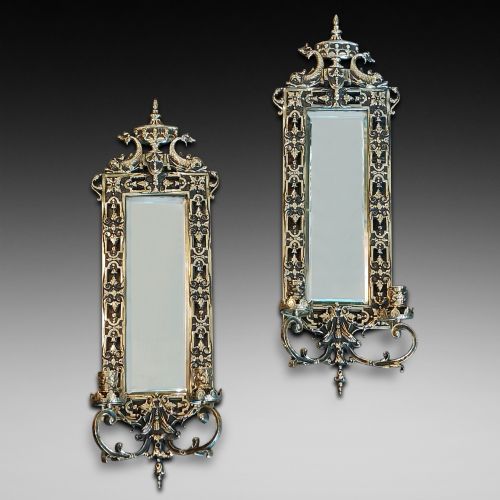

Victorian Candle Mirror
A victorian candle mirror reflects the flickering warmth of nineteenth-century rooms through combined glass and metal sconces.
Victorian Candle Mirror
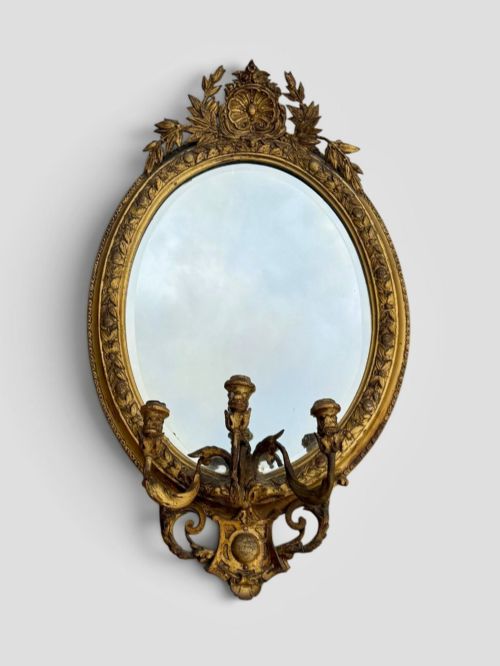
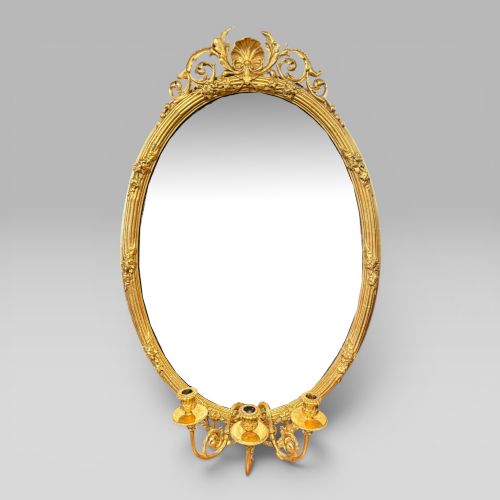
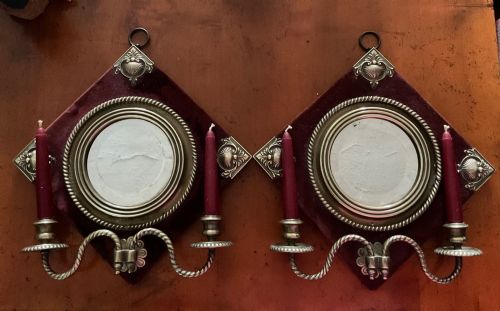
A victorian candle mirror brings together reflective glass and integrated candle arms to multiply light in dim nineteenth-century spaces. These pieces appear most frequently as ornate wall-mounted girandoles framed in giltwood and gesso, alongside brass-framed variants.
The selection extends from Rococo Revival and Belle Epoque wall sconces to Aesthetic Movement brass designs and Chinoiserie hanging pieces. Domestic forms also encompass dressing chests, cheval mirrors, and telescopic shaving mirrors fitted with working candle holders.
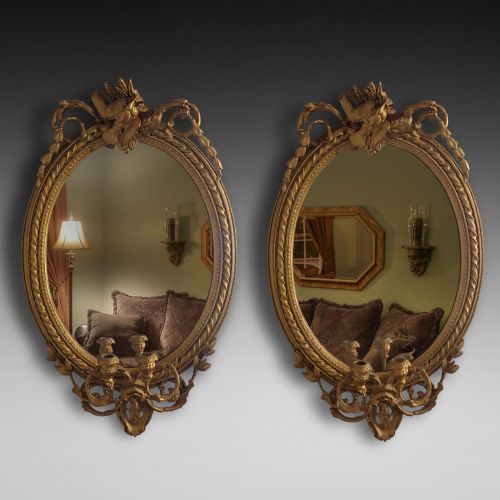
Originating largely from the nineteenth century, these items span periods from the Victorian era into Edwardian production around nineteen hundred. Buyers encounter single wall mirrors as well as matched pairs designed to flank architectural focal points.
Quality differences across the range
Quality rests upon the crispness of hand-carved details in the wooden and gesso mouldings versus the softer definition of mass-produced castings. Superior pieces retain their original mercury or silvered mirror plates and intact gilt surfaces without heavy modern intervention.
The structural integration of the candle arms determines practical excellence, where robust brass mountings and secure fixings ensure the weight of burning tapers is safely borne by the wall frame or mirror stand.
Object forms span wall sconces, pier mirrors, shaving stands, and dressing chests with candle fittings.
E.G Paris
The Victorian Candle Mirror Glossary
- Girandole
- A branched wall-mounted candlestick combined with a mirror so the reflective glass multiplies the candlelight. These pieces often feature ornate gilt frames.
- Gesso
- A plaster-like material applied to wood frames and carved or moulded into intricate decorative relief before gilding. It forms the scrollwork on Victorian wall mirrors.
- Aesthetic Movement
- A late nineteenth-century design style prioritising visual beauty over narrative meaning, often using brass and copper in simple geometric or japanned forms.
- Sconce
- A wall fixture holding one or more lighted candles or lamps, integrated directly into the mirror frame or mounted alongside the glass.
- Cheval mirror
- A freestanding full-length mirror hung in a frame that allows it to tilt, sometimes incorporating articulated candle holders on the upright supports.
Victorian Candle Mirror: Frequently Asked Questions
What is a girandole mirror?
A girandole is a wall mirror fitted with one or more candle branches attached directly to the frame. The polished glass reflects the candlelight to brighten dark Victorian interiors.
These pieces function as both decorative wall art and practical lighting fixtures. They hang effectively in hallways, living rooms, and above mantelpieces where candles provide ambient light.
How do I hang a heavy wall mirror?
Heavy nineteenth-century mirrors require secure fixings anchored directly into wall studs or solid masonry using appropriate brackets. The substantial weight of giltwood, gesso, and glass demands professional installation to prevent displacement.
Check that the hanging loops and wire attached to the reverse of the frame remain sound before mounting. Distributing the weight evenly ensures the wall structure safely supports the piece.
Can I still burn candles on these mirrors?
Burning candles on antique sconces is possible provided the drip pans and arm fixings are stable and secure. Modern dripless tapers help protect the historic frame and surrounding wall from wax damage.
Monitor burning candles closely to avoid heat damage to the adjacent mirror glass or original gilding. Many owners prefer to use unlit candles purely for decorative authenticity.
How do I clean antique mirror glass?
Clean antique mirror glass gently using a soft microfibre cloth slightly dampened with distilled water. Avoid harsh chemical cleaners that can seep behind the bevelled edges and damage the silvering.
Keep moisture away from the wooden or gesso frame during cleaning to protect the gilt surface. Wipe dry immediately to maintain the historic finish.