
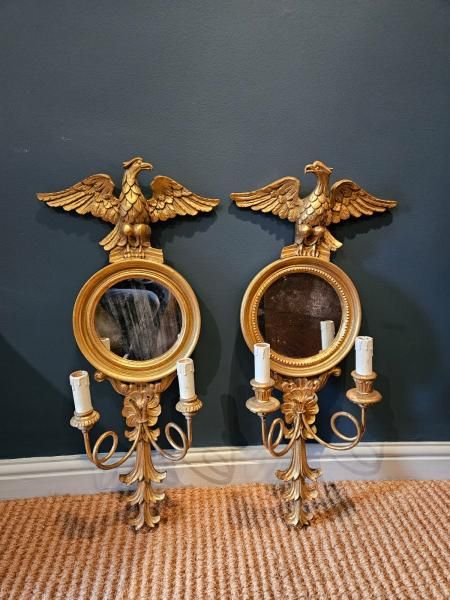
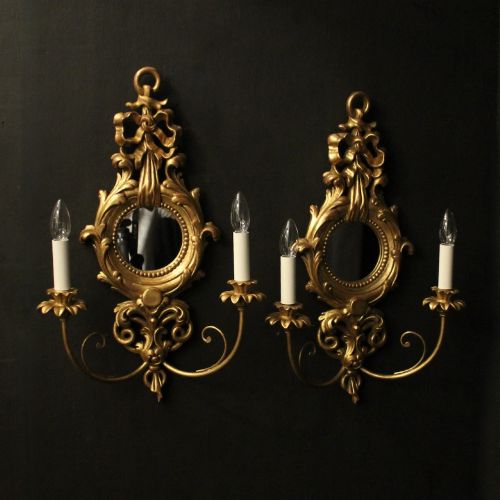
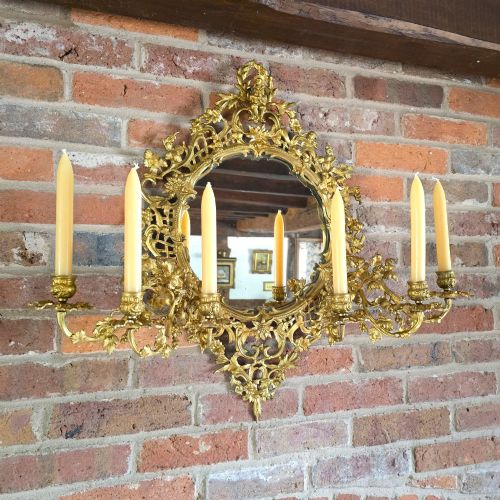
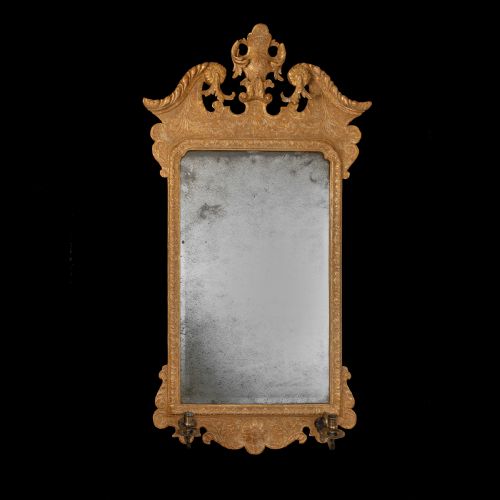
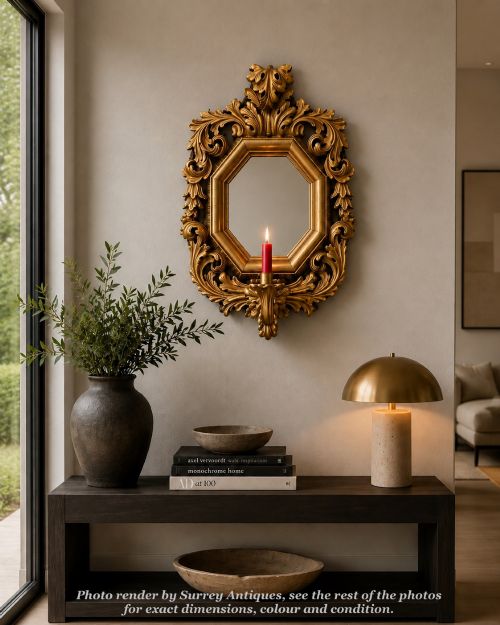
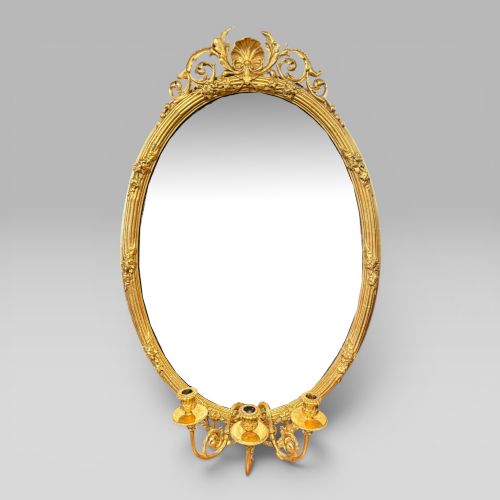
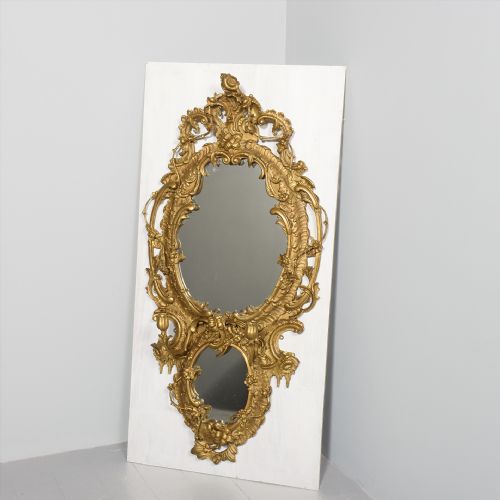
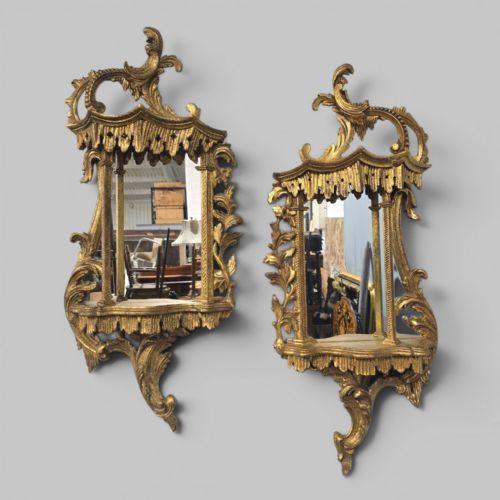

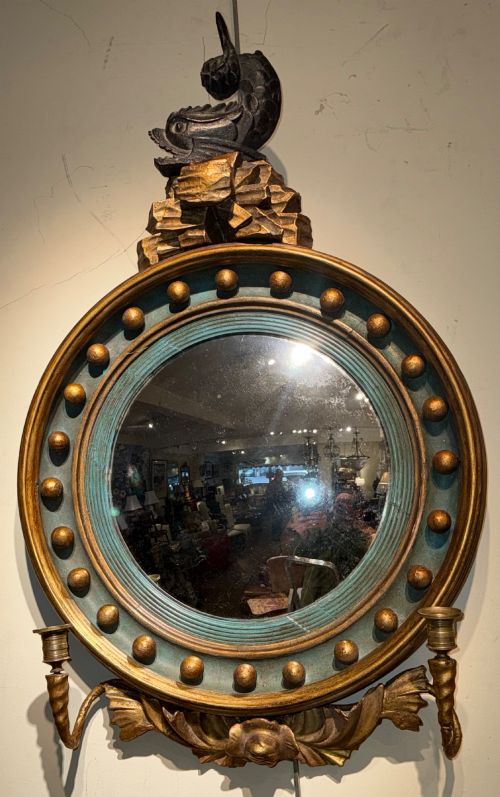


Gilded Sconce Mirror
A gilded sconce mirror combines reflective glass and candle arms to throw warm light across a room.
Gilded Sconce Mirror
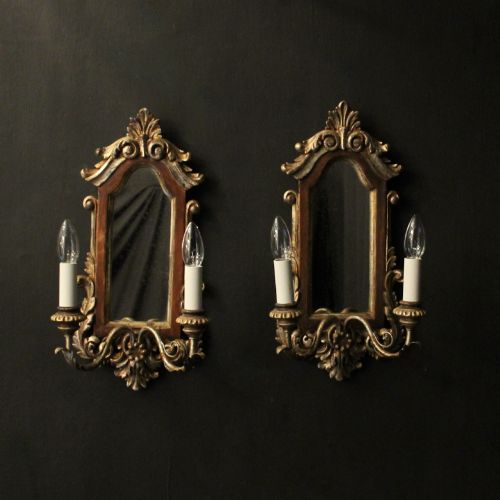
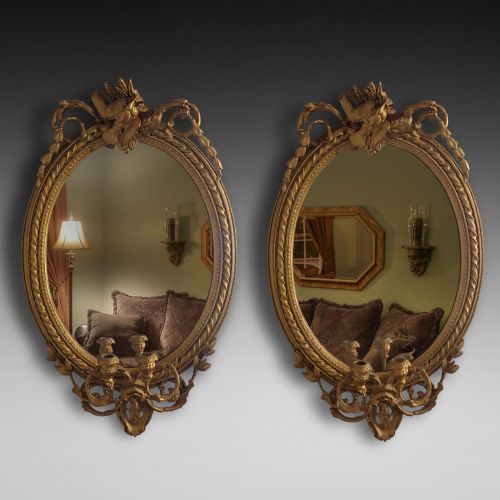
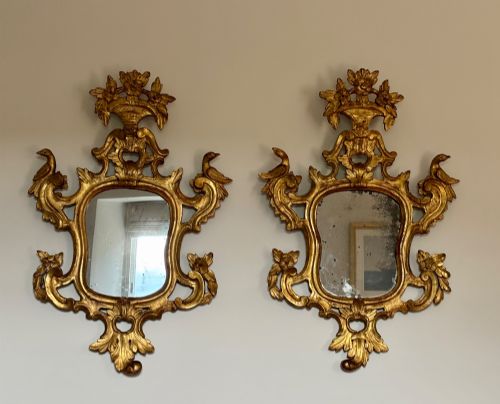
A gilded sconce mirror is a wall-hanging reflector designed to hold candles or lamps, multiplying the illumination in a room through its polished plate. When buyers search for a gilded sconce mirror, they encounter forms ranging from compact Victorian girandoles to grand eighteenth-century Venetian and Rococo pieces.
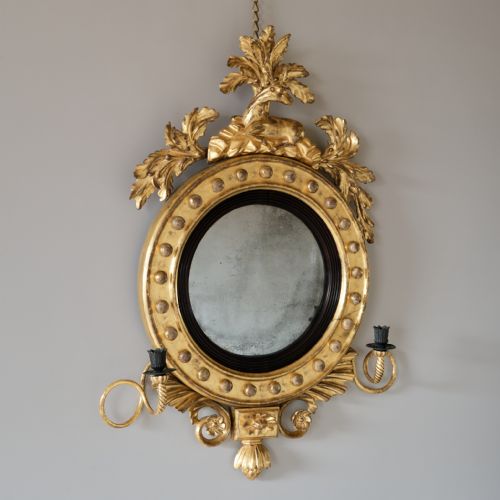
The selection includes matched pairs and single wall mirrors originating from French, Italian and British workshops across the eighteenth, nineteenth and early twentieth centuries. Girandoles with twin candle arms and convex round glasses appear frequently alongside tall pier mirrors and carved overmantels.
How they were made
Carvers shaped wooden frames from softwoods or hardwoods, often applying a layer of gesso to build up intricate scrollwork, acanthus leaves and cartouche borders before gilding. Artisans used thin sheets of gold leaf or applied gilt paint over the prepared surfaces to achieve a bright metallic finish.
Mirror plates were traditionally silvered behind glass, with older examples showing natural foxing and oxidation across the glass surface. Metal components such as brass, ormolu and bronze formed the structural arms and candle branches on specialised girandole and sconce forms.
What varies in quality
Depth and precision in hand-carved gesso and wood separate exceptional frames from simpler moulded versions, defining the crispness of foliage and figural details like cherubs. The survival of original gilding and untouched mirror plates with authentic foxing contributes significantly to a piece's historical integrity.
The architectural balance of integrated candle arms and the solidity of joint construction dictate how well a heavy wall mirror holds its weight over time. Harmony between the glass plate size, the frame proportions and the period style governs the overall visual impact.
Benjamin Goodison
The Gilded Sconce Mirror Glossary
- Girandole
- A decorative wall mirror fitted with one or more arms for holding candles. These sconce mirrors are designed to multiply candlelight within a room.
- Giltwood
- Timber that has been coated with thin sheets of gold leaf. This technique provides a durable and luminous metallic surface.
- Gesso
- A plaster-like mixture applied to wood frames to create a smooth surface for carving and gilding. It allows for sharp relief work.
- Foxed plate
- A mirror glass showing spots of oxidation and discoloration due to age. Collectors value this patination as a sign of authenticity.
- Ormolu
- Gilded bronze or brass used for decorative mounts and candle branches. The technique involves applying a gold amalgam to base metal.
Gilded Sconce Mirror: Frequently Asked Questions
What is a girandole mirror?
A girandole is a wall mirror that incorporates candle sconces directly onto the frame or glass. The integrated arms hold candles so the flame reflects in the glass.
These pieces served a practical purpose before electric lighting by bouncing candlelight around dark rooms. Today they function as decorative focal points in hallways and reception rooms.
How do I hang a heavy giltwood mirror?
Heavy carved wood and gesso mirrors require secure wall fixings anchored directly into structural studs or masonry. Professional mirror hangers use heavy-duty D-rings and steel wire rated well above the weight of the piece.
Distribution of weight across the frame prevents stress on the antique joints and ancient wood. Ensuring the wall bracket sits level keeps the mirror stable.
How do I clean an antique gilt mirror?
Cleaning requires a soft dry brush to gently remove dust from intricate gesso and carved details without disturbing the gold leaf. Water and chemical cleaners can strip old gilding and damage fragile wooden frames.
Glass plates can be wiped with a mild glass cleaner applied to a cloth rather than sprayed directly onto the mirror. This avoids moisture seeping behind the antique silvering.
Are convex mirrors the same as sconces?
Convex mirrors feature curved spherical glass that provides a wide-angle reflection of the entire room. While some convex mirrors include candle arms, many standalone versions do not.
Sconce mirrors specifically incorporate candle branches designed to illuminate the reflective glass plate. Both forms share similar gilded frames from the Regency and Victorian eras.