




Antique Brass Girandole
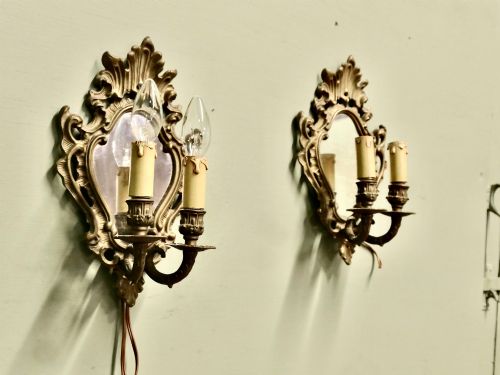
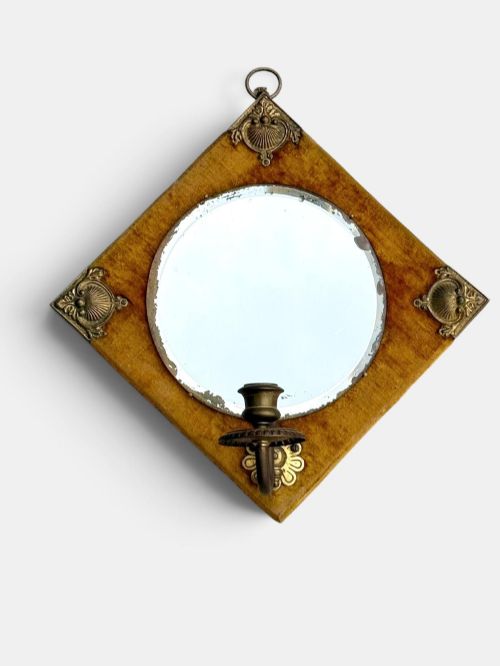
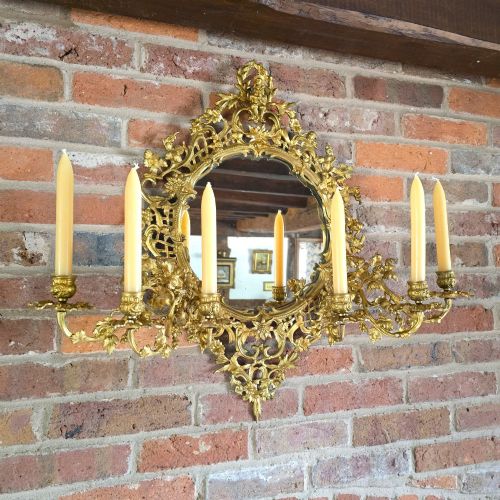
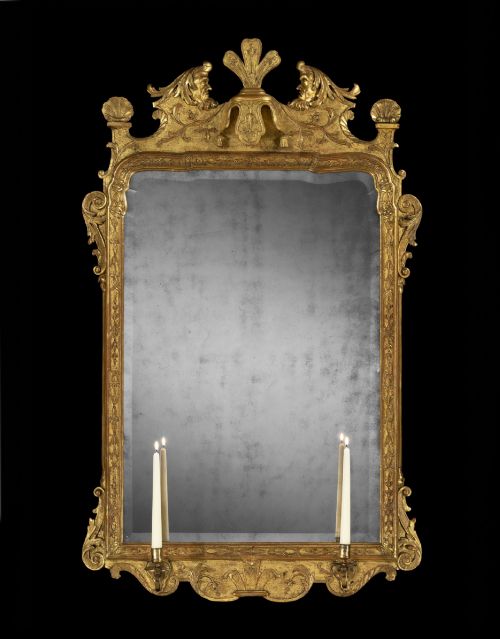
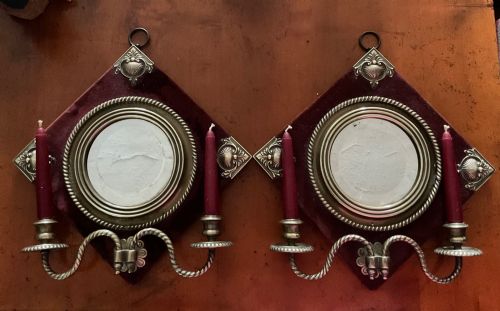
An antique brass girandole combines the reflective depth of a wall mirror with the warm, projected light of attached candle branches.
Materials and construction
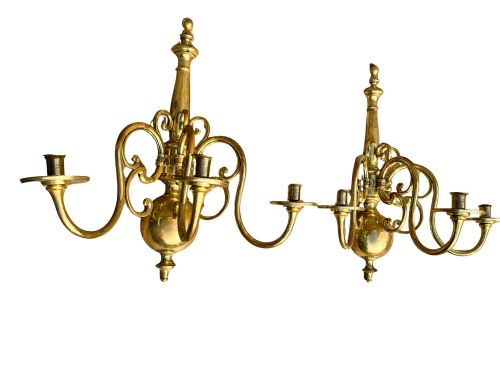
The primary structural elements rely on cast and chased brass, ormolu, and gilt bronze, frequently paired with bevelled mirror glass and cut crystal. Frames are assembled from metal components and wooden backings to support the weight of protruding candle branches.
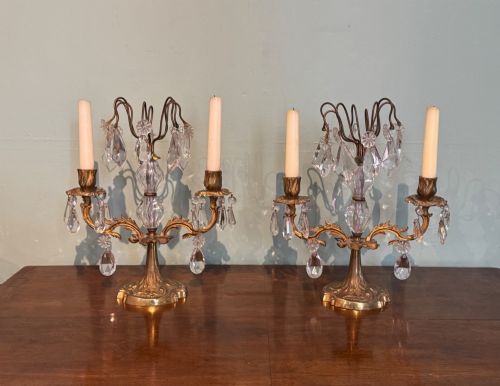
Candelabra arms and mounting brackets are joined securely to hold multiple candle sockets, while glass drops and pendants are suspended from brass pins to catch and refract the candlelight.
Distinctions in quality
Quality rests in the crispness of the metal chasing and the depth of the gilding across the brass or ormolu mounts. Finer pieces display finely detailed relief work on the frame and robust structural joins where the candle arms meet the mirror backplate.
The choice of materials also dictates the tier of the piece, with genuine fire gilding, heavy cast bronze, and original bevelled mirror glass marking out superior examples against simpler stamped brass alternatives.
Antique Brass Girandole Retail Price Guide 2026
Typical asking prices for brass girandole among the pieces listed under this phrase on Sellingantiques today, from the lower quarter to the upper quarter. They describe what is for sale here now, not the wider market.
Listings feature brass, gilt bronze, ormolu, and crystal across Victorian, Edwardian, and earlier nineteenth-century periods.
Thiebaut Freres·Villeroy and Boch
The Antique Brass Girandole Glossary
- Girandole
- A branched candleholder equipped with a mirror to reflect the light. It is typically wall-mounted.
- Ormolu
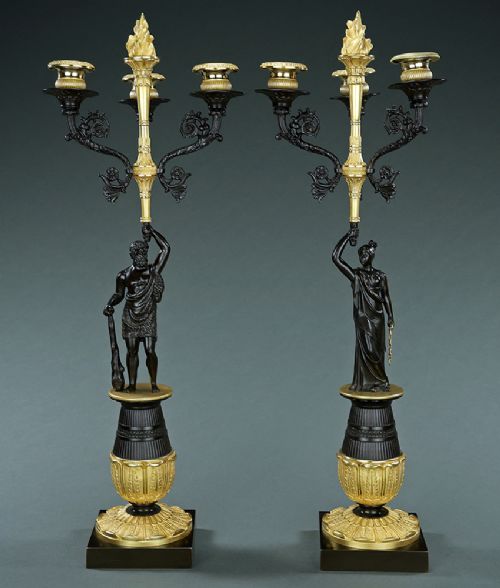
- Finely ground high-carat gold applied to a bronze base using a mercury amalgamation process. This technique produces a durable, rich golden lustre characteristic of French decorative metalwork.
- Candelabra
- A multi-branched candleholder designed to hold several candles simultaneously. They often feature removable branches or central decorative finials.
- Giltwood
- Wood that has been coated with a thin layer of gold leaf or gesso and gilding powder. It frequently complements the brass and mirror elements in revival frames.
Antique Brass Girandole: Frequently Asked Questions
How do you hang a girandole?
These pieces require secure wall fixings due to the combined weight of the metal frame, mirror glass, and protruding candle branches. Heavy-duty screws and wall plugs matched to the specific wall type provide the necessary support.
Positioning them opposite a window or a light source maximises the reflective diffusion of natural and artificial light within a room.
Were these made for candles or electricity?
Original pieces were strictly designed for wax or tallow candles, utilising the polished brass and mirror glass to amplify the dim illumination of the period. Many surviving examples retain their original sconces and drip pans.
Some pieces have been adapted later for electric wiring, though unadapted examples retain their original form.
How do you clean antique brass?
Maintenance requires gentle dusting with a soft, dry cloth to prevent the accumulation of grime on the metalwork and glass drops. Aggressive metal polishes should be avoided to preserve the remaining gilt layers and patination.
Glass components can be cleaned sparingly with a mild glass cleaner applied to a cloth rather than sprayed directly onto the surrounding metal or mirror backing.
What is the difference between a sconce and a girandole?
A standard wall sconce holds candles for illumination without necessarily incorporating reflective glass as a primary design feature. A girandole specifically integrates a mirror plate behind the candles to bounce light back into the space.
Both forms share wall-mounting functions, but the girandole relies entirely on its reflective properties for its visual effect.