




Twin Branch Sconces
Twin branch sconces bring paired illumination to walls through periods spanning Georgian Revival to Art Nouveau.
Twin Branch Sconces
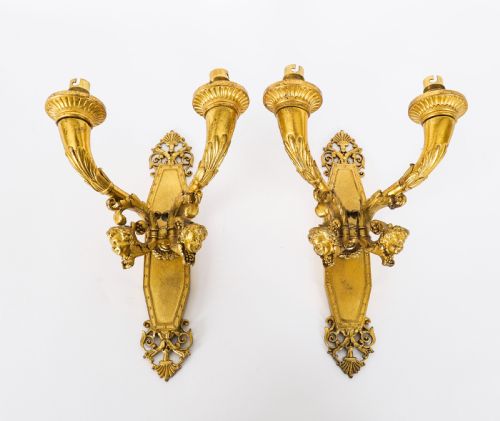
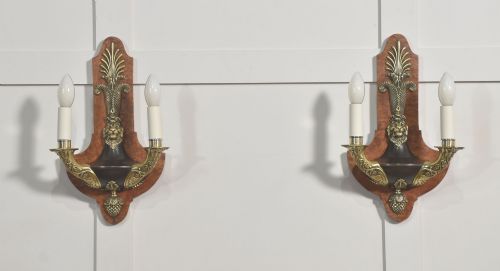
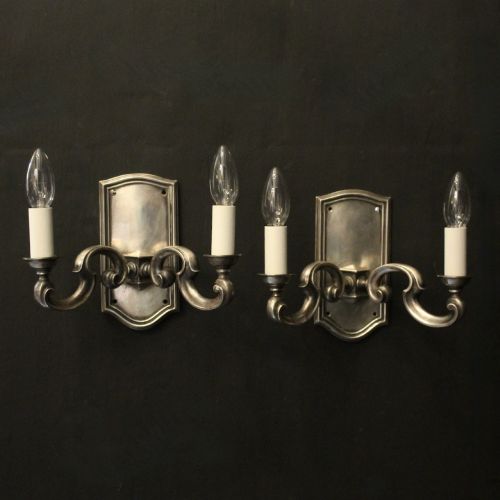
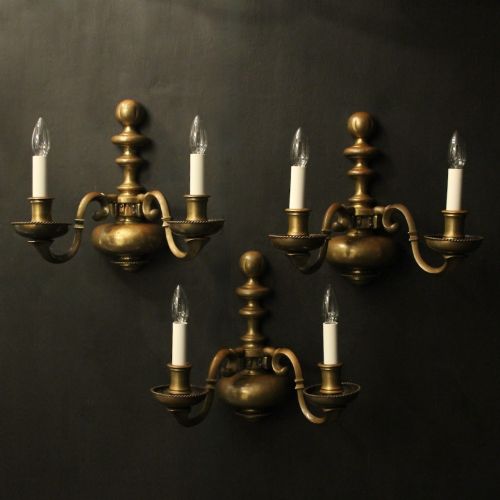
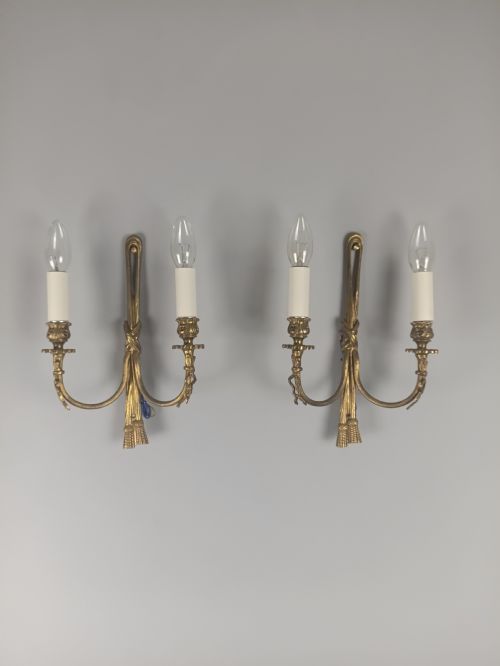
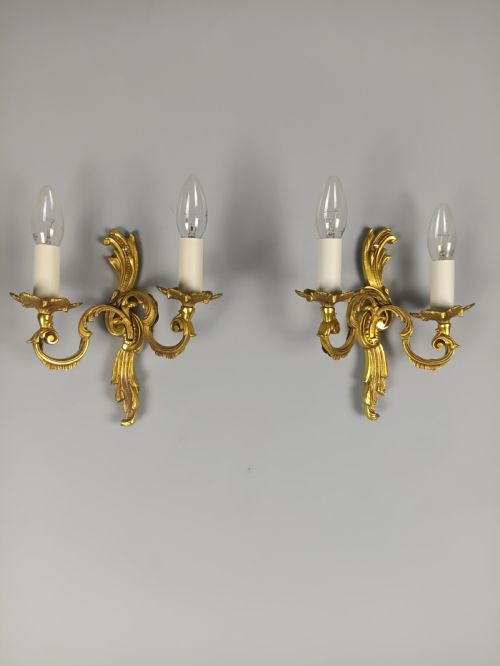
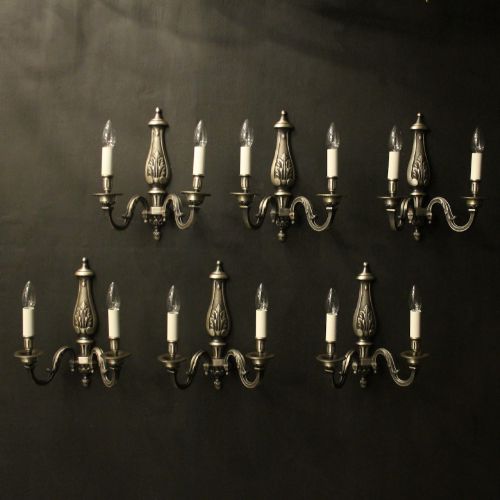
These twin branch sconces comprise paired wall lights, girandoles, and candelabra designed to mount directly onto interior walls. Buyers searching for twin branch sconces encounter forms spanning the nineteenth century through the nineteen-thirties, with French and English workshops providing the predominant examples.
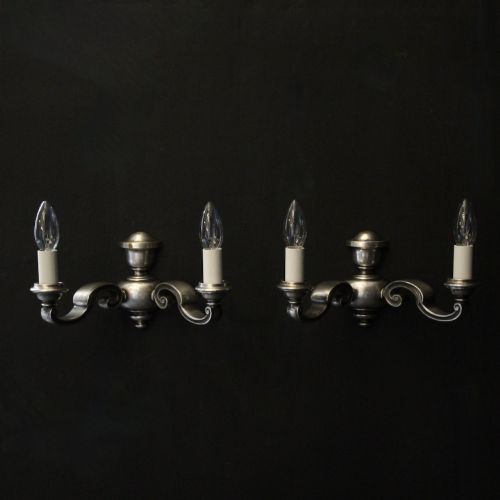
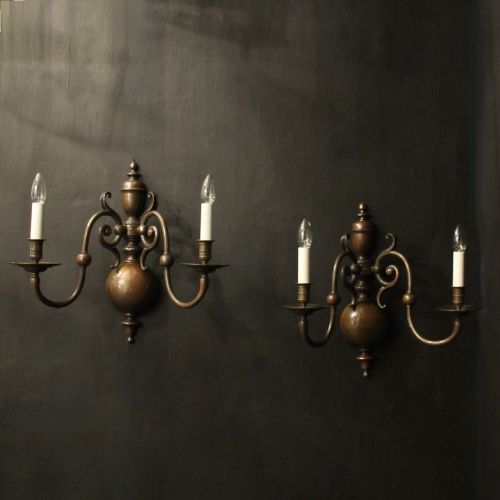
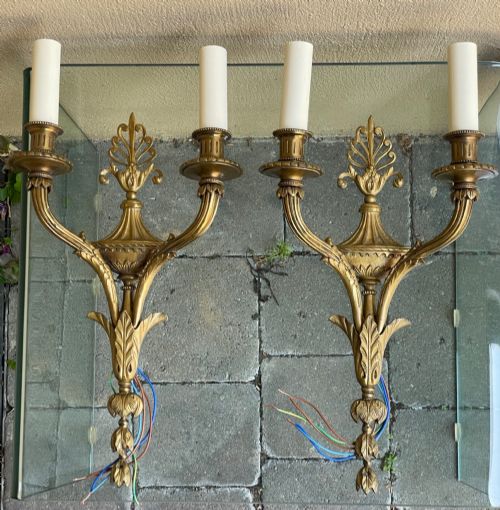
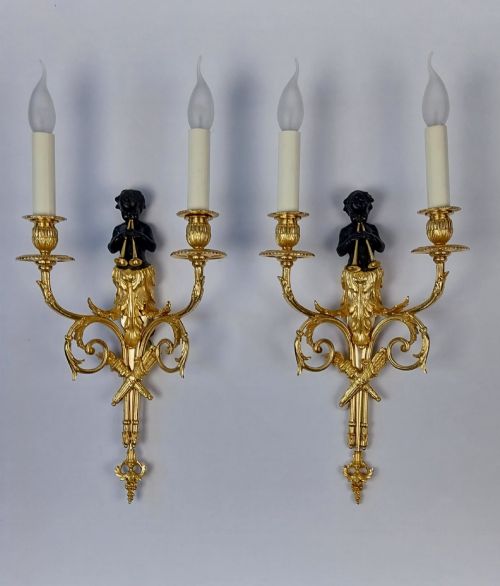
The material evidence on this page demonstrates that brass, bronze, ormolu, and silver plate form the structural backbone of these twin branch sconces. Styles range from French Rococo and Louis XIV revivals to Adam and Empire designs, often incorporating glass, giltwood, or ceramic elements.
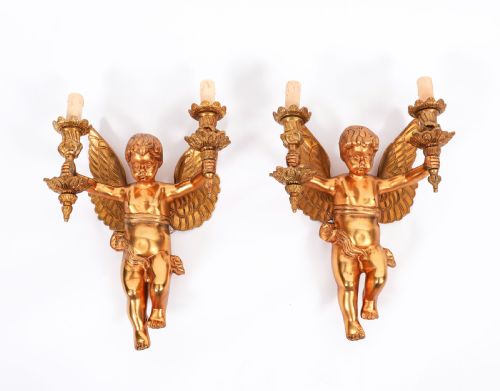
Most pieces appear in matched pairs configured with two arms extending from a central backplate to support candles or electrification. Regional variations run from Florentine carved giltwood girandoles to English silver-plated brass sconces.
Materials and construction methods
Foundry cast bronze, brass, and ormolu provide the rigid armature for the majority of these twin branch sconces, frequently finished with mercury gilding or silver plating. Metal components are cast, chased, and assembled with threaded rods or pins.
Carved giltwood and gesso pieces rely on traditional woodworking and water gilding techniques applied to timber frames. Glass elements, including cut glass pendants and Baccarat components, are hand-blown or mould-pressed and integrated into the metal frames.
The periods represented among these wall lights span from Georgian Revival and Victorian designs through to Edwardian and nineteen-thirties productions.
Evaluating craftsmanship and execution
Quality in these twin branch sconces rests in the crispness of the chasing on bronze and ormolu components, where sharp relief and deep detail distinguish superior work from soft, worn castings. Hand-carved giltwood items rely on the depth and definition of the timber carving beneath the gold leaf.
Weight, substantial gauge metal, and secure structural joints differentiate better examples from lighter, mass-produced commercial output. The integration of high-grade materials like Sevres porcelain plaques, Baccarat glass, or finely cast cherub figures elevates specific pieces above standard production.
F. & C. Osler·Baccarat
The Twin Branch Sconces Glossary
- Ormolu
- Gilded bronze produced by applying a mercury and gold amalgam to a bronze base and firing it in a kiln. This technique creates a durable, warm golden finish seen on many French lighting pieces.
- Girandole
- A decorative wall-mounted sconce or candelabrum incorporating mirrors or reflective backplates to amplify candle illumination. These pieces often feature elaborate carved frames.
- Backplate
- The flat or shaped structural portion of a wall light that mounts flush against the wall surface. It supports the extending arms and conceals the mounting fixings.
- Chasing
- The manual metalworking process of refining a cast metal surface using hammers and small punches. Skilled chasing brings out fine textures and sharp contours on bronze mounts.
- Candelabra
- A branched lighting fixture designed to hold multiple candles simultaneously. Twin branch versions specifically divide the light source into two distinct arms.
Twin Branch Sconces: Frequently Asked Questions
How do I mount twin branch sconces?
Most twin branch sconces attach to walls via a central screw hole or mounting bracket integrated into the rear backplate. Professional installation is recommended if the fixtures are wired for electricity.
Heavier cast bronze or carved giltwood examples require wall anchors suited to plaster or masonry to support their weight safely.
Are these sconces electrified?
The pieces listed across this page include both original candle-holding sconces and examples converted for electricity over their lifespan. Buyers should examine individual listings to confirm whether wiring is present.
Unconverted pieces retain their original drip pans and socket cups intended strictly for wax candles.
What is the difference between a sconce and a girandole?
A standard wall sconce mounts to the wall to support candles or light bulbs without necessarily featuring reflective surfaces. A girandole specifically incorporates glass, crystal drops, or a mirrored backplate designed to bounce light into the room.
Both terms occasionally overlap in nineteenth-century terminology.