
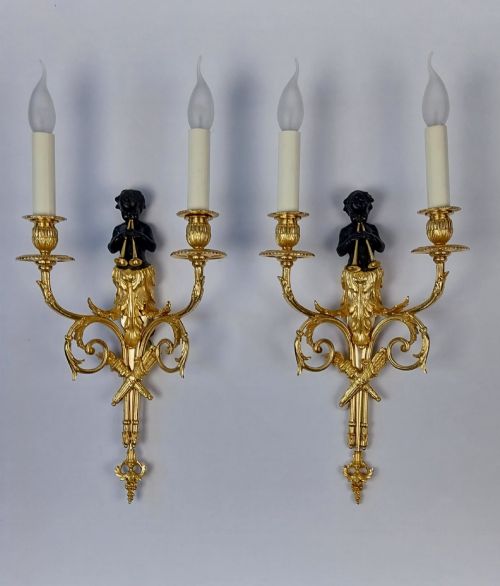


Patinated Cherub Lights
Patinated cherub lights combine cast metal figures with candle or electric illumination, bringing classic figurative sculpture into interior spaces.
Patinated Cherub Lights
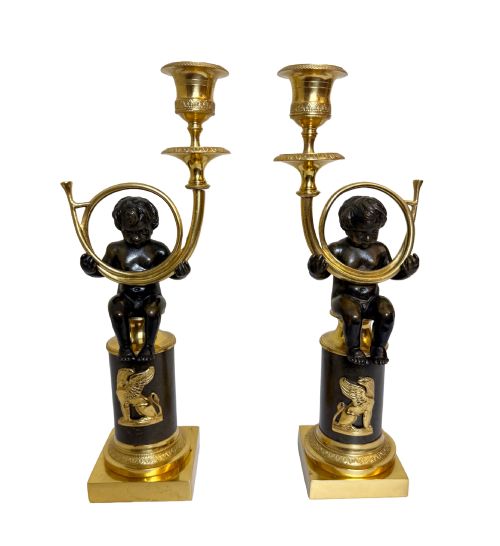
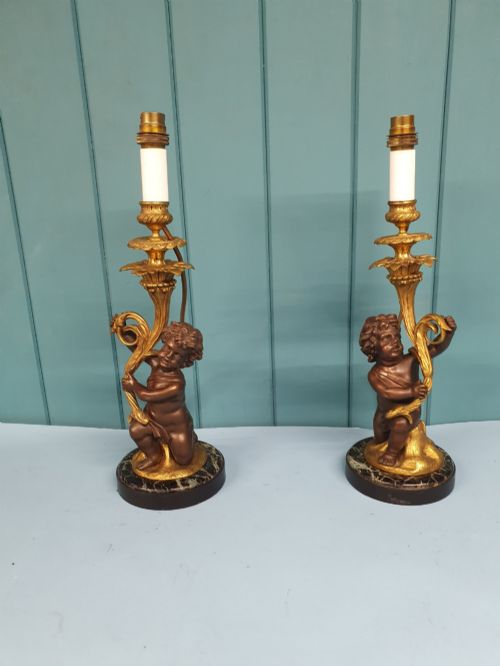
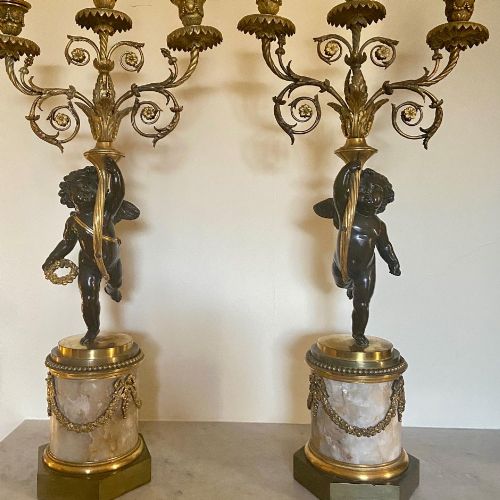
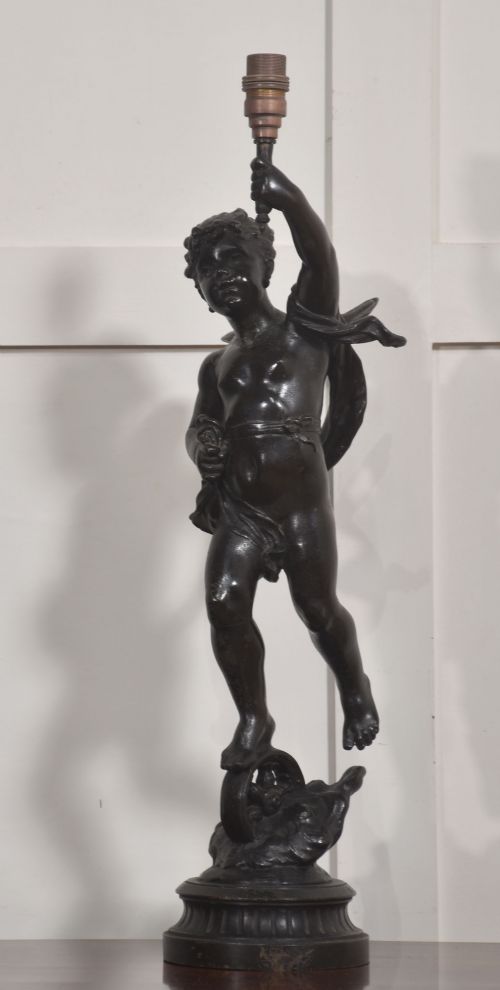
When searching for patinated cherub lights, buyers encounter figurative illumination featuring winged figures, putti, and cherubs cast in metal. These pieces appear as candelabra, table lamps, wall sconces, and chandeliers across the selection.
The objects span periods from the eighteenth century through to the early twentieth century, with nineteenth-century examples predominating. French manufacturing traditions strongly influence the forms, particularly in styles referencing Louis XVI, the French Empire, and the Rococo revival.
Most entries are matched pairs designed for mantelpieces, side tables, or walls. They integrate functional lighting arms with sculptural bronze work, frequently combined with marble bases or ormolu mounts.
Materials and construction
The foundational metalwork relies on bronze, brass, and gilt metal, shaped through traditional casting techniques. Artisans applied chemical patination to the bronze surfaces to create dark, aged tones, contrasting with bright ormolu and gilt highlights.
Many designs incorporate carved white marble bases or columns that anchor the heavier metal figures. Individual components such as arms, nozzles, and figures were cast separately and joined mechanically or via brazing before final surface finishing.
Several cherubs are caught mid-dance or bearing torches, proving that even heavy bronze figures enjoy a little theatrical flair.
Distinguishing quality in figures and mounts
Quality reveals itself in the crispness of the chasing and the anatomical definition of the cherub figures. Superior examples show careful hand-finishing in the hair, wings, and facial expressions, whereas simpler castings lose detail in softer contours.
The integration of materials also sets pieces apart, such as the precision with which patinated bronze meets ormolu mounts and solid marble plinths. Heavier, more substantial metal casting and intact original surface treatments elevate the standing of an individual pair.
Francois Redmond·Aug. Moreau·Clodion
The Patinated Cherub Lights Glossary
- Patinated bronze
- Bronze that has been treated with chemical solutions to produce a darkened or antiqued surface colour. This finish protects the metal and accentuates sculptural contours.
- Ormolu
- Finely ground high-carat gold applied to a bronze base using a mercury amalgamation technique, or simulated through modern gilding methods. It provides bright golden highlights against dark patinated areas.
- Putto
- A plump, naked male child figure frequently appearing in classical art and decorative objects. In these pieces, putti serve as the central sculptural support for lights.
- Torchère
- A stand or light fixture modelled after a torch-bearer. These lamps hold vertical light sources aloft in the manner of classical flame holders.
- Chasing
- The manual refinement of a cast metal surface using hammers and punches. This tool work sharpens details and removes casting flaws.
Patinated Cherub Lights: Frequently Asked Questions
How do I wire cherub candelabra safely?
Many period candelabra were originally designed for wax candles rather than electricity. Converting them requires running internal wiring through existing channels without altering the structural bronze work.
Professional electricians should handle the installation of modern fittings to preserve the historical integrity and stability of the piece.
Where should I place wall sconces?
Cherub wall sconces suit flanking positions around mirrors, fireplaces, or architectural focal points in reception rooms. Their projection from the wall requires adequate clearance from foot traffic and furniture.
Secure mounting is essential due to the combined weight of the bronze figures and marble or metal arms.
How do I clean patinated bronze?
Dust bronze surfaces gently with a soft, dry cloth to prevent the accumulation of grit. Avoid chemical cleaners, polishes, or abrasive cloths that can strip away the historical patination.
Preserving the original surface finish maintains both the visual depth and the character of the metalwork.
What is the difference between Louis XVI and Rococo styles?
Louis XVI style pieces display neoclassical symmetry, straight lines, and architectural restraint. The ornamentation often incorporates classical motifs, urns, and formal drapery.
By contrast, Rococo revival designs favour asymmetrical scrolls, organic curves, and flamboyant naturalistic flourishes that create a more dynamic silhouette.